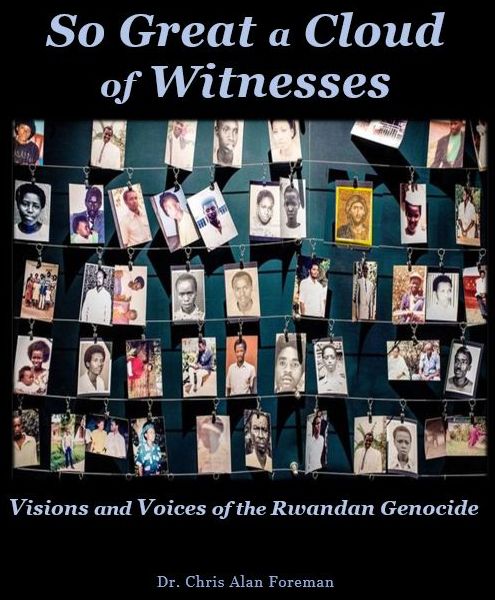
So Great a Cloud of Witnesses | ||||||||||||||||||||||||||||||||||||||||||||
|
Notices Noncommercial interests may reproduce portions of this book without the express written permission of the author, provided the text does not exceed five hundred words. When reproducing text from this book, include the following credit line: "So Great a Cloud of Witnesses by Chris Alan Foreman. Used by permission." Commercial interests: No part of this publication may be reproduced in any form, stored in a retrieval system, or transmitted in any form by any means—electronic, photocopy, recording, or otherwise—without prior writ-ten permission of the author, except as provided by United States of America copyright law. The English language translations of songs composed by Simon Bikindi are copyrighted by Jason McCoy and used by his permission. Scripture quotations marked NIV are taken from The Holy Bible, New International Version ®, NIV® Copyright © 1973, 1978, 1984, 2011 by Biblica, Inc.® Used by permission. All rights reserved worldwide. Scripture quotations marked KJV are taken from the King James Version of the Bible and are in the public domain. ISBN: 978-1-7358280-3-9 © 2026 by Chris Alan Foreman Published through Believers Book Services, April, 2026  | ||||||||||||||||||||||||||||||||||||||||||||
Endorsements from Rwanda
"I enjoyed reading So Great a Cloud of Witnesses from cover to cover. It is a great work of information and inspiration. I must say that as I read this book, I was brought back to 1994, remembering the times we went through and the hardship our brothers had to endure unto death. The book is full of suspense, and I did not want to stop reading until I found out what happened next. In short the book deserves worldwide reading."
"I was here in Rwanda before the 1994 Genocide against Tutsis; I was also present during the genocide as a victim and I was here after the Genocide. I know every story in your book. I want to testify that all the stories are true. The style is fantastic; the content is interesting; The flow of thought is amazing. For sure, readers will be satisfied."
"I have never read the book like this. I keep wondering where you got all the stories and how you collected them! It kept me awake reading for three nights. To understand Rwanda, you must understand the genocide. To understand the genocide, you must read this book." | ||||||||||||||||||||||||||||||||||||||||||||
|
Dedication
One thousand hills.
This book is dedicated to the cloud of witnesses who survived an 
Author's Note So Great a Cloud of Witnesses is a work of historical fiction set in the context of the 1994 genocide against the Tutsis in Rwanda and during the two decades that followed. While most characters are fictional, several are historical and anchor the narrative into its time and place. I wish to thank all those in Rwanda and in America who allowed me to weave threads of their lives into the fabric of this history. | ||||||||||||||||||||||||||||||||||||||||||||
| So great a Cloud of Witnesses – Visions and Voices of the Rwandan Genocide Book One: Witness to the Extermination 
| ||||||||||||||||||||||||||||||||||||||||||||
| Book Two: Witness to the Reconciliation 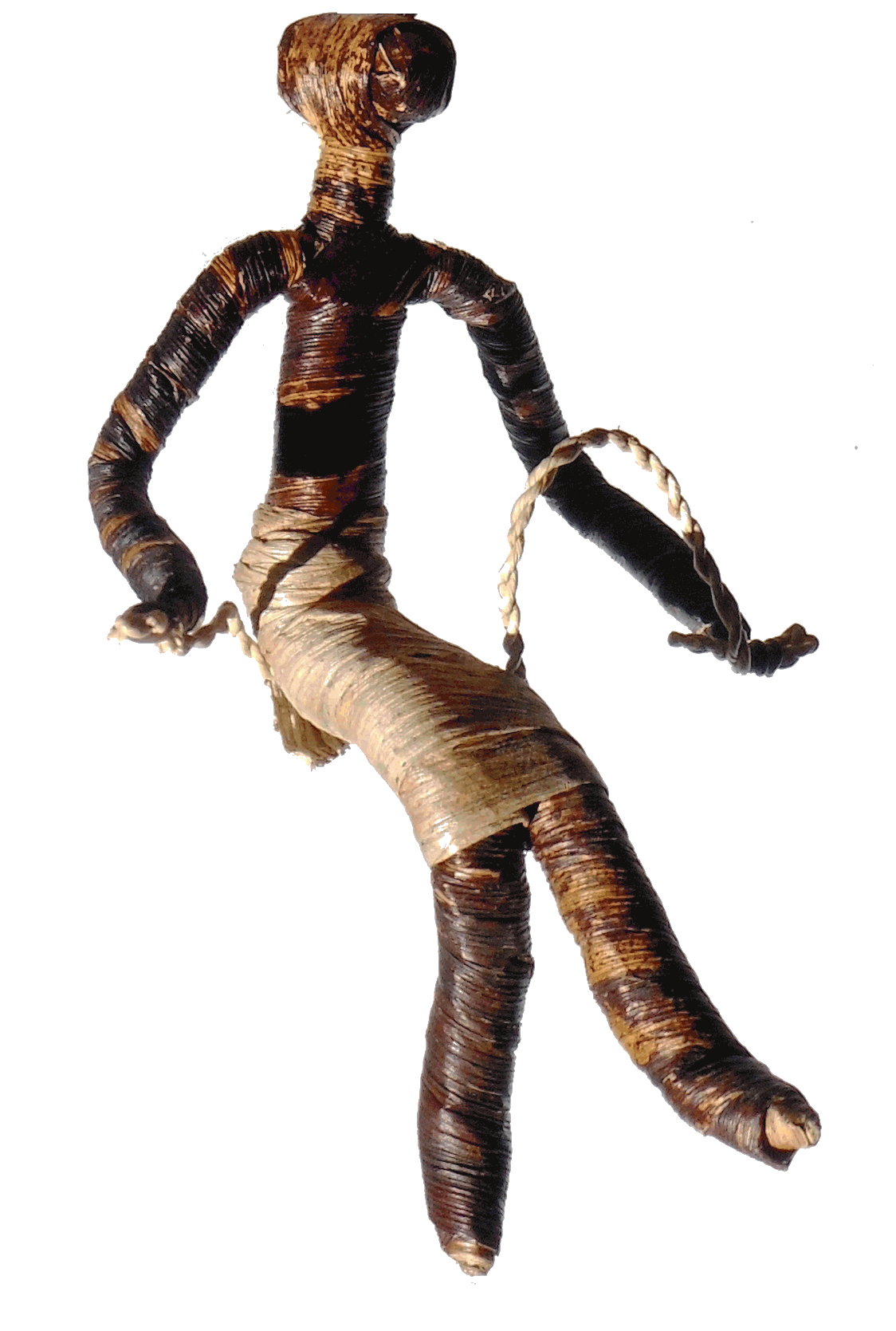
| ||||||||||||||||||||||||||||||||||||||||||||
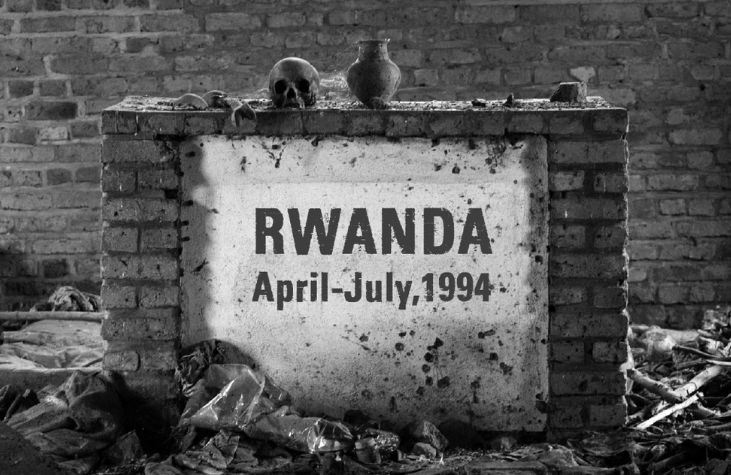
Book One Introduction 1. Land of 1000 Hills The Republic of Rwanda is a small landlocked nation situated in the Great Lakes Region of East Africa along the Great Rift Valley. As a temperate tropical highland, the soil is fertile and the landscape lush. With rugged mountains, terraced slopes, and snowy volcanic peaks, Rwanda is known as the "Land of One Thousand Hills." In 1994, ten million people inhabited Rwanda, making it the most densely populated country on the continent. Traditionally there had been three tribes in Rwanda: Hutu, composing about 85%, Tutsi, about 14%, and Batwa (pygmy), 1%. Official languages were Kinyarwanda, French, English, and Swahili. Eighty-five percent of the people identified as Christian — both Roman Catholic and Protestant. Ten percent followed Islam, and some still practiced traditional animism. Poverty was widespread in 1994, with most workers earning an equivalent of one dollar per day. Isolated from the Western world, Rwanda was the last parcel in Africa to fall into European hands. Germans first arrived in 1892, then Belgians took over in 1916. During their rule, both colonizers promoted racial division. Darwinian anthropologists measured skull size with calipers, while fanciful historians traced ancestry from biblical characters. These pseudo-scientists concluded that the minority Tutsis were closer in kind to Europeans and elevated them to positions of power over the majority Hutus. This solidified the feudal status of royal Tutsis over peasant Hutus. In the 1930s, Belgian overlords introduced ethnic identity cards, enshrining tribal differences. The 1950s marked a decade of rapid decolonization in Africa, mostly overseen by the United Nations. With the coming of majority rule in 1958, racial roles reversed overnight. Once disenfranchised Hutus now lorded over Tutsis. In 1959, Hutu extremists with the help of Belgian troops forced a hundred thousand Tutsis to seek refuge in neighboring countries. Following independence in 1962, cycles of violence recurred in which newly exiled Tutsis attacked government forces along the frontiers, and Hutu militias retaliated by killing Tutsis within the homeland. In 1990, an expatriate army called the Rwandan Patriotic Front (RPF) crossed into Rwanda from its base in Uganda, initiating the Rwandan Civil War. The RPF gained a foothold along the northern frontier but could not win a decisive victory. The Hutu president of Rwanda half-heartedly negotiated for peace in Arusha, Tanzania. In April of 1994, his jet was shot down over the capital city of Kigali, sparking the mass killing of Tutsis. 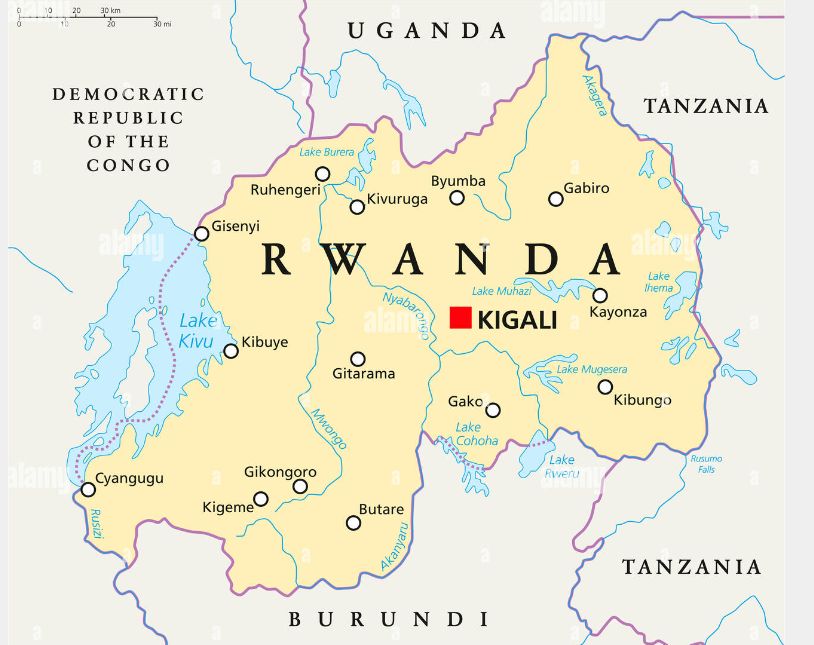 2. An African Holocaust It is at this point in the story of Rwanda that the events of this history begin to unfold. The Rwandan genocide that followed the president's death was distinct in several ways. First, it was well-planned. Organizers used census data, employment records, and church rolls to target every Tutsi in the country. Attacks were orchestrated from the highest echelons of government. Many massacres were coordinated via national radio. Second, its implementation was rapid. Like accelerant tossed onto long-smoldering embers, the entire nation burst into sudden flame. For one hundred days of extermination, the death toll averaged a staggering 10,000 souls per day. Third, it was intimate. For generations, the two tribes had freely intermingled, intermarried, and interacted on a first-name basis. When the slaughter began, neighbor pounced upon neighbor. People who had sat side-by-side in church on Sunday might kill a fellow parishioner on Monday. Friendship did not protect the doomed. Fourth, the genocide was low-tech. Throughout the countryside, machetes and clubs were the weapons of choice. Even when guns were used, killers typically executed at arm's length. Perpetrators often returned home after a day's work sodden with blood. Fifth, the killing was effective. In many regions of Rwanda, the slaughter stopped only because the killers ran out of available Tutsi victims. Not a single Rwandan soul was left untouched by the horrific events of April to August, 1994. Yet within this African holocaust, there were miracles of survival. For thousands who endured, God provided strength and restoration. It is on behalf of these surviving witnesses that I have written this book.
 | ||||||||||||||||||||||||||||||||||||||||||||
Story One ~ April 6 to 20, 1994 ~
1. Strangers in a Strange Land Victor Kwizera rubbed his blood-flecked eyes, straining to read the smudged newsprint. The scholar-turned-soldier sat on a wobbly stool beneath a dim lamppost, the only illumination in this Ugandan jungle. Victor pronounced the English words out loud: "President Habyarimana of Rwanda meets with African leaders to discuss regional peace." The headline from the Kampala Monitor was nearly a week old. Victor gleaned that Habyarimana had been in Dar es Salaam meeting with the leaders of Zaire, Tanzania, and Burundi to patch together the broken Arusha Peace Accords. Although Victor had never set foot in his home country, he doubted power-sharing between his exiled Tutsi people and extremist Hutu could ever be possible. Still, he hoped for peace in Rwanda. As he folded the community newspaper upon his knees, he looked up at the dozen fellow recruits lingering under his lamppost. Victor noted a recent acquaintance named Sano Ruhinda. By appearance, he looked about thirty, short and muscular. By camp rumor he was Hutu, but delving into tribal identity was not appropriate. Sano's lips moved as he recited words from his French Bible. Victor then noticed young Alphonse Tumaini, who danced with a transistor radio pushed to his ear. The high-spirited boy-soldier was continually swaying to the catchy tunes of Kigali station RTLM (Thousand Hills Radio.) Victor studied Tumaini's body language. He figured a rocking head and shuffling feet indicated a popular song. A clicking tongue and clenched fist meant an anti-Tutsi invective, with lyrics along the lines of "The Rwanda Patriotic Front is a brood of cockroaches, and we will kill you all." But what odd combination was this? Shuffling feet and clicking tongue? Tumaini ambled near Sano and cranked up the volume. "Listen to these words. Simon Bikindi is singing to you as a fellow cat-face."
Sano jumped to his feet, snatched the radio, and flung it into the mud. "Are you crazy? Yes, I am Hutu, but I don't hate my people." Victor stepped between the two recruits, extending his lanky frame to its full height of two meters. "Tumaini, step back," he growled. The provocateur retreated a few paces. Victor then shouted to the recruits with sweeping arm gestures. "Did you know Sano is like many of us? I heard both his dad and mum were killed by paramilitary gangs. They spoke out against militia atrocities. His parents were protecting people of our Tutsi tribe." Sano relaxed his posture. "Thank you for those words, but I can defend myself." He turned to Tumaini. "Can you point out one disloyal action I've taken against our cause? Yes, I'm Hutu, but I'm Christian foremost." He held high his book. "Every day I strive to follow these words of Jesus. I vow to protect the innocent and punish the guilty." The onlookers nodded their approval while Tumaini retrieved his muddy radio and muttered, "We need more vicious brutes and fewer pious saints." A cloudburst doused the fiery tempers and the lamplight blinked off. The dozen recruits rushed to the barracks which soon filled with thirty dripping bodies. In dim candlelight, the men stumbled toward their assigned floor spaces and squeezed together on the plastic-tarped floor. The four walls of their dormitory were constructed of sunbaked cinderblock. Red adobe smeared with white plaster covered its exterior surface. Bamboo rods fortified the inside wall. Four rough-hewn windows furnished daylight and two primitive doors provided access. Raw timber held aloft a corrugated iron-sheet roof. Each would-be fighter possessed a wicker sleeping mat, a thin sleeping sheet, and a cloth duffle bag to stow eating utensils, hygiene items, and personal objects. Most young men hid a few possessions under their mats or in a wicker basket. A critical feature of construction was the drainage ditch that encircled the barracks. Because of the April deluge, this canal was constantly monitored and dredged. A few meager planks provided a short walkway over the ditch. From that point emerged a vast sea of mud. In total darkness raindrops pelted the metal roof that reverberated like Burundian drums. Victor fell asleep to the percussive concert. 2. Evil Unloosed About nine o'clock Victor was roused from slumber by exuberant shouts: "What? No! I can't believe it. Yes!" In breathless excitement, Tumaini gasped aloud, "Listen up. Listen up." The men bolted upright on their mats. 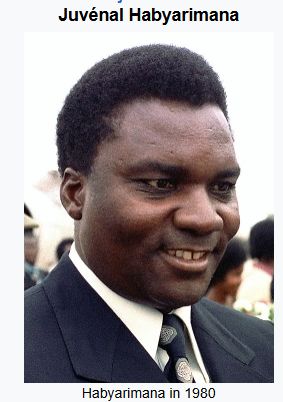
The young soldier yelled, "I just heard this on RTLM. They report a jet plane has crashed in Kigali. And get this: Habyarimana was on board. They say the president was killed, but they haven't yet found a body." A few men cheered. "Hooray! The great devil is dead." Sano raised a voice of caution. "No, no! The great devil may be dead, but his legion of demons is about to be unleashed. Don't you see? We must alert the officers." Victor slipped on his damp clothes and stepped into the downpour. He groped his way to the officer's shelter and pounded on the door. He heard rustling, then the door creak open. "This better be important," Captain Ntwari grumbled. "We think Juvenal Habyarimana is dead," Victor whispered. "Private Tumaini heard it on his radio." "What?" The captain wheeled about, "You, Mwiza, turn on that radio. Ngabo, gas up the motorbike. Stand by to race to headquarters camp for orders." 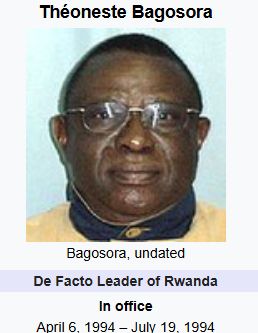
The startling news was confirmed. Both the presidents of Rwanda and Burundi had been shot from the sky with a surface-to-air missile. In the Kinyarwanda language, rabid voices now crackled over airwaves. "The Tutsis did this. Someone must make them disappear for good, wipe them from human memory, and exterminate these vermin from the face of the earth. Let's do the work now." And the devil's work commenced that very night. In Kigali, a crisis committee of Hutu Power was formed. Colonel Theoneste Bagosora seized the reins of government and sent out his Presidential Guard to round up and murder respected judges, journalists, labor leaders, and cabinet ministers. Hutu militias set up street barricades to identify and kill any person with a Tutsi ID card and any Hutu who dared stand in the path of their slaughter. Within twenty-four hours, all opposition figures were either dead or in hiding. A coup d'état had taken place, and the peace-seeking body within Rwanda had been decapitated. From the starting gun, the fanatical goal — the genocidal dream — was to reconstruct Rwanda as a Hutu-only nation. In an African echo of Nazi Germany, the killing campaign became known as the "final solution to the Tutsi problem." The billet of men endured an hour of uncertainty, then Sergeant Mwiza opened the door to read a brief military directive: "Settle down for the night. Get your affairs in order. Tomorrow we begin the liberation of our homeland." Some men closed their eyes, resting as best they could. Others chattered away their tension. Many monitored radio RTLM. At age twenty-five, Victor proved to be a natural leader. He paced the tarpaulin, cracking jokes and calming nerves. He seemed to have a Rwandan aphorism for every occasion. On this portentous night he favored, "You can outdistance that which is running after you, but not what is running inside you." As the billet quieted, Victor lay awake in a vortex of thought. He prayed to Imana, the God of his Christian upbringing, but his petitions seemed to bounce off the metal roof. His mind finally found solace when his ears discovered the comforting monotones of Sano's sacred supplications. 3. Day One of One Hundred All too soon, Sergeant Mwiza flung open the door. "Out of bed, you forest baboons. Your nation needs you. You have five minutes to stow your gear and align to the left of the flagpole." "Yes, sir, sergeant," boomed the lusty voices. At one degree south of the equator, the African sun rose without hesitation. With a measure of mercy, it also rose on this Tuesday morning without rainfall. The camp had altered its complexion during the night. Four troop carriers had arrived and formed a neat row in the low grass. Uniformed figures appeared like phantoms, emerging from the morning mist. A protective perimeter now encircled the compound. Victor stood in ankle-deep mud surrounded by sixty men rigid at attention. At length, Captain Ntwari mounted a wooden platform. "Men of the Rwanda Patriotic Front-Inkotanyi, stand at parade rest and open your ears. The moment we have dreaded — the moment we have longed for and the moment for which we have been preparing — has arrived. That liar and scoundrel called Juvenal Habyarimana was killed last night. We don't know for sure who shot the villain from the sky, but we suspect it was a snake from his brood of vipers. "That single death is sparking a blaze across our homeland. Reports tell us the cowards have murdered several Belgian peacekeepers and our prime minister, Madam Agathe Uwilingiyimana. If the enemy is so bold as to commit these crimes, they will not hesitate to slaughter every Tutsi — man, woman, and child — until our nation is choked with blood from one end to the other. But we will stop them!" "We will stop them!" returned the roar. 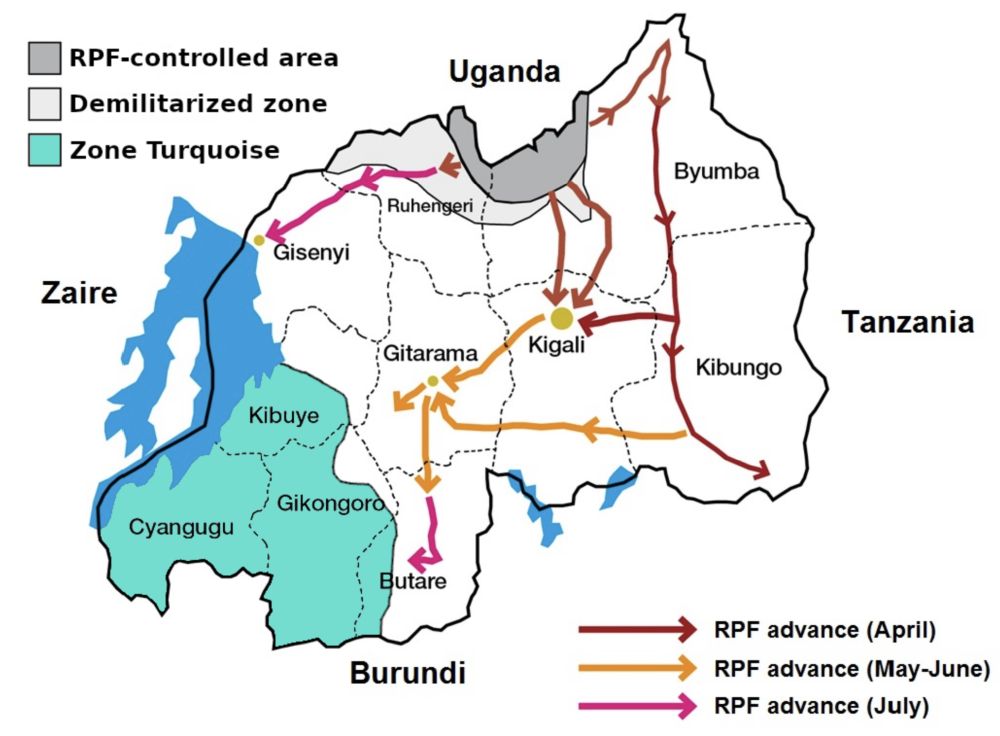 "We will save our people!" shouted the captain above the din. "Don't forget the meaning behind our name Inkotanyi. 'We will fight without delay, never give up.' Yes, we'll return Rwanda to peace. We'll let nothing stand in our way. This is our sacred duty, and we vow this to our God, our nation, our family, and our friends. Swear it. Swear it." As the fervor quieted into resolve, the company dispersed. Captain Ntwari called Victor aside. "Meet me in my shelter in one hour. I have a special assignment for you." Victor had no clue as to his fate. Why had he been singled out? Had he done something wrong? After reporting to his captain, Victor was told to stand at ease. Captain Ntwari eyed him from across a table. "Private Kwizera, I have heard good things about you. My sergeants tell me you have potential as an officer. They say you were an organizer in the Rwandan Alliance for National Unity. Your country needs competent men in this moment of crisis." He examined Victor from head to toe: a thin but rugged body, large red-streaked eyes (a sign of malaria), and a compact head projecting an intelligent face. "They tell me you were born in the nearby camp." "Almost, sir. My mom says she gave birth to me just across the frontier in Tanzania. I don't remember. But all I have ever known is Camp Oruchinga. I know this area like the back of my hand, as well as the mountains across the river in Tanzania." The captain shuffled his papers. "I hear you're also familiar with the Nakivale UN Camp, just up the road to Mbarara. Is that right?" "Of course," he replied. "It's been like a second home to me. This refugee center is the largest concentration of us Banyarwanda outside of our nation. I've been told the place houses 200,000 refugees, all itching to return to their homeland." He added, "It's from Nakivale I've done most of my mobilizing." "Yes," the officer responded. "And I've heard you've been very successful." Then, glancing at his notes, he spoke on, "And did you attend Makerere University in Kampala?" "Yes, sir, for two years, until I ran out of money. Ugandans make it tough for non-citizens to stay enrolled. As a refugee I had no status." "Yes, I understand. I too attended there for a short while. We Banyarwanda are strangers in a strange land." The captain called in Mwiza. "Sergeant, meet your new assistant. He's called Kwizera. He'll act as your guide in the Ibanda Forest. Fill him in on the mission. Also, I've assigned Sano Ruhinda as an interpreter. He's fluent in French, English, and Swahili. You might find him useful." Victor soon learned this team of three would scout the Tanzanian side of the Kagera River and report their findings to battalion headquarters. He and Sano were issued pistols while Sergeant Mwiza with his Kalashnikov rifle would take charge. 4. Tiptoe through Tanzania At midnight, the reconnaissance team was conveyed across the swollen river in a rubber boat. Their orders were to follow the waterway upstream until they linked with their battalion at the Rwanda border town of Kagitumba. The three were to gather intelligence along the route. Victor knew the land well, having once tramped the river course during his days as an arms smuggler. Once on shore in Tanzania, the infiltrators moved silently through the darkness. A peekaboo moon provided occasional illumination. At first light, Sano located a small hollow in a thicket of hedge thorns. "Perfect," Mwiza told Victor. "This narrow path is the only access in for an attacker." "Yes," rejoined Victor, "but the same path is also the only way for us to escape such an attack." "Don't worry." The sergeant patted his rifle butt as one might pat a baby's bottom. "I've dropped many an enemy with this weapon. You two get some rest. I'll keep watch." Lying shoulder to shoulder under a common tarp, Victor and Sano did manage to stay dry and catch a little sleep. With the obscured sun well above the horizon, the three resumed their slog through a steady downpour. Rubber shoes protected their feet, while floppy hats deflected raindrops away from eyes. However, from neck to knee, the team was continually rain-soaked. After an hour's march, four local farmers passed single file to their right, each wielding a long butcher knife known as a panga. The suspicious Tanzanians turned to look back at the RPF fighters. Once out of their hearing, Mwiza advised. "Let's walk to the side of the road. It will be slower but safer." Keeping the river over their right shoulders, the recon team sloshed forward. Victor instinctively hit the ground when he heard clattering metal and excited voices. "I tell you they were around here somewhere. I think they were Rwandan spies." After twenty minutes of silence, the three edged forward. By the time they had found a suitable hiding spot, the rain had stopped, the forest had darkened, and the gibbous moon had begun its ascent. Acting as trailblazer, Victor pulled out his map and pointed. "I think we're almost to the bend in the Kagera River. From that point, we cross into Rwanda. I suggest we wait here until midnight. We'll then move on tiptoe, feeling our way along the riverbank. We should see house lights on the far shore when we arrive opposite Kagitumba." Mwiza nodded his agreement. The trio rested on the tarp, tucked between fallen timbers. Mwiza closed his puffy eyes, rifle clutched to his side. Victor pulled out a tiny penlight to further examine his map. When he glanced up, he noticed his friend still awake, counting prayers on his rosary. "Sano, I've heard the gossip from the others: something about you being a Catholic priest, studying in France, and your parents getting killed because they supported the Arusha Peace Plan. Did you really find your way to Nakivale Refugee Camp to join us freedom fighters? Is a priest permitted to carry a rifle and kill?" "What you say is close to the truth. I'm not yet a priest. I've taken my final vows but have yet to be ordained. I'm studying at the Catholic University in Belgium. My rector permitted a one-year absence to sort things out in Rwanda, and yes, my father was killed last Christmas Day. He was murdered while walking out of church. My dad was the mayor of Gabiro. I've been without a mother for many years." Victor pondered his words. "So, do you count yourself as a soldier, a freedom fighter?" "That's difficult to answer. I doubt you know much about the founder of my holy order, Saint Dominic. He was not an actual soldier, but a preacher of the gospel. Yet, he did combat heresy. He fought a spiritual and intellectual battle against an evil teaching called Albigensian. "He believed, like Saint Paul, that 'We wrestle not against flesh and blood, but against principalities, against powers, against the rulers of the darkness of this world, against spiritual wickedness in high places.' "I believe that Hutu Power is an evil teaching, a doctrine of demons. I'm returning to my homeland as a soldier of the cross to vanquish a blasphemy in which my tribe seeks to annihilate yours. Can there be a greater apostasy than genocide? A greater heresy than preaching human extinction? I also wish to return to my home church of Saint Sebastian in Gabiro. I hope to visit my mentor and priest, Father Silas, and save whomever I can from the edge of the machete." The air grew still as the men eased into slumber.
5. An Unwelcoming Committee Mwiza roused the two sleepers while the sky was still dark and served each man a few bites of banana. They walked the final kilometers, ducking into the bush whenever a noise was heard. At last, Victor perceived the splashing of the Kagera River. Creeping through papyrus reeds, he spotted raging fires on the far shore, reddening the dark sky. Mwiza looked puzzled at the sight but finally concluded, "I guess our RPF are already fighting in the town. I can hear the sounds of rifles, mortars, and grenades." He suggested they hide in the papyrus reeds until daylight. "It's less likely we'll get ambushed in the sunshine." Victor and Sano deferred to his judgment. As the horizon brightened to their backs, Victor spotted a rubber raft on the water moving toward the shoreline. Four onboard soldiers appeared to be wearing the new uniforms of the Inkotanyi. As soon as they set foot in the sand, Mwiza hollered in Kinyarwanda, "Long live the Rwanda Patriotic Front!" The squad looked toward the papyrus reeds, rifles at the ready. One shouted in his native tongue, "Step forward with your hands raised." Mwiza, Sano, and Victor stepped into the twilight mist. One of the four lit up when he saw Mwiza and grasped him by the shoulders. "It's good to see you, comrade. You're the reason we paddled over here." The three clambered into the boat. "We'll have to hurry back to Kagitumba," one said. "The Tanzanians don't appreciate us being on their side of the river." Once they arrived halfway across the Kagera River, the two oarsmen broke into smiles. "Look. We're at mid-current. Now we can tell you officially, 'Welcome to Rwanda, gentlemen!'" The comrades locked arms and in unison belted out, Rwanda ni nziza, that is, "Rwanda is beautiful." Sano rejoiced the loudest, "This is not only my home country, but also my home prefecture of Byumba." Victor then glanced upriver. "Hey, oarsman, pay attention to your navigation. I've never seen so many logs floating downstream. Maybe there are a hundred of them." The boatmen's merriment melted into melancholy. The one steering the craft replied, "And you pay close attention to these logs as they drift by." As Victor peered into the brightening gloom, the log changed aspect. He first saw a colorful patch of cloth swirl into view, and then a naked arm flop in the current. Both allured and repulsed, the onboard witnesses trembled. At last, they recognized the object as a female corpse tumbling in the torrent. Another log appeared, then another, then a baby log. The oarsmen quickened their pace as dozens of human timber swirled by. Sano bowed his head, making the sign of the cross. Victor choked out a few lines of the anthem, Rwanda ni nziza, then with sadness repeated the greeting, "Welcome to Rwanda." Sergeant Mwiza swept his hand across the waters in a sardonic gesture. "Yes, and may I introduce you to members of our welcoming committee?" 6. The Inkotanyi Army After navigating a flotilla of human flotsam, the boatmen touched ground in Rwanda. An RPF captain ushered the recon team aside for a debriefing. When he had verified their identities, the officer gave badges to Victor, Sano, and Mwiza. Within an hour, the captain escorted them to a door marked with the name Major Ntwari. After exchanging salutes, Sergeant Mwiza spoke up, "Sir, I see congratulations are in order. Your promotion is well deserved." "And congratulations to you as well, Lieutenant Mwiza. And to you, Lieutenants Kwizera and Ruhinda." The three sputtered in disbelief. "Men, these are not ordinary times, and we must take extraordinary measures. Our army is doubling in size. Our officer ranks require educated soldiers. I have reviewed a hundred records, and you three have risen to the top. Tomorrow, a dignitary will arrive in camp and he will make the promotions official. Now, enough about that. Let's hear your recon report." The three men recounted details of their two-day trek through Tanzania, but since the northeast corner of Rwanda now lay in RPF hands, their observations were of little value. Victor spent the remainder of the day walking through Kagitumba, glad to make footprints in his home soil. He spent the hours conversing with a dozen soldiers he had once mobilized from Nakivale refugee camp. At night under a makeshift canopy, images of floating corpses swirled in his dreams. The morning brought relief through a hearty breakfast. The cook encouraged him to eat as much beef as he could, quipping, "This big-horned steer who bravely sacrificed himself in battle yesterday will not have died in vain." Outside the mess tent, Victor began to notice an abundance of vehicles and smartly dressed military police. He figured the dignitary was on his way. Victor also noted hundreds of RPF troops uniformed in identical green short-sleeved shirts with matching short pants. He spotted a supply officer issuing the gear and asked him about the clothing. "These are summer uniforms from the old East Germany. Do you know much about history? When that communist country collapsed, the new government was stuck with a warehouse of obsolete uniforms and equipment. We Rwandese are clever and for just a few thousand American dollars bargained for all this." He gestured proudly over the soccer field. "What do you think? Pretty good bargain, right?" It took all morning for the two thousand soldiers to configure themselves in proper military order. Victor stood in a new uniform next to Major Ntwari and in a unit designated as "Reserve Force Personnel Section." In snatches of conversation, Lieutenant Kwizera discerned his assignment. Victor would remain to the rear of advancing troops to oversee Personnel Processing Station Three. The principal function of his unit was to maintain army records, interview civilians, and determine the status of enemy combatants. Major Ntwari emphasized the importance of his assignment. "Not as the point of the spear," he said, "but as the shank that enables the spear to pierce into the enemy's heart." Victor met up with Sano and Mwiza while practice-marching about the soccer field. They too were assigned to Station Three. Victor voiced disappointment at not gaining an infantry position. "All I ever wanted is to be an Inkotanyi fighter." Mwiza put an arm over Victor's shoulder. "Killing people with bullets is not as glorious as it's made out to be." He explained his own task would be to interrogate prisoners of war, adding, "That's alright with me. I've survived four years of combat and don't want to press my luck." Sano told the others he was commissioned as a chaplain. "I will be a soldier of Rwanda on the outside, but a soldier of God on the inside." He retrieved a metal scapular tucked under his collar. "This string around my neck is a reminder that I must remain faithful to my calling in the Dominican order. See the medallion of the Blessed Virgin at my throat. It's the only military decoration I need." He kissed the object and returned it to its hidden place. He elaborated, "My hometown is in this Eastern Byumba Prefecture. I know the people and customs of this area. My chaplain's duty will be to address the spiritual needs of the soldiers and displaced civilians. I believe God has directed my feet to this place and time." A female lieutenant introduced herself to the men. Until recently, Bernice Mukamana had been a school principal in Kampala. Now she wore the green uniform and shoulder epaulets of an army officer. Her task at Station Three was to turn out ID cards and act as an advocate for women's issues. As the hour of noon approached, a dozen enlisted soldiers filled out the ranks of Personnel Processing Station Three. As the lieutenants continued to discuss their military duties, a hush came over the parade field, followed by the amplified command of Attention. Mwiza glanced at his watch. It was exactly twelve noon. "Precision! A good sign," he spoke through his teeth. 7. An Unlikely General Victor extended his neck to see a dozen dignitaries standing on a distant platform. After a command to parade rest, the two-thousand-man contingent watched as a tall, reed-thin, spectacled man approached the microphone. At thirty-seven years of age, Paul Kagame was an unlikely general. He appeared too quiet, too intellectual, too unpretentious, and too young to lead an insurgent movement of fifty thousand freedom fighters. Yet, he demonstrated competence whenever he stepped onto a battlefield, and now, he inspired confidence as he spoke before this assembled multitude. "My fellow countrymen of this great nation of Rwanda, my devoted soldiers in this grand crusade of good against evil, my partner patriots of all tribes, ages, sexes, and backgrounds, we are standing on the sacred soil of Rwanda!" An officer beside the general flung his arms in the air, provoking the mass of soldiery to burst into cheer. The general raised his voice. "We will never retreat, never step backward. We will only advance. We will fight those who murder our people with impunity. We will fight for the right of all Banyarwanda to return home from exile. We demand only to live in peace and security within the boundaries of our land. Nothing more we ask. Nothing less we'll accept." After three more cycles of speech and applause, General Kagame concluded his address by shouting out, "We will fight without delay, never give up." An aide stepped to the microphone. "We are about to take an oath of allegiance to the RPF-Inkotanyi. Stand at attention. Raise your right hand. State your full name, then repeat after me."
After every soldier in attendance recited the pledge, a loudspeaker blasted a patriotic tune. The aid spoke again. "We will now make the following promotions." Over the next thirty minutes, 138 names were read out loud, among whom were Major Ntwari and Lieutenants Kwizera, Mwiza, Ruhinda, and Mukamana. As the multitude cleared the parade ground, the major gathered his staff together. He shook the hand of each officer, then announced to all, "Our first meeting will commence in two hours. Report to the supply officer to pick up a pen and a notebook." At the appointed time, Victor assembled under an acacia tree with the cadre of his battalion. As personnel officer, his duty was to maintain the records of the four hundred men and officers of his battalion. There was no need to keep finance records, since military volunteers did not receive a wage. In addition to managing its troops, Victor's unit would conduct interviews with local civilians and prisoners to determine their disposition. All would be issued fresh identification cards. The tripartite designation—Hutu, Tutsi, or Twa — was purposely omitted. After sixty years of tribal distinction, the Rwandan ID card, called the ubwoko, did not include a tribe identifier. Victor's unit would also carry out graves registration for those soldiers killed in action. An older man joined the cadre under the tree. Mzee Pierre Gahutu was a professional photographer. He volunteered his equipment and services to process ID photos. As the major closed the meeting, he encouraged his staff, "We must learn to share the challenges that come our way. That way our problems will be cut in half." Always instant with a proverb, Victor added the Rwandan version of those words, "Yes, a stone that is visible cannot destroy a hoe." When Victor finally returned to his unit, Mwiza was busy supervising the construction of their shelter, Bernice was organizing boxes of paper records, and Sano already had his hands full instructing local village leaders. All this was being accomplished well after dark in the beam of requisitioned vehicle headlights. In the spirit of their RPF pledge, every soldier was busy helping the other with building, carrying, or record-keeping. No soldier was idle. The RPF rulebook was strict indeed. There would be no laziness, drunkenness, bribery, or carousing with women. Uniforms and bearing were always to be sharp, and interaction with civilians must be polite. A group of political officers (commissars) mingled with the troops to encourage, educate, and enforce this high standard of military bearing. 8. Interahamwe Atrocity On the first day of operation, eight hundred Rwandans passed through Station Three. Most were villagers whom soldiers had forcibly relocated into Uganda north of the Muvumba River. A dozen young men volunteered as recruits, and another dozen accepted professional positions. Criminals were a challenge to deal with. Victor pondered, "How do we separate victims from perpetrators? No Rwandan mama would ever hand over her husband or son no matter how guilty he might be as a killer." Through trial and error, he discovered the easiest method to identify criminals was to interview victims of obvious violence, those few who were attacked but had survived. These witnesses could identify leaders of Hutu Power and those who did their bloody bidding. Every few days Station Three would pull up stakes and move south along the Kayonza-Kagitumba highway, always a few kilometers behind the battle line. Near an intersection not far from the town of Nyagarare, Victor spotted a bus that was being escorted by four UN vehicles. This caravan paused near his post to resupply with water. Sano spoke to the French soldiers in blue UN helmets. He learned the unit was part of Amaryllis, a military operation designed to evacuate expatriates from Rwanda. The convoy was travelling throughout Byumba Prefecture collecting all mzungus (white people) in order to concentrate them at the Kigali airport and then escort them out of the country. One distraught Swedish nurse approached Sano. She burst into tears as she explained how her best friend, a very competent Rwandan aide, was refused entry into the bus. "The Frenchman struck her with the butt of a rifle," she sobbed. "My friend wailed, 'Kill me now with a bullet. Please, I beg you. That's better than to be raped and hacked by the gangsters that are waiting just outside these walls.'" Victor reported these words to Major Ntwari who authorized a platoon of twenty reserve soldiers to race down the road to the rural hospital. Mwiza accompanied this contingent. Victor then took Sano aside. "You've been to France, right? What did you make of those French soldiers in blue helmets? Are they in our country to help our people?" Sano thought for a moment. "Maybe they are, but it's not their top priority. Their number one goal is to promote the interests of France. That's obvious and natural. Their next goal is to help white Europeans. That's why they evacuated the nurse and not her Rwandan aide. Skin color is important to them. Their third aim is to help the interim government. "They place great value on their Francophone empire and keeping together their collection of French-aligned African nations. Our RPF that formed in Uganda prefers the English language. The French hate that. Did you know that right now, the French military is evacuating chief Hutu leaders to Paris? Finally, as a fourth priority, the French want to assist the common Rwandese. This may be a top priority for some French humanitarians, but not for the government. They don't care about them." Sano stared into the distance. "You know these UN soldiers are termed 'peacekeepers' in the English language. Is that a good thing, just to maintain the status quo? In our situation, I don't think so. What does Jesus say in his sermon? Isn't it 'Blessed are the 'peacemakers', for they shall be called the children of God'?" He pointed to Victor's sidearm. "What's the difference between a peacekeeper and a peacemaker? In our fallen world, filled with violent men, I believe it's force. I'm convinced our army will make peace. It won't be easy, and it will require a maximum of force." In late afternoon, the platoon returned with eight bedraggled prisoners at rifle point. They marched to the rear. Victor noted all were bloodstained and wearing baggy print shirts of bright colors. One captive wore a blue wig. Victor surmised they were Interahamwe, a word that meant "those who attack together." He knew this paramilitary gang of young street thugs had been trained by Hutu Power solely to hunt down and murder Tutsis. When Mwiza returned to Station Three, Victor asked, "So what did you find?" With a troubled face, Mwiza began. "The hospital was not too far down the road, but we were too late. We found fifty or sixty fresh corpses, still warm. Most lay inside the hospital walls, hacked by machetes or clubbed by the masu, the one with nails. We saw some people blown apart by grenades and some run through with spears, men, women, and children, some in medical bandages. We saw hands and legs severed, brains smashed with hammers, private parts sliced off, and women stripped naked and violated with beer bottles. It was savagery beyond necessity. We might have killed a dozen of the attackers as they ran into the bush. Only one of us was wounded, thank God. We managed to rescue three survivors who will testify against these devils." He wiped his eyes, then snarled, "Now I know why I'm fighting — to stop this hell on earth." After an hour, Victor heard distant rifle fire. Mwiza counted the rounds. "Yes, eight shots for eight murderers. Justice can be swift when guilt is certain." As Victor lay in his cot, he considered the day of blood and violence. Unable to sleep, He switched on his transistor radio. BBC World Service was filled with reports from Rwanda. In just five days, forty thousand people in Kigali had perished. Many other familiar cities were named with corresponding death counts. The BBC described his RPF-Inkotanyi as Ugandan, outsider, and invader. The RPF was vilified for refusing a French offer to cease fire. "How could we pause our fighting?" he muttered to himself. "Can you have a ceasefire without a corresponding cease murder? Doesn't that give Hutu Power more license to slaughter Tutsi innocents? I guess they don't know the words of our pledge, 'Without delay. Always advance.'" Victor yielded to temptation and turned the dial to RTLM radio. For a while he grooved to the African rock music. He strained to understand the fast-paced words of Simon Bikindi as he described Tutsis as umuzimu utera aturutse ishyanga, a spirit that attacks from a foreign place. Then the racist hype broke in — pure hate propaganda. Victor was aghast. He heard the word umuganda, which refers to communal work, something that villagers had performed for generations. As the commentators joked through their skits, he understood clearing bush now meant "killing men" and pulling up the roots of the bad weeds meant "killing women and children." These were the euphemisms emanating from RTLM radio. In short, "All you Hutu, do your work — Umuganda." For the first time, Victor fully grasped—down to his bones—the unmitigated evil of his exterminating adversary.
9. Inhabiting the Horror The Rwandan Armed Forces (FAR) were larger than the RPF but less motivated and disciplined. In the face of the relentless onslaught of the Inkotanyi, disheartened units continued their retrograde movement. Victor heard many say the Hutu-Power government was so preoccupied with killing Tutsi civilians behind their lines, they neglected to engage the Tutsi army to their front. Perhaps it was so. During their southward march, Victor and his comrades stumbled through the smoldering ruins of a small village just abandoned by FAR soldiers. Mutilated bodies filled the ditches, recent kills on top, putrefying flesh on the bottom. Strewn corpses littered the main street. They appeared frozen in their final screams of agony. Females of all ages told a visual tale of rape and mutilation. Bernice choked back tears as she covered the exposed bodies of violated women. "How can these brutes claim to be human?" Mwiza comforted the distraught Bernice, seating her on a bench. He then entered abandoned huts to flush out any remaining enemy. In the dark corners, rats and dogs feasted on human flesh. Mwiza shot and killed one particularly vicious canine, then raced toward the fleeing enemy, rifle in hand, hoping to overtake at least one perpetrator of this outrage. Sano seemed to exist in a world of his own. With pen in hand, he calmly counted bodies, sketched figures, and scribbled notes. He will give this testimony in court someday, Victor mused. He will be among the witnesses. As Victor's unit advanced south, their workload seemed to decrease. Many desperate villagers were now escaping into the great Kagera jungle, while those who were complicit in mass killings, already anticipating defeat, were fleeing into Tanzania.
10. Evil Articulated After an evening meal and a few hours of catch-up work, Victor, Sano, Mwiza, and Bernice began to verbally process the day's horror. Under a dim battery-powered lamp, Bernice spoke up first. "Please help me. I can't hold it inside. I need to talk to some ears about what my eyes saw today." Sano responded, "Yes, let's help our sister. Let's help each other. If we are human at all, each of us is hurting inside." Mwiza spoke kindly to Bernice, "I have seen much evil in my service as a soldier, but nothing compares to the atrocities I saw yesterday and especially today." Victor stammered, "The visions I saw today will never leave me. I pray to God they might, but doubt they ever will." After a moment to recover his voice, he inquired, "Sano, you're a man of God. If Imana exists at all, how do you explain this evil thing that surrounds us?" "How can I explain to you the mystery of evil when I don't comprehend it myself? I was taught at seminary evil is not a thing at all, but the absence of a thing, the privation of the good. Maybe so. But like each of you, I cannot fathom how so many of my countrymen — most of them professing Christians — could transform themselves into such a pack of devils. I do understand this one thing. At the heart of our religion exists a savior, a God in human flesh, who suffered like the innocent dead we have witnessed today." Sano retrieved the rosary from his pocket and displayed the crucifix. "I worship this Christ-on-a-cross who experienced firsthand the consequence of evil. Our Jesus Christ dripped real blood, as red as we saw today. His flesh was scourged by wicked men and thrust through with a sharpened spear. He was displayed before a jeering crowd, then died in agony — naked, humiliated, violated, friendless, and drenched in his own blood. All of this took place under the authority of a cruel government. Does this story sound familiar? From the day that Cain killed Abel unto today, the world has been filled with continuous evil. The divine response to human wickedness has never been to send a divine explanation but to send a divine being. "But we are too close in time to think clearly about this human catastrophe. We still inhabit the horror. Please, my friends, give me space to meditate and pray. Maybe then God will grant me sufficient grace to talk with you about the evil that envelopes us." Bernice wept. "I will pray and meditate too. May God grant each of us strength to deal with the emotional trauma we've suffered today, and may He give this Inkotanyi the wisdom and ability needed to end this terrible genocide." As each retreated into his private world, Victor repeated the final word spoken by Bernice in the French language: génocide. "Yes, that's exactly what it is. And the organizers behind this crime are génociders." The next day, while marching past more devastation, the four lieutenants conducted further conversation. Mwiza opened this round of discussion. "I used to go to church and say my prayers, but now how can I believe? Look around you. How could a loving God allow such suffering?" Sano took a deep breath and began his apologia. "Forgive me ahead of time for my inadequate words. I searched for answers all night long. As a first step, I must confess to you I am a sinner. I have done wicked things that shame me — cursing, stealing, fighting, abusing, cheating, and lying — things that God deplores, things that deserve His wrath. Yes, Sano Ruhinda is a great sinner. Now, I ask each of you to search deep inside your soul. Have you discovered a sinful person inside of you?" Sano paused as each acknowledged their sinfulness before God. "This may shock you. I am no less guilty of sin than those eight prisoners who were executed a few days back. Yes, yes. The outworking of their sin — murder and rape — was clearly more criminal than anything I have ever done. Yet my heart on occasion has been just as black as theirs. At times my anger has been as murder, my lust as rape, and my covetousness as looting. My soul held the evil desire, but my body did not carry the thought into action." He paused. "If you claim you have not sinned in this way, then speak up now." The three remained silent. "So, you ask, 'Why did God create a world with evil in it?' I might answer, 'Because God chose to create a world with you in it?' You may contend, 'I think God could have created a world absent of suffering.' I might respond, 'Yes, God could have done such a thing, but then He would have created a world without you, in fact, void of all human beings, because we each choose to sin. Let's be honest. A world without the taint of evil could not contain you or me.' "And look around at this very moment while we are marching down the Kayonza-Kagitumba highway. Turn your head to the right at the smoldering ruins, now to your left. What crimes lie moldering under that blue tarp? Don't you recognize human sin as the greatest source of human misery?" Bernice responded, "Okay, Sano, I see your point. Still, I could not have done what these Interahamwe devils have done. Impossible." Sano agreed. "The Bernice who is talking with me now, the Bernice who was recently a school principal in Kampala, this Bernice could not be a génocidaire. But what if Bernice Mukamana had been raised in an isolated Hutu village, illiterate, obedient to her tribal leader, and poisoned with racist propaganda? Could that Bernice have been an accomplice to murder? Do you think your soul is so incorruptible?" After a moment of reflection, he added, "As a Hutu, I am grateful I was out of the country when my father was murdered. Either I would have died defending him or lived in shame, compelled to be a silent accomplice of Hutu Power." Bernice and Mwiza spoke many words in whispered conversation. Friendship had blossomed into affection. As Bernice gazed at the lush countryside, she was reminded of a beautiful woman, now pockmarked by obscene sores. She confided this observation to Mwiza, then added, "I have lived a sheltered life and have never seen death so close up. Tell me, friend, have you seen this horror before?" "Yes, my first time was in Gisenyi. I had just completed my second year at the National University and was home to visit my parents. Just as darkness fell, we heard shouts in the street, then gunfire. My dad locked our doors and turned out the lights. That first night we were spared violence. "The next morning a kind Hutu neighbor dropped by our house to warn us. We were on the Tutsi death list. My father and mother told me to escape into the bush, then return to university. My folks determined to stay behind, insisting they had enough money to bribe the local leaders." His lip trembled. "Of course, they were among the three hundred murdered that night. I don't think this first slaughter was pre-planned, but it did go unpunished. That's all the incentive the bloodthirsty killers needed. I knew my life was in jeopardy, so I decided to leave my homeland. I made it out of Gisenyi, but instead of returning to school, I walked west into Zaire. Along the route to the border post, I saw destruction like this — burned-out huts and human bodies left like trash along the roadside. I wanted to avenge the murder of my parents and to end the madness in Rwanda, so I infiltrated north to join the RPF." After several more steps, Bernice posed a more personal question to Mwiza. "Is there anything you're afraid of if we confront enemy troops?" "I'm not afraid to kill, nor am I afraid to die. But maybe this: I'm not sure how I would stand up under torture. Will I be brave? Will I be a coward and beg? I pray that I could take death like a man and not lose courage." After a few breaths, he returned the question. "How about you, Bernice? What's your greatest fear?" "I think I'm like any woman in any war zone at any time in history. It's something you males don't face. I fear being raped, ravished, and violated by multiple men. Death is to be preferred, I think." Her voice trailed into a quiver. Overhearing the talk, Victor joined in, "As long as we're sharing our fears, my greatest is pure physical pain. How would I respond to taunts and jabs? How would I bear up under real torture, deliberate cuts, burns, and blows, not designed to kill, just to inflict agony — not for minutes, but maybe for days? What if they hammered out my teeth or snipped off my fingers one by one? God help me." Sano spoke up, "Yes, it takes physical courage to run into battle and moral courage not to run in retreat. May God grant us courage if we ever fall into the hands of the enemy." He collected his thoughts. "I know you're wondering what my greatest fear may be. Like each of you, it's how will I bear up under ridicule and torture? It's hard for me to put my thoughts into words. Perhaps my greatest fear is this: that I lose my Christian compassion for my enemies and thus betray my Lord." The drizzle turned into a deluge, stifling further talk. In defiance of the downpour, the marching soldiers broke into song. "Nothing will delay the Inkotanyi. Nothing will stop our forward march."
11. Red-Handed The next morning while Victor was immersed in paperwork, Mwiza led in three captives at rifle point. Their wrists were bound with twine, and their hands were stained with blood. They reeked of banana beer. "We caught these killers red-handed. Look at their fingers. This young one seems talkative. Do you want to interrogate him?" Mwiza forced the three to squat under a tree, then spoke to Victor in hushed tones about the circumstance of their capture. Victor shook his head in disbelief. He then addressed the youth. "If you talk to me, I may be able to spare your life. What can I call you?" "My name's on the ID in your pocket. I am Prosper Mukiza." The elder of the three, who seemed to be their leader, screamed at him. "Don't speak another word to this inyenzi — cockroach!" Mwiza struck him in the face with his rifle butt. "If you interrupt again, your worthless body will rot under this tree." Victor addressed Prosper. "The lieutenant here says he caught you and your friends while you were hacking a family with machetes. He says you were having some kind of contest. Maybe you were seeing who could chop off a living body part with just one swing. Is that right?" Prosper fell silent, finally responding, "The decision to kill was not my idea. It came from the organizers. They gave me orders. I refused to join the butchery at first, but it was easier to stab with the blade than to be stabbed with ridicule and contempt. That's the truth." Victor asked, "How long has this killing been going on?" "On the morning after Habyarimana died, the young men in my village gathered on the soccer field. Our mayor told us the Tutsi were responsible for our beloved president's death, and all Tutsi were our mortal enemy. It was 'kill them or they will kill us.' He said it was our work — Umuganda — as Hutu patriots to cleanse the earth of its cockroach infestation. So, many of my friends went out hunting as if it were a sport. They no longer saw our neighbors as human beings but as vermin to be exterminated. "Because I showed reluctance, the mayor required me to demonstrate loyalty by participating in a ritual murder. I was given a panga (long knife) and commanded to stab a pregnant mama in the belly. It was difficult, but the crowd egged me on. That was my first murder — or rather, a double murder. I couldn't believe what I had done. "The next morning, I was ordered to hunt Tutsi with the others. I had my panga to slice. Others had machetes to hack. Even excited boys ran alongside us with sticks. If we encountered stout resistance, the local police would join us with guns and grenades. The first hunt was tough for me, but then it became easier. We began the day by killing; we ended it by looting. I learned that if I killed a Tutsi, I had first claim on his property. Our mayor termed this kubohoza — liberating enemy goods. I collected three radios, two bicycles, and this set of new clothes you see on my body. I am ashamed to be wearing this suit coat." The second youth spoke up, "Did you know that two Sundays ago was Easter? I sang in the choir that morning. Two Tutsi friends sang in the celebration next to me. They were schoolmates. The next day was Monday, and the president's jet fell from the sky. On Tuesday we learned this news, and on Wednesday, this old man sitting next to me hacked my schoolmates to death." The accused shouted, "That's a lie. I was helping to protect the Tutsis." Mwiza lifted his rifle, and the protester closed his bleeding mouth. The second youth squirmed. "I confess. I did what I did. I had lived with Tutsi friends for years without noticing it. Then I became contaminated with racial hatred without noticing it. But what's my defense? My priest, the man who baptized me as a baby, condoned the killing. He said it was God's will. Tell me. Who am I to resist God?" Victor had heard enough. The three remained tied to the tree until dark, when Mwiza informed Victor, "It's time I escort these prisoners into their new home." With the assistance of a few enlisted soldiers, the killers were led away. After several minutes, Victor heard a single rifle shot. "One out of three." He remembered Mwiza's words: "Justice can be swift when guilt is certain."
12. Wheeling West On April 19th, the entire army changed course toward Kigali. Word filtered through camp that the RPF strategy was now to move with force upon the capital city. After only ten days of existence, his unit was reorganizing. Victor wanted to preserve the moment for posterity, so he asked Mzee Pierre Gahutu to take a photo of the four lieutenants. Victor, Sano, Mwiza, and Bernice posed by their shelter with an RPF flag as a background. Pierre snapped the picture and gave a copy to each officer. Mwiza and Bernice appeared side by side, a shy smile upon each face. One day before the army cut new orders for Third Battalion, the FAR staged a fierce counterattack against the Inkotanyi. Enemy artillery exploded behind the lines. A dozen soldiers perished in the withering fire. Victor's unit had one last function to perform before reorganization: graves registration. The duty fell upon Bernice to visit the mobile hospital to identify the dead and dying. The schoolteacher-turned-army-officer burst into tears when she drew back a shroud and saw the tattered remains of her dear friend, Lieutenant Gilbert Mwiza. 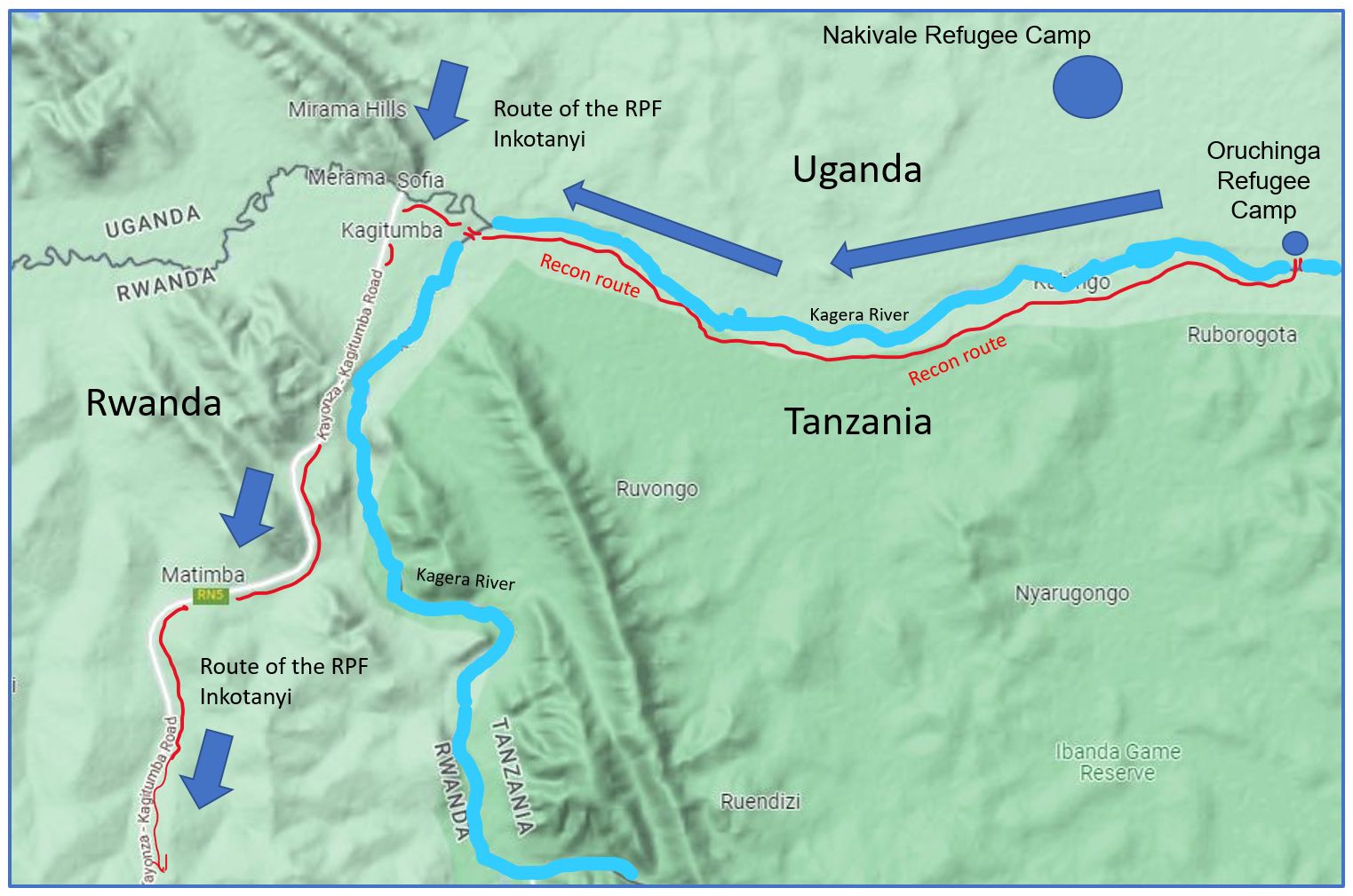 The three lieutenants gathered at the side of their fallen comrade. The grim mask of death, hitherto familiar but impersonal, now settled upon the face of their friend. Each grieved the loss in their separate way. Victor brooded; Sano prayed; Bernice wept. Major Ntwari permitted the body to be interred in a local churchyard, well-marked for possible reburial. Bernice carried out her duty as registrar of graves. Tucked inside her friend's shirt, she discovered the recent photo displaying Mwiza and herself standing side by side. She pressed the picture to her lips before she re-tucked it and sealed it inside his body bag.
End of Story 1   | ||||||||||||||||||||||||||||||||||||||||||||
Story Two Kagera Forest ~ April 21 to 30, 1994 ~
1. Dispersed As the military action shifted west toward Kigali, Lieutenant Kwizera was directed to RPF headquarters in the demilitarized zone (DMZ), while Lieutenant Mukamana focused on processing a flood of Tutsi survivors into the expanding army. The Rwanda Patriotic Front decommissioned Lieutenant Sano Ruhinda as a chaplain and appointed him temporary magistrate of the now-liberated town of Gabiro. He would assume the chair of his martyred father. The priest-in-training dispatched a letter to the Catholic University of Bel-gium asking his superior for a dispensation to fill this position until legal authority could be restored in Byumba Prefecture. As he departed, Sano lifted his arms in a goodbye blessing to his two friends, que Dieu soit toujours avec toi, that is, "May God be with you always." Sano was assigned a bodyguard of twenty armed troops who claimed as home the northeast corner of Rwanda. These soldiers would serve as a con-stabulary police force. The next morning, the new magistrate headed north in a convoy along the Eastern Highway. For although Hutu Power had been crushed in the eastern provinces, it had not yet been eradicated. Gangs of thugs still roamed the countryside, especially in the vast jungle of Kagera. The daylong journey to Gabiro proved uneventful. The troops dismantled a few makeshift roadblocks and fired a few rounds at fleeing marauders. A contingent of Inkotanyi soldiers greeted the convoy outside of town and escorted Sano to the city hall of Gabiro. Battle smoke had lifted, but widespread destruction and the stench of death still clung to a town in ruin. The new mayor's first act was to incarcerate about a dozen of the most notorious génocidaires, securing them in a local schoolhouse. The population was in flux. As surviving victims straggled into their looted homes, authors of the bloodlust slunk into the bush. Chief among the alleged perpetrators was a parish priest by the name of Father Silas Zagabe. Acting-mayor Ruhinda gathered together the town leaders to dictate occupation rules. Any citizen carrying a firearm would be arrested. Anyone resisting arrest would be shot. Racist talk and behavior would not be tolerated. A curfew would remain in place from dusk to dawn. No one was to depart town limits without an official pass. Sano located a trusted schoolmate named Dennis and a friend of his father named François. He spoke with these two in private and pieced together the degeneration of his mentor-priest, Father Silas. 2. Spiritual Wickedness Sano learned that just after he himself had left for Belgium in 1991, the gentle priest began a descent into the abyss. Whether co-opted or coerced, he came to embrace the ideology of Hutu Power. His allegiance was no longer to his God and church but had shifted to his rulers and tribe. Any Hutu who opposed Hutu Power was included under the rubric of icyitso—that is, "an accomplice." Father Silas joined the National Revolutionary Movement for Development (ruling MRND Party), then compiled a list of Tutsi parishioners and tracked their movements. He stood by as an outspoken deacon was attacked and murdered. The man was very tall. His assailants chopped his legs off below the knee and bragged about how they had cut the Tutsi man down to size. A grieving mother reported to François how Silas had violated his confessional. She told how her son had confided his intention to cross the Ugandan frontier. The youth was found chopped to pieces the next morning. His severed head was left at her doorstep. Dennis related to Sano how his father had died on Christmas Day. "We all urged him to flee into the forest, but he replied, 'How can I do that? I'm mayor of this city and the last voice of reason among our leaders.' The odd thing was how these purveyors of death projected their evil deeds upon the heads of their opponents. It was like a mirror. "Father Silas actually accused your father of spreading tribal hatred and supporting militia killers. I overheard this supposed man of God say to him at one of the rallies, 'As a Hutu yourself, you are a traitor to your tribe. It's not my fault if civil defense youth rise up against you. They despise you, and I cannot control their actions.' "As your father departed morning mass on Christmas Day, a dozen youth accosted him near your home. Upon orders from the priest, his body was not mutilated, and he was granted burial in the church cemetery. With the moderating voice of your father gone, the situation in Gabiro deteriorated. A Tutsi corpse was found in the street nearly every morning. "On Easter Sunday, I joined the celebration of Christ's resurrection. I partook of the Eucharist with a few of the remaining Tutsis. The next day, when Habyarimana died, Satan took command in Gabiro, and Father Silas stepped forward to become a champion of his demonic hordes. "Madness gripped the entire Hutu population. Young men hunted their neighbors as jackals hunt rabbits. With the connivance of the priest, hundreds of terrified Tutsis sought refuge within the walls of Saint Sebastian. When the building was packed to bursting, the priest himself unlocked the doors and directed the work of Interahamwe gangsters. Men, women, and children were butchered inside the church and on parish grounds. You know about one-quarter of Gabiro was Tutsi. They are all gone — one hundred percent. Many fled to the jungle, but most are in graves or in rotting piles beyond the toilets." As this sad story drew to a close, Sano asked, "Does anyone know the whereabouts of Father Silas?" François answered, "We think he is hiding near his mother's home in the jungle, biding his time, hoping for an opportunity to return to his post." With a tear-stained face, Sano then requested, "Please take me to my father's grave." In somber procession, he followed his friends to a corner of the Saint Sebastian cemetery. Encompassed by stones, the small plot presented an inscription carved upon a wooden plank: Damascene Habimana 1940-1993. Sano knelt and recited a prayer for the dead. "Eternal rest grant unto them, O Lord, and let perpetual light shine upon them. May the souls of the faithful departed, through the mercy of God, rest in peace." After several minutes of silence, Dennis broke in. "I'm glad your father was buried here and not left to the dogs. I am also grateful his body was not desecrated like so many others. Father Silas boasted about his intervention as if it were an act of virtue. Tell me. Does that single act of decency exonerate the guilt of his crimes?" Rain began to gush from the sky, and the men sought shelter under the roof of the church. François quietly spoke. "Forgive us. We've had no oppor-tunity to clean this place since the slaughter." As Sano glanced about the sacred space — so integral to his upbringing — he wept at the desecration. Blood still encrusted pews and spattered walls. Even the Blessed Virgin on her high perch was flecked with blood. Gouges from knives and holes from bullets violated the altar. All items of value had been ripped away as booty. Sano asked about the headless statues. "Yes," said Dennis, "The drunken hoodlums practiced their technique on the saints. They tell me Father Silas hid the head of Saint Sebastian, but I don't know where it is." Sano studied the disfigured image. "That could have been me if I had remained in Gabiro. You may not know this, but my religious name is Sebastian. "Tomorrow is Sunday. I'm not a priest, so I can't celebrate mass, but I'd like to give a homily, not as Mayor Sano but as Brother Sebastian. Please get the word out to the parish. I'll be here at ten." 3. Brother Sebastian After a night of rain, the morning broke bright and clear. As Brother Sebastian walked through the doors of Saint Sebastian, he displayed a white vestment salvaged from the church closet as well as his scapular, now visible on the outside of his shirt. He marveled at the interior transformation. Debris was gone, the floor was swept, and much of the blood had been scrubbed away. Old François explained, "We gathered together as many as we could. They brought their brooms, buckets, and rags. I'm astonished at what ten people working for ten hours can accomplish. A few of your soldiers were a great help." Brother Sebastian glanced at the torso of Saint Sebastian. Dennis smiled. "That was my son's idea. Your namesake has a head again, even if it's a whitewashed soccer ball." By ten o'clock, thirty townsfolk had gathered in the church. Brother Sebastian recognized most of the faces and knew them to be Hutu. He saw only three Tutsi parishioners shuffling near a side exit. He beckoned them forward, saying, "Our Father in heaven recognizes only one race of people, that is the human race without distinction and without preference. We must learn again to sit together in harmony." His brief homily concerned the three cardinal virtues: faith, love, and hope. He urged his hurting flock to remain faithful to God in spite of their suffering, to keep Christ upon the throne of their hearts, and not to reject the Church because certain priests proved to be unworthy of their calling. He then encouraged his listeners to love every neighbor in spite of past prejudices and recent wrongs. He added, "But remember, Christian love does not preclude justice. Our loving God is also a just God. As a nation, the challenge ahead is to balance love and justice into something called reconciliation. This road before us will take more courage and forgiveness than I can imagine. Still, we must look ahead of us and not behind. As his homily drew to a close, Brother Sebastian emphasized hope as the most critical virtue for the current situation. "Remain hopeful that your life will improve, that time will turn your wounds into scars. During these impossible times, cling to the hope that the depth of evil has been plumbed and the only direction is upward toward heaven. As the Psalmist says, "Guide me in your truth and teach me, for you are God, my Savior, and my hope is in you all day long." As the group began to rise, Brother Sebastian dismounted the platform. "Please neighbors, remain seated," he spoke in a firm voice. "I now want to address you as the mayor of Gabiro and not as Brother Sebastian." He removed his vestment and placed his scapular under his shirt. As the parishioners resettled in their places, he spoke on. "I am sad to say that some of you sitting before me are criminals. You know this fact, and so does God, even if I am ignorant of the details. Your Christian duty is to confess your sins and pay society for your crimes. In the days and years to come you will be held accountable for your deeds. "Some of you are innocent victims. I'm so sorry for your losses and suffering. Your duty is not to seek revenge but to seek solace in God. I promise I will do all I can to work for justice within the limits of the law. "Some of you stood by and did nothing when your neighbors were butchered. You did not speak up, and you will have to live with that guilt. "You have all survived a refiner's fire. May your souls emerge as purified gold, not as spoiled dross, and may you walk out of Saint Sebastian resolved to do the right thing." The people were subdued as they exited the church. Some wondered if the fire ahead might refine the soul as much as the fire behind had scorched it. The next day, Sano announced to the new city council. "I want to meet with Father Silas as a peacemaker. I think it's important." 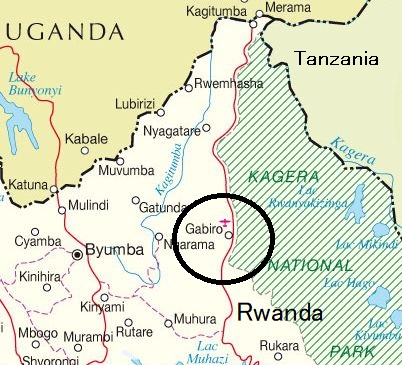 Sano asked François to locate the runaway priest, and the old man returned the same day with news that his mentor would welcome a parley of reconciliation. Silas pledged no harm would come to his one-time protégée. Sano left the next morning, taking along Dennis and François as witnesses. Four soldiers accompanied them to a crossroad not far from Silas' boyhood home. The escort would remain in place until the peace party re-turned. Sano then proceeded on foot up a hillside path, now cascading with rainwater. The three peacemakers felt the gaze of spying eyes as they trudged through dense foliage. Suddenly, four whooping warriors rushed to confront them. As the gang menaced and swung machetes, a man shouted from behind, "These are my friends. Show some respect." Sano recognized the resonant voice as that of Father Silas. 4. Renegade Priest As their eyes locked, Sano observed a short, rotund, jovial man, more weathered than he had remembered, but still recognizable as the priest of his youth. The four ruffians melted into the forest while Silas led his guests through the bush. "François! Dennis! I'm so glad to see you've survived this war. I've been praying for your safety every day. And little Sano — or should I say Sebastian — I am so glad we can meet and clear up our misunderstandings. I'm ready to get back to work, you know." The chirpy words and jaunty demeanor seemed wildly inappropriate. Silas jabbered on about the good old days before the Ugandan enemy in-vaded our homeland. Sano, Dennis, and François held their tongues. They noted the ominous reappearance of the bodyguard as they entered the rustic home. On a corner table, Brother Sebastian noticed the statuary head of his namesake. The priest spoke up, "You remember my mama, right?" A toothless old lady grinned at the visitors. Silas entreated, "Please sit around my humble table and enjoy a glass of local beer." The old lady filled four tumblers. "Now, tell me. How can I help you bring peace to Gabiro? You know I have some influence in town." Sano finally spoke, "Yes, I know you are a man of influence. My question to you is this: 'Up to now, how have you been using your influence? Has it been to promote the gospel of Christ and the welfare of His entire flock?'" Silas assumed an insulted posture. "I have kept my solemn vows if that's what you mean. I have never disobeyed Bishop Misago and have nev-er broken a law of the Rwandan Republic. My conscience is entirely clear on these matters." Sano replied, "I'm pleased to hear that. You're the person who inspired me to the priesthood. Since the days I served as an altar boy, you've served as an example of what a priest should be." A wide smile broke on Silas' face. Sano confronted his mentor. "Since you are certain of your loyalty to the church and your innocence before Rwandan law, I expect you're prepared to travel with me back to Gabiro." The smile vanished. "It's not that simple. I have many false accusers, just like Our Lord had them. If I return with you, my enemies may try to crucify me for crimes I never committed, especially those cockro-." He swallowed that last word. "I mean our Tutsi brethren." François entered the conversation. "Old friend, it may be true that you followed the lead of your bishop in Kigali and upheld the rule of your Hutu masters, but your religion was corrupt and your politics evil to the core. I myself repent for being a coward in the face of so great an evil, but I know exactly what my eyes saw and what my ears heard." Silas burst in, "All rumors and lies! You must understand that our coun-try is at war. Many Tutsi neighbors are ibityso, domestic accomplices to an invading army. Believe me. I stood up for every innocent Tutsi in my parish and tried my best to protect them from the killers." Dennis could not hold back his indignation. "You are in one hundred percent denial. I heard your speeches at the rallies! I watched you as you unlocked the big doors to the church! How can you say you're not complicit in the crimes that followed? Can you give me the name of a single innocent Tutsi you protected from death?" Silas shifted ground. "They forced me to do those things. I was under threat of death myself. How could I resist? "Sano, listen to me. I did not want your father dead. I did my best to protect him. When I learned he was killed, I rescued his body intact and gave him a Christian burial. Did they tell you that?" Sano answered, "Yes, François and Dennis have told me many things about your conduct over the last few years. I didn't believe the stories at first, but I heard the same words from the mouths of a dozen witnesses. I know what's happened in my beloved country, and my heart is broken. No one can deceive me." For thirty minutes Sano then recounted his two-week experience in Rwanda, to include the floating bodies that welcomed him, the hospital grounds ravaged by Interahamwe, and especially the massacre of villagers at the crossroad. "I witnessed this carnage firsthand. I took notes. I counted ninety-eight bodies — women and children all chopped with machetes. "Silas, the Rwanda Patriotic Front only carries rifles, never machetes. I am certain one hundred percent that the cutting I witnessed was not the result of a war between two armies but a genocide perpetrated by one tribe upon another. That is an undeniable fact." "No. It was war," Silas insisted in agitation. "I did what I could to survive it. I'm not ashamed." Sano stood to his feet. "It's getting dark. We need to return to the high-way. Father Silas, please come back with us. I promise you will get a fair trial and justice will be done. I'll stand at your side if you wish." The pastoral demeanor of Silas returned. "My son, I need time to think this over. I promise to give you my answer in a few days. Until then, I will be praying for the situation. "Say, Sano, are you still reciting the rosary? If so, then please include a prayer for me." With that, the three peacemakers exited the home, shaking their heads. Once out the door, Dennis muttered, "What did we just witness? Fantasy? Delusion?" Sano grumbled, "I wanted to give that deceiver an opportunity to confess his sins, to unburden his soul, but how could I do that when he is in complete denial?" François provided a different interpretation. "I think it was all ikin-amico–theater. Father Silas is deliberately scheming. He was practicing his defense for the day when he must defend the indefensible in a court of law." The three began their return walk down the footpath to the down-slope trail now gurgling with water. When Sano, François, and Dennis arrived at the forest trail, Sano glanced back to see Silas gesturing to his bodyguards. "I don't trust that man. Dennis, you're a strong runner. Sprint as fast as you can back to the soldiers and tell them what's happened. François is old, and I'm no good at running. We'll head deeper into the jungle. Go now!" As Dennis sprinted rightward toward the road, Sano and François pivoted left into the darkening jungle. After twenty quick paces, they crept be-hind a tall tree and remained still. The two heard the splashing footfalls of the four killers as they raced away from them. Then they continued down the winding road until dimness halted further movement. François collected a few large branches and leaned them against a tree. In this miserable shelter, the two huddled together to brave a rainy night. They saw — or imagined they saw — a dim light pass by their hidden position. 5. A Witch in the Woods After nine hours of profound darkness and heavenly petitions, the two prey stumbled back onto the muddy trail heading east, deeper into the Kagera Jungle. Relentless rain bogged their feet, limited their vision, and played tricks with their ears. Sano queried François, "Should we go on or try to sneak back? What do you think?" "We must go on. I've been down this dark path once or twice. Did you no-tice the sign of the snake, those wavy lines carved into tree trunks? They say this land is haunted. A sorceress is reputed to live nearby with the power to heal, cast spells, and foretell the future." Sano let loose an involuntary laugh. "And you believe that?" François saw no humor in the statement. "This is what people tell me. A traditional healer named Zura Hakuziyaremye inhabits these woods. My mother spoke of this Pigmy woman even when I was a boy — and that was fifty years ago. Some villagers still seek out this ancient woman for potions and advice." Sano rejoined, "Believe me, I'm more afraid of the killers behind us than the sorcery ahead. Yes, let's keep moving." Soon a bright sun filtered through the canopy. A teenager pedaled past them on an unsteady bicycle. The boy paused to gaze backward, then continued at double speed down the path. "I don't like the looks of this," said Sano. "Let's hurry to see if we can find refuge somewhere." "I like this situation even less than you," responded François. "Did you see the ghosts?" Sano shot him a sideways glance. "Ghosts?" "Yep, just up ahead, to the sides of the hilltop." When they attained the crest, the pair peered back down the path to see distant killers jogging with machetes in hand. Suddenly two ghosts darted from the woods, covered from head to toe in some kind of white powder. "Please, come with us. We'll take you to Mama Zura." A third ghost sprinted toward the killers, screaming and dancing. A fourth ghost blew on a cow's horn. At once, the air was filled with beating drums and terrible shrieks. Sano and François clung to the ghosts as they glided through dense underbrush. One of the ghosts whispered to Sano, "They're frightened away for now. Don't worry." Soon the group approached a clearing. On the far side Sano spotted a sturdy stone structure. Robed in crimson and festooned with bangles, a squat woman of ancient visage stood outside the doorway. Zura grabbed each by the arms, saying, "Welcome, Sano. Welcome, François." Sano whirled in a complete circle, taking in the shaman symbols of skull, snake, and lightning bolt. One of the ghosts began mopping his face, removing a dusting of cassava flour. "Do you recognize me now?" Sano stared in bewilderment. A spark of recognition emerged from his tongue. "You're–You're little Willy." The lanky man grinned. "That's me, but no longer so little." François looked into the man's face. "We thought you were dead." "Almost," Willy said. "Zura here rescued me, and not just me, but all those you see around you. She's a remarkable lady." Still confused, Sano retorted, "What? How?" "You are not the first person to run down this muddy path. Since the death of Habyarimana three weeks ago, hundreds of Tutsis have fled into this jungle. Most were caught and killed — many by the same group that chased you. After I reached this house, you won't believe what happened next. "I was trembling like a little girl, but Zura confronted the Interahamwe who were rushing after me. She shook her bracelets at them and shouted, 'You all know that I'm a witch doctor. I'll send my ghosts after you if you enter my house. You'll be digging your graves.'" Willy expanded. "Are you aware that Zura knows all the medicines in this forest? She discovered a special powder that makes men itch. It irritates their skin." Willy the ghost began laughing. "Zura put this powder on the sleeves of her robes, then flapped her arms as the killers entered her house. The intruders began to scratch their skin as Zura shrieked out, 'I'm putting a curse on you right now.' The militiamen ran from the property in horror, asking the witch doctor to show mercy." Zura chimed in, "I also called down the thunder of Nyabingi onto their heads. She's the goddess witch of my childhood. The hoodlums scampered out the door in terror and have not returned." She hesitated. "But maybe they'll come back tomorrow." "Sano," she looked into his face. "You're a high-value target, and the killers are thirsty for your blood." The group re-gathered in the parlor. Sano drew a pen from his pocket and scribbled words in the back of his notebook. Handing it to Willy, he instructed, "Hurry into town. Give this book to the police chief. I hope he can send my soldiers here tomorrow." Zura assigned a Pigmy boy to accompany him. "Take Pierre with you. He can navigate these woods in the dark." With matriarchal pride she added, "He inherited this gift from his great-great grandma." After the two departed, Sano quizzed his hostess about her unlikely calling as a rescuer of Tutsis. "Yes, I never intended to shelter such a crowd, but what could I do when they came pouring through my door? I couldn't turn them away." Pointing to a corner blanket, her eyes welled with compassion. "See those two tiny babies over there. They come from different mothers who were murdered with these infants still clutched in their arms. Could I abandon these little ones? And that girl-child! She looks after them. Her mother was murdered too." François followed the dialogue in the quietness of profound thought. Finally, he spoke in a low voice. "Brother Sebastian, I have a spiritual ques-tion to ask you, and I hope you will not be offended." "Speak on." "You know both Father Silas and now you know Mama Zura. Right? The father is an ordained Roman Catholic priest, while this mama is a witch of the woods. Tell me then, why is it that Silas is a wicked man and Zura is a righteous woman? I don't understand." "That's an excellent question, my friend. I have no answer, but I have similar questions. Why did Simon Peter deny his Savior and Judas Iscariot betray his Lord? Why did a thief on the cross respond to Christ with respect, and a persecutor from Tarsus spread His Gospel throughout the world? I don't pretend to know. I can tell you this. Father Silas Zagabe is a wicked priest. He should be expelled from his church and imprisoned by his country. Mama Zura is a saintly witch. I don't understand it, but from where I stand right now, she deserves heaven, and he has earned a place in hell. But I'm not God, and the verdict is not mine." François paused, then responded, "Yes, I remember you once saying by their fruits you will know them." After dark, one of the boys kept watch outside with a whistle in his hand. A quiet tweet meant silence and a sharp trill meant run through the back door. The conversation inside continued until two candles had burned themselves into puddles. 6. Circle of Knives The night was rainy and whistle-less. Sleepers avoided the spots where water dripped to the wooden floor. Sano could not sleep. He sensed the night was his Gethsemane. He prayed that the cup of suffering would pass from him, but he expected it would not. A whistle tooted just after daylight. House dwellers quickly donned their bits of clothing. The smallest refugees hid under floorboards and in cabinets. Through a morning mist, Sano viewed a dozen men walking toward the front door. A man garbed in vestments positioned himself in the rear. A few rocks then pelted the windows. "Listen up!" a rough voice shout-ed out. "We know Sano Ruhinda is in there with you. We want to talk with him. We won't harm the rest of you if you send him out." As if to make the point emphatic, a burst of automatic rifle fire shot through the door. "Yes, we have guns this time, and if Sano doesn't come out in one minute, we promise to kill everyone inside." François spoke to Sano, "You know they will kill us all anyway. They can't leave any witness to your murder." "I believe you're right," said Sano. "Still, I have no choice. I must put my trust in God." Zura rushed out the front door. She shook her fist and rattled bracelets. "I put the curse of Nyabingi on your heads." A few in the crowd trembled and staggered backward. Then a priestly voice rang out. "That old lady is full of baboon dung. I speak from authority. There is no genuine witch in this forest just as there is no genuine God in heaven. Only the strong survive, and we embody Hutu strength!" Another burst of gunfire ricocheted off the stones. "Come out now, Sano. Your time is up. The graves are only half full." The door flung open, and Brother Sebastian paced into the open yard. Zura staggered backward, bracing against the wall. One voice shouted, "Let's slice him to pieces now." Another said, "No, let's play with him first. I want to see if a witch or a god will come to his rescue." A third shouted, "Let me slice his ankles. I want to make him crawl like the insect he is." Inside a circle of taunts, the gang beat Sano with clubs. They turned him upon his belly, with one attacker forcing a foot into the small of his back. "Watch this," bellowed a big man. "This is the right way to do the job." He then surgically sliced the Achilles tendon above each heel. "Now pick him up under his arms and set him on his feet. You'll get a kick out of this." Once upright, Sano teetered forward upon his face, the soles of his feet still planted on the ground. The crowd roared and jeered as Sano writhed in pain. In raspy gasps, Sano shouted, "Père Dieu, pardonne á ces gens", that is, Father God, forgive these people. Silas-the-apostate raged at this pious rebuke. He screamed, "It's time for this Hutu traitor to die. All of you, each one, must take a hack with a machete. I am watching, and if you don't chop, you yourself will be chopped." With Sano now flung to his back, the big man swung a machete at his throat. Blood spurted in all directions. "Hurrah!" the killing circle shouted. A second man raised a long knife above his head. A rifle shot rang from a distance, and the long knife dropped to the ground. Another shot felled a second killer, then a third. The Inkotanyi in full force were racing toward the killing squad, but Sano was too far gone to notice their arrival.
End of Story 2  | ||||||||||||||||||||||||||||||||||||||||||||
Story Three ~ April 6 to July 4, 1994 ~
1. Capital City Following Rwandan independence in 1962, the centrally located city of Kigali blossomed into the nation's commercial and political capital. All roads led to the newly established seat of government. Thirty-two years later, when the Rwandan Patriotic Front marched south from its Ugandan stronghold, the strategic objective was Kigali City—to establish its rule and to liberate the city's vast population. The military achieved their goal in only ninety days. After expelling perpetrators and supporters of genocide, the conquerors discovered the great metropolis had devolved into a great necropolis, that is, a city of the dead. 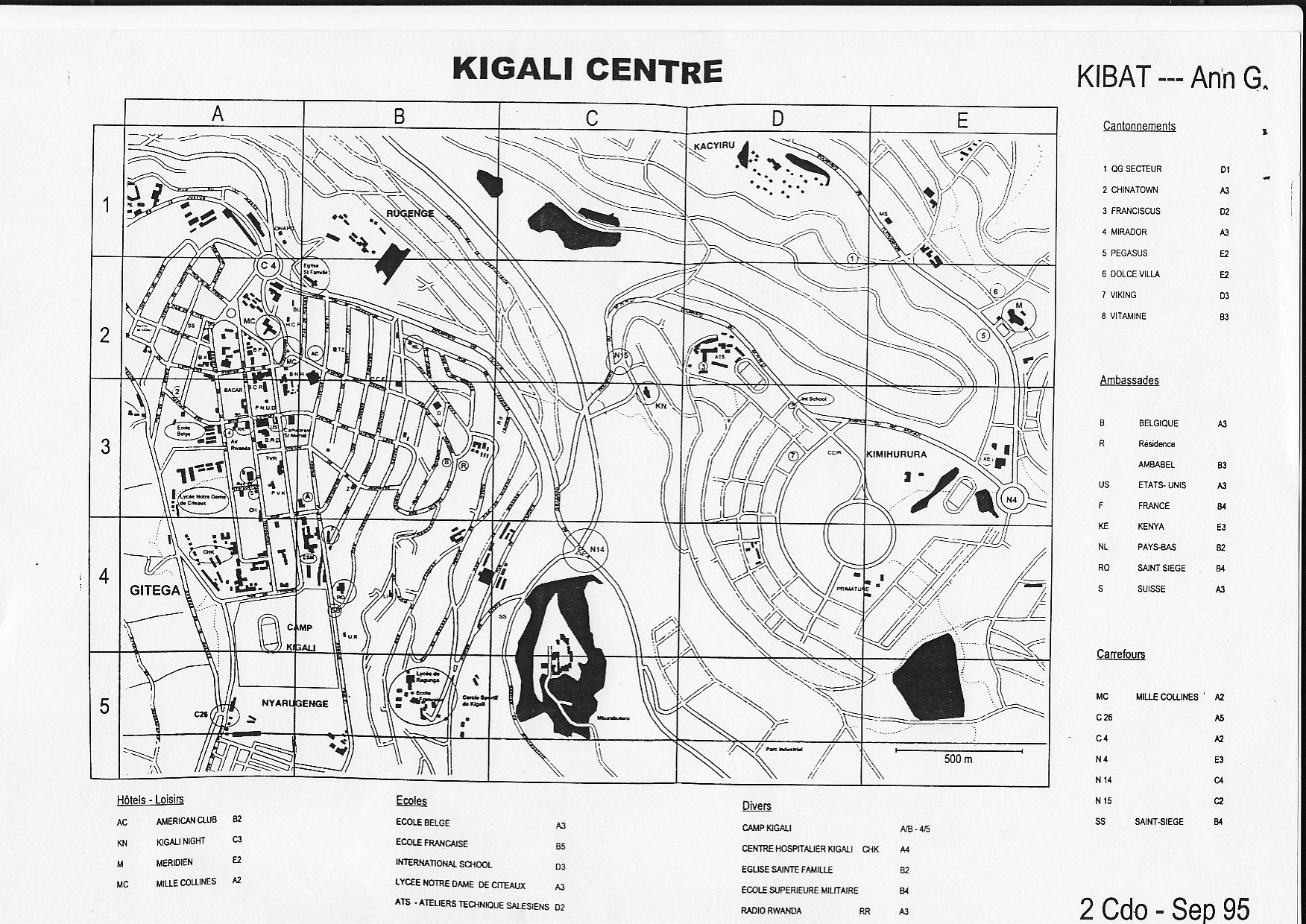 2. A Peacekeeping Force In the months leading up to the genocide, an international army was on the ground in Kigali called the United Nations Assistance Mission for Rwanda (UNAMIR). The Force Commander was a French Canadian named Roméo Dallaire. The general carried himself with military bearing, his muscular frame, trim moustache, and square jaw accentuating a marshal appearance. His central charge was to facilitate the implementation of the Arusha Peace Accords. This UN-brokered agreement outlined a transitional period during which the Hutu government was to yield positions of power to its rival Tutsi army. Some people referred to this one-year countdown, that concluded in a genocide, as the time of hesitation. General Dallaire was an idealist who attacked problems with missionary zeal, doing all in his power to keep peace and save lives. While in Rwanda, his catchphrase became "Peux ce que veux," meaning, "Where there is a will, there is a way." The commander was constantly on the hotline with his UN superiors in New York begging for more men and material. If the mission were to fail, it would not be due to the general's lack of trying. UN peacekeepers set up battalion headquarters at Amahoro Stadium in the Gasabo district of Kigali. However, the force proved inadequate, never empowered to take sides in the conflict. As General Dallaire once remarked, "We are to be neutral referees, not coaches, and definitely not players." Senior UN officials instructed UNAMIR to monitor, assist, investigate, and report. The prime rule of engagement dictated "not to fire unless fired upon." With this restrictive mandate, plus minimal troop allocation and ammunition, the United Nations Assistance Mission for Rwanda was doomed to failure. When Juvenal Habyarimana's plane was shot from the sky, any hope for a peaceful resolution died alongside the deceased president. Helpless to intervene militarily and relegated to a bystander role, UNAMIR was still able to rescue thousands of souls. General Dallaire personally negotiated a prisoner exchange between Paul Kagame of the RPF and Interahamwe warlords. He met face-to-face with the chief génocidaires. He asked one notorious warlord, "And what should my troops do if we encounter a vacant lot filled with hacked corpses? Should we report this to you?" The chieftain laughed. "If you have rifles, you can shoot the ravenous dogs." Dallaire later remarked that he "shook hands with the devil." 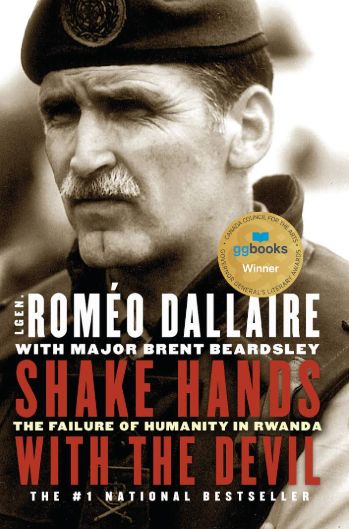
During the ninety days of brutal bloodletting, UNAMIR was also able to establish safe havens for internally displaced Tutsis. The Hotel des Mille Collines, later coined Hotel Rwanda, became a sanctuary for wealthy Rwandese and stranded foreigners. Although under siege for three months, 1200 hotel guests managed to survive the slaughter. In addition, twelve thousand Tutsis found refuge in Amahoro Stadium under the protective umbrella of UN peacekeepers.
3. Truce Talks The Rwanda Patriotic Front established a headquarters in the demilitarized zone north of Kigali in a place called Indake, a word that means cave. As commander of UNAMIR, General Dallaire often shuttled between opposing armies, forwarding messages and urging peace. During one such session, Dallaire addressed an assembly of RPF officers. Lieutenant Victor Kwizera happened to stand at the margins, hearing his words spoken in French. "Messieurs, thank you for meeting with me today. I have come with an urgent message from Colonel Theoneste Bagosora. He asks you, the RPF, to call an immediate ceasefire on all fronts. He says he is willing to stop hostilities and wants to negotiate a peaceful solution agreeable to all parties." General Dallaire paused and retrieved a letter from his briefcase. "Look. Here is a document that Colonel Bagosora has signed along with others from the interim government. I believe he is sincere. He agrees to stop fighting you if you stop fighting him." All eyes turned to Paul Kagame as he stood to respond in English. "General Dallaire, we do appreciate your effort. We all recognize your integrity and humanity in this matter. I have no doubt the colonel is sincere in wanting us to lay down our arms. However, a ceasefire is out of the question. You say the interim government will not fight us if we agree not to fight them? I have many questions for you. First, does Bagosora also agree to stop killing my Tutsi people? Does he agree to surrender himself as a war criminal? Are your UN peacekeepers able to compel the militias and Interahamwe to stop the slaughter of Tutsis throughout the entire nation—in all eleven prefectures?" Subdued cheers sounded from those listening to the words. The army leader continued, "I'm sorry, general, but we must reject that truce offer. There can be no peace in Rwanda until that evil regime of Hutu power is totally crushed. Every day of delay means the death of ten thousand more innocents." General Dallaire returned the envelope to his satchel. "I'm sorry too. You understand I am not the author of the note, but its messenger. I'm operating within the confines of my mandate. I'll pass your response on to the interim government detailing the reasons for your rejection." When the words ended, Victor noticed Kagame whisper to an assistant. Then the assistant spoke to three subordinates. Soon Victor was summoned into a small building. His captain spoke to him. "Here are your verbal orders, nothing in writing. You will exchange your uniform for civilian clothes and acquire a new identity card. You are identified as a newspaper reporter from Kampala, so speak only in Luganda or Swahili." "You are to accompany Dallaire to Amahoro Stadium attached to the rear of his convoy. You will gather intelligence as to the UNAMIR disposition, then report to Captain Sibangali at our Parliament stronghold. You will then carry messages back to this headquarters. Do you understand?" The captain hushed his tone. "Lieutenant Kwizera, be careful. The last officer assigned to this intelligence duty never returned." Victor saluted, then reported to the supply pavilion. He donned a set of city clothes: brown pants, a checkered jacket, and pointy shoes. "I look too tidy," he told the sergeant. The intelligence officer located a patch of copper-toned earth, smudging his face and clothes with handfuls of moist soil. As Victor approached the UNAMIR convoy, his captain grabbed his arm. "Hey, where are you going?" he barked. He then recognized his subordinate and sheepishly added, "Good disguise."
4. Amahoro Stadium General Dallaire's military transport sported flapping UN flags and matching door insignia. The convoy sped unmolested from the RPF headquarters through the Kigali suburbs to the gates of Amahoro Stadium. Victor's vehicle latched on to the official party and never paused along the route. Whenever a barrier arm was lifted, his driver tailgated through. The intelligence officer did provide false papers once inside, designating Victor as a newspaperman for the Kampala Monitor. The lieutenant played his part well, casually asking questions and discreetly probing every corner of the large facility. He mentally took notes, estimating ten thousand refugees camping upon the unkempt ball field and squatting in the bleachers. The sports palace did not appear super crowded. He knew the national stadium held a capacity of 45,000 spectators, so there was sufficient space to accommodate the mass of bodies. He figured the limiting factor was food and water, as well as sanitary and medical provisions. Victor spent a rainy night with a couple from the Gikondo District. Huddled with two kids around a small fire, the father told of their perilous escape from the Polish Catholic church. "We hid behind a wall looking on as the Interahamwe militia slaughtered one hundred parishioners inside the sanctuary. We've been sheltered inside this stadium for a month now." The traumatized mother could only sob during the conversation. In choking tones, the father informed Victor, "We lost all five of our children in the massacre. These two little ones you see are my dead sister's girls." In the morning, Victor loitered near the entrance of the UNAMIR offices. He managed to strike up a conversation with an English-speaking Ghanaian named Alban. Through an hour of conversation and clarification, Victor concluded there were about four hundred uniformed UN troops with a hundred more mzungu civilians. When Victor displayed his press credential, Alban mentioned the name Samantha Power, the American newspaper correspondent. "Would you like to meet her?" Alban asked. "Could you make that happen?" Victor responded with enthusiasm. Alban answered, "Let me talk to my colonel." After hanging around the military entrance for an hour, the Ghanaian returned. "It's your lucky day. In a few hours, General Dallaire will hold a press conference. Here, I got you a badge. Ms. Power will be there too." As Victor pinned the badge to his rain-soaked overcoat, Alban reached into his pocket and handed his new friend a Ghanaian-flag pin. "I know those militiamen will kill you if they get their hands on you. Maybe this pin will afford you some protection." "Why are you doing this?" Victor inquired with amazement. Alban gazed into the distance, looking upon the mass of suffering exiles. "Understand, I cannot do much. This rifle does not even have a bullet in the chamber." He glanced around, "but don't tell anybody." The foreign soldier put his hand on Victor's shoulder. "I'm in your country to help your people, yet I myself am helpless. Today, this hour, I can help one man to survive this madness—and I'm looking at the man." While they were speaking, several large limousines pulled to the front of the stadium gate. The Presidential Guard checked the credentials of several foreign correspondents before allowing them entrance into the stadium. With them was a French politician named Bernard Kouchner. Victor followed this group into a crowded briefing room, noting journalists from Africa, Europe, and America. Samantha Power seemed to hold an elevated status among this press corps. General Dallaire opened with the following statement: "Good afternoon. Today is May 14, 1994. Standing to my right is the honorable Bernard Kouchner, who will deliver a few remarks. As you know, Doctor Kouchner is the minister of humanitarian action from France and a founder of Médecins Sans Frontiéres. He is in Rwanda to secure the release of civilians trapped here in Kigali. Doctor Kouchner, the floor is yours." "Thank you, General Dallaire, for your service during this human catastrophe. I have seldom met a humanitarian of your caliber and devotion. "Most of you know I have just returned from a radio station interview. While in the studio I appealed repeatedly for the carnage to stop, pleading with both the RPF and the interim government. I am hoping that peace will come. I will do all I can to make that happen. I'm now working hard to evacuate one hundred orphans by airplane to my home country of France." He paused. Samantha posed a question. "What is your impression? The genocide has been going on for fifty days. Do you see an end to it?" "I have spoken with both sides. Neither seems willing to call a cessation of hostilities. Without outside intervention, I see little possibility the war will end until one side or the other capitulates." One reporter shouted out, "And who do you hope wins the war, the Rwandan government or the rebels?" Doctor Kouchner's face reddened. "I am not in a position to choose sides. Humanitarians don't do that. Sans Frontiê:res means without borders and we remain fiercely neutral. That's how we strive to be honest brokers. We urge peace on all sides, appealing to the goodness inherent in all men." He paused. "My time in Rwanda is short. I'm returning to France tomorrow, so I must leave the stadium now." "Where are you going from here?" another reporter shouted out. The doctor replied, "The interim government has granted me safe passage to the RPF compound at the parliament building. My goal is still to gain the release of civilians trapped in Kigali, and the rebel army must be part of that equation." With those words, he handed the microphone back to General Dallaire, donned a bulletproof vest, and exited the briefing room flanked by three bodyguards. With microphone in hand, Dallaire asked, "Are there any more questions?" One reporter shouted out, "General Dallaire, how hard is it for you to remain in your role as chief peacekeeper? Are you ever frustrated or depressed?" The general's response was brief: "We must persevere. Despair is the sin that cannot be forgiven." An attendee wearing a clerical collar waved his hand. "Sir, I'm a priest here in Kigali, Tutsi by birth. I'm sad to say that most in my parish are dead or missing. Several have found sanctuary in this sports stadium. General, I have heard that you are a man of the Catholic faith. Here is my question. How could you still believe in God after the evil you have witnessed in my country?" A question about God and His existence seemed out of place in such a setting, but the general was not confounded. He spoke slowly. "I know there is a God because here in Rwanda I shook hands with the devil. I have seen him, I have smelled him, and I have touched him. I know the devil exists, and therefore I know that God must also exist."
5. Isabelle's Testimony After the general's briefing, correspondents clustered around a Hutu refugee named Isabelle Kabano. She was a guest of Samantha Power and wanted to report her story of RPF atrocities. Victor felt animus in his heart and a sinking in the pit of his stomach. He bolstered his courage with self-talk, "I'm a reporter now—even if under a false document. Let me try to be objective as I hear what this double-tongued woman has to say." Isabelle sat at a table with several pages of notes at her fingertips. At a cue from Samantha, she began to speak in French. Victor stood next to a man who interpreted the words into English. "I'm here to tell my personal story. I will not speculate but only report what I have seen with my eyes and heard with my ears." She paused with a grimace, "And smelled with my nose." "I am twenty-four years old, a graduate of our National University, and an employee of the African Women's Alliance based in Belgium. I have traveled widely, speaking in both Kinshasa and Brussels. For three years I have organized women's cooperatives, mostly in Byumba Prefecture. Helping rural women is my passion. My hometown is a village called Cyumba, north of Byumba City. Here has been my family's home for three generations. "Since the time I was a little girl, I have realized there has been ethnic tension in my country between my Hutu family and my Tutsi neighbors. The ethnic polarization diminished for a time in the 1980s, but then the hatred flared with a vengeance. "I first became aware of the Rwanda Patriotic Front in 1990 when they broke a peace agreement and sent an army from Uganda across the frontier into Byumba. I was at university at that time and understood the RPF to be foreign troublemakers dedicated to overthrowing my national government. As a patriotic Rwandan citizen, of course I opposed this force. "These incursions were small-scale until February 1993, when a large army invaded my country. Within six months, a considerable slice of Byumba and Ruhengeri Prefecture was under the domination of these foreign barbarians. The story of RPF occupation is not well known, and I want to tell you of my experience, hiding nothing. "I was organizing women in the countryside when my sister burst into the meeting room. She pulled me aside and said our mother needed me immediately. I rushed home to find my mom wailing in grief. I learned that an advance guard of the RPF had just murdered twelve in her family. I knew the dead men, dead women, and dead children by name. They were not merely statistics to me. Their deaths were undeniable, and the perpetrators were identified positively as RPF soldiers. "There was little time to pack our belongings and flee south to Kigali. I saw with my eyes thousands of people, mostly Hutu, packing the roadways in desperate flight. On the way through Byumba, I saw the mangled corpses of ordinary people. My older brother told me they were victims of hand grenades. I saw one building on fire and smelled burning human flesh." Her voice wavered. "Yes, I am a witness of this Hutu genocide—my eyes, my ears, my nose." "My extended family of twenty spent three nights in a makeshift camp, without food or sanitation. I spoke with many survivors of this RPF rampage. One old woman told me how poor villagers were lured with a promise of salt and matches, then smashed in the head with old hoes. A rural schoolteacher explained how Tutsi soldiers would gather Hutu families inside a meeting house with a pledge of protection and then proceed to slaughter all inside. 'We have a sick joke,' he told me. 'Kwitaba Imana means to die. Kwitaba inama means to attend a meeting. For my neighbors, they turned out to mean the same thing.'" Victor appreciated the play on words but could not tolerate the slander against his Inkotanyi Army. "How dare you? That can't be true," he shouted out. The entire press corps turned their heads to stare at the outspoken observer. "It's very true," said Isabelle in English. "These eyes have seen it." "There must be some explanation," raged Victor. "Renegade troops? Self-defense? Provocation of some sort?" He found himself the center of unwelcome attention and so shut his mouth. This RPF fighter did not want to blow his cover as a newspaper reporter. Victor caught hold of himself and apologized. "I'm sorry, Isabelle. I do not doubt your word. I find it so hard to be impartial in these matters because my mother and father were killed by Hutu génociders." Isabelle replied, "I accept your apology. I have many Tutsi friends in Kigali, and I know many of them have suffered losses just like me. I am speaking out today to let the world press know that one side is not completely innocent and the other completely guilty. Both sides have committed atrocities." She took her eyes off Victor and gazed at the correspondents. "Many of you reporters may wonder why there is such a visceral hatred by some of us Hutu toward the Tutsi. I do not condone it nor justify it, but I understand the source of such hatred. My point is this. Every human life is of equal worth. Therefore, every human murder is an equal crime. We must hold accountable all those who wantonly kill, whether they be Hutu or Tutsi." She stood up from her chair. "Thank you for your attention." Victor exited the room as Samantha and Isabelle began to field questions about what they termed a possible Hutu genocide. The RPF lieutenant was too partisan to abide by such conjecture.
6. Parliament Stronghold Victor remained in the stadium for two more nights. He witnessed three artillery rounds exploding onto the grounds, killing a few, maiming a dozen, and discomforting all who cowered inside. Alben told him the Rwandan army lobbed these occasional shells to keep occupants in a state of terror. "You never know when one will have your name written on it." On May 17, a nondescript mama approached Victor and passed him a sealed note. He was directed to follow her out of the stadium. Once outside the gates, two men jumped from the shadows. Both wore militia pants and bright colors. One carried a wooden replica of an AK-47, and the other swung a machete. Victor tensed, taking a step backward, but the escort whispered, "Stay calm. They're with us." "Put this on your head," growled one of the men to Victor. As he donned the pink ball cap, he noticed his female escort now wore one of the same style. The four walked several blocks, weaving with ease through road barriers, then entering a café near the National Council for Development. "We'll wait here for a while," said the woman. "Drink the beer, laugh, and look like a patron." Victor swayed to the lyrics of Simon Bikindi, oftentimes eliciting a twinge of discomfort. The song was called "Intabaza," The Alert, a homage to the Hutu as the "Farmer of Farmers" and an invective against the Tutsi as "Cattle Breeders":
After forty minutes of such music, a burst of gunfire rang out from the street. Five RPF soldiers crashed into the café, pointing their weapons at the foursome. The soldiers rushed them to the far side of the street. Bullets zinged and ricocheted as the group of nine leapt behind a concrete barrier. Once inside the compound, Victor sought out Captain Sibangali. After providing a briefing to his superior, he inquired about the RPF bastion. "Sir, I've walked around this place a bit. It's impressive. How did our army ever manage to occupy such a prime piece of real estate right here in the center of town—the parliament building, no less?" The captain was happy to provide details. "It's a fascinating story for sure, maybe a sign that God is on our side. "We have to begin with the events of last August. As part of the Arusha Accords, Habyarimana agreed to provide our RPF with a Kigali garrison. This concession was to facilitate direct talks between the two sides. Our chief negotiator is Colonel Alexis Kanyarengwe, but there are others as well. Our army was permitted to shelter one battalion of soldiers to protect these few dozen politicians. "It wasn't until December when Paul Kagame was able to secure this particular parcel of land. His was a brilliant choice. We're located on a hill in the heart of the city overlooking two arteries leading in and out of town. Can you believe it? Without a single shot fired, we gained three city blocks containing the National Assembly, a hotel complex, and a conference center! "Did you know the Presidential Guard is headquartered just across the street—near where we snatched you from that café? I guess they wanted us close by to keep an eye on us. In any case, they were fools. Maybe they saw the flimsy protective fence stretched along the roadway and considered us easy pickings. Did they think we Inkotanyi would sit on our hands waiting for them to storm our perimeter? "From the moment we arrived after Christmas, we've been working non-stop, digging and building. We now have full trenches with roofs to protect us from artillery fire. We have concrete barriers, bunkers, caverns, and a complete underground complex, invisible to outside eyes. We've infiltrated a hundred new men and truckloads of weapons. "The enemy has attempted to breach our perimeter on six occasions, each time with hundreds of men. Yet we remain in place. Every time they attack our garrison, we counterattack and always get the better of them. I think the enemy is becoming desperate. They know when the main body of Inkotanyi links up with us, they are defeated. And if we defeat the Presidential Guard, Kigali must fall. And once the capital capitulates, the entire nation will follow." Victor sat in awe listening to his words. "So, when will the main army arrive?" "Of course, we don't know for sure. I've spoken with some of the UNAMIR troops. They tell me the Rwanda Army is discouraged at their losses and demoralized by incompetent leadership. Others tell me the Hutu-power regime is so accustomed to killing unarmed civilians they can't handle real soldiers with real weapons. I don't know. Another man told me Kagame is delaying his full invasion of the city until he builds up sufficient strength. Every day, more and more young men are joining our side." After an hour of conversation, Victor told Captain Sibangali, "I'm ready to return to the RPF basecamp. Just give me a good meal, a good sleep, and a clean uniform, and I'll be off in the morning." The captain smiled. "That won't be necessary, lieutenant." He handed Victor reassignment orders. "You'll get the uniform tomorrow, but for now you're part of this battalion." 7. Independence Day A month passed with non-stop street skirmishing. Artillery shells crashed into the compound, return fire rattled from the trenches, and civilian bodies piled up along the avenues. Victor breathed in the stench of mud and blood. Every few days he infiltrated the neighborhood to assess the situation, write reports, and pass summaries up the chain of command. On one occasion, Lieutenant Kwizera led a convoy of vehicles to Amahoro Stadium to facilitate negotiations. The Interahamwe had communicated a "safe route" that the RPF was required to follow. At one intersection along the convoy route, the roadbed was strewn with corpses—the remains of men and women deliberately placed from curb to curb. The driver of Victor's vehicle spoke to him, "Sir, what do you want to do?" Victor glanced through all the windows, not seeing a militiaman in sight. "This is psychological warfare. The Interahamwe is under orders not to confront us, but this is a debased game they like to play." "Yeah, I know," said the driver. "I've seen this outrage before." Victor motioned for the driver to exit the 4x4 and help with body removal. Six other soldiers assisted while a dozen more stood guard with rifles at the ready. Victor told his driver, "We have orders to get to the stadium immediately. There's no way to do this job in a respectful manner." Clearing the roadway proved to be a gruesome task. The two men hurriedly pulled lifeless bodies by the legs and set them by the roadside. The young driver fought back tears as he carried out his duty. "This woman could be my mama." In the coming weeks, Victor looked down at the city from his rooftop perch. Day and night he saw thousands of civilians fleeing the crumpled capital: women laden with bags, men pushing carts, and boys maneuvering overburdened bicycles. An occasional car honked its way through the chaos. It seemed the entire city was being drained of its population. In mid-June, fighting around the RPF enclave rose to a fevered pitch. The boom of big guns echoed throughout the fortified compound. Victor was fearful. "Maybe they'll break through this time." Then he realized the bulk of explosions resounded from the east. "It's our troops," he shouted to anyone who could hear over the din of the racket. Within an hour, celebration replaced fear. The Alamo of Kigali had been relieved. When Victor finally passed through the city, he observed work parties loading human remains into pickup trucks. "They're stacked like so many bags of beans," he said to himself. He noted officials searching pockets for identification and taking pictures of the cadaver faces. At one pickup site, he spotted two old friends: the photographer Pierre Gahutu and his fellow lieutenant, Bernice Mukamana. Victor could only stop for a moment since face masks and rubber gloves were required to protect from stench and disease. After mutual acknowledgement, Victor asked, "Bernice, where are you taking all the bodies?" She looked at him. "I'm numb with shock, my friend. I expected to see death, but not on this scale. We are carrying these genocide victims to a collection facility in Gasabo district, to a place called Gisozi. For both sanitary and ethical reasons, the removal of human remains must be priority number one. We've recruited a thousand soldiers and volunteers; still, this difficult business will take weeks to complete." She turned her head away. "Sorry, Victor. I can't interrupt my work. You know my name. Please, look me up when this dead city returns to life." With that, Bernice exposed the face of another victim as Pierre took his one hundredth photo of the day. The date was July 4, 1994, a day that Rwandans would mark as "Liberation Day"—a day of celebration, remembrance, and reflection for every Rwandan for all time. By the time every street, building, and waterway was cleared of human remains, 250,000 former citizens of Kigali were interred at the Gisozi Genocide Memorial. This huge number represented one-quarter of all genocide deaths in the Land of One Thousand Hills. 8. Onward to Gisenyi The Rwanda Patriotic Front occupied the heart of Rwanda, but resistance lingered in the limbs. A portion of the army moved south to Butare, but the bulk moved east into Gisenyi Prefecture, home ground of the Hutu-Power movement. Victor arrived in Gisenyi on July 11, and a week later all resistance collapsed. Many genocide perpetrators and enablers fled across the international border into Goma, Zaire. Victor was part of an Inkotanyi battalion that headed south along Highway 7 toward Kibuye. His right-hand man turned out to be a corporal named Joseph Mugemana, a college graduate and a crack marksman, who also called home the nearby town of Kayove.
End of Story 3  > > | ||||||||||||||||||||||||||||||||||||||||||||
Story Four ~ April 6 to 23, 1994 ~
1. City on a Hill When Belgian colonizers first acquired the East African territory of Ruanda-Urundi in 1920, they established a new capital, naming the city Astrida in honor of Queen Astrid of Belgium. This was to be their new Jerusalem—a city on a hill.  Upon independence in 1962, the Rwandan capital moved to Kigali, and the government renamed the town Butare and reformulated its well-constructed secondary school as the National University of Rwanda. By 1994, Butare had become the intellectual hub of all Rwanda, a watering hole for both democratic liberals and Hutu hardliners. Along with the national university, Butare boasted a large seminary, a scientific research center, and an arboretum. The National Museum of Rwanda lay just south of the city. At the time, the leader of the Butare Prefecture was Jean-Baptiste Habyalimana, the sole Tutsi among ten regional governors. As a perceived refuge for terrorized Tutsis, thousands flocked to Butare to escape ethnic violence elsewhere. For several days in April 1994, it appeared Butare might sidestep the holocaust that had engulfed the rest of Rwanda. 2. Walking the Tightrope Francis Mutabaruka was a renowned professor at the National University and an eminent scholar of Rwanda's pre-colonial past. Doctor Mutabaruka's passion was to discover, catalog, and publish documents concerning his nation's royal history. The professor conducted the bulk of his research in nearby Nyanza, the kingly capital of old Rwanda. He counted among his friends Rosalie Gicanda, surviving widow of Mutara III, the country's last mwami (king). Francis Mutabaruka was an ethnic Hutu but eschewed politics, proclaiming a love for all things and all people Rwandan. Pascazia Kubwimana was Francis's former student and present wife. As a scholar in her own right, Pascazia managed acquisitions at the newly built ethnographic museum. Francis and Pascazia were a well-respected couple within the Butare academic community, conservators of a celebrated past and advocates of a peaceful future. As the nation devolved into ethnic chaos, Francis and Pascazia walked a tightrope between compliance to authority and resistance to injustice. On the evening of April 6, the fraying rope began to unravel. The couple had just turned off the house lights when a knock sounded at the front door. Daniel Mugisha, vicar of the Anglican Church, greeted them with concern etched on his face. "Have you been listening to the radio?" "No," Francis answered. "Please, sit down and turn it on. It appears President Habyarimana has been killed." Pascazia gasped, "Oh, my God! What now?" Francis turned up the broadcast loud enough for all three to soak in the startling words: breathless updates of a deadly jet crash punctuated by hate-filled vituperation against Tutsis. Awakened by angry voices, little Beatrice wandered into the parlor dressed in her nightclothes. "Mommy, is there anything wrong?" Pascazia scooped up her four-year-old and carried her back to her bedroom. The two men were left alone to talk. "What do you think?" Daniel asked. "You're an expert on all things Rwandan." "That may be true," Francis replied. "I know about the past, but I avoid current politics. I keep my mouth shut and my head down. I make it a point not to attend rallies. I don't want to make enemies among the politicians. You know I have to be extra careful since Pascazia is Tutsi." "I fear the worst," the vicar lamented. "Can you hear the screams for revenge coming through the radio? Those boys are serious. The president's death may provide the spark that will explode this nation." "No, I think we will be okay here in Butare. Our university community is solid, and our citizens are reasonable. Plus, Habyalimana is a strong governor and a good man. He would not allow what's been happening in Gisenyi to occur here in Butare." The vicar looked in the direction of the child's bedroom. "You may be right, my friend, but it would be wise to plan as if you were wrong. We are close to the frontier of Burundi. Your wife has family there, right? Maybe tomorrow is a good day for Beatrice to visit her grandmama in Bujumbura." As he rose from his chair to alert others in his parish, he added, "I thank you so much for your participation last Sunday. What a family! You recited the words of the Easter story, Pascazia sang the songs, and I noticed Bea dropping coins into the offering box." He studied the professor's anxious face. "I want to see you again. You and your family are in my prayers." After the door closed and Bea had returned to dreamland, Francis and Pascazia continued to monitor events. The newscaster from Thousand Hills radio droned continually, "Stay at home. Make no movement. We are setting up roadblocks and checking ID cards." Francis attempted to telephone friends, but after thirty minutes of frustration, the couple settled into conversation. "I have a bad feeling about this," Pascazia began. Determined to maintain a positive outlook, Francis rejoined, "I think we can survive even this if we all stick together." With pleading gestures, Pascazia replied, "Darling, not this time. I've never heard government rhetoric so fierce or seen Pastor Daniel so agitated. Please, let's send our little Bea to my mom. Our baby is our future, and I could deal with the present if I knew she were safe." After a pause, Francis responded. "The radio reports Cyprien Ntaryamira also died in the plane crash. Do you think Burundi will be a safer place with their president murdered?" "A little safer, yes. It's true that the people of Burundi harbor the same tribal hatreds as we in Rwanda, but their government is not so proficient as a killing machine. Plus, the propaganda Burundian Hutus hear over their airwaves is not as virulent. I do believe it will be easier to hide and to lay low." "Then our daughter must cross the frontier into Burundi. I'll make the arrangements." Looking into her moistened eyes, his voice quivered. "And I think you must go with her and live with your mother for a while." "No," she protested. "My place is with my husband. I promised 'til death do us part,' and I will keep that vow." A minute passed before Francis spoke up again. "I have another concern. Maybe you can help me with it. I've noticed Interahamwe militia hanging around the residence of the queen dowager. Rosalie Gicanda might be in immediate danger. She wouldn't agree to flee to Burundi, but perhaps she can find refuge on the museum grounds." "Let me talk with my boss. Maybe the old lady could be our guest for a season. She might find comfort among our other old relics." The hour was late when the exhausted couple fell asleep in each other's arms. 3. Flight Across a Frontier The next day did not bring violence to Butare but increased tension. In this traditional society, everyone knew everyone else's business: their workplace, their social status, and especially their ethnic identity. As Pascazia walked onto the museum grounds, she observed a handwritten notice obscuring the welcome sign: "Stay home. Closed until further notice." Unlocking the door, she noted Hutu employees huddled in tight knots, not quite threatening, but surely scowling at their Tutsi co-workers. She spoke privately with the museum director—a Tutsi man—and received permission to smuggle Rosalie into a museum vault. "After all, she is indeed a national treasure," was his matter-of-fact response. Pascazia got word to Francis, and soon the queen dowager reclined on a royal sofa in a cluttered storage basement. Five elderly attendants looked after her personal needs. With this regal relic now secured and with her own workplace shuttered, Pascazia returned home to prepare her daughter for a cross-border escape. After a lifetime in Butare, Francis held deep connections within the local power structure. He prevailed upon a former student, now police captain, to risk his badge in an attempt to escort refugees into Burundi. The captain explained how the province was in turmoil and how the Kigali Crisis Committee was issuing one set of orders, while the governor in Butare was busy countermanding them. Army troops and local police were at loggerheads, striving for supremacy. Francis managed to hire a taxi driver to carry five prominent refugees south to the border checkpoint along the Kanyaru River. To pass through a gauntlet of Rwandan soldiers, escapees would require documents, advocates, bribes, and especially luck. After a full day of planning, two policemen accompanied Francis as he headed twenty kilometers south along National Highway One. The little girl on his lap asked, "Where are we going, Daddy?" "To your grandmother's house," came the reply. "Don't you want to visit with her and your aunties?" "Are you and Mommy going with me?" came the little voice. "No, you'll have to be a big girl. Your mom and I have work to do at home." After a pause for thought, Bea asked, "Daddy, am I Hutu or Tutsi? All the kids in nursery school are asking me that." "You are Rwandan, my child, a daughter of Imana. Always remember your true identity. Always be proud of who you are." Francis intuited he may be speaking his last words to his daughter. The professor then turned his eyes to the window, stifling tears. He shuddered as he saw a flood of rural countrymen trudging southward, most laden with heavy packs or pushing carts. Overloaded bicycles competed for road space. Cows and goats hustled along an adjoining footpath. Traffic slowed, then stopped. Taxi passengers maintained a somber silence as horns honked, goats bleated, babies wailed, and an occasional gunshot echoed in the distance. Among the throng, Francis observed a scattering of FAR soldiers dressed in khaki interacting with local police in blue. Each group seemed to be shouting contrary orders. Bedecked in the national tricolor of red, yellow, and green, Interahamwe militia danced and flashed their machetes. A few hundred meters short of the frontier, the eight-passenger vehicle began to rock from side to side. Was the crowd trying to flip it over? The door flung open, and an army officer stepped inside. The Butare police officials spoke calmly with the soldier, and soon all passengers emptied the bus undisturbed. They huddled at the roadside while contending authorities bargained for their safe passage. Finally, the group of eight began marching toward the bridge. "We are going to negotiate with the chief captain of the border guard," explained the police captain. The document check turned into an hour-long affair as hundreds idled in a pouring rain. Policemen held onto their sidearms, while soldiers grasped rifles. All documents were checked and then double-checked. Those with Tutsi IDs paid double for their exit stamp. Francis noted hundreds of dislocated Rwandese milling about in disorganized clusters. Suddenly automatic fire broke out, and the massive assemblage began a spontaneous stampede toward the checkpoint with men pushing, children flailing, and women screaming. There was more gunfire, this time leveled at the crowds. But it proved impossible to halt this crush of desperate humanity. The undermanned checkpoint was soon overrun. Francis stuffed his pockets with documents, then clutched Beatrice, pushing his jacket over her head. "Close your eyes, my little Bea, and be brave." Soon he was swallowed up in a human tidal wave. As the masses funneled toward the two-lane bridge, the human crush became a nightmare of compression. Several bodies lay on the ground, trampled or shot. Impotent barricades were shoved aside, and military vehicles overturned. Several refugees carried weapons and overwhelmed the Burundian guards. The multitude began flooding into the Burundian border town of Cyendajuru. Francis overheard one machete-wielding militiaman remark to his comrade, "Too bad these inyenzi have escaped into Burundi. We should have killed them all, but at least our homeland is free from these Tutsi vermin." The situation remained chaotic as some groups dashed for the woods, some continued down the pike, while others set up camp in open fields. As planned, Francis hooked up with his brother-in-law at a furniture store on the far side of town. He handed over Beatrice to her two aunts along with jewelry, cash, and a note from Pascazia. He spoke to his daughter, "I know that you are so good at make-believe. For a little while you must pretend that Aunt Sonia is your mama. Okay? Daddy will come to get you as soon as he is able." The compliant child buried her face into Aunt Sonia's bosom. After parting words and an embrace with each of his in-laws, Francis assessed the situation. He figured an abrupt departure would be less traumatic than a prolonged farewell. He spoke to Pascazia's sister, "It's better that I return home now. This rainfall and chaos are an advantage for me. I don't think I'll be stopped once I'm on Rwandan soil. In any case, I have my Hutu ID, faculty papers, and a little cash to grease the way. Goodbye, my friends. I hope to see you all again soon." He was correct in his escape assessment. By chance he ran across his police captain near the Rwandan checkpoint, one of the few people walking north rather than south. A few more stragglers joined his march. He eventually hopped in the back of a police truck, and just after midnight Francis arrived back home. Pascazia sat in the darkened parlor, unable to sleep. The two talked for a while. Relief brightened her eyes as she learned Bea was safe in the arms of Aunt Sonia. The news was less bright for those remaining in town. Kigali authorities had learned of the frontier chaos and were planning to dispatch an army battalion to occupy the defiant southern province. Pascazia sighed, "Let's get some sleep. Daniel will be speaking at church tomorrow, and we need to hear what he has to say. I also want to speak with my women's group." Under her breath she added, "I may not be seeing them again." Her final words elicited a groan of resignation from her bone-weary husband. 4. Fearful Flock Just one Sunday after Easter, their familiar universe had grown strange. As Francis and Pascazia walked onto church grounds, they glanced at scowling officials scribbling on notepads. Francis whispered, "We shouldn't be here. The radio said we should stay at home." His wife responded, "But look, the police are permitting it—at least for now." The cavernous church space was only one-quarter filled. Handshakes with Hutu friends seemed cold, while with Tutsi intimates, the grasps lingered warm and long. Their previous week's greeting of "Christ has risen" had been replaced with "Christ, what shall we do now?" Pastor Daniel presented two short messages. The first sought to address the pervasive atmosphere of dread among his Tutsi parishioners. He read the comforting words of Isaiah 43:
After minimal elaboration, he then read verses written by the beloved disciple as found in First John 4. These words he aimed at his Hutu brothers and sisters.
As a group of women regaled the church with a song of Imana's love, the vicar locked eyes with Manasseh, the vice-mayor and boss of Hutu Power. Daniel studied his stern face as he inscribed notes and counted attendees. He spoke to himself, "Do these words of Scripture have any impact at all upon my one-time friend?" He then looked upon his anxious flock, so bright and colorful in outside apparel but so anguished in inner spirit. He considered the line he was treading, at once proud of his people's courage yet fearful for their safety. He dare not stir up unnecessary trouble for his bene data, children of the father. Daniel had considered calling a parish-wide meeting to discuss the deteriorating situation but decided against it. He knew government informants hid in his flock and so reckoned covert action would be his best course. As members dispersed, he embraced a few men and discreetly invited each to his house for a luncheon. On the walk home, all Pascazia could say was, "My friends are so frightened. What are we going to do now?" All Francis could reply was, "We'll have to remain brave, take one day at a time, and trust God for wisdom." 5. Sheep in the Midst of Wolves The drenching rain at four o'clock in the afternoon kept the roadways clear of most pedestrians. As Francis avoided puddles on the muddy road, two soldiers approached him. The well-known professor was compelled to produce his ID card. He explained to the armed men he was en route to the university to prepare lessons. With an air of suspicion, they allowed him to proceed. Near the Anglican Church, he was stopped once again, this time by Interahamwe militia. One of the youths, recognizing his former professor, smiled at him with indulgence. "It looks like you're a few hours early. Go right ahead." Francis didn't know what to make of these unexpected words. After setting aside his umbrella and drying himself with a towel, Francis entered the parsonage of Pastor Daniel. As he looked around the dim room, he recognized six of his longtime friends, four men and two women. The group sipped tea and spoke casually of family and work, steering clear of politics. As five o'clock approached, two more men joined the luncheon. The storm outside raged, the iron-sheet roof percussing like kettle drums. Finally, the vicar spoke up, "This is good weather for us to meet. We can shutter the windows, and this racket will hide our voices. My brothers and sisters in Christ, I ask each of you to make a solemn vow to me, to each other seated here, and to God in heaven. You must promise not to share with any soul the conversation that will now take place. If you cannot guarantee this, please leave this room now." Not one person rose from their chair. The nine Hutu participants held hands and prayed. Each promised before God to stay faithful unto death. Daniel continued, "Christ compels me to love all my flock—both Hutu and Tutsi sheep. I know you have been following events over the radio. Our country of Rwanda has gone mad. The devil has taken charge. Believe me. The hills are awash with blood. It's an absolute fact that thousands of Tutsis are being rounded up every day and killed. On the part of our leaders, those numbers are not a regretful admission but a prideful boast. Hutu Power spares no one—man, woman, child. And even if you are a Hutu who shelters a Tutsi, you too may be killed. And it seems UN peacekeepers can do nothing. All French and Belgian troops have fled our country. We are at the mercy of godless killers. I'm informing you of this perilous time because I'm asking you to participate in actions that may lead to your death as well as the death of your family. You must know the risks before you can freely volunteer your service." Daniel paused. "Please, my friends, I need your help to rescue as many of God's children as we can. We will do this in secret, with shrewdness, and in the power of the Holy Ghost. Will you help me?" The group was in tears as Daniel concluded his plea. Rosa, the humble wife of a brick maker, responded with Scripture, '"He who seeks to save his life shall lose it, and whoever shall lose his life for the sake of the gospel shall save it.' Pastor Daniel, what can we do?" He spoke in a low voice. "We will not meet again as a group. It's too dangerous. Remember the faces here as people you can trust, but don't seek out each other's company. I suspect each of you will be followed. I will call upon you as needed, and please come to me if you think we can save members of our flock." With bubbling emotion, Francis then asked a question tugging at his heart, "Pastor Daniel, I've been a resident of Butare my entire life and a professor for the last twenty years. How can this be happening? Our beautiful city hosts the National University. Our biblical motto is 'Let there be light.' Butare is the center of enlightenment for all of Rwanda, its intellectual capital. I just don't understand how this evil can permeate a city like ours. Can you explain it?" After a thoughtful moment, Daniel replied. "Yes. Butare is indeed the center of learning. For thirty years, the light has been shining in our proud city. But now the light is growing dim. Soon the whole nation will plunge into darkness." Having said this, his face sparked with recollection of a Bible verse. He opened his thumb-worn volume and read from Matthew, chapter 6:
He added, "If Butare is turning black, the darkness in Rwanda will be double black." The vicar then solemnly closed his Bible, clapped his hands, and proclaimed, "It's now time to eat, my friends. I just got word that our guest of honor has arrived. You all know Vice Mayor Manasseh?" Their eyes popped large at the mention of a local leader of Hutu Power. "He's here to explain to us Hutus how we must behave in these times of trouble. Didn't you know that was the purpose of our meeting?" he said with a wink. "Please give him your courteous attention." The group rose as the vice-mayor joined their company. They feigned interest in his racist conversation, then settled down to an excellent meal of tilapia fish, rice, beans, and fruit. After the meal, the vice-mayor stood to deliver his invective against the Tutsi tribe. He passed out copies of the Hutu Ten Commandments and read through each of them, emphasizing commandment number eight: "Hutus must cease having any pity for the Tutsi." He expounded, "I know you have all been raised Christians and believe that every man is your brother. I am not speaking against that morality. What I am telling you is this: the Tutsi is not your brother. He is not even human. He is an insect. Listen to your government; listen to your leaders; listen to your Hutu hearts." When he concluded his long-winded remarks, he asked the group to take a Hutu Power pledge. Pastor Daniel interrupted, "Brother Manasseh, we took a pledge just before you arrived. We also commit to being faithful to each of the Ten Commandments." The vice-mayor flattered himself at his effectiveness. He glanced at his watch. "Thank you, Vicar. My job here is complete. I have a long evening ahead of me at army headquarters. I'm glad I can count on each of you to be a loyal Hutu." When the doors were locked, the vicar smiled slyly. "We shall be faithful to the pledges we made earlier and will honor the Ten Commandments of Moses." He added, "Before you go, fold that paper of the Ten Commandments and insert it next to your ID card." The good vicar sent them on their way with a reading from Matthew 10. "Behold, I send you forth as sheep in the midst of wolves: be ye therefore wise as serpents, and harmless as doves." Professor Mutabaruka walked home without incident, not noticing a young man arrayed in cartoon colors followed his every step. 6. Roadblock Encounter The week crept by slowly. Most news was dark, but Pascazia did get word that Beatrice had arrived safely in Bujumbura. She focused on that single bright spot. The university and museum had both closed, and the once-crowded streets appeared void of cars, bicycles, and casual pedestrians. Pascazia perceived the balance of authority was shifting away from local police and toward FAR soldiers. With doors locked, lights out, and noise subdued, the couple spent most hours of the week in the confines of their home. Francis did walk to the market on Wednesday, where he encountered Manasseh at a roadblock. The vice-mayor was accompanied by several mayibobo—young street thugs with weapons. Manasseh pulled Francis aside. "Professor, you claim to be a loyal Hutu, right? The hour has come when you must fully support your tribe. Your wife is Tutsi, am I correct? Understand this. Make no mistake. If there is a knock at your door, you must hand over Pascazia. It's the law. I warn you now. If you hide your wife or run away with her, you will be considered an icyitso (accomplice) and meet her same fate. That will be your choice. I'm your friend. That's why I'm telling you this." Dumbfounded, Francis stared at his old church friend. Unable to articulate a response, he cast his eyes to the ground, shook his head, and walked away in silence. Two thugs who manned the barricade overheard the conversation. With menace, they scraped their machete blades against the pavement, then drew their index fingers across their throats. Professor Mutabaruka muttered to himself, "I will never betray my wife." 7. Song on Her Radio As Francis opened the door of his home, he resolved to be upbeat and not discuss the roadblock encounter with his wife. He discovered Pascazia with her ear to the radio, tapping her foot. She rose to greet her husband with a smile and then shook her head. "That music of Simon Bikindi is so beguiling, almost right but certainly wrong. I can't quite put my finger on it. At one moment he's calling for free elections and insisting that all Rwandans honor the results. Amen to that. Later on, he conjures up images of the father of farmers. This figure will 'adorn his drums with the castrated genitals of fallen enemies.' Yes, that's what the Tutsi kings once did to intimidate Hutus, but now the roles are reversing. I know which tribe fashions itself as farmers, and I know which tribe constitutes his enemy. I also know the whereabouts of those bloody trophies. The museum keeps the decorated drums out of sight in our storage room." Francis replied, "Ah, yes. Our Rwandan history is bloody indeed, and that long song is mostly accurate. It's called Intabaza, and it's played several times a day. Here's the puzzle in it. You know the United Nations is crazy about democracy. Right? And so, as our continent of Africa decolonized, the UN insisted on majority rule. This world organization will not allow admittance into its company until a fair election is held. That's as it should be. Correct? We both agree every nation should rule itself. "However, here's the rub. What about the human rights of the minority populations? The UN seems to care only about the fact that a fifty-one-percent majority establishes its rule. It washes its hands about how it should then govern its people. That's the contradiction, the dissonance in the song. You sensed it in your spirit." He went on, "You know, Simon Bikindi was once a star student of mine, a brilliant man, probably the most innovative talent this country has ever produced. He was a language student back in 1976. He had to drop out because of diabetes, sorry to say. "I've followed his career of song, dance, and performance over eight years. His Irindiro ballet is certainly the best in Rwanda—maybe in all of Africa. You know his troupe has performed for Queen Rosalie Gicanda in Nyanza and for Pope John Paul in Kigali." Pascazia sat down to respond, "Yes, I know. Some claim he is 'Rwanda's Michael Jackson.' But how did he become such an instrument of Hutu Power? Why does RTLM Radio constantly promote his songs?" Francis speculated, "His lyrics are clever, and his rhythms are spellbinding. His historical accounts are mostly correct. Bikindi knows how to manipulate his audience toward murder without actually mentioning the word 'kill.' But enough about my former student. What else did the radio tell you?" Pascazia hesitated, then spoke. "Have you heard about your old cohort and one-time faculty member?" Francis appeared puzzled. She whistled through her teeth. "You know, Theodore Sindikubwabo." "Oh, him. What's our professor of pediatrics doing these days?" "He's now the president of the Republic of Rwanda! Can you believe that?" Francis was shocked. "How is that possible? I thought he was just the secretary of health." "Apparently Colonel Bagosora and the rest of his clique figured he'd make a good figurehead, a puppet they could control. But that's not all the story. This morning, I heard he is coming back to his hometown—here in Butare—to install a compliant governor." "When will that happen?" "The radio didn't say, but it will be soon, and he's bringing busloads of commandos with him." Francis responded. "I know that man. What an opportunist, always grasping for more. His big house sits on that hillside, near the back gate of the university. I was his guest a few times back in the early eighties. I know this about him too—so odd, so perverse. My mother grew up in the same Shyanda village where he was born. She told me once, years ago, that both his parents were Tutsi. My mom said Sindikubwabo bought his Hutu credentials just after independence. Can you believe that?" Pascazia was astounded. "He himself was born a Tutsi, and now he insists there is an indelible ethnic divide between Tutsi and Hutu. What a hypocrite!" "Oh yes, purchasing your tribal identity was quite common back in those days. It tightened up in later years. Common Rwandese like me or you could not possibly know the true ethnic identity of our great-grandparents. In any case, I believe that any person whose roots spring from the soil of this country is my countryman." Francis mused for a moment, then spoke with linguistic irony. "You know that name he has, Theodore? It means gift from God. If his Tutsi mother were alive today, how disappointed she would be in her gift from God!" 8. The Evil of Manasseh Soon it was Sunday again. Out of concern for her safety, Francis asked Pascazia to stay in the house. Under cloudy skies, Francis walked the few blocks to the Anglican Church. He approached a newly established roadblock and anxiously stood in line. He thought to himself, I'm sure glad Pascazia is not with me. He noted certain people passing through the barricades while others were herded into an idling truck. Francis produced his Hutu ID card cradled in the Ten Commandments. The militiaman grinned and let him pass. Only a few dozen men occupied the church pews, no women or children. They sat in an eerie stillness until Pastor Daniel entered through his office door. He was accompanied by Manasseh and a few other local leaders. The vice-mayor took the pulpit. "Excuse me for speaking first, but I have an important announcement to make. The honorable president of the Republic of Rwanda, our own Theodore Sindikubwabo, has just decreed that all governmental laws will be enforced throughout our towns and villages, especially as they pertain to our enemies, the Tutsis. There will be no exceptions. He has also contacted me personally to announce that tomorrow he will arrive in Butare. The president is bringing military reinforcements to ensure all the laws of Rwanda are being obeyed in all parts of our homeland. He will insist that all of us Hutu do the work." He looked up from his notes. "I've received word that some inyenzi plan to enter this church building as a kind of asylum. That will not happen on my watch. Right after this service, I will bolt all doors onto the church grounds and post guards to prevent entry." He gestured toward several Interahamwe militiamen lounging near the back walls. "I have permitted the vicar to speak a few words before these doors are locked. But don't worry. When peace is restored to Butare, the doors will be opened again." Under the stern gaze of Hutu Power, Pastor Daniel stood erect behind his pulpit and began to speak. "Thank you, Mister Vice-Mayor. Today I have a special message that will honor you because it's about a certain king of Judea named Manasseh, just like you." He nodded toward the public official who beamed with satisfaction. "An important lesson that Christians learn from reading about the kings of Judea and Israel is this: 'When an evil king rules in the land, the nation suffers; when a good king rules, the nation prospers.' I don't want to be divisive or get into politics, so I will only read the scripture exactly as it stands, without commentary. You can draw your conclusions." The vice-mayor smiled indulgently. Pastor Daniel inhaled a deep breath and opened his Bible to Second Kings, chapter 21.
Pastor Daniel closed his Bible, saying, "He who has ears to hear, let him hear what the Spirit is saying to the churches." He glanced at Manasseh, whose face was now hot with rage. The vice-mayor jumped to his feet and shouted. "This church service is over. Everyone, get out now. Pastor Daniel, come with me. I want to talk with you." Francis exited the church, not looking left or right. The professor could not help but admire the courage of his pastor. His heart swelled with admiration. "If only I could be such a man," he whispered to himself. As Francis rushed home in a rainstorm, intoxicated militiamen waved him through the roadblock. He noted with distress that the Tutsi detainees and the utility truck had vanished into the eye of darkness. That night, Pascazia bolted upright in bed to ask Francis, "What was that sound? thunder or gunshot?" "I didn't hear a thing," he mumbled. "Maybe it was a gunshot, maybe thunder, maybe a premonition of things to come." 9. Interim President Theodore Sindikubwabo was a slight man of sixty-five years. A childhood injury had scarred his face, producing a perpetual crooked smile—one that mirrored his crooked soul. Before his unexpected ascendancy to head of state, he was leader of the Rwandan legislature. Doctor Sindikubwabo was educated as a physician at the National University and still practiced pediatrics at Kigali Central Hospital. 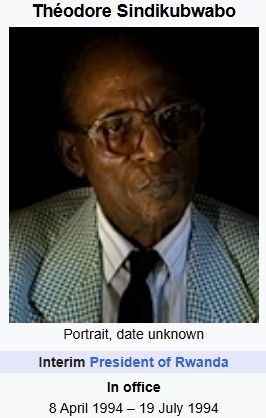 On Monday morning, April 18, the Crisis Committee of military officers directed him to his hometown of Butare to enforce the final solution to the Tutsi problem. His fleet included six busloads of commandos, a convoy of Interahamwe militia, several pickup trucks fitted with loudspeakers, and three limousines packed with VIPs. These political elites would replace existing leaders in the uncooperative southern province. After traveling eighty kilometers, his first stop was in Gikongoro to parley with Monseigneur Misago. This provincial bishop had sold out to Hutu Power, encouraged the killing of Tutsis, and helped the interim president plan the provincial genocide. (Bishop Misago would one day be imprisoned, released on appeal from the pope, and returned to his post in Gikongoro. His consequent death by heart attack was counted as justice by many in his parish.) Sindikubwabo's second stop brought him to the Simbi Sector near Butare, where it was reported Hutus were lax in doing the work. In a rallying speech, he called the local Hutus ntibindeba, a term that means "those without concern." He emphasized that Hutu ntibindeba who do not kill with vigor would be killed themselves. Upon entering the city, the interim president confronted Governor Jean-Baptiste Habyalimana, placing him under arrest. A new mayor and police chief took command and immediately reenforced roadblocks throughout the city. Screams of terror and bursts of gunfire punctuated Monday night. On April 19, the interim president held a ceremony at the university auditorium. His incendiary rhetoric was broadcast over national radio. "These Tutsi are out to kill us. They want to take over our government and persecute you. Don't trust them. We Hutus must act first. Every loyal Hutu must join together to rid Rwanda of these vermin. If you Hutu in Butare don't want to soil your hands, then step aside and let your brothers from Kigali do the work." With these words, the Butare extermination campaign was launched in earnest. Immediately Hutu-Power informants led parties of militia into the homes of prominent Tutsi families. Then, in swept the murderous whirlwind. The mass slaughter was typically carried out by young men wielding machetes and long knives. Soldiers with automatic rifles backed the killers, both to incite the bloodletting and to fire upon fleeing targets. The authors of genocide encouraged wavering Hutu neighbors to loot the premises. They figured by making everyone in general complicit in their crimes, no one in particular could be held accountable. Soldiers and militia raged through the streets, having license to pounce upon anyone who even looked Tutsi. Throughout the province, fresh corpses clogged the byways. The ex-governor, his wife, and two daughters were held in a small prison. The females were subjected to continuous rape by dozens of militiamen. Having sex with such important women as belonged to the governor of Butare was something these predators could brag about to their fellows. Eventually, the four were butchered and dumped into an unknown grave. Next on the kill list was the "queen cockroach," Rosalie Gicanda. This frail, devoutly Catholic woman was betrayed by museum workers. The chief military authority personally led a squad of presidential guard into her hiding place, seized her and six handmaids, dragged them to the rear of the museum, and shot them all dead. This spontaneous dumping ground soon grew into a collection point for a thousand corpses, most trucked in from neighboring sectors. On April 20, a pacification rally was held at the stadium. The interim president introduced the new governor and set goals for Butare's extermination campaign. "We will meet our quota," roared the new governor who then organized and sent out teams of killers into every town sector and rural village. Soldiers and police sped out in their distinctive uniforms while Interahamwe militia marched in their gaudy colors. Common farmers who joined in the killing frenzy draped banana leaves over their shoulders. This impromptu costume showed these workers to be "children of the soil" and not despised Tutsi herdsmen. Many participants wore pins of President Habyarimana and chanted the songs of Simon Bikindi. Theodore Sindikubwabo delivered a speech in his home district. He was upset that many of the Hutu men still sheltered Tutsi women, abusing them as wives or sex slaves. In figurative language he shouted, "After cleaning the house, one should clean up the kitchen, taking the remaining ashes to the field." He meant they should slaughter the surviving girls and women whom they had transformed into sex partners. "Bury the remains in the fields," he ordered. The killers moved on to the campus of the national university, where a Hutu-power youth club had segregated Tutsi students. Hundreds of youth fled to the neighboring arboretum. For many young scholars this soil of exotic trees became their final resting place. In a later tally of victims, six hundred university students lay buried in a single mass grave. 10. Narrow Escape When Francis heard large stones crash through his parlor window, he grabbed Pascazia's hand and rushed out their back gate. The front door burst open, and a dozen looters proceeded to pillage their rooms. Fortunately for them, the invaders focused upon booty and not upon blood. As the couple stared down from a nearby hilltop, they watched as clothing, dinnerware, furniture, baskets, and books marched from the house, all upon the backs of people they once considered neighbors. When they saw uniforms appear a minute later, they ran down the far side of the hill. Pursuers gave chase. A childhood friend of Francis agreed to hustle the couple under a plastic tarp. Once the tumult had rushed by, the frightened neighbor informed Francis, "You can only remain until dark. This gang will kill me if they catch me hiding a Tutsi woman." As Pascazia and Francis huddled until darkness, they talked of their love. In hushed tones Francis poured forth his never-expressed gratitude. "Thank you for taking in this old man and giving him such a beautiful daughter. Thank you for ten years of devotion. Thank you for putting up with my old-fashioned ways." He broke into tears. Pascazia squeezed his hand. "Why did you wait until now to tell me these things? Francis, I love you more than words can express. You've always been a good and generous man. "Look. The gangs are after me, not after you. Please, you must go to your university office. You have the proper ID card and will be safe there. My church friend, Rosa, lives a kilometer down the road. I'll seek shelter with her. I know she'll help me." "Yes," he agreed, "Rosa's a godly woman, but what about her husband, Roscoe? He's a violent man." "I can't stay here," she insisted. "I dare not go with you onto the campus. If we're captured together, we'd be in greater danger than if we struggle alone. We must trust God that we'll both survive. We must do this for the sake of Beatrice." After long consideration, he sighed. "Yes, I can see the sense in that. I'll accompany you to the house, and we'll hide together by the privy until you see Rosa appear alone. If she accepts you, I'll go to my office." About seven o'clock, the frightened neighbor pulled open the tarp. "Here, take these sweet potatoes. Please, you must go now. I don't want to leave my wife a widow." They thanked the man for his kindness in hiding them, then Pascazia carefully led Francis through darkened banana groves until they reached the backside of Rosa's rustic home. In a pelting rain, they crouched in a stand of sorghum. First, they noted Roscoe dash out and back to the house. Two teenage sons followed in succession. When Pascazia saw Rosa emerge, she kissed her husband on his forehead. "Francis, I will see you again soon. May God stay by your side." She then dashed under the meager cover that sheltered the pathway between the outhouse and backdoor. Pascazia awaited her uncertain fate. Francis stayed hidden long enough to see Rosa exit the outhouse, take a startled step backward upon sight of Pascazia, and then embrace her desperate friend. The professor whispered a prayer of thanks, then began a half-hour trudge to the campus gate. While stepping through ankle-deep water, he rehearsed the words he would report to the world. "Pascazia and I were sitting at home when a mob broke through the front door. Naturally, I feared for my life and ran. Someone grabbed my wife. I don't know who it was. I have no idea where she is now. I'm so ashamed I left her behind. Can you help me find her?" That was his cover story, and he repeated it until it slipped from his tongue. 11. University Hospital Francis viewed the national university from a trench across the street. He paused to hear the amplified tunes of Simon Bikindi echoing in his ears. His eyes saw the chaotic mob dancing beneath the entrance banner upon which was printed the biblical motto, Fiat Lux. As Francis emerged into the bright lights, two militiamen seized him by the arms and began barking. "Who are you? What are you doing here? You're sneaking around after dark, so you must be up to mischief." The professor strove to negotiate his survival. "I'm Hutu. I'm a professor. Let me show you my papers." He felt the thump of a wooden rod across his back. He stumbled to the mud and received another blow to the side of his head. He spat out a mouthful of blood. "Get up and come with me," an angry voice shouted. They dragged Francis toward an interrogation shelter. He saw uniformed officials kicking a prostrate woman. Francis recognized the victim as an instructor in the math department and knew her to be Tutsi. He averted his eyes as the woman was beaten, stripped of clothing, and passed to a frenzied crowd of local farmers. He did his best to shut out her screams. A police captain recognized Francis and summoned him to the front of the line. "Francis Mutabaruka, what are you doing here among this rabble? You know all the offices are closed." The professor recited his cover story, explaining he had nowhere else to go since his home was in ruins. "Can't I just stay in my faculty office?" he whimpered. "No. That's impossible. Those offices are occupied by soldiers. But look. You're bleeding and can barely stand on your feet. I'll write you a pass to the teaching hospital, okay?" From the bed of a speedy pickup truck, Francis viewed a reign of terror: fires in trash cans, figures darting in the darkness, shouts of chase, whoops of capture, and, of course, a carpet of lifeless bodies.A fellow traveler whispered to him, "See. The dead are treated like garbage. They execute them near the roadside to facilitate removal."Professor Francis was accorded a measure of respect. A doctor who recognized his patient washed his wounds, wrapped his head in bandages, and handed him a crutch. There were no beds available, so Francis settled on a blanket in a hallway. After an hour of extreme discomfort, he looked down the hospital corridor to see a phalanx of soldiers escorting a short man garbed in a checkered suit. He recognized the crooked smile of Theodore Sindikubwabo. As the entourage entered a classroom, he noticed that hospital staff filled the chairs. With the door open, Francis heard the pediatrician speak to an audience of Hutu doctors. "As fellow medical professionals, you know which part of the body to cut, and a person cannot recover from the injury no matter how much effort can be deployed. Use and give to the citizens that tip so that when they take hold of an enemy Tutsi, he has no chance to escape them. Use your medical knowledge to promote the work." The president-doctor then indicated the jugular vein in his neck. "Look, if you cut this part, the victim has no chance to recover. I have called you together to go out into the bush and teach this formula throughout the prefecture." He asked Doctor Gatera, an orthopedic surgeon, to stand as an example of a professional who was practicing this method of murder. The audience responded with applause. He continued his lecture. "In short, I want everyone who enters this hospital to be ready to kill. This goes for patients, aides, doctors, and nurses." The interim president went on. "I've ordered this hospital to dedicate a section to government soldiers who are injured in battle. Do your best to treat them and return them to the work. I've also ordered a separate hall for Tutsis and Hutu traitors who can be dispatched with medical precision. You know what you must do!" Theodore Sindikubwabo glanced sideways through the hallway door to see the man with a bandaged head. Pointing, he commanded, "Bring that man in here." Two bodyguards escorted Francis in front of the classroom as a visual aid. The pediatrician-turned-president now spoke to a dozen soldiers lining the walls. "See this man? If you have crutches like him and a Tutsi doctor comes in to treat you, just endure the pain. Then hit him with your crutches before shooting him." He pantomimed the actions of hitting and shooting. As the classroom sniggered, the president recognized the bandaged head and whispered in jest. "Doctor Mutabaruka, has some Tutsi criminal assaulted you?" Francis nodded balefully and limped back to his nook in the hallway. Another pair of eyes noticed the professor of Rwandan history. Vice Mayor Manasseh lingered behind after the room had emptied of its VIP. He strolled to Francis flanked by two militiamen. "Tell me why you are here." Francis recounted his rehearsed capture story. Manasseh sneered, "That's a lie, and you know it. You see, I was personally at your property this afternoon. I looked on from the shadows as your greedy neighbors entered your house and ruined my plan to snatch Pascazia. I saw you both at the top of the hill. I was hoping to make you squirm when you had to choose between your own miserable life or hers. I'm still wondering, 'Professor, which life would you have chosen—yours or your wife's?'" The mild-mannered academician lost restraint at this Sophie's choice and lunged at Manasseh. "You are the devil incarnate." The militiaman smacked him with a baton. Manasseh straightened his crumpled shirt. "I declare you to be a traitor to your tribe. As you heard, our president has set up a special ward for people like you. I hope you enjoy your short stay." The professor was then dragged away. After hours of insult and abuse, Francis and two other faculty members were led from the Tutsi ward and prodded to the roadside. Three pistol shots broke the quiet of sunrise, and three bodies dropped to the ground. A group of hovering Interahamwe hacked at the corpses for bloody trophies. 12. Boastful Voices At sunrise Pascazia bolted upright in her banana-leaf bed. "What was that sound? thunder or gunshot? Or maybe it was just a dream." Rosa soon appeared in the thatched cooking room and noticed Pascazia's apprehension. "Don't worry. The men never come in here. Woman's work, you know." She sought to bring cheer into a difficult situation. "I must make breakfast for my husband and two sons before they head into town. All three have volunteered to lay aside their brick-making to man a roadblock near the Ibis Hotel. This is a crazy time. Nowadays no laborer is working the land or harvesting a crop. They're too busy working their Tutsi neighbors and harvesting their goods." Rosa sighed and handed her weary friend a ripe passion fruit. "Still, while you're in this room, you better be careful, stay quiet, and cover yourself with banana leaves." Pascazia hid in the kitchen for three full days. Sometimes Rosa kept her company. Sometimes a busybody neighbor would poke her head into the shed. One time, a young girl began to search the place. The fugitive panicked, but fortunately, the intruder scurried away after filling a bag with stolen charcoal. Pascazia perked up her ears whenever she overheard male voices outside the door. She couldn't fathom the cavalier conversations spoken between Roscoe and his sons. They bragged about the number of Tutsis they had killed and about how many ID cards they had turned over to the police captain. They seemed to relish in the misery of others. Roscoe could not hold back his amusement as he told this story: "You should have seen Mister Nkezabera beg for his life. The boys were about to put their knives to work when Shalom, our leader, offered this Tutsi a deal. 'If you pay cash for my bullet,' he said, 'I promise to shoot you in the head—dispatch you quickly. Today this bullet costs one thousand francs.' The rich banker ripped a golden cross off his neck and handed it to Shalom. 'Here,' the Tutsi man said, "it's worth twice that much.' With that, Shalom shot him twice in the head." The trio convulsed in laughter. Knowing Pascazia could follow the conversation, Rosa asked innocently, "Have you heard anything about our neighbors? You know I was friends with some of those killed." One son responded with rage, "How could anyone be friends with a cockroach?" Rosa gently reminded her son, "You used to be good friends with Faustin and Jean. Remember? You played football with them. They once ate in this house. You didn't call them inyenzi back then." Wanting to change the uncomfortable subject, Roscoe responded to her original question. After naming a few slaughtered neighbors, he added, "I spoke with Manasseh a few days ago. The vice-mayor is really good at his work. You know Pascazia and Francis, who lived in the big house by the road? She is either dead or on the run somewhere. Manasseh doesn't know. But Francis, yes, Francis Mutabaruka, actually showed up at the university. Manasseh confronted our Hutu brother and found him guilty of being a race traitor. Of course, he was executed. It was in the morning a few days ago, I think. Like our Holy Bible says in the Ten Commandments: 'Show no mercy to those who betray your people.'" Rosa stifled her emotions, nodding her head. She heard a rustling yelp in the cooking shed and rushed in. She rejoined the men, saying, "It looks like those rodents are after our leftovers again." 13. Stumble in the Dark The next morning, Pascazia informed Rosa it was time for her to go. "I hear there's an army of resistance gathering at the Catholic Church in Karama, maybe ten thousand people. It's not too far. I know I can find the way after dark. Francis is gone from this world. I know it. I think I heard the early-morning gunshots. I must go to Burundi to be with my baby. Keep me in your prayers." The drenching rains favored her nighttime travel. She tripped once in the darkness and suffered a gash to her wrist. Still, she struggled forward. She figured, "Even the Tutsi-chasers don't like to work in such abominable weather. Maybe I'll make it all the way to Karama." However, as she approached the Anglican Church, it appeared her luck had run out. A dark figure stepped out into her path from behind a tree. She trembled. The phantom shouted her name in a familiar voice, "Pascazia Kubwimana, don't be afraid. It's me, Daniel Mugisha. Your friend Rosa told me you might be passing by this way. I'm here to save you." Two large men joined the vicar as he stepped onto the pavement. They were festooned in national colors and carried machetes. "Don't worry, Pascazia. My friends will escort you to a safe house. I'll join you there in a few hours. Put on this red hat with the imprint of Habyarimana. Hold still, and let this guy pour a beer over your hair. Joke and flirt if you encounter militia, and let the men do the talking." Pascazia did as she was told, walking nonchalantly through two checkpoints, feigning intoxication. "You should be an actor," chuckled one of the men. "You make a good Interahamwe." Far off the road, in a private room lit by three candles, Pascazia sprawled on a floor mat. The rain had lessened to a patter against the iron-sheet roof. She could hear men talking in an outer room. Pascazia responded to a gentle knock and opened the door to the pastor's wife, Esperance. One of the men also entered the room carrying a basin of warm water. The other man carried in an armful of clothing. He exited and closed the door behind him. In the quiet of evening, the two women sat alone knee-to-knee. Esperance leaned forward. "I'm so sorry to hear about your husband. Rosa told me all about it. Francis was a very good man. I so wish he could have survived this madness." Pascazia wept rather than spoke, tears being the best language. "Daniel and I have developed a plan to help get you to Bujumbura. Just listen for now. Use this soap, water, and towel to clean yourself for the journey. Dear, here are some underthings and pajamas that I think will fit you. I also think this newly laundered uniform is the perfect disguise for you. This is what you'll be wearing in the morning. One of the guys mentioned that you're a great actress. You'll need that skill tomorrow. For now, get some sleep. Daniel will speak with you over morning tea." 14. Bus Ride to Burundi Pascazia awoke on Sunday, April 24, to find Daniel and Esperance conversing over African chai. She was reluctant to leave her room. Finally, she stepped into the parlor, sashaying her body. "What do you think?" she asked as she modeled the FAR uniform. Daniel marveled. "Wow! You look just like a female fighter in the Rwanda Forces Army for sure." Esperance was not so certain. "We'll have to lengthen the sleeves a bit, and I'm sorry to say you'll need to shorten your hair to military regulation." While Esperance was clipping and sewing, Daniel spoke. "I'm glad I caught you before you made it to the Karama Church. Informants tell me thousands of Tutsis are being killed there, even today." He shook his head. "You know, at first it was government policy to lock the doors of churches, forbidding entry. Now local officials demand they be filled with the displaced. Why do you think they're urging Tutsis to seek refuge on church property? Is this because Hutu Power has had a change of heart?" He scoffed at his own question. "Of course not! It's just easier to slaughter people in a confined area, so they make promises of sanctuary until the place is overflowing, then they move in to kill, throwing hand grenades and firing machine guns. It's like a slaughtering pen for animals. The same thing is happening at medical clinics and schoolyards. They say you can find safety in numbers, but in Rwanda you find nothing but death." Daniel pointed to her outfit. "One of the ladies in the church donated that uniform to the cause. She worked at a laundry until her shop burned down. She managed to save that bundle. So many lives have been destroyed by soldiers wearing that uniform. I hope this emblem of death can save your life." Pascazia practiced her military salute and bearing. She repeated her temporary name, "Corporal Jane Nyinawumuntu". Daniel presented her with a handful of Rwandan francs as well as two American twenty-dollar bills. At noon the two Interahamwe imposters escorted Corporal Nyinawumuntu to a military bus. She postured as a last-minute replacement for a sick comrade. Her uniform and smile proved sufficient to gain entry onto the transport. Her papers weren't checked because the driver seemed distracted by a crowd of refugees who attempted to storm their way on board. A burst of gunfire killed a few and chased away the rest. The foot traffic appeared inured to another bleeding corpse. So many of their countrymen already lay along the curbs in uncollected heaps. A man who introduced himself as Sergeant Kambanda sat next to her. He appeared suspicious of his seatmate, staring at her face. "Haven't I seen you before?" "I don't think so. I arrived from Kigali a few days ago." He looked her over, struggling to place her identity. "Aren't you a little old to be a corporal in the army?" "I only joined last year. I taught school but felt it my duty to fight against the Inkotanyi." She turned her head to look out the window, signaling she was not interested in further small talk. She despaired at roadside houses in ruin and so instead focused on the verdant mountains. 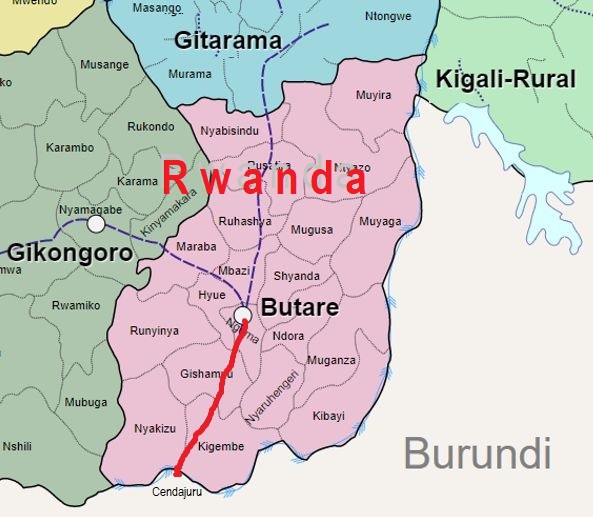 Every few kilometers, the bus stopped at a checkpoint. At these crossroads, a militiaman walked down the aisle, tallied the uniforms, compared them to his roster, and walked out again. Not far from the frontier, a FAR major stepped on board. He explained that those present had been selected for a special mission in Burundi. Their job would be to repatriate detainees back into their home country for summary judgment, that is, execution. He expanded to say the Burundian government didn't want to shelter these important cockroaches, but neither did they want to dispose of them. The major began a careful stroll up the aisle to check ID badges of those on board. Sergeant Kambanda pulled out his badge and held it on his lap. The corporal lapsed into a full panic, gasping for breath. The sergeant observed the woman's frenzy, looked to the ceiling, then whispered to the corporal, "Don't worry. I'll take care of it." When the major reached the rear of the bus, he recognized Sergeant Kambanda. The FAR soldier stood erect to speak with him. "Sir, this woman is Corporal Nyinawumuntu, a friend of mine. She was attacked by a terrorist last night who stole her badge. I can vouch for her, sir. She will stay with me, and I promise she'll get new documents when we return to Butare." The major looked her in the face and asked, "Is that true?" "Almost, sir. Except there were two cockroaches. The little one is dead, but I am ashamed to say the big one ripped the badge from my hand." She showed him the wound on her wrist. "If the sergeant vouches for you, that will do for today. But tomorrow be sure to get a new badge." He then returned to the front of the bus. The military vehicle crossed unmolested into Burundi, where FAR soldiers formed up and began to interrogate the detainees of interest. Armed Burundian troops looked on from the sidelines, rifles at the ready. After a few minutes, Sergeant Kambanda spoke to the major, "I'd like permission to escort the corporal to the privy over there. This place is not safe for a woman, even one in uniform." The major nodded his consent, and the two headed out the gate. But rather than turn right to the toilet, the sergeant bumped the corporal to the left. "That's the road south to Bujumbura. Go now. Go fast." Pascazia stared at him in amazement. "Why are you doing this?" "Last year, when I visited the national museum, you favored me by allowing me to tap Kalinga—the royal sacred drum of King Mutara. You did not have to do that. Mrs. Kubwimana, you were so kind to me. I am only returning your kindness. Go now in peace."
End of Story 4  | ||||||||||||||||||||||||||||||||||||||||||||
Story Five ~ June 6 to 14, 1994 ~
1. An Artist of Renown At thirty-nine years old, a barrel-chested, multi-talented musician known as Simon Bikindi stood at the pinnacle of popularity. Over the previous decade his intricate rhythms and catchy lyrics had captivated the common people of Rwanda. His particular interpretation of history promoted solidarity among Hutus and resentment toward Tutsis. The singer-songwriter was apolitical by bent, but during this period of ethnic upheaval, he was obliged to walk down one side of the road or the other. There was no middle ground to straddle. Bikindi chose the safer path of Hutu Power. Bikindi's most-celebrated composition was called Twasezereye, a song that may be interpreted as "We said goodbye to the feudal regime." During the one hundred days of genocide, Twasezereye was repeatedly broadcast over radio, becoming an anthem at Hutu rallies and a soundtrack to massacres. As an artist of celebrity and renown, Simon Bikindi walked among the highest echelons of the MRND government. 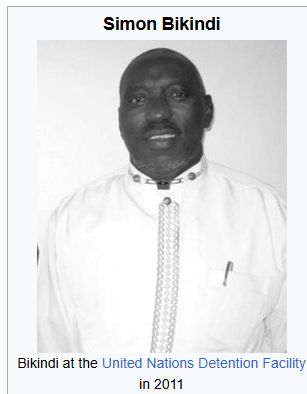
On June 6, the popular singer consulted with Charles Nzabonimana, Chief Minister of Youth and Sports. Simon Bikindi had composed a new song and presented the master cassette to his boss. After previewing the recording at a record studio called Autotex, the minister informed the artist that Colonel Bagasora himself, head of the Crisis Committee, would have to approve the composition before permitting it to be broadcast over Thousand Hills Radio. With business concluded, Simon asked with unease, "What do you think? How is the war going for us?" Charles answered with caution, "Officially or unofficially?" He then drew his chair closer to Simon. "You know it's been exactly two months since the president's plane went down. Some things are proceeding to plan. For example, thousands of Tutsi vermin are in the grave. That's a positive, right? But I'm worried. Our Rwandan forces don't seem able to hold back the tide of Inkotanyi. I see panic in the eyes of the committee. I hear their whispers. But we shouldn't lose heart. We're hoping the French are about to intervene on our behalf." "Have you made plans?" Simon interjected. "I mean, where will you go if the enemy storms into Kigali?" "It's a delicate balance. If I make public my intention to exit Rwanda, I'll be seen as a traitor. Yet if I stay, I'll become a prisoner to the snakes. The best strategy is to keep an eye on the big shots. For sure Bagasora doesn't want to fall into the hands of Paul Kagame. On the day he scrambles to the airport, that's the day I make my escape too." Simon pondered, then asked, "What do you think about my situation? Am I in any danger? Should I leave?" Charles scoffed at his naivety. "And what do you think?" Simon burst forth in an embarrassed defense, "Look. I'm an artist! I've been performing in France for the past three months. I wasn't even in Kigali when Habyarimana died. My songs are patriotic, yes, that's true, but they're historically accurate. I've never advocated the killing of any human being. You know that as well as anyone. How can I be held accountable if the enemy misconstrues my songs?" The minister shrugged a response, "It's up to you if you leave or stay. If the Inkotanyi enter Kigali, it's every man for himself." Then he stood up. "One more thing, my friend. The committee wants you to go on a road tour to encourage our cause. I've requisitioned three pickup trucks with sound systems. You are directed to take your performance group along with a few dozen Interahamwe and convoy west to Gisenyi Prefecture. We want you to perform at Umuganda Stadium. It looks like Gitarama will fall soon, and the leadership is moving to our stronghold in the west." "When do I go?" "Three days." Simon protested, "How can I do that? I have obligations here in Kigali—to my wife, kids, and to my performers." Charles responded, "You may have your obligations, but I have my orders. You must go on Thursday with your troupe and Interahamwe support. The Akazu is expecting you in one week, and the Little House doesn't like to be kept waiting." With a wink he added, "And if anything bad happens here in Kigali, you'll be just that much closer to the Zaire frontier." That evening, Simon broke the news to his wife, Angeline Mukabanana. "I have just three days to pack up and leave for Gisenyi. I don't want to do this, but …" She interrupted, "Are you coming back to Kigali?" "That's my plan, but I don't know for sure. The government's already moved out of town to Gitarama, and I suspect Kigali will be overrun soon. Should I come back if the capital is in the hands of the RPF? You know some miscreants have called me a criminal for just writing music. They say my lyrics incite murder. Can you believe that?" With passion he ranted, "I have nothing personal against the Tutsi people. Angeline, you yourself are Tutsi! Your son who lives with us is Tutsi, as is his father. Three in my ballet are Tutsi, and two are Batwa. I agree my profile in the party is high, but truly, I'm only a humble singer of traditional songs. Yes, I admit I've been ambitious, but I've never advocated genocide. That's the God-honest truth!" She comforted him, "You are a good and fair man, Simon. I've never seen hatred in your eyes, only compassion. I know for a fact you only seek talent in the Irindiro Ballet. You look for quality, regardless of caste. If a man or woman can sing or dance, you welcome them with open arms. Yet, having said this, you're a prominent member of the MRND team, and if this team loses the game, you'll be punished along with the rest." "It's not fair, but I think you're right," he grumbled. "The RPF doesn't understand my music. I'm a working man. The Hutu government has paid generously to perform songs that praise their tribe. I have to make a living, you know." Again interrupting, she asked, "And what if the Tutsis come to power in Rwanda?" "Of course, I would write my songs for them." He smiled and paused. "That's what I do. I perform traditional ikinimba music and dance. Hutu or Tutsi, it doesn't matter to me. Music's in my heart, not hatred toward a particular tribe." Angeline circled back to his destination in Gisenyi. "You say you will be performing at a rally for the Akazu? Now there's a clan with true tribal hatred in their heart. The president's wife, Madame Agathe, may have run away to France, but her family still spews tribal poison in Gisenyi. You know Agathe was the mastermind behind Zero Network, that is, "zero Tutsis in Rwanda." And that zero includes me and my son. "She's the one who hypnotized President Habyarimana with occult evil. Those in the Akazu always opposed his peace initiative in Arusha. There are even rumors she was behind her husband's death because he supported accommodation with the Tutsi RPF." Simon grew alarmed. "Don't say that out loud. I've heard that too, but spies are everywhere, and a word against Madame Agathe is like digging your grave. But, thanks for reminding me about the zero tolerance of the Akazu. I'll only take my Hutu musicians on this road trip. I love all my performers, but Emanuel and Josef are Batwa, and Promise and Maria are Tutsi. I don't want them harmed. They'll remain behind here in Kigali. Who knows? Maybe they will even welcome the RPF's arrival."
2. Road to Perdition Over the next few days, Simon recruited four Hutus as stand-ins for his Tutsi and Batwa stay-behinds. He also coordinated with the Minister of Youth for vehicles and Interahamwe militia. Bikindi's caravan of eight transports and thirty personnel left the capital city at noon on Friday, June 10. 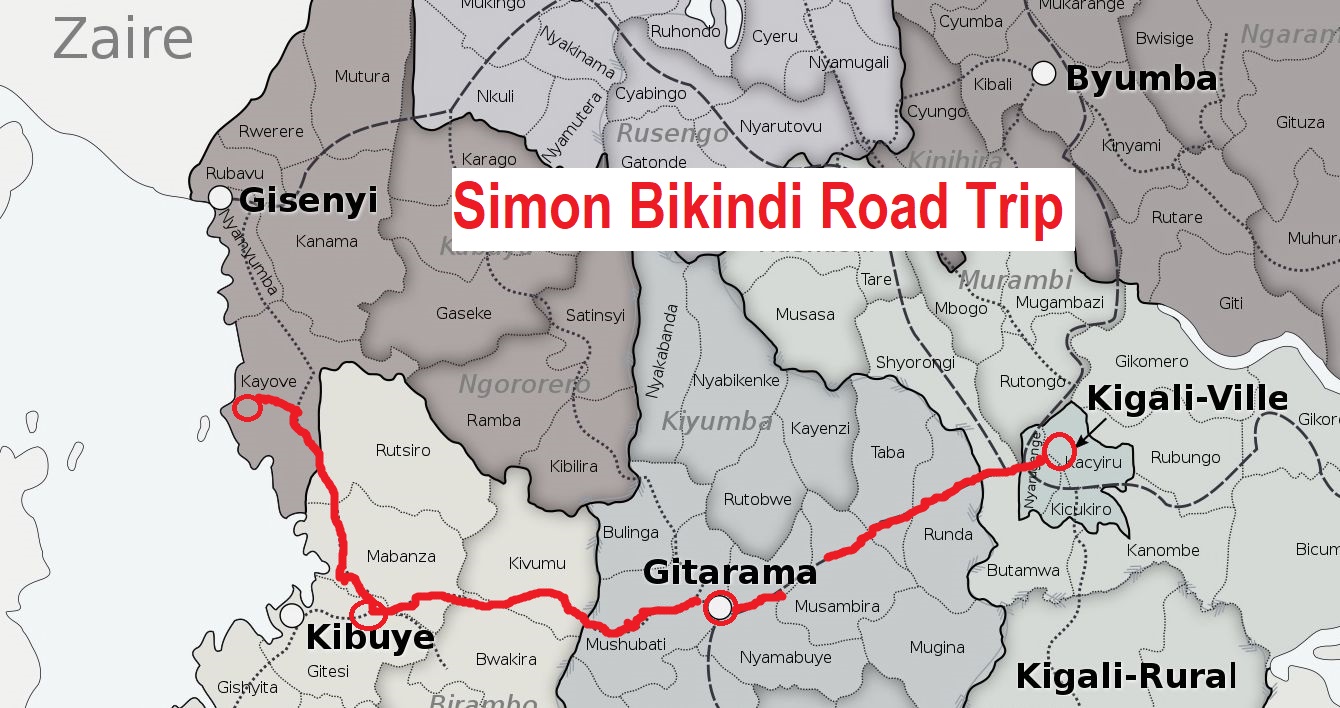 As his convoy snaked out of town, Simon pondered his excursion to the west. He felt a rush of pride. The artist considered himself a super-patriot, a true son of the father of farmers, a man of the people doing his righteous duty. Indeed, he loved Rwanda, singing about bad old times and pleading for better days to come. He truly wanted justice for all. Of course, he opposed the foreign invaders flooding in from Uganda. How could a patriot feel otherwise? His face darkened. "But I cannot condone the cold-blooded murder of civilians, especially women and children. But what can I do as one man against so many?" Simon dreaded powerful extremists like those on the crisis committee and in the Akazu, those with hatred in their hearts, machetes in their hands, and the power to declare even himself an icyitso—an accomplice. "I don't want to get on the wrong side of such violent people." He set his jaw. "I'll do the minimum necessary to keep myself safe, to survive this tribal war. But I will never take a weapon in my hand or speak the word kill into a microphone." The raging sea of his inner turmoil—after much mental gymnastics—had landed him upon this fantasy island of compromise. At the first roadblock exiting Kigali-Ville, he directed the vehicles to circle in a large dirt lot. With the nation's preeminent singer in their midst, the high-spirited youth demanded he lead them in songs that they had only heard on the radio. The sound systems echoed throughout the suburban shantytown as Simon Bikindi let rip the anthem, Twasezereye. Colorful dancers shook and shimmied to the opening beats. Then, like a church choir of animation and syncopation, all the voices erupted:
After an hour of raucous celebration, the commander of the barricade took the microphone. The tumult had attracted about a thousand local residents. The FAR captain beamed at the crowd and then at the singer, "Mister Bikindi, thank you for this unannounced rally. We of Butamwa sector appreciate it so much. We want you to know that just today we have captured and killed nine of the enemy. And this is getting harder to do because so few cockroaches remain hidden under their rocks." The listeners cheered with approval. An exuberant Simon took the mike, couching his words in coded speech. "Thank you, captain. But I want to tell you, the work is not complete. All of you hearing my voice, we must seek out all the enemy and complete the work." Again, the crowd roared at his oblique words while Simon basked in the adulation. Near the truck bed where Simon was standing, three farmers—obviously drunken—stepped forward. One shouted at the entertainer, "Look. We brought this enemy especially for you." Two more farmers decked in banana leaves emerged from the crowd, dragging a battered, sobbing young woman. "We just caught this inyenzi hiding in the fields," said one with slurred speech. "Let me show you how well we farmers from Butamwe can carry out the good work you are asking us to do." Each farmer then took a hack at the victim. Her breasts were cut off, her belly sliced open, and her entrails wrapped around her quivering body. A sickened Simon Bikindi could not stand the sight of such butchery and turned aside his head. A few local boys dipped their fingers in her blood to paint their faces. Simon was appalled. The two juveniles then dragged her body to a ditch, flinging the mangled corpse upon a pile of nine, making this girl the tenth victim for June tenth. At that moment the sky burst with open-spigot rain. The crowd vanished, and the convoy team huddled for the night in a large vacant house, a property once owned by a prominent Tutsi businessman but now vacant for sixty days. On the next morning, the convoy continued southwest toward Gitarama. It's true the main north-south artery may have proven quicker, but the Inkotanyi had severed that route and were closing in on the relocated seat of government. Progress was slow along unpaved roads. Hundreds of refugees now clogged the thoroughfare, some with arms, heads, and backs fully laden with meager possessions, others pushing carts or overloaded bicycles. Small boys pulled the leads of goats and cows. At every roadblock, the convoy would pause, and Simon would sing along to a recording from his well-known repertoire. Enthusiasm waned as concern began to settle in. Still, some along the road would stop to listen, others would even cheer, but most of the displaced trudged onward, eyes downcast. Simon Bikindi received word in Gitarama that the Little House was no longer holding rallies. Thus, his ballet troupe was not needed. However, he was informed there was an opportunity in Kayove, a town along Lake Kivu. The local mayor could use his help in flushing out a few hard-to-find enemies. This was not a directive from the committee, but an invitation. The convoy could return to Kigali if they so wished. Simon gathered his troupe together. "So, what do you want to do? Return to Kigali or go on to Lake Kivu?" The lead dancer spoke up. "I talked to my husband before leaving. He's not expecting me to return. Did you see all the people walking along the road? They were coming up from behind us. They were voting with their feet. All of them were heading west; not one toward Kigali. There's wisdom in that." A drummer added. "There is nothing left in Kigali for a Hutu like me. Soon it will be a Tutsi-run capital, and reprisals will begin. I think my family is already headed in this direction. Maybe we passed them. I don't know. This road west—this road into Zaire—is a road to hell. It's a road to perdition. Yet we must take it and trust God for the outcome because it's the only road open to us." The decision was unanimous. They all agreed to demonstrate their loyalty by helping the cause in Kayove. There they would wait to see if Kigali fell into the hands of rebels. If that were to happen, the patriotic action would be to join a Hutu government in exile within Zaire. Who could have predicted such a catastrophe could ever be possible? After loitering a few nights in Gitarama, the convoy continued west. This was fortunate for Simon because the Inkotanyi army captured the city on the next day, June 13. The Irindiro Ballet had danced one step ahead of its enemy. As the summer solstice approached, sunshine replaced rainfall. A film of red dust soon choked the jammed roadway. The weary travelers grew thirsty, especially the restless contingent of Interahamwe youth. Their chief joy was in killing Tutsi, yet in passing through Kibuye Prefecture, all such victims were either dead or fled. Simon directed the caravan to stop at a roadside cabaret for liquid refreshment—something to wash away the dust. This traditional Rwandan cabaret was a combination of social club, bar, and general store. Inside the thatched-roof hut with a beaten floor stood cases of Primus beer and soft drinks stacked against a side wall. Containers of banana and sorghum beer lined the back counter. Simon bellowed out, "One hour. That's all. Then we have to move on to Kayove before dark." The proprietor was astonished at the sudden appearance of thirty thirsty travelers. A few barflies rushed left and right outside the door to summon additional vendors for such a large number of guests. The single hour extended into two as rowdy youth downed drink after drink of intoxicating beverage. Skewers of goat meat appeared with bags of peanuts and bowls of fruit. Of course, the famed Irindiro Ballet could not refuse to perform. When farmers returned from the fields at dusk, a party atmosphere ensued. His drunken Interahamwe escort proved impossible to control. Finally, Simon directed one semi-sober driver ahead to Kayove to inform the mayor, with apologies, that the ballet could not arrive until the next morning. A local magistrate showed up at the cabaret to talk with Simon Bikindi. He quizzed the singer about his plans and about the progress of the war. "It doesn't look good for us," was all Simon would say. He did apologize for the conduct of his Interahamwe escort: drunken fights, gunshots into the air, breaking glass, and screams of women. The Hutu magistrate commiserated. "It's okay. These boys are just letting off steam. They're more perceptive than you may think. It's like they're slowly emerging from a bad dream but not yet waking up. They sense their life of unrestrained murder, loot, and lust is coming to an end. In the back of their minds, there's a dawning awareness that someone-someplace-sometime a reckoning awaits them. Their dream is turning into a nightmare. Their heaven will soon be hell." After a long pause, he added, "I think that goes for myself, and maybe for you too, Mister Bikindi."
| ||||||||||||||||||||||||||||||||||||||||||||
Story Six ~ April 7 to July 24, 1994 ~
1. No Certain Dwelling Place With a grand estate on the banks of Lake Kivu, the prosperous Tutsi family had been a pillar of the Kayove establishment for decades. The father, André Muhoza, served as headmaster at the College of Saint Mary. Over the previous few months, he had viewed with consternation the disintegration of his academic community. Long-time Hutu friends had begun to shun him, some disrespecting him with tribal epithets. The seminary priest spoke out against such racial hatred, but his voice was muzzled when the local bishop assigned a junior priest to deliver party-line homilies. André's wife, Adeline Niyigaba, was the first to hear the ominous news on the morning of April 7. It was true she had heard gunfire during the night, but recently such ruckus had become commonplace. With the first hints of daylight, she stepped out her front door to see a neighbor dashing by, then another, then three schoolboys waving Rwandan flags. Adeline spoke through the iron bars at the front gate, "What's all the excitement, guys?" "Haven't you heard?" shouted the youngest with wild eyes. "The Tutsi cockroaches have killed our beloved president!" A taller one added, "Yeah. They shot down his airplane, but don't worry. My dad said we'll be getting our revenge soon." The third one studied Adeline's face, finally saying, "Aren't you Clementine's mom? That means you're not one of us Hutu, but an accomplice." All three boys then joined in jeers, "inyenzi, traitor." They banged their flagsticks against the bars, then scampered further down the street. Adeline rushed into the parlor. She turned on the family radio and summoned her husband and two children to listen up. Through screeds of anti-Tutsi vitriol, they understood President Habyarimana's jet plane had crashed the previous evening. A crisis committee had formed in Kigali, which asked all citizens to remain in their homes. André did his best to reassure his wife, daughter, and son. "We'll be okay. Things like this have happened before. Both my mom and dad survived 1959—you know that—and those days were worse than what we see now. I have connections with the local council, and if that doesn't work out, Idjwi Island in Zaire is just across the lake. We can paddle there in our boat, if we have to." The two children looked intently at their mother. Trying to stay calm, Adeline said to them, "You two won't be going to school today. You heard the radio direct us to stay home, and you'll be safer here with me anyway." She cut fruit and warmed porridge for breakfast, but Clementine and Jean-Luc were too anxious to eat. Clementine Ndayambaje was a schoolgirl of sixteen. Still growing into her classic Tutsi frame, she was tall and slender with big eyes and bright teeth. She was her father's princess: studious, focused, and compliant. Clementine shined in the classroom, spoke elegant French, and was painfully shy, shielding her mouth whenever speaking in public. Clementine would be happy to remain home for a day just to read her books. Jean-Luc was twelve years old—all boy. A gifted soccer player, he never walked anywhere; he always hustled. While sitting next to his mother in church, the boy would bounce and squirm. By all measures, Jean-Luc was a handful. Yet, he brought such joy to the family, always amusing, always playful. "He'll grow out of this phase," his mother would assure André. Their son was disappointed he had to remain home, not because he enjoyed schoolwork, but rather, because he loved to hang out with his buddies. André informed his wife with reluctance, "I have responsibilities. I have to go to seminary today. People are depending on me. I owe it to them." "And how much more do you owe to me and your children? Your students can get along without you. Your family cannot." A tear squeezed from her eye. Both André and Adeline regretted the harsh language that ensued on that Tuesday morning. As the headmaster strode out the front door, he whispered an apology to his wife. "I'm sorry, sugar. Duty calls me, and I must be faithful." He murmured to himself, "And I must be kind. I never know when I might speak my last words to this beautiful woman." Once he reached the front gate, he turned about to see Adeline, Clementine, and Jean-Luc standing outside the door. André shouted. "I'll see you again this evening. Don't worry." After another step, he spun around. "And you better make sure you lock this iron gate." The remainder of April 7 passed in relative peace, but Adeline had a premonition of evil things to come. Anticipating her home might become the target of jealous Hutu neighbors, she packed a suitcase for herself and each child, then walked with her son to the shoreline to bury a satchel of valuables. As she flung sand into a pile, Jean-Luc looked at the waters of Lake Kivu. He tugged at his mom's dress. "Isn't that our boat out there?" Adeline looked up, shocked to see Tutsi neighbors paddling their small craft. She ran into the shallows and shouted. The neighbor-turned-thief waved his hand, showed his back, then continued his escape to the far shore. There was nothing she could do. Adeline sent Jean-Luc home, then rushed up the road to the dwelling of a woman she knew from church. Her Hutu friend answered a knock at the back door and ushered her into the garden behind a wall. Adeline began, "Paula, I see by your face you know the gravity of the situation." Averting her eyes in deference, she continued. "We've known each other since our catechism days. Can you show kindness to a fellow parishioner? Can I make a bargain with you?" With passion the supplicant delivered her plea, "If my family must suddenly vacate our house, can I trust you to look after our possessions? I will put all we own into your hands for safekeeping. If we never return, our property will become yours, even the car. I'll put that in writing, if you like. I only ask one thing, Paula. Please show mercy and hide me and my two kids for one week until I can arrange to flee into Zaire." Paula frowned. "You know, even hiding you for one day could be dangerous." She mused for a moment. "But for you I'll do my best. You're my friend, and I'd never take advantage of you. I promise to look after your things." Adeline handed over her house keys and car key as a token of her sincerity. When she returned home, she found a note pinned to her front gate. It was from André: "I'm so sorry. I can't make it home this evening. The streets are too dangerous, and I'm looking after terrified students locked inside a classroom. Please pray for us." Adeline wondered if she would ever see her husband again. 2. Refuge in a Crypt On the morning of April 8, as André was placing phone calls from his office, a frightened student burst through the door. "Principal, you must leave now. A gang of Interahamwe is headed this way. I've seen several of our Tutsi teachers killed. They're coming for you." André rushed toward the church building just out the back door, but seeing the gaudy garments of paramilitary assassins near the entrance, he raced to the rear, where Father Clement was waving him inside. Gesturing to a closet, the priest said, "Hide in here, André." The campus descended into bloody chaos. For one night, then two, then three, the priestly closet served as a cluttered sanctuary. On the fourth night, Father Clement informed his friend, "The police will conduct a thorough sweep of this place tomorrow. Mayor Rubangura is desperate to catch you. I've prepared a room that will be difficult for him to find." In the dead of night, the two lowered themselves via a ladder into a dank cellar beneath the altar. A dim devotional candle lighted the way. The priest whispered, "Not many people know of the concrete crypts down here. I think there is just enough space, daylight, and fresh air for you to survive—at least for a while. I relocated the bodies of my predecessors. I don't think they'll mind. You can see the two saints stacked in the corner." André spoke at last. "Thank you, Father. I don't mind the company. You know, I've sat in this church for years and have never known about this hiding place." His face contorted into grief, "Please get word to me about my darling Adeline. I must know if my wife is safe and about Clementine and Jean-Luc too. And let Adeline know that I'm alive." "I'll do what I can, my friend. When I get to the top of the ladder, pull it down with you. I'll drop food, water, and news into this cellar when it's safe. Whenever you hear footsteps from above, be as quiet as you can." The two embraced and recited prayers, then the priest left André to his thoughts. During that first night of confinement, the fugitive prayed until daylight, mostly for his family, but also for his seminary, his neighbors, and his nation of Rwanda. He thanked God that his first son, Oliver, was out of harm's way studying at the Catholic University in Kinshasa. "I'm sure he's on his knees right now praying for his family in Kayove," André brightened at the thought of his first son. He was unsure concerning the whereabouts of his number-two son. Joseph was supposed to be studying at McGill University in Montreal. However, he heard rumors that his patriotic son had secretly returned to Uganda to fight as part of the Inkotanyi army. Could that be true? Father Clement had advised him to only speak of Joseph as if he still resided in Canada, quipping, "That would not demonstrate the vice of deceit but the virtue of prudence." As André pondered alone in the darkness, he adapted as best he could to his damp quarters. About dawn, he noted a slight glow at ground level. He gave thanks: "I am blessed by this tiny gap between the church foundation and this cellar. Maybe I can really survive this ordeal." For weeks André kept to his secret vigil in the crypt beneath the floorboards. He often heard screams, gunfire, and heavy footfalls on the planks above his head. Every few days a parcel of food, water, or newsprint was lowered via a basket through the small opening. In one note, Father Clement let André know that Adeline, Clementine, and Jean-Luc had disappeared. They were not listed among the dead, and Paula, a neighbor, reported the three had attempted the journey to Zaire. The professor was a practical man, determined to use his days of confinement as a learning opportunity. He possessed a large French Jerusalem Bible and a small Gideon New Testament. "I will learn to read English," he resolved to himself. From First Corinthians four, he ran across the French words, "Nous sommes devenus comme l'ordure du monde, jusqu'à présent l'universel rebut." Finding them particularly appropriate, he memorized the words of Saint Paul in his King James Bible:
André continued to read every scrap of print lowered to him, joined silently in church masses conducted above his head, and tried to keep his flagging spirit afloat through continual communion with God and the saints. The days passed in ceaseless procession. When the rain stopped, reports of possible liberation reached his ears. 3. Refuge in a Goat Pen At the same hour on April 8 as André first fled from his school office, Adeline and her children rushed outdoors to seek refuge in their neighbor's garden. Their hiding place turned out to be a tarp-covered goat pen. The ground stank with manure. Yet its very awfulness provided a measure of security. No human being would willingly poke his nose into that stench! While the family huddled in the rear goat pen, Paula busied herself at the streetside, pasting pictures of President Habyarimana to the windshield of her newly acquired car. She figured it might provide protection from looters. A ragtag mob of farmers and youth marched down the street on that Wednesday afternoon. As leader of Kayove Youth Ministry, her husband, Freddie, marched at the head of the procession. Freddie stopped for a moment to congratulate his wife for poaching the car so quickly, then added, "But have you seen the owners, André and Adeline? Those cockroaches are next on our hit list." "Yes, I just saw them running toward the water to their boat." At that word, a dozen youth cut toward Lake Kivu. Because her husband was a Hutu party official, Paula figured no one would suspect she was sheltering the objects of their pursuit. Days passed. The three fugitives shared their hovel with five goats only during nighttime hours. As the sun rose each morning, a local street urchin would arrive, rope the goats, and walk them through open spaces to graze on grass and fallen banana leaves. The boy would return before sunset and be rewarded with an evening meal. Felix was the same age as Jean-Luc but had to drop out of school after his mother died of AIDS. When his father abandoned him as well, good-hearted Paula provided Felix with enough sustenance to survive orphanhood. On the fifth day of hiding, Felix spotted Clementine peeking from behind a fence. "What are you doing here?" he demanded. The girl glared at him, speechless. Then Jean-Luc jumped into view, arresting his attention. Finally, Adeline spoke up, "Your name is Felix Ndizeye, right? I remember you once attended school with my son. You even helped him with his math homework. We are going to need your help." She spoke to Jean-Luc with nonchalance, "Get my purse, will you?" Adeline took from her wallet a thousand-franc banknote and handed it to Felix. "Can you buy for us a large bag of peanuts, say for five-hundred francs? You can keep the remainder if you can keep the secret that we are here. I have more money to give you later." Felix responded with a distinct stutter, "I c-c-can do that. S-s-see you soon." The boy dashed through the back gate without his goats and returned an hour later. He handed over a bag of nuts, wearing a new store-bought t-shirt. He roped the goats together and headed out the gate. "We c-c-can talk some more when I c-come back this evening." When Paula appeared in the garden, Adeline told her about the incident. The protector clicked her teeth. "It was only a matter of time. The boy is clever but pliable. I don't think he can hold his tongue for long. I'm sorry, but it's time for you three to move on." Adeline sighed. "You're right. Jean-Luc tells me that Felix spends his time with a gang of lost boys. I'm sure many of them are combing the area right now looking for runaway Tutsis. She collected her thoughts. "Maybe you can do this. Hide us in the house for just this evening. When Felix returns, he'll see we're gone. We promise to leave after midnight, and trust God will lead us safely to Zaire." After hiding the three in her kitchen, Paula reconstructed the goat pen on the other side of the garden. Sure enough. When Felix returned that evening, he was accompanied by two older boys armed with machetes. "Where are they?" asked the startled Felix. "What are you talking about?" Paula retorted. "You know. Jean-Luc, C-c-clementine, and her mom." "I don't know what you're talking about," she scolded. "We only keep goats in this garden. Maybe you can't tell the difference between humans and goats." The older boys laughed as Felix slunk away, never to return to his goat herding. That night, after Freddie fell asleep, Paula filled two bags with sweets and handed them to the children. She gave Adeline an envelope with cash, saying, "I sold your car. I hope you don't mind. Here's the money." With tears, the two women embraced. Then the three outcasts strode into the darkness. A north wind howled as rain pelted their cheeks. With Adeline in the middle pulling one child on either side, they made their way to the stand of trees near the shoreline. There they huddled under a large avocado tree. Jean-Luc whined, "What a nasty night! How can we possibly find our way?" His mom spoke firmly, "Your childhood days are over. Starting right now, you must act like a man. Do you understand we are counted as Tutsis and many of our neighbors are out to kill us? That is real. You must not complain and always listen and obey what I tell you." Jean-Luc bit his lip. "I understand, Mama." "Look around you. This weather is perfect for our escape. God planned it this way. Those Tutsi-catchers won't search in the woods during this midnight tempest. She paused, then wrapped an arm around each child. She then explained, "We are not going to Idjwi Island, but to my sister's house." Clementine interrupted, "I thought my Aunt Louise lived over in Kivu with her husband and kids." "She did until a few years ago. Her husband—your uncle—was killed in a guerrilla attack. Her sons were kidnapped and forced to enlist as underage soldiers. They did wicked things to Louise. I never told you because it was all too sad. My sister was so shattered. She retreated to our old family property but lives as a recluse. She hates all people and refuses to even see me." The mother softened her tone to explain this difficult family matter. "You may not know this, but your Aunt Louise is Hutu. We are actually half-sisters. Our father was Hutu, and Louise's mother was also Hutu. My mother—who I never met—was Tutsi. I told you once she died giving birth to me." Adeline held back her tears. "It's complicated. I've not seen my half-sister in ten years. I don't know what to expect when we present ourselves to her. But she's our best hope to survive—our only hope." Adeline rose to her feet. "Clemi, Jean-Luc, I think I can find my way to the old family farm. It's only a few kilometers from here, across Serpent Creek, and up a steep ridge. I pray we can make it that far, and I pray Louise still lives on that run-down piece of dirt." Mercifully, the rain clouds parted, and the gibbous moon provided minimal light. Adeline led the children up the shoreline for an hour. In total silence, they steadily picked their way through sloshy fields, moving parallel to a roadway. As they approached the bridge spanning the creek, Adeline heard a faint tinkle of radio music and froze. She strained to catch the distinct beat of a popular song. "Thank God for Simon Bikindi's voice," she whispered out loud. The outcasts thrashed downstream a short way, then struggled to cross the fast-flowing creek. Clementine gave thanks to God because her papa had taught them the skill of swimming. Shivering on the far shore, Adeline informed her children. "This is far enough for one day. Let's squeeze together for warmth." Still, she wanted to draw her family closer. "You know, children, I was thankful for that radio sound that alerted us to a barricade." Speaking to her daughter, she added, "And you, Clementine, you told me you were thankful your papa taught you how to swim, right?" She spoke to her son. "How about you, Jean-Luc? Are you thankful for anything?" The boy sniffed the air. "Yeah. I thank God the stream washed us clean, and we don't smell like goat poop anymore." 4. The Mswahili The three outcasts slept soundly through a morning drizzle. In a hazy dawn light, Adeline awoke to the clang of morning cookware. She heard a female voice and a male response. Did the man bid her a goodbye? Half in dream and half awake, Adeline's brain had been concocting a survival plan. She spoke it softly to her children, "There's a woman nearby. I must contact her to find out if Louise still lives around here. Listen carefully, children. As a disguise I'll pretend to be crazy, out of my wits. This will be an act, but you must pretend it's real. Do you understand?" "Yes, Mama," they said in unison. "You must be clever; play along with me. Remember, we're not telling lies. That's a bad thing. We're just pretending, like actors on TV. Do you understand?" "Yes," they nodded. "And stay hidden right here until I come back for you. It may be a few minutes or maybe hours." Clementine groaned within herself, "And what if it's never?" After commending each child to the care of the Almighty, Adeline put on her makeshift disguise. She mussed her hair, rubbed dirt into her face, and put a small stone inside each cheek. She purposely exposed one breast. Jean-Luc turned his head away from his mother's demented appearance. Adeline stood and walked resolutely in the direction of the woman's voice. The stranger came into focus—a woman with a headscarf. Was she a Swedish Pentecostal? No. By her flowing dress, she was Muslim, an Mswahili. "What! Who are you?" The startled woman gasped. "Why are you on my property? Are you alone? You're not one of those runaway Tutsis, are you?" In a garbled voice came the response, "Can you help me? No, I'm a Hutu widow running from the Inkotanyi army. I'm searching for my big sister, Louise Mukakuabuga. We used to live here together. Do you know her?" The crazy eyes darted side-to-side as drool dribbled down her chin. "Cover yourself up," the Muslim commanded. Then she stepped behind the crazed woman, peering into the sorghum fields. "I guess you're alone." She spoke on, feeling safer, "Look here. I know of Louise. She lives on the other side of the cornfields, but she never wants visitors." The Mswahili bent forward, looking the disheveled outcast square in the face. "Yep, you look Hutu well enough, and I might add a little bit like Louise." She chortled to herself, "And you look just as crazy as Louise, poor woman." After a circling inspection of the unexpected guest, the Mswahili said, "Okay, I'll take you to Louise's shack. It's not much to look at. I'll let her decide if she wants to keep you. What did you say your name was?" "It's Deli," she responded, using a childhood name once spoken by Louise. "Okay, Deli. I'm called Fatima. Let's walk over there. I'm curious about how one crazy woman will react to another." As the two strode through fields of maize, Adeline chattered to herself, not in tongues of dementia but in recitation of fervent prayer. She looked to her right and noticed a concrete structure painted a lime green. "That's a pagan mosque, for sure," she thought, and she prayed even more zealously to her Christian God. 5. Demented Duo Adeline (now called Deli) spied a dilapidated mud hut, a squat cube of sunbaked adobe. She barely recognized it as her old homestead. It appeared the edifice was dissolving into the rust-colored ground from whence it came. Only splotches of white plaster stuck to the exterior walls. Window outlets were boarded shut. A black tarpaulin flapped in the breeze, no longer adequate to cover a yawning gap in the rusting roof. Fatima shouted from the rickety gate, "Louise—Louise Mukakuabuga!" There was no response. They circled the house together. "Louise, your sister is here to see you." Still, there was no response. Then they stood for a few minutes near the front door. Just as they turned to walk away, a frightened voice sounded from the shadows. "My sister, you say? Who? What sister?" "She calls herself Deli," shouted Fatima. The door creaked open. "Adeline, is that you?" "Yes, Louise. It's me, but you called me Deli. Remember?" Fatima stepped back, and the sisters stood face-to-face. "Deli, yes. You were Daddy's favorite. Aren't you married? I seem to remember children." Deli responded, "Can we go inside your house so we can talk more?" She turned to Fatima. "Thank you for your kindness. I need to talk with my sister alone." The Mswahili ambled down the footpath muttering, "Umugore ufite ubumuga bwo mu mutwe—the woman has a sickness in the head." After entering the ramshackle hut, Deli continued her demented act, drooling and rolling her eyes. Louise responded, "Is there something wrong with you?" "Yes," came the reply. "My husband and sons are killed. I have no place to go. This was our daddy's farm a long time ago. Please, let me stay here with you. I think I can get better." Louise stared at the apparition for a long time. "Yes, I recognize your voice and your face. You are indeed my little sister. I remember when you were born and how sad Papa was when your mother died. People here call me umusazikazi, crazy woman, but I'm not really. I'm just a widow alone in the world, bereft of husband and children. We're alike in that way." After a pause Louise added, "Maybe we two widows can help each other on this farm. Our country is filling with blood. I don't understand it. I never had a problem with Tutsis, but the mayor tells me I must hate them. Sister, maybe we can survive this madness by being crazy together." After considerable thought, Deli grinned. "Yes, let's survive this madness by being crazy ourselves, the demented duo." At that point the door flung open. Fatima appeared with her husband. The man wore the kufi cap and abaya robe of Islam. He looked at Adeline in anger and then pushed two children in her direction. "Are these yours?" Clementine and Jean-Luc cowered in the midst. "I caught them stealing bananas from my garden." Fatima spoke harshly to Adeline. "I don't appreciate being lied to. That is not the way of our Prophet. This girl told me who you really are and why you came to this hilltop. Yes, Louise is your sister, but you're Tutsi, and the police are searching for you." Adeline looked into Fatima's eyes and with humility replied. "Yes, what you say is true. I'm sorry for lying to you. That's not my character. I only did it to save the lives of these two precious children." The couple turned to each other. "We understand," the man said. "I would do the same to protect my daughters." A tear trickled down Fatima's cheek. "My husband and I have agreed to help you. It is our righteous duty, but there are many young hoodlums combing this neighborhood looking for runaway Tutsis just like you. We must have a plan if you are to survive." Adeline embraced her two kids. She abandoned her crazy act, expressing gratitude to the couple, "Thank you for your mercy. I know you are putting your lives in jeopardy. You know, besides in the marketplace, this is the first time I've spoken with Muslim people." Fatima responded, "Yes, our community is small, but we are a tight-knit group. We look after each other, and our Prophet tells us to show compassion on the oppressed. That means you and your children." The husband added, "Our ubokwo shows us to be Hutu, but we are Muslim first." Louise joined the conversation. "Adeline, since you're my sister, these two must be my niece and nephew." She choked with emotion. "Come here, children. Let your Aunt Louise give you a hug. I haven't seen family in such a long time." Tears filled the room. The man led the strategy session, pointing first to Adeline. "We will call you 'Deli.' Your real name 'Adeline' is known to many people. My guess is that you are not an idiot at all but are using madness to mask your identity. I think you should continue to do that. If police or thugs appear at the door, act demented. My wife tells me you're an expert at that. What do you think?" She clung to her children. "I can do that, but what about these two little ones?" Fatima spoke up, "They look too much like Tutsis, and they are too honest to fool interrogators. They couldn't even fool old Akbar here." Her husband laughed at that reference. "Yes," he said. "We'll have to hide them, and they'll have to be quiet. The four of us will look after the children until this nightmare has passed." Adeline spoke, "What do you think, sister?" "I'm scared. These boys in pajamas I've seen running around are ruthless killers. I've stepped around the bodies they've butchered. I know what happened to my man and my kids in Kivu. And now it's ten times worse here in Rwanda. But, Adeline—I mean Deli—you are my sister, and you are seeking my protection. I cannot turn you away. I'll help out with this plan. Just tell me what to do." Akbar outlined a plan. "We are already hiding two Muslim Tutsis under the floor of our mosque. There's no possibility there, but we do have a ceiling space above our shop kitchen. You know we sell those tasty pancakes called chapatti. I think that's the best place to hide your son. As for your daughter, we can hide her in the sorghum field. I'll dig a pit, and put an iron sheet over it, then cover it with soil and brush. We can get them food and water, but they'll have to stay quiet, especially if they hear voices. These Tutsi-catchers are always boisterous when they're on the prowl. This is the best plan, I think." As Akbar turned to leave, Deli caught him by the arm. "I believe with all my heart your intentions are genuine. I want to reward you for your kindness." The Muslem man looked at her in puzzlement. She took a deep breath. "Several days ago, I buried a briefcase in the sand behind my house. Please find it and use the valuables to offset our burden." She then explained the exact location of her family treasure. Akbar was silent for time, then answered, "Yes, I will do as you request. That will help us all. But please understand. We would protect you without this reward. It is zakat, charity, a pillar of our faith." 6. Hiding Places Thereafter, the two sisters hung out in the shack, dirty, disheveled, and deviously demented. When they felt securely alone, the two would often talk of old times—happier times of youth. Their staged insanity and deliberate uncleanliness acted as armor when militiamen entered the space and looked into corners. Deli considered everyone a potential spy. She would visit the sites of her children every day, stand at a distance, and talk to herself within range of their hearing. She didn't see their faces for ten weeks, knowing that direct contact could reveal their presence. At first, it appeared Jean-Luc had the easier time. His above-ground enclosure was mostly dry, he slept and crouched on a cardboard mat, and he was well fed from the kitchen. But Jean-Luc was a squirmer, and Akbar constantly scolded him for making the boards squeak too much. The twelve-year-old had to learn stillness, especially when voices sounded from below. He also battled with kitchen smoke, heat, and stinging insects. Each day of solitude passed as torture for this hyperactive boy. He did emerge a few times in the dead of night to wash, stretch, and gobble food, but that was never safe. Clementine survived in a wet foxhole dug into a slight rise in the sorghum field. Her enclosure was about one meter deep, one meter wide, and two meters long. A sandy entrance was just wide enough to squeeze her slender body into the pit. This refuge was ably covered by one long panel of iron sheet roofing. The teenage girl vowed to make at least one modest improvement to her shelter every day. She placed plastic and bamboo on the bottom of her nest and sticks along the side to hold back the wet mud. Her mom assisted in the survival effort by creating a garbage heap on top of the shelter. Adeline would throw food waste and paper trash over the top mound. Sometimes she would burn the garbage to obscure her treasure hidden below. Clementine would scour the heap at night to recover bits of food and notes of comfort. After dark in the rain, the young girl could sit just outside the entrance, alert like a sparrow, never more than a body-length from her nest. As the days passed, rain became less frequent. 7. Predator and Performer The mayor of Kayove was named Alexis Rubangura. He held a pathological hatred of all things Tutsi, and being more zealous than his peers, he continued to hunt for his enemy week after week, well into the month of June. The predator was merciless, ordering the extermination of women, children, and babies. He often quoted his favorite saying: "Iyo inzoka yizingiye ku gisabo ugomba kikimena ukabona uko uyica—In killing a snake curled around a gourd, you break the gourd if you must kill him." In his capacity as chief magistrate of Kayove, Alexis had smashed a thousand innocent gourds. The mayor met with local Interahamwe every Monday, held rallies with homegrown Hutu farmers and thugs every Sunday, and personally led police on home invasions at the slightest rumor of a runaway. In some of the Tutsi-abandoned homes, he housed FAR conscripted troops. He paid these soldiers two beers per day for their services with a ten-beer bonus for capturing an enemy—man, woman, or child. On three occasions, the mayor entered and searched Saint Mary Church. André had heard his footfalls and listened to him shout insults at parishioners. Mayor Rubangura had walked into the home of Akbar and Fatima just one time for a talk. Jean-Luc held his breath as a team of boys searched in all the corners. Even the crazy sisters received a visit from the obsessive mayor. He examined the stinky women, perceived them as idiots, and never returned. Adeline cackled with amusement when the oblivious mayor slammed shut the front gate. At a meeting of Hutu Power leaders in the provincial capital of Gisenyi, the mayor got word that the planned visit of Simon Bikindi had been cancelled. Since the Irindiro Ballet was already en route, west of Gitarama, Mayor Rubangura appealed for a visit to Kayove in order to motivate local youth and farmers. He voiced certainty that many snakes were still hiding in the bush. The mayor boasted to his bosses, "I can provide accommodations for Bikindi near the banks of beautiful Lake Kivu. I own a marvelous residence once occupied by a seminary dean." Mayor Alexis Rubangura waited anxiously in his office for the arrival of Simon Bikindi's convoy. As was his habit, he kept one ear tuned to radio station RFI (France International Afrique). The news was not good. Kigali was being besieged by the Inkotanyi army, and the capital could fall any day. In addition, thousands of displaced Hutus were now flooding toward the Zairian frontier. He could look out his office window and see the feet in motion. His dream of Hutu Power seemed dashed. Then he heard a special bulletin. His ears perked up. The French government had just announced a plan to organize "Opération Turquoise" in the southwest corner of Rwanda. This safe humanitarian area would comprise one-fifth of the nation's landmass, forming a rough triangle between the cities of Cyangugu, Kibuye, and Gikongoro. The stated aim was to secure this expanse to protect displaced persons and threatened civilians. The mayor was elated. He intuited Zone Turquoise could provide a safe haven for dispirited militiamen and uprooted génocidaires. Alexis flipped the radio to Thousand Hills. The announcement was confirmed. He heard the celebration in his language. At the brink of defeat, France was intervening on his country's behalf. An exuberant broadcaster boasted. "We are not yet conquered. Our French allies will support us, and we will prevail. In the meantime, remember the graves are only half full. Continue your patriotic work." The broadcaster then joked, "You Hutu girls go wash yourselves and put on a pretty dress to welcome our French allies. The Tutsi girls are all dead, so now you will have your chance." Just then, Alexis heard a song of Bikindi amplified through the atmosphere. In a moment the man himself appeared in the room accompanied by an entourage of performers. "Bien accueillir, welcome," exclaimed the joyous mayor. The performer looked at him askance as if something were amiss. "Why are you so happy?" "Haven't you heard? Our allies, the French, are coming to assist us. We can still turn this war around. And the new French zone begins only a dozen kilometers south of here in Kibuye!" Simon listened carefully as the mayor explained the latest news, then responded. "I've just left Kigali and Gitarama. I've seen a wasteland, people running away, and soldiers in full retreat. A few thousand French gendarmes can't turn that mess around." "We will see, Mister Bikindi, but please stay positive for the sake of the majority population." Changing the subject, he asked, "Where would you like to go first? To the barricade or to your guesthouse?" "We are all so exhausted. Let me and my troupe rest a bit, and then we'll be ready to help with your propaganda." Over the next two nights, twelve performers of the Indiro Ballet lounged in André's comfortable mansion by the sea. By chance Simon discovered a photograph tucked in the top of his closet. He remarked to a dancer, "What a good-looking family: a father and mother, three boys, and a girl. I wonder where they are now." On the day of the summer solstice, André heard a blast of amplified music. He perceived the clatter of shuffling feet on the boards above his head. Some entertainer was making use of the sacred space as a practice hall for popular music. He was aghast at the sacrilege. André overheard the heated argument between Mayor Rubangura and Father Clement. A gunshot fired through the floorboard settled the dispute. After passing through the carpeted wood, the errant bullet whizzed past André's ear. Could the mayor have ever guessed how close he had come to dispatching his arch fugitive? André then heard complaints about the RPF reclaiming his nation. It might be just a matter of weeks before he could climb out of his crypt and breathe the fresh air above. He couldn't help but wonder, "But what will I find on the outside?" 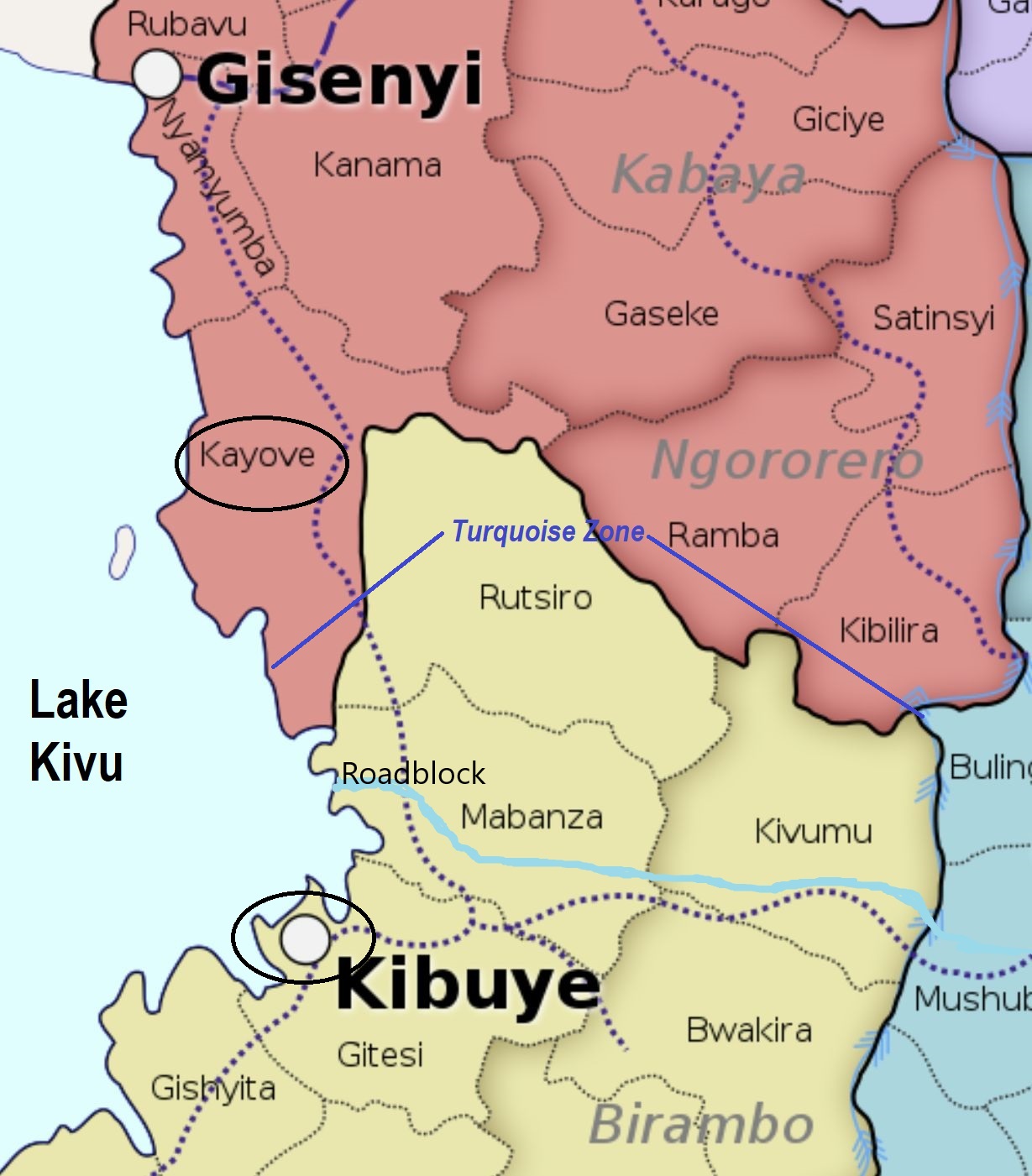 A few hours after their entrance, the troupe exited the church. Two pickup trucks equipped with oversized speakers reverberated through the neighborhoods. "Attention! Attention! The world-famous entertainer, Simon Bikindi, will be performing at the soccer stadium at six o'clock this evening. You are all invited to listen to his patriotic music and message." From their farm shack, Adeline and Louise heard the Bikindi echo. From his hiding place nestled above a ceiling, Jean-Luc heard the words, as did Clementine from her underground burrow. They also heard a chilling proclamation spoken by the artist himself: "To the majority populations, it's you I'm talking to. You know the minority population is Tutsi. Exterminate quickly the remaining ones." Serpent Creek served as a perfect barrier to catch runaway Tutsis. The waterway twisted through the countryside like a winding snake, hence its name. Militiamen and volunteer boys guarded about three kilometers of the creek, from the steep hillside waterfall to its outlet into the lake. Many unsuspecting Tutsis had been snared in this net. The bridge itself was the heart of the barricade, encompassed by a boarding house, cabaret, and lesser establishments. The mayor greeted the entertainer upon his arrival. As they sat together drinking a Primus beer, the mayor pontificated his philosophy. "Hatred and Power!" he thundered. "Leading these common people is like leading a goat. Hatred is the stick. You hit the goat from behind to motivate it into action. The people surrender to this hatred. Power is the banana skin given from the front to entice the goat forward. The common people aspire to power." He added, "I've trained my townsfolk to hate the Tutsi vermin and, once in their grasp, to demonstrate Hutu power by killing them without mercy." Liquor had loosened his lips, and he philosophized further, "You've got to understand. Deliberate homicide is an unnatural act. We humans are trained from birth to abhor it. So, to accomplish mass bloodshed, we must dehumanize. First, we reduce the victims to the status of animals—vermin like insects and snakes. We can do this through propaganda. That makes the enemy easier to kill. Next, we dehumanize the killers. I accomplish this through alcohol and drugs. Once their inhibitions vanish, killing becomes a sport." He paused. "And the young girls, oulala, they are especially useful to me. Sometimes I pay the soldiers with a girl—an umusanzu—a contribution to the army." Simon Bikindi squirmed, uncomfortable with this line of conversation. After the glasses were emptied, three men of his Indiro troupe approached their leader. "Boss, look what we found." An adolescent girl stood before them, battered and bloodied with a rope around her neck. Umusanzu, Bikindi figured. A young boy lurking behind the Indiro men spoke out, "Hey, don't I get some of the c-c-credit? I'm the one who blew the whistle when I saw this girl c-cockroach swimming in the c-creek." The mayor kept his ear tuned to radio station RFI. He learned Kigali had fallen to the RPF on July 4, and the bulk of the Inkotanyi army was now turning west—heading straight toward him. After two more weeks of futile Bikindi propaganda, confused troop movement, and sporadic gunfire, the end seemed near. Word reached the mayor that the RPF had liberated the Hutu stronghold of Gisenyi on July 17. A column of bedraggled military men shuffled south over the Serpent Creek Bridge. Hordes of terrified refugees followed in their wake: young women hoisting babies, old men pushing carts, goats, chickens, and bicycles, all in a jumbled procession of panic. In spite of the growing chaos, this local boss of Hutu Power remained resolute. "Even if I die in the process, I'll take along as many of these cockroaches as I can." He ordered his police to stay on the lookout for Tutsis and offered a bounty for each so-called head of cabbage brought to him. 8. Barricade at Serpent Creek André heard explosions and shouts above his head. The RPF was on its way. He could not contain his joy but had to climb out of his tomb. From the top step of his ladder, he could see the shattered church interior, a shadow of its former brightness. He spotted the ever-faithful Father Clement on his knees near the bullet-ridden altar. The priest advised his friend to wait—just a few days—but the headmaster was determined. The benevolent father provided him with a ball cap as he stepped into the sunlight. Invigorated from the brisk air and vivid greenery, he skipped through campus. Knots of people huddled in corners, all shuffling in a general southward direction. The disorganized swarm seemed lost in their own world. No one appeared to be on the lookout for runaway Tutsis. André worked his way through the throng, creeping down familiar streets, until he arrived near his house. From a distance he observed a convoy of vehicles packing up drums and musical equipment. A barrel-chested man was urging the group to expedite their exit. André lay low until the Bikindi party had cleared the street corner, then he cautiously pushed open the front door. He shouted the names of Adeline, Clementine, and Jean-Luc, but only a few blank faces stared back at him. Pulling down the bill of his cap to hide his face, he walked north to the rear of the lakeside mansions. He spotted a woman sitting on a low wall, head in hands. "Paula," he whispered, "is that you?" She looked up, stared in shock, then gasped, "André, are you alive?" With a smile, he responded, "Yes, I have survived." She took to her feet, still gazing. "I wouldn't have believed it except I saw you with my eyes." "Paula," he asked with a stammer, "do you know anything about Adeline and my kids?" Now it was Paula's turn to smile. "Most people think they've gone to Zaire, but I know otherwise." She glanced over her shoulder. "André, I got word that your wife is hiding out with a sister on her old property. Do you have any idea where that is?" "I think I can find it," came the prompt reply. Just then a male voice shouted from inside the house, "Woman, who are you talking to?" Paula whispered to the fugitive, "That's Freddie. You better run like a gazelle." Although the street was overrun with panicked people, most were trudging south toward Kibuye. Only André was walking upstream through this human current. His counter-movement caught unwanted attention. A sergeant in the militia shouted at him, "You, yes you, where do you think you're going?" André ignored the shout and darted through a gap in the crowd. He jumped the roadside ditch and began to walk along the same side path that his wife had navigated a few months earlier. Chaos increased as he approached the Serpent Creek barricade. He noticed a second militiaman jump the ditch and clamber to the path. A whistle tweeted, then a voice squealed, "C-come here. I think I c-caught me a c-cockroach." The young boy pursued. André's old legs could not carry him far. The wheezing runner was corralled at the base of a large eucalyptus tree. Machetes appeared. The large man in tricolors snarled, "Show me your papers." His pre-teen accomplice yanked off the fugitive's cap. "I know this guy. The mayor will be so pleased. This insect here is headmaster André Muhoza." A loud blast echoed just a hundred meters down the highway. The whistle-boy turned to see crouching soldiers in uniform. He was stunned. Their garb was not brown and shabby but green, neat, and short-legged. The sergeant screamed, "Let's get this knife work done with. I'm not going to fight the Inkotanyi." His bodyguard swung at the helpless victim, slicing off his private parts and hacking his head from his body. "The mayor might give me cash for this cabbage, but I'm not going down that road." "C-can I have a stab?" stuttered the whistle-boy. "Make it fast," the leader replied. The twelve-year-old plunged his blade into the headless body, then all three murderers hurried into the bush, leaving a mangled corpse by the roadside. 9. Discovery at Serpent Creek As this murder was taking place, Lieutenant Victor Kwizera sat in the lobby of the Serpent Creek Guesthouse. He was gathering intelligence as the Inkotanyi Army advanced. By day eighty-eight of the hundred-day genocide, the RPF officer was proficient at his duty. In the afternoon, a blood-soaked Sunday missal appeared on his cluttered table. He recognized the name scribbled upon the front leaf, André Muhoza, and conferred with his notebook. Then he summoned his assistant, Corporal Joseph Mugemana. "You've talked about your family in Kayove. Do you recognize this book?" Joseph examined the pocket prayer book and trembled. "Yes, that belongs to my father. Where did you find it?" "I'm sorry to tell you this. A fighter removed it from a corpse just up the highway." Joseph shuddered in grief. "Please, I must go to him immediately." "I'll go with you," Victor insisted. A blanket already covered the remains as tearful residents looked on. "Let me look first," said Victor. The severed head was placed above the neck, but the sight was ghastly. To Joseph he spoke, "I know you must see and verify for yourself, but fortify your heart." After a brief observation, the corporal knelt at the side of his father and wailed. Finally, a bystander took him by the arm. "You're Joseph Mugemana, aren't you? I loved your father. He was such a kind man. I may have some good news for you. I've heard rumors that your mother is still alive." Joseph was shocked out of his grief. "What? Where?" "She's hiding next to a mosque not far from here. Talk to someone named Akbar." At the exact moment Victor and Joseph looked upon the corpse of André, his three killers arrived at the cookstove of Fatima. They were demanding food and valuables before a retreat to Kibuye. Brandishing his knife, the blood-spattered sergeant shouted, "Hurry, hurry, fill this bag." The whistle-boy boasted to the bodyguard, "You know that man Muhoza we just kill k-killed? I remember him. That c-cockroach was the father of my rich s-schoolmate." Ears hidden in the ceiling above the cookstove listened and remembered these stuttered words. With one bag filled with booty and a second stuffed with chapatti, the trio of killers high-tailed south. 10. Rescue at Serpent Creek Accompanied by a squad of fighters, Victor and Joseph raced down the path toward the mosque. Unbeknownst to them, they passed within ten meters of the three retreating killers. Joseph shouted to a veiled woman outside the mosque, "Is there someone here named Akbar?" The woman pointed to the house next door. "There's his wife. Talk to her." Fatima recognized the uniforms of the Inkotanyi and said, "You got here too late." Joseph looked at her in alarm. "Too late?" he muttered. "What do you mean 'too late'?" She gestured at her looted storefront. "I mean, you didn't arrive in time. Those thieves were already here and stole all the valuables I had." "But what about my mother, Adeline? Someone told me she was around here." "What? She's your mom?" Then talking at Akbar, "Go fetch the crazy sisters and bring them here." Again, turning to the young soldier, "Well, if that woman is your mother, then your brother must be just above your head." Joseph looked up puzzled. "Go ahead and call for him." A tear fell from her eye. "Jean-Luc! Jean-Luc, are you here someplace? This is your brother, Joseph." After a pause, a knock sounded from the kitchen ceiling, followed by a feeble voice. "Joseph, is that really you? Am I dead or dreaming? Are you really coming for me?" The big brother could not contain his joy. He pushed aside a ceiling board, and two bare feet appeared in a small opening. "I need help getting down," the voice continued. Victor and two soldiers helped the boy to the floor. Jean-Luc wobbled and looked a mess. He reeked of urine and feces. His blood-red eyes were wide open, yet he could not see his brother. "I tried to stay good. I had to keep quiet," he mumbled. "I think the bugs ate out my eyeballs." Just then, two women rushed toward the soldiers, nearly as stinky and disheveled as Jean-Luc. Adeline screamed. "Where is he? Where's my son!" Joseph squinted sideways at the demented appearance of the woman. Then a spark of recognition lit a fire of emotion. Like his Biblical namesake (the son of Jacob, the governor of Egypt), the army corporal revealed himself. He removed his headgear, wiped the camouflage from his face, and shouted, "It's me, Joseph. I am your son." All those who witnessed the reunion would remember the moment forever. Adeline embraced Jean-Luc with concern. The boy was weeping, "Mama, I can't see. I can't see." She wiped his face and eyes with a wet towel. "Oh, Joseph, what can we do for this boy?" Then she remembered. "Joseph, let's go together to get your sister." The little group pushed their way through a sorghum field, coming to a mound of smoldering garbage. Joseph was leading his blind brother by the hand. Adeline shouted out, "Clementine, you come out now. Someone special wants to greet you." Victor heard a high-pitched squeal. Where was it coming from? Even the army intelligence officer had no clue. Then he saw a pile of refuse shift sideways and a delicate hand appear. "Here, let me help you." Victor grasped one hand, then two, then gently lifted the teenage girl from her hiding place. She stumbled on the soft earth and fell into his arms, chest to chest. Embarrassed, Victor set her on her feet again. Clementine smiled as she gazed into the face of her champion warrior. The family of four joined arms. "We made it," declared Adeline, but Clementine whispered loud enough for all to hear, "But what about Papa?" Joseph glanced at Victor, then Victor noticed Joseph's tightening jaw. After a moment of hesitation, Victor spoke up in a military manner, "I'm sorry to tell you this, ma'am. We have received an official report that André Muhoza has been killed in the war. I will let you know more when I can." As the family continued to celebrate their survival, they also grieved the one who did not survive. Adeline would look at her children with joy, then raise her eyes to heaven with tears streaming down her cheeks. After an hour of washing and eating, Joseph proposed to his mother. "Let me take you, Clemi, and Jean-Luc back home." Victor added, "I can get you a car to take you into town." Adeline looked at her sister. "Louise is coming with us. She's part of my family now." A convoy of three RPF vehicles headed into town. The area was mostly clear of Hutu Power, but automatic weapons still rattled along certain side streets. Joseph pointed out his house. A dozen Inkotanyi soldiers crouched around the iron gates. One reported to Victor, "Sir, we have a situation here. A few men are holed up in this house. We think one might be Mayor Rubangura." The lieutenant responded, "I'd like to take that man alive. He's on my list as a noted war criminal." Adeline spoke up, "He was the lead killer in Kayove. Everyone knows that." Jean-Luc added, "For sure. He's the leader of the group who killed Papa." Just before sunset, three soldiers rushed through the back door. One threw a hand grenade, another tossed a tear-gas canister. Three men in white shirts fled through the front door, choking and brandishing pistols. A burst of automatic fire struck the lead man, dropping him to the ground. Victor turned to see Joseph handing a rifle back to a startled private. "You didn't have to kill him, corporal." "Oh yes, I did," came the solemn reply. Lieutenant Kwizera never pursued the matter. He remembered the words of his friend Mwiza: "Justice can be swift when guilt is certain." 11. A Final Rescue On July 19, 1994, the Rwanda Patriotic Front installed a government of national unity in Kigali. This marked an official end to the 100 days of genocide. Within the UN-mandated Turquoise Zone, French troops were maintaining a measure of peace in larger cities, but killing continued in the hill country. Inside the lakeside manor, Aunt Louise, Adeline, and two children were trying to put their lives together. To the back of the property, the remains of the headmaster had been interred in a makeshift gravesite. A proper headstone would have to wait. To the front of the house, they gazed upon thousands of Hutu refugees streaming south toward the Zairean border city of Bukavu. In mid-July, Father Clement appeared at the door. At his side stood a young mother nursing an infant girl. The priest spoke to the entire family. He told them about André hiding out in the crypt, how he had urged him to remain longer, and how passionate he was about reuniting with his family. Then he introduced the young mother. He switched to the French language, which the woman could not comprehend. "This lady is called Victoria. You see her breastfeeding this newborn, but the baby is not her own. A few weeks ago, hoodlums broke into her mud house. They killed her husband, abused and raped her, and then stabbed her little baby. Because she has abundant milk, she has agreed to suckle this orphan. This baby you see has no name. An Inkotanyi fighter found her held fast in the arms of her mother. The victims were stacked upon a pile of corpses. The poor woman was slashed across the throat. The fighter heard a feeble cry, treated the baby's vicious cuts, and brought her to Saint Mary's. She was barely alive, but now—thanks to God and a caring doctor—she seems to be recovering. That's their story. I am here today to ask your care for these survivors. The woman wants to return to her parents after the baby is weaned, but this baby girl requires a permanent home. Adeline, can you find it in your heart to adopt this child?" She replied, "You know my André departed from this world three weeks ago. That appears to be the same timeframe when this infant entered into the world. You say this child has not received a name. At church next Sunday I'll christen this girl, my new daughter, with the name Andrea."
End of Story 6 | ||||||||||||||||||||||||||||||||||||||||||||
Story Seven ~ June 25 to August 30, 1994 ~
1. French Roadblock Major Ntwari was maneuvering his battalion southward along Route 7 from Kayove toward Kibuye. All Rwandan territory to the north had been liberated by the Rwandan Patriotic Front, and the genocidal killing had wound down. However, when his Inkotanyi fighters reached the Nyabahango Bridge, the major ran into an obstacle. Three French armored personnel carriers blocked his river crossing. A dozen French troopers in UN helmets inspected vehicles and checked documents. Gendarmes permitted only civilian refugees into their Turquoise Zone. A French officer explained to him, "This has been designated as a safe region. No weapons are permitted beyond this point." 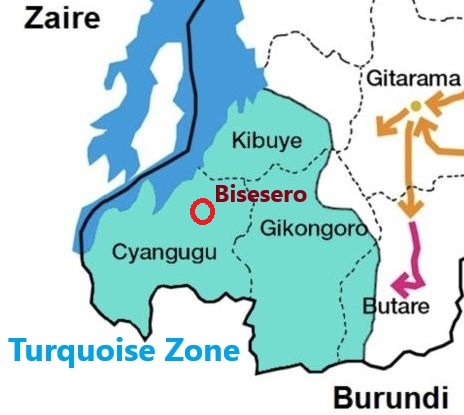 Major Ntwari contacted his higher headquarters for instructions and was ordered to stand down and camp north of the river to await developments. Victor Kwizera looked through his field glasses at the south side of the span. He could see clusters of Interahamwe waving machetes. Some were draped in the tricolors of France, others waved banners of the Rwandan regime, all jeered at the impotent Inkotanyi. Officials of the tottering regime had been anticipating this confrontation for several days, this moment when RPF vehicles would be stalemated at the threshold of the Turquoise Zone. Among the satisfied onlookers stood Bosco Kayishema, governor of Kibuye Prefecture. This true believer in Hutu Power had already supervised the slaughter of 40,000 Tutsis and was hoping to complete the gukora—the work. Once he was assured his enemy would not cross the bridge, he and his cronies returned to Kibuye, courtesy of a French quatre-quatre (4x4 all-terrain vehicle). Next to the governor sat the French commander in Kibuye, Captain Marin Gillier. He took the attitude that Kayishema was the legal authority throughout the province and hence warranted his full military support. According to the captain's worldview, Anglophone Africans like the Ugandan-based RPF posed an existential threat to Francophones like Hutu-Power Rwandans. It was of secondary importance who was being killed and who was doing the killing. That evening the governor led a rally at the stadium flanked by Rwandan and French flags. He bowed to Captain Gillier, remarking in the colonial language, "Thank you so much for saving our nation. Your people have always been friends of us Rwandese." The governor switched to his native tongue, knowing the captain could not understand his oration, "Majority population, hear me out. Our brothers, these French Hutus, insist they will leave our country in just one month. Therefore, we must quickly do two things. First, we must strive to make our province Tutsi-free. Cleanse it from all cockroaches. Don't worry. I've been assured Captain Gillier has no mandate to identify criminals or arrest militia fighters." With a wink he added, "And we are so many, and they are so few. They can't possibly look on every hilltop at once." "Second, we must cross the frontier into Zaire. Our esteemed leaders are waiting for us. They're already preparing camps near Bukavu. Once we're established in strength, our revived army will return to Rwandan soil, and then it will be Paul Kagame's turn to run away. I also heard this: Once we have a toehold on foreign soil, the UNHCR (UN High Commissioner for Refugees) will recognize our international status. Then, even the American government will provide us with aid." The frenzied crowd of one thousand cheered. "Yes, governor, let's get to work." Back at the RPF encampment, Major Ntwari voiced his frustration. "If I could shoot just one Frenchman, these UN interlopers would soon pull out of Rwanda and slink back into Zaire." The major understood the hiatus in fighting was a diplomatic decision and not one based on military necessity. 2. Into the Turquoise Zone While politicians debated and diplomats dithered, ethnic cleansing continued throughout this back pocket of Rwanda. With the connivance of French Hutus, Thousand Hills Radio was relocated from Kigali to Kibuye. The governor used the power of broadcasting to specify the locations of renegade Tutsis and to direct paramilitary forces against them. Finally, after three weeks of idleness, Victor looked through his binoculars and noticed the UN-helmeted troops had vanished. With orders from the new unity government, Major Ntwari led his convoy across the deserted bridge. By this late date in August, over one-half million Hutu refugees—many complicit in crimes of genocide—had already escaped through the Turquoise Zone and crossed the international bridge from Rwanda into Zaire. By September, two million desperate souls overflowed makeshift refugee camps near the frontier cities of Goma and Bukavu. All who fled into Kivu Province were now outside the reach of Rwandan justice. After the liberation of Kibuye, Major Ntwari learned that Bosco Kayishema had flown the coop into Zaire, taking along most of his ringleaders. Reports of reprisal killings by armed Tutsis and undisciplined Inkotanyi came to the ears of the new governor. He asked the army to keep half its force in the city as constabulary police. "I have no love for the génocidaire," said the Unity governor. "But I'll keep these evil men in custody until justice finds them." The battalion convoy struggled down Highway 11 toward Changugu, crawling up one hill then down another, negotiating hairpin turns and hugging the deep inlets of Lake Kivu. After a torturous twenty kilometers, the two hundred fatigued soldiers stopped for the night at Bisesero Secondary School. The buildings were shattered and looted, but the classrooms served as adequate billeting. At first light, Lieutenant Victor Kwizera reported to the major. "Sir, I've received reports that a remnant of the Interahamwe militia is still roaming the hills just east of here. They tell me a dozen killers are five kilometers up the road near an Adventist church. They're still hunting down Tutsis." A moment later, three tactical 4x4s were churning the dust, heading into the sunrise. Along the route, fighters recruited a church elder to guide them. Soon a flash of color and a stray gunshot alerted them to danger ahead. The troops dismounted and cautiously walked up the road. In the distance they saw the backsides of the scampering enemy. At the same moment, they heard the shriek of a child. Two riflemen leapt over a stone wall to confront a militiaman beating a crumpled woman with a masu, the nail-studded club. At the sight of intruders, the outlaw drew his pistol and fired. His bullet missed its mark. The rifle response did not. The fighters attempted to calm the screaming toddler. From the shadows of a back room, a short man crept forward with a newborn in his arms. He studied the uniforms of the intruders and burst into sobs. "Thank God. Thank God," he cried out. Then, seeing the disfigured form of his wife, he looked to heaven and wailed, "My sweetness is dead. Why did it have to happen like this?" The fighters escorted the grieving man to the roadside, each carrying a small survivor of the genocide. As two of the 4x4s raced to catch the fleeing enemy, the third vehicle carried three witnesses back to Bisesero Secondary School. The next day, after the short man was fed and cleaned, he sat with Victor for an interview. The Adventist elder and his wife looked after his two children. The newborn was not doing well. Her head was bruised when the bandit had dropped her to the ground. The witness spoke into a tape recorder with sorrow and purpose. He wanted his testimony to be complete.
3. Anchor of the Soul "My name is Eric Nshimiyimana. I was once on faculty at this school, teaching French and English. It seems like a very long time ago." Eric spread his papers on the tabletop. "As you can see, my ubokwo declares me to be a Batwa. That's not quite true. My father was an indigenous dancer at the court of the last Mwami. He sang about the inyambo—sacred cow. My mother was Hutu, a singer of traditional ballads. As the second of nine children, I took my father's tribal identity. "I grew up with privilege, but when King Mutara was poisoned to death, my parents resettled in my father's ancestral home near the Nyungwe Forest. We lived so deep in the trees of the Rift Valley; we figured politics would not touch us. But trouble came to our door. When my father spoke out against the murder of his Tutsi friends, he was killed in reprisal. The local police did nothing. I was only twelve years old." Eric paused and brightened his mood. "I don't want to make my story so depressing. There was plenty of joy also as I was growing up. I remember this old song my dad taught me before he passed away. Let me sing it for you. It's called Ntawundi mwana nkibyara ndakuze— "He's so old he can no longer procreate." The listeners in the room could not contain their laughter as Eric sang through five verses of this folksong. He made faces, pantomimed, and shook his body until tears rolled down the cheeks of Victor. After catching his breath, Eric resumed his life story. "When my father died, my mom took us kids to Gisenyi and joined a performance troupe, again singing these kinds of traditional songs, often for private parties. We struggled; we begged; my mom did what she had to do to feed us all. At that time, I attended a day school set up by Belgian missionaries. When I turned eighteen, I was able to use my French skills to support my family. My mother died of AIDS when I turned thirty, so did one sister. "This was a desperate time for me. I began to attend a Protestant church, one of the Pentecostal type. My troubled heart changed. I began to study the Bible in a serious way and became a youth leader. "That's how I met Rachel in 1990. She was twenty years younger than me, and she was Tutsi. My friends warned me that such a liaison was not wise. After all, we lived in Gisenyi, the stronghold of Madame Agathe Habyarimana's Akazu. The next year I married her anyway, and soon my first son came along, that's Marco. Because my wife came from the wrong tribe, I lost my government job in Gisenyi. We should have walked across the frontier into Goma as refugees, but I love my country, and instead, we moved to a place not far from here: the house where you found me. "This past year, around Christmastime, I learned that Rachel was pregnant again. I should have been happy, but instead I was fearful. I was now teaching school right here; as a matter of fact, just two classrooms away." Eric abruptly stopped his narrative and walked to a window. He pointed to a small building across the courtyard. "I kept up to date in regard to political events by listening to France International Afrique. I was hoping the Arusha Peace Accords would bear fruit and Rwanda would heal. However, when I bicycled into school on April 7, I learned about the tragic death of our president. "My ubokwo showed me to be Batwa, but that was not the same as being Hutu. I was not the enemy, but neither was I a friend. We Batwa were somewhere in the middle. The thing that tilted the scales against me was Rachel. I did not advertise my Tutsi wife, but I think the school principal reported her to the sector leader. "After a few uncertain days, the school closed and the massacres began. My humble house was far from the highway, and we managed to survive there. On a few occasions, Interahamwe came to the door, and I showed them my papers. Rachel and Marco had already moved deeper into the interior. She had church friends there, and I provided her with some money. I later learned Rachel had given birth to our daughter. She named my second born Hope. "The situation worsened during the month of May. Residents from neighboring sectors came to take refuge in Bisesero. As mass killings by the militia increased, people trekked from miles to take refuge in these hills. By now there were ten thousand Tutsis banding together. Even though I'm Twa, I joined this resistance on behalf of my wife. We resolved to fight unto death rather than succumb to the Interahamwe. "One of the village elders named Aminadabu Birara took command of the situation. We prepared to fight anyone who came to attack our villages. Our leader instructed all Tutsi resisters to take strategic cover on top of the hill called Muyira. Here we could spot our enemy from a high vantage point. Only men and boys who were strong enough to resist joined the fighting. Children and women took cover behind the hill. At that moment our weapons of resistance were stones and a few spears. Yet, we proved able to kill several of our attackers. "When Governor Kayishema learned that Bisesero residents were fighting back, he directed units from the regular army to crush the resistance. Artillery and mortars were called in from all corners of Rwanda. "On May 13, over four thousand residents gathered on top of Muyira Hill. I stood among them. Big bullets from mortars and cannons rained down on our heads. They even dispatched a helicopter overhead to spy out our positions and direct attacks. Our stones and spears were no match for such an onslaught. Although most resistors died, a few of us did survive and continued to resist. "After a full month of running and hiding, our hopes soared. I heard on a small radio the French army had arrived. Their mandate was to protect us civilians, non-combatants. We would be rescued! "Only later did I learn the cunning of the governor. He convinced the French captain—a man named Marin Gillier—that the resisters at Bisesero were in fact armed rebels; this was absurd. In fact, the front line of the RPF was some fifty kilometers away. "Our so-called French protectors arrived in Bisesero on June 27, intending to stop the genocide. Governor Kayishema accompanied them. Captain Gillier asked to parlay with a French speaker, so I volunteered to meet him at this school. I explained the best I could that we were not rebel fighters. We possessed no weapons but were merely defending our lives with spears and rocks. Many of us who were well-hidden came out to seek the protection of the French army. Our secret places were spied out by the militia. After discussing matters with the governor, Captain Gillier told me he could do nothing on that afternoon but promised his troops would return in three days for our rescue. "I saw the face of the governor brighten up. I knew we were in for trouble. So many people trusted the French, and so many people died as a result. I ran to get my wife and kids, and without further word, we escaped deeper into the forest. "Not long after the French army's departure, the Interahamwe came back to finish what they had started. They attacked day and night to kill each and every survivor. On the night of June 30, the French came back to find a hundred corpses. Only a handful remained alive to tell our story of resistance." Eric paused, and Victor probed, "How did you come to live in that house?" "Oh, that?" Eric stood up and paced. "With one three-year-old and one newborn, my wife could not stay in the forest forever. She said to me one day, 'I've been praying a lot lately, asking God about hope. A church friend directed me to a book in the Bible called Hebrews. She read to me, 'We have this hope as an anchor for the soul, firm and secure. My dear husband, we must cling to this hope in order to survive. Hope in God anchors our being. You and I must have this anchor for the soul. That's why I named our daughter Hope. Don't you see?' "I said to her. 'Sweetness, every time I look upon my daughter's face, I will think about this moment of hope.' I then suggested our best chance for survival would not be in the forest nor on Muyira Hill, but back in our house. We still had food hidden in the area, and our walls were sturdy. Plus, if we had to die, I'd rather it happen in our own home. "That was two months ago. Everything seemed to be going better. The French left for Zaire, and the wicked governor followed. The killing seemed to taper off, and guns ceased to fire at night. I even spoke to some of my neighbors, and we bartered for food items." Eric's tone darkened. "Lieutenant Kwizera, do you believe in demons? I saw them. With my physical eyes or spiritual eyes, I don't know. First, I heard the demonic laugh, then I turned to see this red-colored beast fall down from a tree, like a spider on its string. I saw several more grinning down at me, pointing at me and making obscene gestures to my wife. Then, they faded away with a lingering odor of sulfur. That's how I knew. The evil presence of the Interahamwe was still around. "Then two days ago, a gang of straggling gangsters reappeared. We hid behind our house in the tall grass. But yesterday morning Marco heard a gunshot nearby and let out a scream. A single evil-eyed man uncovered us. He hit me with a club, then grabbed Rachel. He ripped Hope from her mama's breast and flung the baby to the ground. Then he dragged my wife into the house to abuse her for his pleasure. "I heard her cries fade into sobs, then into silence. My three-year-old wandered toward the house to see what had happened to his mama. I was too much of a coward to even stop him. My son shrieked louder than I had ever heard before. A moment later I heard one gunshot, then two in reply. Again, there was silence. That's when I collected the courage to walk through my back door. I found two Inkotanyi soldiers, one holding Marco in his arms." Eric broke off his interview and burst into tears. "Rachel is still in that house, still exposed to the world. Please help me get back to her. I must give my wife a decent burial; for her sake, for my sake, for Marco, and for Hope."
End of Story 7 | ||||||||||||||||||||||||||||||||||||||||||||
|
Story Eight ~ July 1994 to July 1999 ~
1. Human Catastrophe In the weeks that followed the hundred days of genocide, approximately two million refugees fled from Rwanda into the neighboring countries of Burundi, Tanzania, Uganda, and especially Zaire (later renamed the Democratic Republic of Congo). This mass exodus has been termed the Great Lakes Crisis. As Zaire's chief of state, the aged Mobutu Sese Seko showed himself to be as inept as he was corrupt. His government—sometimes termed a kleptocracy—proved helpless to deal with the border crisis. The stampede consisted mostly of panicked Hutus who were fleeing the Tutsi-dominated Rwandan Patriotic Front. In just a five-day span, about 600,000 displaced persons crossed into the Zairean border cities of Bukavu and Goma. New arrivals survived in squalor, camping out on doorsteps, in fields, at schools, and in cemeteries. Most had crossed the frontier with only the possessions they could carry on their backs. Families were separated and children abandoned in the midst of dense crowds. The makeshift encampments were strewn with human waste, rotted trash heaps, and fetid water holes. Outbreaks of disease, especially cholera, began killing refugees at the rate of one thousand per day. Media coverage of the human catastrophe brought the issue to international attention. US President Bill Clinton called the Rwandan situation "the worst humanitarian crisis in a generation." More than two hundred relief organizations rushed aid to the suffering masses. The United States military coordinated an international operation to airlift supplies and personnel into settlements along Lake Kivu. As the Hutu camps organized, perpetrators of the Tutsi genocide began to commandeer aid resources. Former soldiers of the Forces Armees Rwandaises (ex-FAR) used the camps to launch cross-border attacks against their RPF enemy. Many relief organizations, including Doctors Without Borders, began to withdraw workers, stating they could not ethically continue to provide aid that was being funneled to Hutu fighters. In the same timeframe, as massive aid was surging into chaotic Kivu province, the World Bank chose to withhold development funds from the provisional government in Kigali. This UN agency insisted the new administration first repatriate its millions of refugees—a daunting task. In this cyclone of circumstance, Eastern Congo devolved into a state of utter lawlessness. 2. Across the First Bridge A gang of three killers fled south from Kayove, joining a crush of desperate humanity. Were these thousands of Hutus "refugees from violence" or "fugitives from justice"? On that July evening, every person tramping down dusty Highway 11 was one, the other, or a mixture of the twain. The Sergeant strode at the head of the trio. This Interahamwe leader sported a military beret of green, black, and red. His ample belly bulged from under his tasseled tunic. The big man personified the swagger of Hutu power. Trailing the leader trudged his Bodyguard, a slight juvenile with bright clothes and wild eyes. He carried a jerrycan of water in one hand and a bloodied machete in the other. Whatever mayhem Sergeant ordered, his henchman executed without question. The two militiamen affixed the name Gamin to little Felix Ndizeye. The twelve-year-old "street urchin" staggered with two heavy sacks attached to either end of a neck pole. The burden equaled his thirty-kilo frame. Felix had retained his tin whistle on a neck string now tucked under his tattered tee shirt. As daylight dimmed, the three stepped off the crowded highway and trudged up a grassy path until the echoes of traffic faded. "We'll stop here for the night," Sergeant barked with authority. Bodyguard shrank in obedience to the big man's diktat, while Felix groaned in fatigue as he stumbled to the base of an acacia tree. "And what do you think you're doing, Gamin?" Sergeant smacked the boy's face with an open palm. "Open that sack and serve us those chapattis." The whimpering boy complied. The big man was about to bark further orders when gunshots rang out. He put a finger to his lips, signaling silence. The three shimmied down the hillside, deeper into the bush. Screams and wails pierced their ears. Hugging the ground, they observed the ankles of a dozen gunmen amble past in the twilight. After a period of quiet, they heard the moans of victims, then silence again. Sergeant whispered, "No talking, no lights. We'll sit still until daylight." Punctuated by distant horn honks, gunshots, and shouts, the nine hours of darkness passed slowly. Felix recognized his position of servitude and was inwardly relieved the curfew kept his companions invisible and silent. When daylight finally filtered through the foliage, the three arose and stepped onto the footpath. After a hundred downhill steps, they reached a small clearing. The corpses of a dozen men, women, and children sprawled near the tree line. Sergeant glanced in all directions, then spoke, "You two search these bodies for valuables. I'll keep watch." Bodyguard relished the task, removing outer and under garments; groping for booty. Felix proved reluctant until Sergeant waved a fist in his face. Looking through a meager pile of debris, the boss set aside paper money, sunglasses, sneakers, five sets of ubwoko (ID cards.) He studied the IDs, finally saying, "Bosco, you have a new identity. Study this ubwoko. The face looks a little like yours. Until we reach Kibuye, I will call you Kyihura and you will respond. Got it?" He examined another ID and grinned. "And you will call me Fabrice. Of course we are still Hutu, but now simple farmers like these dead ones." Unexpectedly, the boss smiled and handed to Felix a folded paper. "Listen up, Gamin. You may be useful to me. I want you to stay with us. Just learn to obey orders and you'll survive. This paper is an official document stating your ubwoko was lost in the war. Keep it with you." The three fugitives soon joined the mass of humanity, mostly women and children, as they trekked down the roadway. At three checkpoints, the gang showed their false IDs and were waved along. Finally, about noon, the trio reached the Nyabahango Bridge. The crossing queue ran deep with ten thousand dusty, dirty, displaced people. French gendarmes checked the bags and IDs of every person crossing into their UN Turquoise Zone. No weapons were permitted. Felix faced a choice. In the presence of foreign troops and surrounded by a throng of humanity, he could easily flee his two companions. But what were these men—protectors or oppressors? He finally concluded the two devils he did know were safer than potential devils he did not. Bodyguard was giddy to learn his machete was deemed a farm implement and not a killing tool. Sergeant pulled out his prize beret from a pant leg and returned it to the top of his stylish coiffure. For one night, the three slept on the south bank of the Nyabahango River, beyond the reach of the Inkotanyi. Once in the city of Kibuye, the militiamen resumed their military identities. In a roadside cabaret, Sergeant ran across several Interahamwe buddies. They ushered him to a table, pouring him a beer. One slapped him on the back and shouted, "I'm glad you made it out of Kayove!" Sergeant growled, "Yes, it was a close call," quickly adding, "Do you know how I can resume the battle? I'm more thirsty for revenge than for this Primus." "Perhaps I can help," another comrade spoke up. "Do you have a plan for your vengeance?" Sergeant waved his arms. "The French won't occupy their zone much longer, and I want to establish myself in Kivu before the RPF hunts me down." A third comrade entered the conversation. "I'll introduce you to our boss, Commander Laurent. He has an army hidden in the forest. As soldiers of a righteous cause, we can defeat the RPF." Sergeant thumped his chest in a rage. "Look what they did to me. These traitors ran away to Uganda, built up a strong army, and attacked our homeland from the north. We loyal Hutu can do the exact same thing: escape to Zaire, rebuild our army, and reconquer our beloved Rwanda." All those listening to the conversation cheered these words. Gamin was sucked in by the rhetoric. He too aspired to become a Hutu fighter and liberate his homeland. The lowly street urchin longed to return to Kayove as a conquering hero. He caught the attention of militiamen by shouting out the lyrics of Simon Bikindi:
The militiamen embraced the boy, and he found a new home among these gangsters. 3. Across the Second Bridge As the newly forming militia passed into Cyangugu Prefecture, they accrued a company of about twenty Interahamwe and FAR fighters. The presence of French checkpoints kept the Kivu byway relatively safe from violence. At the crossroads of Buhinga, the men plunged east into the Nyungwe Jungle, Gamin now pushing a cart of supplies. After a three-hour uphill struggle, they joined a guerrilla army headed by Commander Laurent. His headquarters were located at a highpoint called Eagle Nest, beyond the reach of French interference. A motley residue of three hundred fighters encamped under the jungle canopy, augmented by a hundred women who served as porters, cooks, and comfort wives. Gamin was startled to see a dozen boys his age, each shouldering a Kalashnikov rifle. Bodyguard followed his gaze. "Yes, those are our kadogo—child soldiers. If you're brave and follow orders, you can carry a rifle like them." After a satisfying meal of skewered goat meat, cassava, and banana beer, the entire crowd gathered on an open lawn to receive instruction from Laurent Umimana. The warlord was arrayed in battle dress, belts of ammo crisscrossing his chest and grenades attached to his waist. He looked every part the bush warrior. With a staccato voice and forceful gesture, he addressed his assembly in Kinyarwanda. "My friends, my countrymen, do not despair. Look around you at these seasoned fighters. Observe their weapons. We will crush the invaders, these inyenzi from Uganda who have infested our homeland." Cheers broke out among the listeners. The warlord continued. "We will never give up. We will rescue our Hutu people from our oppressors. We are still the majority and therefore can never be overcome! We will never return to the days when Hutu peasants bent the knee to Tutsi kings." He lowered his voice. "In consultation with our great general Paul Rwarakabije, we have formed the Army for the Liberation of Rwanda, uniting all armies, militias, police, and Interahamwe into a single fist of power. Tomorrow, we begin to prepare this powerful force. Our exile into Zaire will be a continuation of war by another means." After an hour of bombast, he concluded his remarks. "The following twenty men have been chosen as ALIR squad leaders. I will meet with you in one hour at the Eagle Nest." An assistant read off the list of subordinate leaders. Sergeant was delighted to hear his name sounding from the loudspeaker. The ALIR army stayed in place for three more weeks, scouring the countryside for weapons and provisions. Laurant had directed squads to cross into Kivu before the exit of French troops. Sergeant used the days to assemble his squad of eight men and four kadogo; Gamin was one of the boy soldiers and carried a rifle. The squad would fight its way to the village of Kabera, located on a hillside west of Bukavu. There it would organize the camp in a Hutu stronghold. On August 20, Sergeant Squad approached the Rusizi River, the border between Rwanda and Zaire. As a tsunami of refugees poured across the dam spillway, French troopers were nowhere to be seen. A dozen feeble Zairian border guards could not hope to stem the tide. Most of the trampling Hutus possessed only what they could carry: ragged clothes, handbags of food, and perhaps a ground cover. A catastrophe was in the making.
4. Kabera Camp Sergeant laughed to Bodyguard. "Ha! Commander Laurent was so concerned about resistance! Look, no French, no RPF, no Zarian soldiers or police. The land is ours for the taking. We possess the guns and can do whatever we want." He then pointed his Kalashnikov at a woman carrying a basket on her head. She trembled as he hand-signaled to lower the wicker container. "What's in there?" he growled. Sergeant plucked out three avocados and casually tossed them to his buddies. "As I said, 'We can do whatever we want.'" The heartbroken woman sank into the dust, her two children whimpering in fright. The Zairian village of Kabera had exploded into an encampment of ten thousand souls—mostly Rwandan Hutus, mostly non-combatants. They had fled their homeland because they feared Tutsi-directed retaliation. Was this fear justified or imaginary? The distinction didn't matter. The terror they felt to their bones was one hundred percent genuine. Gamin noted foreign vans creeping down crowded streets, marked with red crosses or stenciled with the letters UNHCR. Dozens of people trotted behind the vehicles with begging hands. Broken bodies crowded into tight spaces, and the stench of human waste offended even a goatherd like Gamin. Sergeant whispered to a bulky militiaman directing traffic at a crossroads. An underage assistant led the Sergeant Squad to a school building where the ALIR had established a headquarters. The local captain assigned the fighters to an abandoned classroom. "You'll find some food and weapons stacked against the wall. That's your initial provision. It's up to you and your guns to keep yourself supplied." On their preliminary patrol around the camp, the Sergeant Squad helped other militiamen establish a barrier of sharpened logs and razor wire. In his stammering manner of speech, Gamin asked Sergeant, "What's this for? Is it t-to keep people in or t-to keep p-people out?" The Sergeant smiled, "Yes. Both." As the weeks passed, Gamin came to understand these words. The boy, now thirteen years old, proved to be both observant and intelligent. As he looked on at the wretched inhabitants of Kabera, he could discern the purposes of the ALIR. First, the civilian population provided a recruiting ground for the fighters. Dozens of able-bodied young men joined the resistance as armed combatants. Second, women and children inside the wire acted as human shields whenever an outside force tried to penetrate the town's perimeter. The innocents were often herded to the front of the rifles. Third, the population served as a conduit for NGO provision. All charitable foodstuffs and medicine that entered the town—clearly marked UNHCR—were redirected to the school compound. ALIR leaders kept a portion for themselves, exchanged a portion for weapons, and returned a meager ration to those in their charge. 5. Finding a Friend One morning as Gamin was tending a fire, Bodyguard led a captive into the schoolyard. His face was bloodied, and his hands were roped behind his back. The prisoner appeared to be a few years older than himself, tall, and rail thin. Gamin overheard the interrogation conducted by Bodyguard in Swahili. "So, you want to be a freedom fighter. Is that right?" "Do I have a choice?" rasped the captive. "Don't get cheeky with me." The interrogator slapped his face. The captive bit his lip. "If my choice is to fight or die, I choose to live." Bodyguard smacked his knee with a wooden rod. "What are you anyway? Your face looks Hutu, but your body is like a Tutsi cockroach." The captive replied in a calm voice, "My mother was Banyamulenge, but my father was from a local tribe. They are all killed, so I can be a fighter now if that will save me." Bodyguard shoved him to the ground, then spoke to Gamin, "Look after this misbegotten creature until I come back. Here. Keep this rifle pointed at him." He then left the two alone. The captive slumped against a wall, mumbling to himself. He then began singing in low tones. Gamin listened to the words, almost his native Kinyarwanda, but not quite. He thought he heard repeated use of the word hallelujah. After several minutes, curiosity got the better of the boy. "What are you singing?" The captive looked up. "It's a church hymn my mother taught me." After a long pause, Gamin continued, "And what kind of language are you speaking? I can understand most of it, but it's strange." The captive smiled. "No, it's your Kinyarwanda that has the accent; my Kinyamulenge is correct." They both grinned at the remark. The captive continued, "Do you know the meaning of Banyamulenge?" Gamin had a vague notion, but he enjoyed the conversation. "Who are they?" Our blood is Rwandan like yours, but mostly Tutsi. My people settled in Kivu, in the Mulenge Mountains, a long time ago, before the mzungu colonists. We are Zarian citizens by birthright but more like Rwandans in custom. My mother tells me my father stuck around long enough to leave her pregnant with a child—that's me. He was from the Tembo tribe. I never knew him." Gamin was intrigued by the story and asked him to speak on. "I can do that," the captive croaked, "but may I have a drink of water first?" Gamin unloosed the rope restraints and handed him a Pepsi bottle of murky water. After a few gulps, he continued. "First, my name is Gaston. What's yours? The boy-soldier set his empty rifle aside and replied, "My name is Felix, but everybody here calls me Gamin." Gaston replied, "Gamin means street urchin, doesn't it? That's not who you are. I will call you 'Felix.' That means lucky." Gamin was impressed. "And how do you know these things?" "I was studying with a missionary when our village was overrun. Until that time, I spent every waking moment reading his French books. Last week, your Hutu rebels burned my house to the ground. Most of my family is dead or a prisoner like me. I hid in the forest for a while, but I was captured this morning, and here I am. Die or fight. This is my dilemma." Gamin grew introspective. "That's my choice too. To be honest, sometimes I want to be a Hutu fighter to avenge the oppression of my people. Still, at other times, I understand that killing is wrong, and I want to run away. I enjoy being around animals, especially my goats." Gaston laughed. "Sometimes I enjoy the company of dogs more than my fellow human beings." A tear appeared in the corner of his eye. "I think they killed all my dogs." An unseen bond formed between the two animal lovers, and for a long hour they exchanged stories. Gamin chortled at the tale of his dogs guarding a plantation of banana beer. Then Gamin heard a door creak open and grabbed his rifle. Two figures appeared. "Why are his hands loose?" shouted Bodyguard. Gamin stammered back, "I had to g-give him water. He might have d-died." Sergeant kicked the captive, looking him over. "Too skinny, and you say he's Banyamulenge?" He snickered, "Maybe we could use him for target practice, but he's so thin the bullets might miss." The two militiamen were startled when Gamin interrupted. "But he can help us. He told me a secret." Measuring his words, the boy-soldier went on, "He knows how to get banana beer and plenty of it. He speaks the local dialects and knows the local farmers." The two looked at each other, stepped into a corner, and discussed in private. Sergeant spoke to the captive and his advocate, "We don't trust your words, but beer is difficult to procure. Here, take this half-kilo of rice and empty jerrycan. Come back with beer, and we'll believe you. If you don't return by nightfall, we promise to hunt you down and kill you both without mercy. Do you understand?" Gamin nodded, thinking to himself, "They like beer even more than blood." Bodyguard escorted them to a sentinel at the wire gate, then scraped a finger across his throat as they scrambled out. "You better come back with my beer," he screamed at the pair. Felix and Gaston became so successful at running liquor, their sole occupation became providing beer to the entire army at Kabera Camp. By the time the new year of 1995 rolled around, the pair was supplying the encampment with ten jerry cans of liquor per day. The two were trusted because they themselves did not drink a drop of the fiery liquid. Felix had fired his rifle a few times, but the leadership told him to lay aside his weapon to focus on the liquor supply. One day he noted Bodyguard's bunk was empty. Sergeant shook his head as he informed the boy that a fellow militiaman had stabbed his henchman in a drunken dispute over alcohol. Felix washed the blanket and took possession of the cot. Nearly every day, Hutu fighters crossed into Rwanda to kill, rape, and loot. Elements of the RPF, allied with Banyamulenge militias, retaliated in kind. Shoot-outs often took place in encampments with women and children as collateral victims. Atrocities took place on all sides. No hand was clean from innocent blood. This situation in Kabera remained static for several months. The muzzle of a gun was the only authority. In the midst of such lawlessness, three categories of humanity emerged: the attacking terrorists, the defending terrorists, and the terrorized. Often, the first group switched roles with the second. In mid-1995, conditions in Kabera Camp grew intolerable. The UNHCR withdrew its personnel, foodstuff vanished, the RPF repatriated thousands of displaced Hutus, and disgruntled locals harassed the armed invaders. It was time to move on. Sergeant received orders for his squad of fighters to convoy north.
6. Expedition to Goma The perimeter wire came down in the middle of the night as a contingent of liberation fighters headed north toward Goma. Felix and Gaston tailed the convoy of three hundred men, protecting supplies from multiple threats. The entire region broiled in anarchy. Vagabond youth roamed the byways. Armed and ruthless, these Mayibobo were road pirates in search of booty. In response to marauding gangs, every able-bodied male was armed and expected to protect his household. These village defense groups were termed Mai Mai, their competence and allegiance varied from town to town. Complicating an already deadly mix were multiple ethnic tribes with distinct languages and shifting loyalties: Hunde, Nande, and certain Twa. As the contingent snaked up Highway N2, they hugged the west coast of Lake Kivu. Along the route, militiamen foraged liberally, clashing with mayibobo, mai mai, and local tribes. The fighters rested in lakeside settlements like Kidumbi, Bulera, and Minova, recruiting runaway Hutu along the way. Turning east at Sake, the Virunga Mountains loomed in view. The twin peaks of Nyiragongo and Nyamuragira rose above the clouds. These active volcanoes belched lava just seven kilometers from central Goma. "Do you see that?" shouted Felix to Gaston. "Plastic tarp, wooden huts, and wire fence as far as my eye can see." His friend replied, "Amazing! I was here a few years ago, and Goma looked nothing like what I view now." Indeed, the capital of North Kivu Prefecture had ballooned from a pre-war population of eighty thousand to nearly two million. Up jagged volcanic slopes, tent cities sprang up like mushrooms after a rain. One could not imagine a less hospitable environment. Solidified lava made digging latrine pits impossible, and jagged cinders cut into bare feet. Sanitation was appalling; food and water were meager. Most of the recent refugees inhabited makeshift shelters called blindés. These dwellings consisted of a UNHCR tarp roof supported by rope and wood. In these cramped tenements, six or seven persons huddled shoulder-to-shoulder. Several NGOs provided assistance as best they could, but security proved impossible. Gangs terrorized inhabitants, especially women, especially after dark. Rape, murder, and robbery became a daily occurrence. Adjacent to Goma lay the Rwandan city of Gisenyi. There was no bridge to cross or mountain to climb. The two cities melded into a single metropolis. This circumstance made it simple for Rwandan genocide perpetrators to move entire agencies from one side of an invisible line to the other. As part of an extended group of ex-FAR fighters, Felix and Gaston remained in Goma for over a year. Their friendship deepened as they shared their space, their meals, and their souls. Felix spoke of the abuse he had once suffered after crossing into Kivu. "I was separated from Sergeant while on a scouting mission. I was kidnapped and kept in chains. A pervert named Nehemie and his cruel daughter sexually assaulted me. I was fortunate to escape from their control and find my way back to Kabera." He cringed. "I still have nightmares." Gaston shared of his difficult childhood, but to lighten the mood he demonstrated how he could leap into the air, circle twice, and land on his toes. To escape the cramped quarters, the buddies would often scramble up the steep slope of Nyiragongo Volcano. Sergeant thought the two were crazy but was indulgent when they returned with booty retrieved from hidden nooks and crannies. The times were hard, but hardship hardened friendship. Ex-FAR fighters sustained their presence by expropriating goods from NGOs, robbing helpless refugees, and invading cross-border villages in Gisenyi Prefecture. The frequent attacks evolved into a game of "cat and mouse" whereby squads of Hutu fighters would raid into Gisenyi to destabilize the Tutsi government. The RPF cats would chase the ex-FAR mice until they returned to their rat holes hidden in the bowels of Goma encampments. Officials in Kigali complained about these cross-border incursions to the government of Zaire, but President Mobutu would not permit Rwandan troops to set foot on his nation's soil. By mid-1996, two powerful figures set up shop in Goma. One was Paul Rwarakabije, senior commander of ex-FAR forces. This Hutu colonel was orchestrating attacks into Rwanda. The second strongman was Laurent Kabila, political leader of the Alliance of Democratic Forces for the Liberation of Congo-Zaire (AFDL). He headed a network of Congolese insurrectionists intent on overthrowing Mobutu. In August of 1997, the Zairean autocrat sought to suppress the ongoing rebellion. He ordered five thousand Kinshasa troops into the giant refugee camp of Mugunga, on the periphery of Goma. But rather than restoring order, a greater disorder resulted. His undisciplined security force wreaked havoc, killing, extorting, and abusing those whom they were charged to protect. Two foreign leaders noted the continuing cross-border attacks and the incompetence of Zarian troops. Paul Kagame of Rwanda set up a strategy comprised of four elements: first, to destroy the refugee camps; second, to destroy ex-FAR and Interahamwe based in the camps; third, to repatriate as many Rwandans to their homeland as possible; and fourth, to overthrow the Mobutu regime. President Yoweri Museveni of Uganda joined forces with Rwanda in support of the AFDL civil war. The stage was set for major bloodletting. 7. The Congo War On October 18, 1996, Laurent Kabila launched a fierce campaign to drive President Mobutu Sese Seko from power. Soldiers from Rwanda, Uganda, and Burundi entered Zaire en masse and set about occupying the provinces of North and South Kivu. 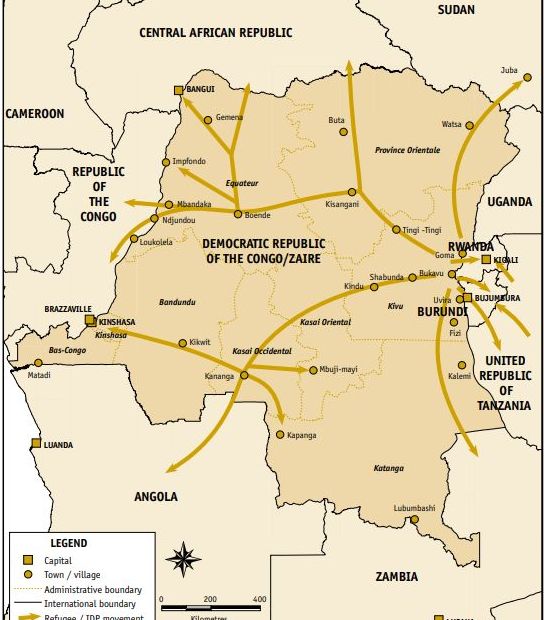 The coalition armies targeted the densely populated refugee camps situated along the Zaire-Rwanda border. During the lightning offensive, the attackers destroyed all Hutu camps in the vicinities of Bukavu and Goma. Tens of thousands of refugees and militants perished in these onslaughts. Approximately 800,000 refugees were forcibly repatriated to Rwanda, but thousands more fled into the dense interior of Zaire. For many, the fear of returning home outweighed whatever hardship may lie ahead. For the next several months, the AFDL would pursue terrified refugees while on their rampage to the Zairian capital of Kinshasa. Along the route, coalition armies systematically destroyed makeshift refugee camps and persecuted anyone who came to their aid. In years to come, Amnesty International would report large-scale massacres in eastern Congo perpetrated by members of the AFDL and its allies. Back on October 18, Felix and Gaston had just finished breakfast when they perceived the first rumble of artillery. Immediately they realized this was no small-scale raid. They soon heard the thunder and spotted the lightning of an approaching army. They looked on as terrified men stampeded and sobbing children were trampled underfoot. Earlier, in one of their late-night bull sessions, Felix and Gaston had hit upon an escape plan. Rather than join a panicked multitude west on Highway M2, Gaston proposed they move straight to the refuge of Nyiragongo. "We know those hidden places. It will be like exiting through a side door when a house is in flames." The two tied on hard-soled shoes, grabbing rifles, backpacks, and water canteens. As Felix exited his quarters to dash uphill, he was astonished to see Hutu fighters stumbling toward the highway, wide-eyed in terror. Some paused long enough to turn and fire a burst of rounds at the advancing enemy, but most fled in full retreat. After several steps, Felix glanced over his shoulder to see Sergeant firing his rifle from behind a large boulder. On a second glance, he saw the top of his head blown off by a mortar blast. As bullets whizzed by his own scalp, he muttered to himself, "At least the boss died with bravery." Gaston had once remarked the name Felix meant "lucky," and on that October day their luck held. Somehow, they managed to climb to the rim of the volcano. The cinders were sharp, and the air sulfuric. Only a handful of frightened survivors shivered with them through one hellish night. At dawn Gaston suggested the two work their way south to Bukavu. He guaranteed they could find safety in the stronghold of his people. "Yes, my mother and sisters are dead, but we Banyamulenge are all like one big family. You will see. When I talk about you, they'll embrace you as one of our own." He joked, "You can practice your dialect on them. They will laugh as you speak." The two traveled by night in the forest. Gaston seemed to have a sixth sense of his whereabouts, evading mayibobo and locating fruit trees. They ran across occasional travelers and numerous corpses. Felix told his big brother it was permissible to search the bodies for valuables. "The dead will not mind," he philosophized. The two could only keep what they could carry: a blanket, a rifle, and pockets of food. Gaston removed a pair of new sneakers from a bullet-ridden body. They were too small for his feet, so he handed them over to Felix. With this gift of footwear, he trudged south along the road to Bukavu. As the two walked through the jungle, Gaston shared his thoughts about the afterlife. "That dead boy whose shoes you're wearing, did he have a soul? What do you think?" "I don't know," came the reply. "I'd like to think so. It would make me feel better." "Then where is his soul now?" Gaston probed. "It was you who said he wouldn't mind if I took his shoes. Where is the he you spoke of?" Felix looked to the sky. "Maybe he's with Imana," he shrugged. Gaston countered, "Do you think you'll go to see Imana if you die?" Felix stared ahead, not wanting to stammer a reply. Gaston shared his heart. "You know I studied with a Jesuit missionary named Francis. He taught me all humans have souls, a part of them that's eternal. He said that is why we bear the image of God. I haven't told you this, but my mentor-priest died in the massacre of my village. "Father Francis was a good man, generous with his time and his books. He told me God was good and saw God's goodness shining through my eyes." Gaston paused and put one hand on Felix's shoulder. "When I saw the priest's mangled corpse at the altar, I ran into the woods. I vowed never to talk about God again, never give Him praise. I questioned myself. How could Imana allow the killing of such a righteous man?" Felix could only shake his head in silence. Gaston shared his soul. "But I see life differently now. Francis told me once, 'There are two types of people in this world. The same harsh sun beats down on both. Some are composed of soft wax and melt away in times of trouble. Others begin like soft clay but harden—become stronger—when the oppressive sun beats down. My son, you are strong; you will survive these difficult times. You must put your trust in God.'" Gaston embraced Felix. "My young friend, I pass this same word on to you because you too need to put your trust in God. You must become strong to survive this time of tribulation." The young man was in tears. "Help me do this, g-Gaston. I don't want to be like the cruel fighters, like Sergeant or like Bodyguard. I want to be like you with g-goodness shining in my eyes." The two boy fighters flung their rifles into the bush. Together they vowed to place their trust in Imana and not in bullets. Within one hundred steps, the two found themselves near a small stream. While they were filling their bottles, they became aware of painted faces to their front and to their rear. A dozen warriors surrounded them; some with spears, some with pistols. The fiercest of them spoke in Swahili, "Who are you? Why are you in our forest?" The thought flashed through the mind of Felix, "Why was I so foolish as to throw away my rifle?" Gaston noted something in the tenor of the voice and in the craft of the spear. He responded in his Kinyamulenge dialect, "We are your family." A puzzled look, then a smile, appeared on the leader's face. "Can you be Gaston Sebagabo?" Rather than answer, Gaston sprang vertically off his feet, twisting a circuit in the air. A second warrior shouted, "Yes, that's Gaston. No one could manage that twirl but him." The leader spoke, "You better thank Imana you weren't carrying rifles. We would have killed you on the spot, thinking you were those two mayibobo who've been harassing our women." Felix exhaled a thank-you to God, the first prayer ever to fall from his lips. 7. Massacre at Chimanga Camp With relief and celebration, the two followed the Banyamulenge warriors up a winding path into the deep foliage. Behind a wall of stone outcroppings, Felix spotted wooden huts half-hidden under the jungle canopy. A settlement had been carved out of the jungle. He was startled to see a hundred women and children emerge to greet the visitors. As Felix looked on, Gaston greeted a dozen of his people by name. "And where are the men?" the returning youth asked. A grandmother answered, "Most are dead, and the remainder are out on patrol to forage and protect." Gaston introduced Felix as an honorary Banyamulenge. "We've been talking about the situation, and my friend here wants to return to Rwanda. He wants to reunite with his kinfolk in Kayove." One of the young warriors spoke up. "On my last foray into town, I heard talk that the army of Kabila is in Chimanga camp, not far from here. The RPF has joined forces with them. They are seeking out refugees who want to voluntarily return to their home country." One of those with a painted face interjected, "Please enjoy our hospitality. Stay a while, rest and refresh, then we will lead you to the camp. But we must be careful. Danger crouches behind every bush and can pounce without warning." Gaston replied, "I know. I didn't see your paint until your spear was at my throat." After ten days of recovery in the hidden stronghold, the two were ready to walk into Chimanga camp, about ten kilometers to the west. Gaston insisted on escorting his young friend into the camp. He wanted to remain for a goodbye and then return to his people. Felix became friends with the youngest warrior—a boy about his age. Upon parting, Felix gave him his tin whistle. "Use this for good," he said. "I've used it for evil, causing the death of many innocent people." On November 20, flanked by several warriors, Felix and Gaston walked down the mountainside toward the refugee camp. When elements of the AFDL appeared at a roadblock, the warriors faded back into the jungle. The two walked on. Felix showed his ID as a Rwandan refugee, and Gaston was accepted as a Banyamulenge ally. When they arrived at the camp, Felix noted RPF troops intermingling with Congolese. The place appeared in confusion. A colonel with the AFDL asked the Hutu refugees to assemble in the center court. He promised them the army would slaughter a cow and give them meat so they could build their strength before their return to Rwanda. A dozen RPF troops then began to register the refugees, grouping them according to their prefecture of origin. Gaston stood next to Felix as he filled out a card requesting transport to the town of Kayove in Gisenyi Prefecture. At the shrill sound of a whistle, all the RPF rushed behind a low wall and hit the ground. The next moment, AFDL soldiers positioned around the camp opened fire on the refugees. At the first crack of gunfire, Gaston pushed Felix to the ground and lay on top of him. "Stay down and play dead," he shouted into his ear. After thirty seconds of rata-tat-tat, the gunfire ceased. With his head twisted toward the wall, Felix opened one eye. He could see two RPF officers in a shouting match. The senior was berating the younger, striking him with a baton. Soon, the same soldiers who had been registering the living Hutus were now stacking their corpses into piles of ten. Although a few survived the slaughter, about five hundred lay dead. Felix was lucky; Gaston was not. In the midst of such carnage, Felix crept from the camp. He walked past the distracted sentries and stumbled toward the Banyamulenge stronghold. He was met along the way by his new friend with the tin whistle. Felix collapsed into shock and tears. 8. A New Name Felix told the Banyamulenge what had happened at Chimanga. The chief mourned the death of Gaston but voiced indifference at the massacre of Hutus. "They got what they deserved. They killed people in Rwanda, then came into Kivu to kill some more." Felix protested, "But I'm Hutu, and I'm peaceful." "Yes," he said, "you became like a brother to Gaston, and as such, you are always welcome among us." Felix felt the burden of sin as he conversed. He knew in his heart he was one of those guilty Hutu who had killed in Rwanda and then killed again in Zaire. He chose not to talk about his past but to bury it deep in his soul. He wanted to make a fresh start to his life. With the downfall of Hutu power, the fortune of the Banyamulenge altered. Once quarry for ex-FAR fighters, they now became the hunters. Felix chose not to pick up a rifle but remained in the camp. At fifteen years old he became a kind of tutor to many of the children, explaining to them the rudiments of arithmetic. After a few months of relative quiet, the community broke up. Some single men joined the fighters moving west; most family units returned to their old villages for rebuilding; a dozen old men relocated to refugee centers in Rwanda, while a few adventurous souls stayed in place to maintain the outpost as a redoubt. It was time for Felix to move on. He sat around a fire for a talk with the chieftain and elders. "You have become a family to me, but I need to return to Kayove." "That's a wise choice," said one of the elders. "We will support you in that decision." Felix paused, not knowing how to voice his request. "I think the Tutsis in my town will be looking for a certain boy named Felix Ndizeye. They may want to punish him for crimes he committed during the war." The chief clicked his tongue but did not pursue the matter. Felix gathered his thoughts. "If you want to help me, perhaps you can provide me with a new name and identity card. I've been thinking a lot about it lately, and it would honor me to resurrect the name of Gaston Sebagabo." An elder wanted to clarify the proposition. "So, do you want to assume the identity of your friend, a Banyamulenge?" "Yes," came the reply. "I can think of no higher honor. He was the best man I ever knew." The chief burst in, "That's not our custom. We could never do such a thing." The oldest of the tribe spoke up, "Many things have happened in the last few years that have not occurred according to our custom. It might be a good thing that, although the man Gaston Sebagabo is dead, his name and spirit live on." They asked Felix to leave the circle while they discussed the matter in private. After several minutes they summoned him back. The chief spoke up, "The grandfather reminded me we do have an ancient custom of outside adoption. We are willing to adopt you as a Banyamulenge, and since no man alive has the name Gaston Sebagabo, that name will be acceptable as your tribal name." The entire community encircled the young man on the following evening. The celebration was muted due to security concerns. A calf was slaughtered and prepared for the feast. Bread, yams, fruit, and honey came out of hiding. Banana beer flowed into one hundred metal mugs. Those who gathered appreciated the adopted son as he spoke to them in his best Kinyamulenge. Since such an adoption had not occurred within the lifetime of participants, the chieftain improvised. He applied a firebrand to the right arm of the adoptee. The brand took the shape of a traditional shield. "You are now part of us, and I pronounce your name to be Gaston Sebagabo." On the next morning, two of the elders accompanied the young man into Bukavu. They brought with them a pouch of French and American money. The streets were in ruin. Death and decay permeated the nostrils. After several vain attempts, they located a Zairian magistrate. In exchange for cash, he wrote out for them a Zarian passport with the name of Gaston Sebagabo. For a few coins more, a small portrait photo was attached to the document. The nationality was given as Zairian, the ethnicity as Banyamulene, and the age boosted to sixteen. An official seal was affixed, and Felix transformed into Gaston. The elders walked Felix (now called Gaston) to the Rusizi Bridge Number One, where they bid him farewell. In spite of the ongoing violence, commerce was brisk across the international frontier. Rural mamas with chickens bound in twine competed for road space with boys pushing overladen bicycles. Gaston showed his papers to officials on the Zairian side and was waved across after a minor bribe. On the Rwandan side, he had to explain that his parents were deceased but he had relatives in Kayove. He stated he planned to visit them. His passport, use of dialect, and knowledge of Kayove convinced an interrogator he was legitimate. With a stamp in his passport, he walked into Cyangugu. Gaston carried few possessions and would have to survive by his wits. The young man held one advantage. He was now part of a tight-knit ethnic group. At a few markets and shops, he tactfully inquired if any Banyamulenge resided in the neighborhood. After several negative responses, one mama looked at his face. "Are you Banyamulenge? You sure don't look it." He responded in his best Kinymulenge and showed her his passport. She smiled. "I think I can help you." Then she led him down a few blocks and into a cabaret. She spotted a few men drinking at a table. "This young man needs your help." The elders stopped their conversation and looked him up and down. One noticed the shield tattoo on his upper arm. Another spoke in heavy dialect, "Are you from our tribe?" Gaston answered that question in the same accent, "I am indeed." He then mentioned the names of his chieftain and a few elders. The three invited him to sit. One inquired of his business. "My parents died in Kivu, and I have distant kin in Kayove," came his reply. "I think I will be safer on this side of the lake." "Safer for sure," one answered. "That's why we're here. In Zaire, it's so dangerous. Everyone wants to be our friend. At the same time, they make us an enemy. I have to read the newspaper to find out whose side we're on this week." The table burst into laughter. "We can help you get to Kayove," the woman spoke up. "You can sleep behind the cabaret tonight. Every day about noon, a UN transport passes this way from Cyangugu to Gisenyi. Only displaced persons can get on board. I know you have an ID, but do you have proof of destination? That's required to board the bus." The men at the table pondered a moment. One said, "Hey, I think there's a UN camp near Byumba exclusively for us Banyamulenge. You can tell the UNHCR that's your destination but jump off the transport wherever you please." "That should work," said the woman. 9. Return to Kayove In the morning, the kind mama spoke to Gaston. "You know, I don't believe your story entirely. I don't think you have relatives in Kayove, but no matter. I had a son about your age, but he died with his father in Goma. You remind me of him." She brushed away a tear. "Look, here comes the UN transport. I'll speak to the driver. She knows me. I give her treats sometimes." With that, the woman pressed Rwandan currency into his hand. "It's not much, but it may help you along the way." Gaston took the last open seat and was soon bouncing north up Highway 11 toward Gisenyi. The bus stopped at several points along the way. Soon the driver counted twice as many passengers as seats. That was the absolute limit, so she locked the doors. As Gason looked out his window, he saw his life pass by—but in reverse. He noted the crossroads of Buhinga where a twelve-year-old boy pushed a cart to the Eagle Nest. The bus paused for a comfort break at Kibuye, the place where the same boy swore allegiance to Hutu power. A short time later, the bus rumbled across the Nyabahango Bridge, a location that once marked the boundary of the French Turquoise Zone. Just before dark, the transport turned a corner and entered into the lakeside town of Kayove. Gaston struggled to the front and told the driver he was sick and about to vomit. She stopped the bus; Gaston hopped out but never reboarded. The driver waited an extra moment and continued her travel to Gisenyi. Gaston was hungry, thirsty, and exhausted. He was surprised at the generosity of the mama in Cyangugu. He was able to buy a few bananas and a box of cold yogurt. He walked a few blocks to the sandy shore of Lake Kivu, stretched out, and quickly fell asleep. Visions of his final flight from Kayove haunted his dreams—the blood, the sergeant, the whistle, and the murder of an old man. He could not imagine who that twelve-year-old might be. He was glad Felix Ndizeye had vanished from the earth. When the sun shone through the clouds, Gaston arose and shook his clothes. Would he be recognized in Kayove? Probably not. He was a full head taller than the preteen and now held a Zairian passport in his pocket. Yet he could not take chances. He determined to make one walk through his old hometown and move on. But to where? Gaston strolled down the shoreline, a montage of memories flooding his soul, nostalgic images invading his mind. There was the home of headmaster Muhoza. A few houses further along he saw the wall of kind-hearted Paula, who helped him as a street urchin, allowing him to care for her goats. Why did he abuse her so? The refugee strolled past a collection of ramshackle huts that his gang of street urchins had once occupied. He stepped into the doorway of the Le Tigre cabaret. "I used to hang out here with Jean-Luc," he mumbled to himself. He shook his head in disgust as he recalled his turn to the evil side. He walked the full length of town, all the way to Serpent Creek, so much the same, yet so different. He reversed course at midspan, ambling down a side path lined with eucalyptus trees. As he looked back at the bridge, his mind flashed to July 1994, when RPF marksmen were shooting at him and two militiamen. Gaston paused at the base of the largest eucalyptus. He shivered in remembrance. "Yes, that's the exact spot where helpless André Muhoza lay quaking in fear. Why did I blow my whistle? Why did I insist on thrusting that blade? Who was that lost boy anyway?" Gaston wandered to the green-painted mosque and from a distance saw the bearded man he had once robbed. He then returned to the big house on the corner. The refugee sat and paced across the street from the front door. He stepped back when he saw the gate swing open. His thoughts raced. "Was that Clemie? So tall, so beautiful! And to think I wanted to slash her." His heart ached. "Who is that with Clementine's mom? He looks like my old classmate, Jean-Luc. Why is she leading him by the hand? Oh, he must be blind." When the three had pulled away in a car, Gaston walked with stealth to the backside of the property. He shinnied to the top of the wall. Beyond a clothesline, he spotted a tombstone. Whose could it be? The name read André Muhoza. He could not stifle the tears and begged God for forgiveness. 10. Trek to Butare Gaston paced up and down the beach for the remainder of the day, deciding what to do next. What might honor his old friend, an invisible ghost he called Gaston Sebagabo the First? Maybe he should attend Bible school? That did not sound right. Maybe he should strive to attend university? That sounded better. He knew the National University was located in Butare, and that's where he set his course. He was only sixteen, so he understood he may need to attend high school classes for a while, but that was okay. He had heard rumors that as a displaced Banyamulenge, he might earn a scholarship. Gaston turned his back on Kayove and began his journey to Butare. He soon ran out of money and became desperate. He did not want to steal, but what option was available to him? The displaced youth sat on a street corner in Gitarama for a week but begged just enough to buy a few sweet potatoes. He was accosted by a street gang and compelled to join in their outlaw ways, but he escaped when their backs were turned. Finally, Gaston ran across a goat market. He gazed for hours as the animals romped and butted heads. His thoughts were interrupted when an old man noticed his animal interest and asked, "So, do you know how to handle goats? I can always use an honest and hardworking young man. It doesn't pay much, but you get room and board." Gaston took the job of assistant goat merchant and stayed for a full year. He worked hard, and the old man grew to trust him. He found peace as a goatherd, reading books and making efforts to overcome his stutter. In this endeavor he was mostly successful, although in times of stress his stammer would return. Gaston impressed his employer with his bookkeeping ability, and soon he was managing his records. He stuck around for a second year and may have found a business career in Gitarama, but he remembered a promise he had made to an old friend. Now at eighteen years old (according to his passport), Gaston possessed a note of recommendation, a savings of 50,000 Rwandan francs, and a suitcase of clothes and books. He caught a bus to Butare. Gaston found his way to the admissions department and spoke with a counselor. He learned that yes indeed scholarships were available for displaced Banyamulenge. A high school diploma was not required if aptitude scores were high enough. Gaston paid to take an entrance examination and returned to the counselor. Perusing the test scores, his advisor told him, "I've never seen such achievement in mathematics and logic. Outstanding. Your reading skill in Kinyarwanda is adequate, but your French is poor and your English is nonexistent. Young man, I understand where you come from, and I sympathize, but you are only eighteen. I suggest you take off a few years to master the languages and fill in the gaps you missed by not attending high school." Gaston was disappointed but determined. He lodged in a meager guesthouse for a few days. On Sunday, he decided to seek God in prayer. An Anglican church was just next door, so he took a seat at 9:30 am. Gaston did not understand the proceedings. He stood when the congregation stood, sang along with the choir, and read the words in the pew Bible. He listened carefully as the Anglican priest delivered his Gospel message. He had questions about the Christian religion, so he hung around in the back of the sanctuary as the rest of the people exited. The vicar of the church, Daniel Mugisha, sat down next to Gaston, and that's when his life took a turn for the better.
End of Story 8 | ||||||||||||||||||||||||||||||||||||||||||||
|
Story Nine ~ April 17 to 27, 1995 ~
1. Orders to Clear the Camp A full year after the onslaught of genocide, the unity governor of Butare Prefecture called a meeting of his top civilian and military advisors. Waving a paper in his hand, he exclaimed, "I have a direct order here from the minister of defense—Paul Kagame. He is crystal clear. The refugee camp at Kibeho must be emptied immediately, forcibly if necessary. He says it's a threat to our national security. Our aim, as always, is to send known génocidaires to prison for adjudication and the remainder back to their hometowns to carry on with their lives. To assist the displaced civilians, I've been directed to establish smaller staging areas around the province. We will gather transport and send them all home." The governor then asked the local commander of the Rwanda Patriotic Front to brief the group about Kibeho. Colonel Muneza stood to speak. "As you know, the Kibeho camp is operated by the United Nations Assistance Mission for Rwanda (UNAMIR). It's grown to become the largest camp in our nation, containing more than 80,000 displaced Rwandans. The camp is located on a plateau of about nine square kilometers near the Kibeho Catholic Cathedral. Most of you know that place to be a center for devotees who believe in the apparitions of Mother Mary. "I understand many fearful Hutus have congregated there to seek the protection of the Blessed Virgin. This camp is policed by a company of Zambian infantry assigned by the UN, but they are too few and do little but wave batons. There are limited medical services provided by Médecins Sans Frontières and other volunteers under the auspices of the UN. "At the present time my army is maintaining a tight cordon around the camp. Any refugee wishing to exit has to pass through our checkpoints. At these gates we have local genocide survivors who will point out criminals. You realize that with such large numbers the process has been slow. But because of the crisis, we are speeding things up. "Also, we believe strongly that Kibeho doubles as an active insurgent camp. We have concrete evidence that inside its perimeter, the Interahamwe are terrorizing residents and using them as human shields as they attempt to escape. These former militiamen chase them and crash them against the wire. I can also tell you this: Many Hutu extremists inside the camp are spreading disinformation. They tell the lie that whoever leaves the camp will be killed. This delusional thinking makes it nearly impossible for us to get these fearful people out of the camp and integrated back into society. General Kagame has concluded the camp must shut down before the displaced people will leave—by force if needed, with violence if resisted." The governor closed the meeting. "As this camp is being cleared, I expect many will die. The United Nations will not like it, but it can't be helped. We are damned if we do and damned if we don't. "I am no friend of the UN. Where were they when Tutsis were being slaughtered? Where were they when my brother and sister were killed here in Butare? But now that one million innocent dead are rotting in the grave, the UN pampers their killers and their accomplices, insisting each génocidaire is entitled to Western-standard human rights." "Those white Europeans treat us Black Africans with contempt—like we're ignorant children. If it were left to the UN do-gooders, that miserable camp would remain open forever, a hotbed of resistance, a resort for criminals, inside our borders yet outside of our jurisdiction. That's not acceptable. Why don't they let us deal with our problems in our own way? He took a deep breath and moderated his language. "Yet we are part of the world community, and we Rwandese will need the help of foreigners to get back on our feet. We must resist their nonsense yet cooperate as best we can to gain their financial assistance. May God help us." 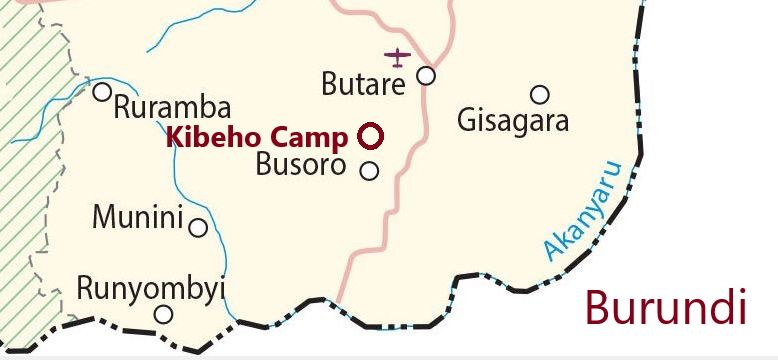 2. Man in a Yellow Coat Thirty kilometers to the southwest—in the center of Kibeho Refugee Camp, Mathilda Umuraza was voicing the same prayer: "May God help us." Looking upon the concentrated mass of humanity, her heart groaned with compassion. At twenty years old, Mathilda was a budding scholar, a warrior for justice, and proud of her Hutu heritage. She had been praying since the day her family fled from the Rwanda Patriotic Front. That expulsion had occurred twelve months earlier during the previous April rain. Her refugee journey took her from Kigali to Gisenyi, then into the Turquoise Zone. Although not subscribing to the extremes of Hutu Power, Mathilda counted the Inkotanyi fighters as foreign invaders. Like most in her caste, she equated all Tutsi people (inyenzi) with accomplice (icyitso) and accomplice with enemy (umwanzi). And in this time of pitched war, she agreed the enemy had to be neutralized. Hutu ideology may have lodged in her head, but in her heart and through her actions, she treated all human beings with dignity. These virtues of charity and justice she had inherited from her father. Preacher Elisha—as her dad was called—was a man of deep faith. His wife had died in a stampede when shots were fired in the Turquoise Zone. His younger daughter had succumbed to severe diarrhea a week later. Elisha and Mathilda were now on their own, two flecks of debris bobbing in a torrent of turmoil. The devoted daughter gazed at her upright father in amazement as he quoted the Biblical figure of Job in regard to his losses: "Naked came I out of my mother's womb, and naked shall I return thither: the LORD gave, and the LORD hath taken away; blessed be the name of the LORD." "Where did my father find such peace?" she marveled. "He is either a fool or a saint. Maybe they are one and the same." Preacher Elisha was dirt poor. He possessed no food or money. He did wear a bright yellow raincoat once handed to him by a UN worker. He also maintained a French New Testament, that he protected from the elements by shielding it under his waterproof jacket. The preacher projected an aura of calm in the midst of chaos as he sat on a wooden box and read words from the Sermon on the Mount:
On April 18, two battalions of RPF soldiers surrounded Kibeho camp. Their orders were to clear the area using any force necessary. To accomplish this end, the military had barricaded the two roads winding into Kibeho. They stopped all food and water distribution from aid organizations and forbade any further UN involvement. Medical personnel were permitted to treat patients only outside the barbed-wire perimeter. The soldiers used the expedient of firing shots in the air to move the residents along. During this process of concentration, several children were trampled to death. The troops also torched many of the huts so residents would not return inside. One group of refugees broke away and started to run into the valley. Rwandan troops fired, and several runaways fell dead. The army command resolved to let no man—especially any potential génocidaire—escape past the cordon. As the process continued, the refugees concentrated into an increasingly tighter area. At this point about 100,000 refugees stood shoulder to shoulder on a mountain plateau about the size of three football fields. Kibeho Concentration Camp took on the character of a dying star. Compressed by its own gravity, it grew denser and darker. No light could escape from this black hole. On April 22, what has been termed "The Massacre at Kibeho Camp" took place within this confined area. Just after 10:00 am, in heavy rain, army forces began firing into the air near the hospital compound. Fearing a riot, some troops began to shoot directly into the crowd, and soon most riflemen joined in, firing indiscriminately. Many Western onlookers claimed their motive became more about revenge against Hutus and less about crowd control. This shooting caused a stampede of human livestock that broke through the razor wire and barricades. Army forces continued to discharge their weapons at fleeing refugees for the next two hours. While initially firing into the massed crowd with rifles, the army later began using heavy machine guns and mortars. Escapees were run down and killed on the spot. Nevertheless, hundreds of internees did escape into the countryside. As conditions in the camp became desperate, terrified herds of people rushed first in one direction, then another. Shifts in the pattern of slaughter caused bodies to be crushed, rolled in human filth, and torn by razor wire. Panicked women and children strove to evade machete-wielding Hutu fighters on the one hand and to escape the bullets of Tutsi soldiers on the other. To avoid injury, some frantic souls leapt into latrine pits, wallowing in neck-deep human muck. Oblivious to the tumult swirling around him, a solitary preacher stood on a wooden box. A dozen downtrodden refugees encompassed him, clasping hands or hugging children. Mathilda did her best to sing a rendition of "Amazing Grace," but her voice faltered. The man in the yellow coat continued his reading from the Sermon on the Mount—that pinnacle of ethical teaching that has set Jesus above any mystic or guru who has ever preached: "But I say unto you, love your enemies, bless them that curse you, do good to them that hate you, and pray for them which despitefully use you or persecute you." As her father encouraged his listeners and restored to them a sense of dignity, Mathilda spotted a mzungu (white man), a visitor she knew to be from the Australian peacekeeping forces. George Gittoes wore a blue UN helmet, held a sketchbook in one hand, and appeared to be taking notes. Then, snapping his book closed, Mister Gittoes took two small boys by the hand and led them toward the front gate. A respite of relative quiet burst into a maelstrom. Explosions rocked the earth, and Mathilda's father vanished into a jumbled hillock of splinters, clothing, and body parts. Mathilda was knocked to the ground. Then, rising to her knees, she limbered her body. Was it an "amazing grace" that she was spared serious injury, or would it have been a greater mercy of God to bestow death at the elbow of her beloved father? A woman with a bandaged head handed a Bible to her. "Maybe you should hang on to this. This book is a survivor too." For several hours, the young woman hugged her knees, rocking gently. She sang hymns to herself before falling into a fitful sleep. The muddy Bible served as her pillow. In the morning, a measure of calm was restored, and she picked her way unmolested to the front gate. A female guard leafed through her tattered Bible and searched her body. Mathilda signed her name in a big book, recorded her hometown, and checked the mark stating she did not take part in genocide atrocities. She then joined an endless procession of bedraggled men, women, and children as they plodded toward the relocation camp near Butare.
3. A Displaced Person Once again, Victor Kwizera teamed up with his comrade, Bernice Mukamana. The two lieutenants worked side by side at the relocation camp near Butare. Their focus was to reissue ID cards to the tide of incoming Hutus who no longer needed the word "Hutu" imprinted on their ubwoko. Both were counting down the days when they could finally shed their army uniforms and resume their pre-war lives. Victor noted the large photograph on his friend's desk: four lieutenants standing side to side near the eastern frontier. He spoke quietly to her, "This war is so cruel. Mwiza was a true friend, and do you know whatever happened to Sano?" She responded, "Yes, Mwiza… Will I ever find a special friend like him again? And I see that earnest face of Sano staring into the camera. He had such a bright future ahead of him. We cannot be sure. We have his journal as a witness, which suggests he was killed at the house of his mentor priest. The cleric he loved turned out to be a lead génocidaire." She shuddered, "I'm glad those murderers have been weeded out of this bunch. It makes our job easier." Bernice wiped a tear and asked him about his experience in Kigali. Victor held a pencil between his fingers. "When I entered the capital on the heels of the Inkotanyi army, I could not even find a single pencil like this one here. Every item of value had been carted off or destroyed. The only objects in abundance were human corpses. I found it so odd how a human life can vanish with one swing of a blade, but a human body can remain for weeks, foul and putrid." Bernice responded, "Yes, I was there too. Remember, you met me for a moment. I helped supervise the burial of thousands in such places as Gisozi and Kicukiro." After an exhausting day of work, a sergeant spoke to Victor in private, "Sir, there's a woman here who demands to see the officer in charge. She has a complaint to lodge against the army and appears very determined." "Show her in," responded the weary lieutenant. A young woman strode up to Victor's desk. Bernice glanced sideways at the developing situation. "Are you in charge?" the woman demanded. Victor looked her up and down. Like most others fleeing Kibeho, her clothes were filthy and ragged. Her hair matted with clods of dirt. A bruise marred her frowning face, and she carried what appeared to be a Bible. After these observations, Victor answered, "Yes, I'm in charge at the moment. How can I help you?" Mathilda raised her voice in anger, "Where can I get the proper forms to report acts of genocide?" "Oh," said Victor. "You've been a witness to the murder of Tutsis? We have forms right here." "No, you dunderhead. I want to report RPF soldiers who purposely killed innocent Hutus at Camp Kibeho." Victor was taken aback. He was about to curse the woman but gulped his words. Lieutenant Mukamana came to his rescue, "Miss, you can't use those words in here. If you won't speak with respect, you'll have to leave." "Respect!" she shouted. "Respect? Just a few days ago I witnessed my father blown to bits by an RPF mortar. Your underlings wouldn't let me report this atrocity. They said there are no forms for such things. Are you telling me that murdering a Tutsi is a crime, but murdering a Hutu is not? What kind of country is this?" With a measure of sympathy, Bernice handed her a blank sheet of paper. "Here, write down your story—names, times, places—I promise to pass it up my chain of command." "I don't want your promise," she raged. "I want justice for my father. I want his killers held accountable. He was such a good man." Victor and Bernice consulted in whispers as Mathilda filled two pages with handwritten scrawl. After several minutes she presented the paper to Victor. Victor read the words and clicked his tongue. "This will never do. These are serious accusations against loyal soldiers of the RPF. I see you have no corroborating witnesses and no direct evidence of how your father died. These allegations are also dangerous for you personally." He then told Mathilda a Rwandan proverb, "If your mouth turns into a knife, it will cut off your lips." Mathilda pondered his words a bit, then responded. "When I was in grade school, I learned proverbs too. I'll recite this one for you. 'In a court of fowls, the cockroach never wins his case.' And now I see clearly you two are the fowls and I am the little cockroach. Such irony! Me in the role of inyenzi!" She laughed to herself. Bernice demonstrated patience with the troubled woman. "I do promise to pass on your letter if you insist, but while you're here, let's get you a new ID card." Mathilda was directed to a basin of water where she could clean her face and tame her hair. She looked at her reflection in the mirror, studying her bruise for the first time. "I guess that's the best I can look." When she was handed the completed ubwoko, she studied it with a look of puzzlement. "I see my proper name, my hometown, and my birthdate, but where is my tribe? Where's the word Hutu? Are you trying to erase a whole population? Isn't that a kind of genocide?" Bernice was astonished. "Didn't you know the Government of National Unity has forbidden you to speak those tribal names? Don't you recognize racial distinctions are what caused the genocide in the first place?" "Excuse me," she shot back. "Hatred is what caused the killing, not tribal affiliation. I was born a Hutu, and I will die a Hutu. Isn't it denying reality to say no tribes exist in Rwanda? Isn't it rewriting history books?" She held up her father's Bible. "Look here. In the Sermon on the Mount, Jesus says we are to love people who are different than us. He taught that Israelites should love Samaritans and vice versa. He never taught His followers to erase racial distinctions, but to embrace them! And still to love. Why can't you be a Tutsi and I remain a Hutu and we still respect each other as neighbors, allowing no special treatment for either tribe? That's the world I want to live in." As she tucked her card into her Bible, Victor warned her one more time, "Don't let your mouth cut off your lips." Mathilda slammed the door behind her and stormed onto a relocation bus already overflowing with fellow refugees all returning to Kigali.
End of Story 9 | ||||||||||||||||||||||||||||||||||||||||||||
Story Ten ~ 1994 to 1998 ~
1. Finding a New Home The nation of Rwanda was left decimated in a literal sense of that word. One in ten citizens had been exterminated. In addition, two in ten had fled into neighboring countries, mainly into refugee centers along the Zairian frontier. On top of this, another million Rwandese were categorized as "internally displaced persons," wanderers without a place to call home. In an ironic twist of numbers, an influx of one million diaspora Tutsis backfilled the void left by one million annihilated countrymen. It was as if an avenging angel had stuck his mixing fork into a paint bucket, scrambled the human contents, poured out a portion, and added outside ingredients. In the Land of One Thousand Hills, not a single mound was left untouched by the tragedy. From Mount Bisoke near Kigali to Huye by Butare to the great mountains of the East Africa Rift to the volcanic peaks of the mountain gorillas, there was desolation on every hill. Would border wars continue into the indefinite future? Would cycles of murder and revenge never cease? Or could reconciliation replace retaliation? Could this textbook example of dysfunctional Africa actually transform itself into a prosperous, unified, democratic, and peaceful republic? Hope and despair wrestled in an uncertain atmosphere. With such widespread desolation, many rootless survivors surveyed the breadth of their troubled nation, seeking a peaceful corner in which to settle. This was especially the case for the Tutsi diaspora, who had never claimed a home in their homeland. Many of these returned citizens wended their way into the university town called Butare. 2. A Lieutenant Returns Ugandan-born Victor had mustered out of the military near the town of Butare and figured he'd seek his fortune in this intellectual hub of the country. He had heard the National University would reopen soon, and he desired to complete the education he had abandoned in Kampala. He soon found a job as an English interpreter for a nonprofit organization. Compassion International, headquartered in the United States, paid him a meager salary and provided him with room and board. Among his roommates were Fred and Emmy. These two evangelists would keep him awake at night with their hymn singing and would pester him with gospel appeals. Fred handed him an English-language booklet called "The Four Spiritual Laws." Victor studied the words, both to polish his English and to consider their message:
Emmy shared with him the story of Nicodemus and asked Victor, "Have you been born again?" Fred added the cryptic saying, "Born once, die twice; born twice, die once." Victor appreciated the word riddle. The two continually invited Victor to their Pentecostal church. Finally, on a September Sunday, the apprehensive soldier-scholar accompanied his two companions to a lot on the outskirts of Butare. Victor noted the parcel of land was in the process of being cleared. A herd of munching goats assisted in that endeavor. At the lot's center stood a half-complete rectangular structure. A dozen sturdy timbers held up an iron sheet roof, while lesser saplings formed a two-meter-high external wall. On this Sunday morning, light burst in from all directions. Although the grounds appeared freshly swept, a powder of red dust settled on every surface. Two cars parked near a rear door and a young man struggled to start a gas generator. As Victor strolled toward a welcoming line, he glanced in the direction of the pastor. Yes, it was he! It was Eric Nshimiyimana, the man he had once interviewed in Bisesero. Emmy introduced Victor to the pastor. "Yes, yes, I think I know this man," Eric spoke to himself. "But you were in uniform two years ago." He probed his memory, looking up and to the left. "Kwizera, right?" "That's correct. It was such a difficult time back in Kibuye. And how are your two kids?" An eye-twinkle preceded a positive response. "Marco is well, and we never lost Hope. But you'll see for yourself. They're inside with my new wife, Esther." As the three friends entered the church, Victor looked around at the space. Crude wooden benches were filled with about one hundred worshippers, and a dozen folding chairs surrounded a raised pulpit. Several carpets and wall hangings added a dash of color to the drab interior. As he stepped in, an electric guitar crackled to life, and the young man thump-tested a microphone. When the singing, dancing, and preaching had concluded, Pastor Eric asked if anyone needed prayer. Victor stepped forward. A dozen hands stretched in his direction as he confessed his faith in Jesus and put his trust in the Lord. Shouts, whoops, and spontaneous cheers reverberated through the space. Victor soon became a regular attender and a volunteer greeter. A few months after his conversion, he recognized a familiar face entering the church. He grasped the hand of his old comrade, Joseph Mugemana from Kayove. Next to him stood a tall young lady he hardly recognized. Could that attractive creature actually be Clementine? His eyes widened. Joseph followed Victor's gaze. "Yes, that's my little sister. She's really blossomed into a beauty, huh? Oh, and that's Jean-Luc holding on to her hand. My poor brother. We've taken him to doctors, but he remains blind." He lowered his voice. "Most of it is physical, but after two months hiding in an attic, he also suffers some kind of post-traumatic stress disorder." As Victor and Joseph engaged in conversation, the shy Clementine looked on from the sideline. How could she forget that brave soldier who had rescued her from the pit of gloom and briefly held her in his arms? 3. A Professor Returns A few weeks after the RPF had liberated Butare, Pascazia Kubwimana returned to her university town. Her property was trampled and her house plundered, but the structures were mostly intact. She discovered a dozen refugees squatting in various corners and permitted one mama with three babies to remain while finding shelter for the others. Because Pascazia knew how difficult it would be to mend her shattered world, she decided to leave Beatrice with her aunts in Bujumbura, at least for the time being. Every morning, she was reminded of Francis, and every evening, she wept herself to sleep. After a soul-strengthening visit from Pastor Daniel, she determined to redeem her time by keeping her life busy. First, she relaunched her effort to earn a law degree, reading legal books in the evening and completing courses by correspondence. Next, the new unity government appointed her administrator of a museum committee. With the aid of a Belgian nonprofit, she initiated the reopening of the Ethnographic Museum. This monumental task of restoration and inventory was the kind of detail work that kept her mind engaged, day by day putting distance between her bloodstained past and her post-genocide world. Yet Pascazia realized she could never return to a time she called before. Beatrice returned to her mother in 1996, not alone but with her Aunt Sonia and a few cousins. The situation in Burundi had deteriorated, and Butare now seemed more stable than Bujumbura. In mid-1997, Pascazia met with the new president of the National University. She shared with him her vision of a permanent memorial dedicated to all students, staff, and faculty who had perished during the one hundred days. By year's end, a stone enclosure set astride the north-south highway. Facing the roadway, visible to all vehicle and foot traffic, a purple banner exclaimed, "Twamaganye abapfobya. Itsembabwoko n'abarihakana. No! to the revisionists. No! to the deniers." Wooden display cabinets spanned the interior walls of this structure with photographs pinned behind Plexiglass. Of 565 known victims, about 300 were exhibited through name and photo. The black and white likeness of Francis Mutabaruka appeared in a corner of the martyred faculty. 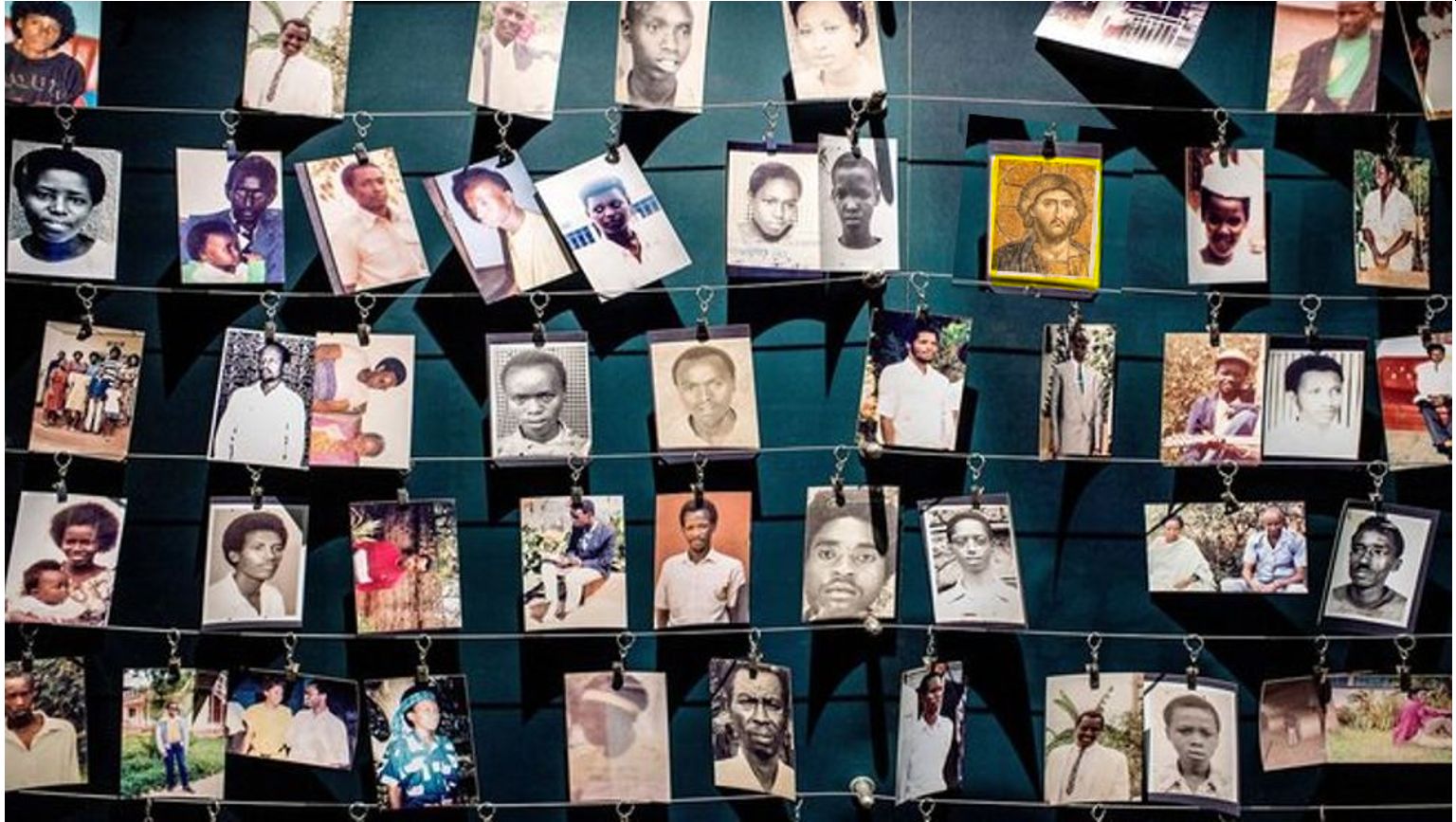 For the next few years, Pascazia stopped by this touchstone on every passing. She would sometimes put flowers in a vase and say to herself, "Yes, these are the martyrs. These are voiceless witnesses." This was the best a sorrowing widow could manage since there was no gravesite for her beloved husband. 4. A Major Returns In early 1997, during a walk through the local market, Victor Kwizera spotted a uniformed officer examining produce. He studied the man's face, circled to his back, and joked from behind. "Major Ntwari, what are you doing in my city?" The officer responded without turning about, "Your city, Lieutenant Kwizera? It's my city too." Victor reacted with surprise, "How did you know it was me without even turning around?" The major laughed. "I've been here in Butare for a full month, and it's my business to know the name and status of every resident. Also, I observed you examining the men's cologne. As a matter of fact, I was about to contact you." "You were?" "Yes, my military section has need of reserve soldiers, not fulltime you understand, but once a month and when called upon for extra duty. I suppose you're in need of more pocket change." Victor smiled as his response. The major set down his potato. "I know your ability. I saw you in action. You're a soldier of intelligence and discretion. That's what I need right now. Why don't you drop by my headquarters this evening to talk, say about seven?" Victor took the card handed to him as Major Ntwari walked to the cashier to pay for his purchase. That evening Victor showed his entry pass to a guard and was escorted to a spartan office. "Not much here," quipped the major. "We're still gathering our supplies. That's one of the things you may be doing if you accept a position." An easy conversation ensued. Victor filled in a few details of his life since they had parted ways in 1994. He mentioned his Christian walk, but the major showed little interest in his religion. Victor then asked, "I read the newspapers every day, but what's going on now? Are we really at war with Zaire?" "It's called the Democratic Republic of Congo now. Its president is Laurent Kabila. He was our friend last year, but this year he's our enemy. I'm a soldier and not a politician, so I try not to dig deep and just follow orders." "So, then you were in Kivu, fighting?" asked Victor. "How was that? What can you tell me?" "I can't tell you much about what I did personally, but I can inform you about the situation in general. We estimate that two million Rwandan Hutus fled into the border camps just inside Congo. Do you think these masses of refugees are avoiding revenge? Or are they escaping the justice that is due them?" Victor responded, "I guess it depends on whom you ask." "Still the diplomat, I see." The major then continued, "The ex-FAR military began to set up replicas of their Hutu power state. Our enemy was massing fighters just a few kilometers from our border. We had to act. We had no choice. Then what began as a border problem expanded into a regional problem. A political crisis exploded into a humanitarian crisis. Thousands of Rwandans died by disease in these festering hellholes. I felt especially sorry for the suffering women and children. Then the Nyiragongo volcano erupted and killed thousands more. Some religious people—perhaps you're among them—called all this divine retribution in response to their murderous deeds within our country." "And what about the authors of the genocide?" asked Victor. "What happened to them?" "We know where they are, and we'll bring to justice as many as we can, but it's a challenge for a small country like Rwanda. Colonel Bagosora plots his revenge from Cameroon; Bizimungu fights rebels in Angola; and Bikindi now sings Twasezereye in Goma with his ballet troupe. Madam Agatha fled to France and is gathering a kind of Akazu around herself. Interim President Sindikubwabo hides out in Bukavu. In revenge of a sort, my troops destroyed Sindikubwabo's big house south of campus. Not one stone is upon another. Have you seen the ruins? "Kwizera, maybe you don't know this: The UN has set up a court in Arusha, Tanzania, calling it the International Criminal Tribunal for Rwanda (ICTR). I suspect most of these big shots will end up there in the dock before foreign judges. That angers me. These crimes were perpetrated by Rwandans upon Rwandans within the boundary of Rwanda. It's not an international affair at all. I'm told the powers at the UN don't trust our government to provide justice for our people." Major Ntwari changed the subject abruptly. "By the way, do you know a certain woman named Mathilda Umuraza? She was in my office a few days ago. Her attitude appeared most negative. She was asking me how to file charges against Inkotanyi soldiers who she claims killed her father. She said you interviewed her once." "Yes, I remember the woman. She was asking me those same questions a few years ago, and I warned her about being so vocal. So, she's in Butare now?" "Yes, she says she's enrolling at the university. Umuraza seems to be a religious person. She was carrying a Bible. Maybe you could speak with her. I'd hate to detain her, but if she breaks the law, I have no choice. You know that tribalism, revisionism, and trivialization of genocide are now counted as criminal offenses." 5. A Troublemaker Returns As the new year of 1998 began, classes resumed at the National University. Returning students could simply re-enroll, but new students needed to undergo an evaluation of documents and submit to interviews in both English and French. As he walked toward the exit, Victor felt dejected. Yes, he was admitted, but only provisionally. He'd have to take one full year of remedial French and pass a language aptitude test in 1999. By chance, he spotted Clementine, looking equally dejected. He nervously approached her. "What's wrong?" he blurted out with embarrassment. Clementine was shocked. Although the two had been exchanging glances in church for a full year, he had not yet spoken to her. Her heart fluttered as she responded. "I'm sad because I can't take regular classes yet. I'm fluent in French, but my English is very bad. I have to study English for a year." Victor couldn't bear to look into her eyes, so he spoke to her feet. "It's very strange. I'm good at English, but up in Uganda I never learned French." He took a deep breath to muster his courage before adding, "You know, maybe I could tutor you in English, and you could help me with French." There, he had said it and now looked into her eyes. She turned her head and spoke to the air, "I will have to ask Joseph about that, but I think it will be okay. Of course, we'll have to be very discreet." "Yes," Victor glowed all over. "Akabanga? A secret? I'll speak with your brother in private, if that's okay with you." After her emphatic yes, she cast a flirtatious smile toward Victor and strode away in wonderment. An angry woman barged past the couple. Clementine stepped backward to give the intruder space. The reckless woman was now shouting at an older man, a professor. "What do you mean I'm not found suitable for the university?" Victor recognized the supplicant as Mathilda. He heard the professor say, "You'll never attend this university if I have anything to say about it." He then turned his back and stomped away in a huff. Calling out her name, Victor caught the attention of Mathilda. He spoke to her, "Is there anything I can do to help you?" She looked at him from head to toe. "I remember you. You once helped me fill out a complaint form. That didn't help at all but got me into big trouble." "Yes," Victor responded. "And if I remember correctly, I told you not to let your lips cut your neck. Is that what you were doing just now with this vice rector?" "You don't understand. None of you Tutsis understand. I can speak French and English better than this so-called professor who just rejected me. I scored the highest on every math test they offered me. Yet this man had the gall to say there was no space for me at the NUR. He said only 120 new students would be admitted for this semester, but forty slots were reserved for diaspora soldiers—that means Tutsis—and fifty for orphans of the genocide—that translates as more Tutsis. What chance do I have?" Her face contorted into tears. "Look, my mother died in the Turquoise Zone, and my father died in the RPF massacre at Kibeho Camp. I explained that to this professor, and do you know how he answered? He said, 'That doesn't count. Only if your parents died at the hands of the génocidaires would that count.' Of course, my dad was killed by a Tutsi explosion." Before running off, she shouted over her shoulder, "I know who you are. You're a friend of that Major Ntwari. You can tell him I'm leaving this rotten country. I have no future here. I've made important friends in France, you know." And with that, she stormed off. 6. A President Arrives On March 25, 1998, the President of the United States, Bill Clinton, paid a visit to Rwanda, limiting his stay to a few hours at the Kigali Airport. He was hosted by the president of Rwanda, Pasteur Bizimungu. In so many words, Clinton offered an apology on behalf of the world for failing to intervene during the Rwanda genocide. "I have come today to pay respects from my nation to all who suffered and all who perished in the Rwandan genocide. It is my hope through this trip, in every corner of the world today and tomorrow, their story will be told: that four years ago in this beautiful, green, lovely land, a clear and conscious decision was made by those then in power that the peoples of this country would not live side by side in peace. "It may seem strange to you here, especially to the many of you who lost members of your family, but all over the world there were people like me sitting in an office, day after day after day, who did not fully appreciate the depth and speed with which you were being engulfed by this unimaginable terror." Clinton went on to suggest if the US had intervened in Rwanda following the start of the genocide, at least a third, or roughly 300,000 lives, could have been saved. He remarked it could have been an easy task to put radio station RTLM out of commission with just a few missile strikes. Pastor Eric was viewing this event on his television with Deacon Victor at his elbow. "Yes," Eric said. "Clinton's words are cheap. Why didn't he take action four years ago?" While not disagreeing, Victor remarked, "You know he's the first world leader who is even attempting an apology, as feeble as it may be." 7. A Missionary Arrives After three months of secret French-language remediation, Victor received a visit from Pastor Eric. "Hey, Brother Victor. I've got some good news. I may need your interpretation skills. There's this guy coming from America, but he's Korean and speaks Korean with some English. Anyway, he's an evangelist and wants to hold Christian rallies all over Rwanda. Can you stay after church next Sunday? He wants to meet with local pastors and interpreters. It may mean some money for you. I'm expecting about a dozen local clergy." On the following Sunday morning, Victor greeted Missionary Park and a few other Korean-Americans at the Pentecostal church. When the service ended, local pastors began to arrive. Daniel was there from the Anglican Church, Pastor Zebulon from the Nazarenes, Monte from the Transformation Church, Willie from the Baptist Church, and even Dante from the Swedish Pentecostals. Victor recognized Oscar, the police captain, and Pascazia, representing the mayor's office. He also greeted Emmy, who planned to serve as a fellow interpreter. Along with this crowd there were campus leaders from a multitude of university groups. After a few hymns, Missionary Park rose to speak. Eric provided the interpretation from English into Kinyarwanda. "Thank you for inviting me to your wonderful town and beautiful country. Imana ni nziza—God is Good!" The audience appreciated his effort at speaking their language. Missionary Park continued, "You may not know this, but next to America and England, the little nation of South Korea sends out the most missionaries in all the world. And many faithful Koreans have immigrated to the USA, especially to my state of California. As a matter of fact, I've personally visited over sixty churches filled with Korean-speaking Christians. "I first came to your country in 1994, just a few months after the war ended. I didn't arrive as a missionary but as a reporter for the Korean Times Newspaper based in Los Angeles. My heart was broken by what I saw four years ago, and my faith was rekindled. I continue to see your suffering and your desperate circumstances, but also, I see your rebuilding, your effort at reconciliation, your forgiveness, but especially your need for Jesus Christ." At these words, the group of pastors broke out into applause and into amens. Missionary Park went on, "I want to bring about forty Korean-Americans to your country, three or four to Butare. Can you help me? We want to speak and teach in your churches and hold a crusade at your football field. We want to turn the hearts of all Rwandans to Jesus." Everyone in the pews agreed to participate in the upcoming event scheduled for July. Eric was elected as a representative to Missionary Park's organization, that was called Christian Life Frontiers. He spent the day coordinating with Jonas, a Rwandan and Park's right-hand man. A budget for Butare was agreed upon at four thousand US dollars. They would now have to wait until July to see what would develop. As the months progressed, Victor held a clandestine date with Clementine every week. The supposed objective was language learning, but this object proved secondary. Victor also accepted the offer of Major Ntwari and began to collect military intelligence in the environs of Butare. Pascazia passed her bar exam and began to dabble in Rwandan law; Pastor Daniel was demoted from his position as Anglican church vicar; Pastor Eric became affiliated with the Assembly of God denomination and began construction of a permanent church building made of brick and mortar; and Mathilda purchased a one-way ticket to France. The April monsoons came and passed—reminding this nation of the devastation that had occurred just four years earlier, a time when one hundred days of genocide descended upon this land of one thousand hills and left one million of its people in the grave.
| ||||||||||||||||||||||||||||||||||||||||||||
So great a Cloud of Witnesses – Visions and Voices of the Rwandan Genocide
Book Two | ||||||||||||||||||||||||||||||||||||||||||||
Book Two IntroductionUp From the Ashes "Miraculous" is the word most commonly spoken to describe the transformation that took place in Rwanda in the two decades following the 1994 genocide against the Tutsis. This astonishing turn of events occurred throughout Rwanda—in its society, polity, economy, and in the very fiber of its people. How did it become possible for ten million traumatized citizens not only to function as neighbors but also to flourish as a nation? The path to wholeness and prosperity was neither smooth nor easy. Hatred and resentment ran deep. Credit belongs to all citizens across the board: to Hutu, Tutsi, and Twa; to Christian and Muslim; to rich and poor; and to the perpetrator, enabler, bystander, victim, and rescuer alike. The mass of society had to buy into the framework of reconciliation, and warring tribes had to set aside their differences. The multitude had to seek out this higher good. However, one man stands out as indispensable to Rwanda's national success. That person is Paul Kagame, first as general of the RPF, then as president of the republic. Without his guiding hand, it's difficult to imagine how Rwanda could have ever transformed from a basket case to a case study. Like the first American president, Kagame has been hailed as "first in war, first in peace, first in the hearts of his countrymen." He maintains such a stellar reputation that African despots in surrounding countries have taken to calling him "Saint Paul." Of course, Paul Kagame does have his detractors, especially among those in the exile community, where he is vilified as dictatorial and anti-human-rights. The president of Rwanda does indeed strictly enforce laws against tribalism, revisionism, and trivialization of genocide. Some opponents would add to that litany "criticism of his policies, his governance, and especially his person." Nevertheless, even his fiercest critics point with pride to the stability and prosperity so obvious in Rwanda today. As a tribute to this nation and its president, many notable Americans have trekked eastward to pay homage to the revived Rwanda. During a short span of four months in 2006, three wise men bearing gifts arrived in Kigali. First to come was Bill Gates, offering prosperity through healthcare and his charitable foundation. A few months later Bill Clinton appeared, once again contrite for his non-intervention, and providing international visibility to an obscure nation. Within a short time, Rick Warren paid a call on President Kagame. He offered evangelical support along with 10,000 copies of his Purpose-Driven Life. 
The three American magi underscored the threefold mend that was taking place in Rwanda: economic, political, and spiritual. In formulating his national policy of reconciliation, Paul Kagame favored the adage, "Truth passes through fire but it does not burn." He believed the road to recovery must begin with indestructible truth. Every Rwandan person had to admit to the truth of the genocide and account for their involvement in it. He insisted no progress could be made without such transparency. Only upon a foundation of truth could justice stand firm. Yet, Western-style justice proved elusive in a place where one million citizens were potentially complicit in the destruction of another million. There simply were not enough judges, juries, and court space to accommodate the decimation. At a rapid pace of one hundred legal verdicts per day, it would still have taken three decades to adjudicate one million criminal cases. Rwandans would have to create their own homegrown method to administer justice on such a massive scale. Only after truth and justice have taken root could a process of reconciliation bear fruit. At a minimum, a genuine reconciliation would entail a willingness to forego personal revenge and an agreement to live side by side in harmony. Such reconciliation would require both superhuman strength and supernatural grace. Yet, miraculously, both seemed to happen. Those of us foreigners who ministered post-genocide in the Land of One Thousand Hills became firsthand witnesses to a miracle of reconciliation. We count ourselves among the great cloud of witnesses. Perhaps it came to pass as written by Saint Paul, the apostle, not the president: "But where sin abounded, grace did much more abound (Romans 5:20)."
| ||||||||||||||||||||||||||||||||||||||||||||
Mission 1998
1. A Seed Is Planted Joy Lee Taylor spread her Korea Times on the kitchen table. Munching pear slices with one hand, she flipped through newsprint with the other. It was her hour to unwind the day. She read with interest news of a conflict along the DMZ in Korea as well as a double homicide in Los Angeles's Koreatown. A special report told of pregnant women flying from Seoul to LA to give birth in California hospitals. It appeared this was a novel form of tourism designed to provide American citizenship to newborn Koreans. Almost complete, Joy turned the newspaper upon its face, displaying its back cover. There she noted a full-page ad from a missionary named Fred Park. His organization, called Christian Life Frontiers, was recruiting volunteers to accompany him on a short-term mission to the troubled nation of Rwanda. The deadline for payment was only five days away. She sighed, folded the paper in two, and tucked it into the waste bin. After removing makeup, brushing, and flossing, she plopped into the king-size bed, unable to fall asleep. First, she fretted about the raucous day just past at Sonoma State University. She was a tenured professor after all. Why should she take flak from that subordinate lecturer? How dare he tell her how to teach! Should she speak with the department chair about the unhappy situation? She placed her hand on the pajama waistband of her snoring husband. Yes, they were still in love, still devoted to each other, and still active in the Baptist church, but where was that lost sense of adventure? Ken said he didn't mind that she earned more money than he did. That was probably true, but deep down, did she herself care? Maybe she did. Maybe she resented her carefree American husband, who always stopped to smell the roses. She smiled as she thought about her son, Jefferson. Three years at Princeton was a financial challenge, but he was fulfilling his dream—or perhaps more properly, her own. She was proud of her firstborn. Unlike most Ivy Leaguers, Jeff held firm to his Christian principles. Madison? Well, Madison was struggling with both her faith and her direction in life. She was certainly smart enough for U.C. Santa Cruz, but there were so many distractions. It was such a liberal place—no structure, lots of parties, lots of discovering yourself, lots for a mother to worry about. But the two of them would be chatting about such things the next day. Her mind shifted to the newspaper and the full-page ad. The picture of gaunt children with big eyes haunted her imagination. It caused her to think of her upbringing in South Korea just after a bloody civil war in which a million of her countrymen had perished. Her family was dirt poor in rural Gyeongnam Province. Yet there always seemed to be enough fruit to eat in her grandpa's orchard. Joy turned and tossed. She later claimed it was a prompting by the Holy Spirit that kept her awake. Finally, she retrieved the newspaper from the bin, smoothed it out, and placed it next to a stack of student homework she planned to grade in the morning. Ken called to Joy just before eight, "Time to get up, Yobo," his Korean term of endearment. "The coffee's waiting for you." She groaned and flopped over. He stepped into their bedroom. "Maddy's coming back from Santa Cruz today, remember? Her old room is ready, but you said you wanted to do some shopping when she comes, to 'jazz it up,' you said." Those promptings roused her from bed. "Give me a few minutes. I'll sit with you at the breakfast table. Uh, there's something important I want to talk about." Ken felt uneasy. Wanting to talk about something important often meant trouble. "What's this about?" His brow furrowed. After thirty minutes of time-biding, Joy appeared at the breakfast table. Ken slapped down his San Francisco Chronicle, mixed his wife a cup of coffee, then sat with arms crossed. "Well?" "Well, what? … Okay." She gathered her thoughts, trying to figure out her opening gambit. "What do you know about the country of Rwanda?" He approached her question academically. "It's in East Africa; the capital is Kigali; there are mountain gorillas; and a few years ago, the whole country was embroiled in a terrible genocide; there was fighting between two ethnic tribes. I think they were called Tutu and Hootsi." "No, silly, they were Tutsi and Hutu. The killing is over, but there's still a lot of suffering going on in Rwanda." "Okay, that's good to know," Ken responded matter-of-factly and reached for his newspaper. Then it struck his dull wits. this line of questions was more than a geography quiz. "So, what makes you interested in Rwanda?" She smiled coyly. "Oh, I don't know. I was just wondering if maybe you'd like to go there with me on a missionary trip. That's all." Ken was speechless. Joy placed the full-page spread on the tabletop. "I know your Korean isn't proficient enough to read all this, but you get the idea. This church group is going to Rwanda on July 6, and my heart is touched by their mission of mercy. You know I've been wanting to go on an overseas mission for a long time, and just yesterday this appeal appeared in my newspaper. Plus, it's a bonus for me. The group is Korean, so I can fit right in." Ken responded, "Well, yobo, I've learned once you sink your teeth into something, you don't let it go. But isn't mid-July the time we planned to go to England to see Jeff on tour with his a cappella singers?" "Yes, I thought about that. I almost bought those London tickets for us. Maybe God held back my hand because He knew this mission trip was around the corner." Ken mused in silence. Now she's invoking God to plead her case. How can I possibly oppose both my wife and my God? Then he spoke softly, "If this is really important to you, I'll support it. We both have the summer off from teaching, our passports are up to date, and we set some money aside for Europe. Let me know how I can help." Adding with growing interest, "And it might be fun for me to go too." She stood from her chair, stepped behind his back, and placed her cheek to the top of his head. A tear moistened his hair. "Thank you. I know I married the right man." After a few phone calls, she announced to Ken, "That was easy. Christian Life Frontiers is meeting with new volunteers next Sunday afternoon. The time is short. We'll have to bring a check if we really want to take the plunge." Ken wondered what his wife had cajoled him into. Joy talked with Madison while at Macy's. The college freshman was happy to hear of her parents' adventure and promised to look after the house while they were away. Joy concluded the talk, "And I'll speak with the Thompsons next door. They'll let me know if any parties are going on." Madison pretended that such a thought had never crossed her mind. Ken spoke to Jeff by phone. His son was disappointed his folks weren't traveling to England. Jeff also mentioned his intense preparation for the Foreign Service Exam. "Dad, pray for me," he said. "I've been aiming for the diplomatic corps since middle school. Some friends and I will be going to New York City in a few weeks to take the test." 2. A Team Is Assembled After their Sunday morning service in Mill Valley, the Taylors drove to a large Korean church in Santa Clara. It was already two o'clock, and the service was letting out. The pungent odor of kimchi wafted out an open door. "The right place," she sniffed. "Just follow your nose." Joy reveled in speaking her native tongue. English took an effort, but Korean flowed with ease. Missionary Park and his wife introduced themselves to the Taylors. Ken looked around to discover—as was often the case—he was the only non-Korean in the room. He pulled his wife aside. "You enjoy yourself. Talk all you want and learn as much as possible." After a potluck of rice, noodles, and kimchi, twenty-five people lingered around three folding tables. Fred Park outlined the mission in halting English. "We will gather in London. I think we'll bring about twenty people from the Bay Area. Several are also coming from LA, and my brother from Denver will take along six from his church. There are eleven provinces in Rwanda called prefectures, and we'll strive to have a three-man team in each provincial capital. We'll talk more about the team structure later. "Oh, and today is the last day to sign up for the mission. We have to buy tickets next week. If you haven't paid yet, my wife will take your check when we end. First let's make sure we answer all your questions." The discourse bounced between English and Korean, landing sometimes in the middle realm of Konglish. Ken felt he was slowing the process by his presence. The Korean-Americans wanted to be polite and include him in their discussion, but that might double the length of the meeting. Ken caught the attention of Missionary Park. "Please, my friends, just speak in Korean. My wife will fill me in later." To make the point emphatic, he relocated his chair outside the circle of tables. The discussion sped up and became more animated. Soon, one of the men tapped Ken on his shoulder and asked to sit outside with him. Once out the door, a conversation ensued. "I'm Bryon Baek," said the man. "I hope you'll join us next month. There are too many women. We need a few more of us guys to balance things out." Bryon spoke about his church, his wife, and his three kids. He said he worked at Apple Computer in Cupertino and was looking forward to a mission trip in Rwanda. Bryon mentioned how Apple would give him free vacation time if he went overseas with a nonprofit organization. Ken spoke about himself, about being drafted into the army, sidestepping the war in Viet Nam, but instead doing a two-year stint at Yongsan Army Base in Seoul. "I met Joy just as I was about to return to Oregon. It was love at first sight. I wanted to marry that young woman on the spot, but she refused. 'Go back to America,' she insisted. 'Get out of the army and come back here as a civilian. If you do that for me, I'll know you're serious. I promise to wait for you. Then we'll talk about marriage.' That's exactly what she told me, and that's exactly how events unfolded. "We lived as a couple in Seoul for almost two years. I was making decent money as an ESL instructor while at the same time honing my Korean language skills. However, my bride was miserable. Being married to an ex-GI, she was insulted on the street with all kinds of profanity. So, we came to California in 1975." "And what do you do for work these days?" asked Bryon. "I have a checkered career," he laughed. "My undergraduate degree was in history. Then, I was drafted, and when I came back to the States, I couldn't find a job teaching in high school. I loved technology and soon began teaching programming languages at a community college, then more practical stuff like how to operate a PC. I worked with a stockbroker for a while, but now I'm teaching American history. My specialty is in the era of the founding fathers." Bryon inquired further, "I understand you have two children." "That's right. Jefferson was born in 1977 and Madison in '79. You see, I was a historian by trade and named my children after the third and fourth presidents." "That's funny," said Bryon. "I'm a Korean patriot and named my first son after the highest mountain in Korea, called Baek Dusan." "And is your son a volcano like the mountain?" "You may find out. My twelve-year-old is coming to Africa with me." With the fellowship hall nearly empty, Joy continued to converse with Sara, the wife of the missionary. When Joy was finally talked out, she conferred with Ken, and then the two of them held hands to pray. At last, Joy found her inner peace. She wrote out two checks for $1725 each: $1225 for round-trip tickets to Entebbe Airport and $500 as a mission fee. It was a done deal. Now it was time to prepare for an adventure. Joy met with her new Korean friends on the following Sunday. She later informed her husband, "We'll be co-leaders of a team in a town called Butare. Fred made that decision because we're both in academia, and that place is home to the National University. Maybe I can even speak on campus. That would look good in my brag book. There's a woman named Lili on our team and a guy named Johnathan. He's kind of a weirdo, but I think you can handle him. Fred wants you to come next Sunday to talk in person about it." At the top of their to-do list was immunization. Joy and Ken traveled to the Kaiser Permanente in San Rafael to receive vaccines against yellow fever, hepatitis, typhus, and tetanus. They were also prescribed once-a-week tablets against malaria. During this preparation time, Ken made great use of his favorite search engine, HotBot, to discover new things about Rwanda. He wanted to learn especially why the US didn't do more to halt the genocide. What was the history behind that? He discovered that President Bill Clinton and Secretary of State Madeline Albright had been spooked into their position of non-intervention. He read that in late 1992, then-President George Bush injected American forces into the failed state of Somalia at the behest of the United Nations. Operation Restore Hope was intended to save innocent Somali lives. On October 3, 1992, terrorists killed eighteen American soldiers who were trying to arrest a tribal leader. News outlets later broadcast gruesome images of jubilant African mobs dragging American corpses through the streets of Mogadishu. Some news analysts suggested the video might have contributed to Bush's loss in the November election. Newly elected president Bill Clinton determined not to involve his administration in African politics. Non-intervention became a cornerstone of his foreign policy toward the continent. Just after his inauguration, Clinton halted Operation Restore Hope and ordered all American forces home by a deadline of March 31, 1994. Just six days after troops exited Somalia, President Habyarimana crashed to his death in Kigali. From this historical perspective, Ken could understand why Bill Clinton might hesitate to intervene in another so-called African civil war. American leaders shuddered at the thought of American corpses on parade in Kigali. Fred Park was pleased to have Ken along on the mission. When they talked the next Sunday, he asked, "Can you help me with communication and preparation of English documents?" He then handed a mission guidebook to Ken, that contained lists of items to pack, tasks to accomplish before departure, a proposed itinerary, Rwandan songs to sing, dos and don'ts in Africa, as well as passages of Scripture. After reading through the thirty-odd pages, Ken understood why Fred had asked for his editorial assistance. Joy delegated two tasks to Ken. He was to procure two tropical sleeping bags and buy four oversized suitcases. He purchased the bags from Camping World and wheeled home the luggage from Goodwill—two personal pieces of luggage and two more for team use. On July 4, Ken phoned his brother Roger, who was a professor at Multnomah School of the Bible in Portland, Oregon. He explained his itinerary: to London and Entebbe by air, then to Kigali by bus. He told of the purpose: "Joy and I will be Bible teaching and maybe doing some evening preaching. I've prepared five lessons based on the parables of Jesus. I think we'll be going on some side trips to places like a genocide memorial, an orphanage, and a refugee camp. Some of that depends on what we find when we actually hit the ground. Missionary Park tells us things are always in flux, and we need to remain flexible." "I'm glad you're going," Roger told Ken. "Such a trip can be life-transforming. I know you and Joy have been on a few missions to that orphanage in Mexico, but this sounds like it will really stretch your faith. Be sure to take lots of pictures and fill me in when you get back. Who knows? Rwanda sounds like a fascinating place. I may want to accompany you some day." Roger continued, "While you're in Africa, I'll be at a conference in Germany. A theolo gian by the name of Wolfhart Pannenberg will be leading a seminar on the historical resurrection of Jesus. Have you heard of this theologian?" "No," admitted Ken. "Look him up online. He has quite the reputation. Also, I plan to visit some Nazi internment camps while in Europe. I'm still looking for a specialty beyond New Testament studies. Maybe I'll find it in Buchenwald. The existence of evil in God's good creation has always been a problem that intrigues me. I want to resolve this puzzle, at least to my own satisfaction." Ken responded, "I'll be looking at some evil stuff in Rwanda too. You know, the Jewish Holocaust and the Rwandan genocide have a lot in common." Ken concluded, "You'll be in my prayers, brother." Roger reciprocated, "You'll be in mine as well."
3. Final Preparation The Bay Area mission team of twenty-one people gathered on Sunday, July 5, at the Korean church fellowship hall. After travelers showed their passport and immunization record, each received an airline ticket. Next, Sara taught the group some children's games like duck-duck-goose. Then the group sang three Rwandan songs shown from an overhead projector. Every participant brought along one empty suitcase to be filled with common material for Christian Life Frontiers. The twenty-two CLF bags would be trucked to the airport the next day. Once there, each passenger would reclaim their luggage for check-in. Ken and Joy helped to fill the containers with books, bedding, donated clothing, and photocopied handouts. Whenever the packers found an empty space, they crammed it with rolls of toilet paper. The most critical cargo turned out to be Korean food. Ken noted that each piece of luggage contained five pounds of rice, gochujang (hot pepper sauce), dried squid, and packaged noodles. In addition, jars of kimchi were double-bagged for extra safety. Ken pondered, "How could Koreans survive without their comfort food?" Each piece of group luggage was carefully weighed to be under fifty pounds. Finally, Missionary Park closed the evening in prayer. Madison, who had agreed to serve as house-sitter and chauffeur, arrived late Sunday night to occupy her newly furnished bedroom. Most of Monday morning Ken and Joy packed, unpacked, and repacked. Only one item could not fit into Ken's suitcase. That was his favorite wide-brimmed fedora. The hat traveled on his head. At midday they departed, picking up Lili in Sausalito, then heading to the San Francisco Airport. With four adults in car seats and three fifty-pound bags in the trunk, Joy's red Pontiac was packed to the gills. After Maddy waved goodbye from the curb at the international terminal, the missionaries were on their way. They met up with Fred and the others two hours before takeoff. Ken pushed their heavy bags to the British Airlines window and watched as one ton of Rwandan supplies passed along the conveyor belt. Just after taking his aisle seat in economy class, Ken's mind projected. "I've not even set foot in Rwanda, yet I can't shake this intuition that I'll be returning to this corner of the world again and again and again and again."
4. First Steps in Africa After nine hours of talking, movie-watching, and napping, Ken and Joy landed at London Heathrow. The Taylors then boarded Kenya Airlines for a seven-hour flight to Entebbe. With travel fatigue and sleep deprivation, the couple was beyond exhausted. Yet, their bodies perked up when their eyes beheld the Ugandan multi-colored wardrobe and their noses inhaled the moist equatorial air. Yes, they had arrived in Africa! The Taylors passed through customs and boarded an eight-passenger bus. With faces pressed to windows, they bumped down a dusty road to a rural compound where a cavernous church interior would serve as their shelter for a few nights. Fred Park supplied cardboard flooring and foam mattresses as travelers wrapped themselves in their tropical bags. The rough-hewn structure was constructed of raw timber packed with mud. Wasps abounded, having made nests in the earthy roof mortar. Some sleepers lit coils of repellent to keep the mud daubers away. This action proved to be a study in the law of unintended consequences. Noxious fumes collecting in the tall rafters eventually caused a hailstorm of intoxicated insects. The midnight bombardment produced multiple shrieks but no bodily injury. Ugandan mamas prepared communal meals for the multitude. The local fare of rice and skewered goat meat was augmented by kimchi and gochujang. Joy looked around at the African and Asian faces and spoke to Lili, "I'm happy my husband came along with me. It's Ken's face that completes the rainbow." After a few days of acclimating to the foreign time and place, the mission convoy proceeded south, pausing one night at an Mbarara guesthouse. A "Welcome to Rwanda" sign greeted the three buses at the frontier. The sojourners walked through a Ugandan checkpoint, struggling to pull luggage. They paid a Rwanda visa fee and then boarded a thirty-passenger bus, this time keeping to the right side of the roadway. It was all so novel and exciting. The gawkers couldn't keep their eyes off the verdant hills and exotic villagers. The thirty-two short-term missionaries booked rooms at the Isano Hotel in Kigali. From the capital they would move on to their provincial sites. After a breakfast of fruit and porridge, the arrivals assembled in the hotel wedding hall. Missionary Park summoned his Rwandan hosts one by one to identify their city and to meet with their counterparts. Eric Nshimiyimana and Victor Kwizera walked to the platform, announced their hometown as Butare, and called out the names of Kenneth, Joy Lee, Jonathan Kim, and Lili Cheon. The newly formed team of six moved to a corner to confer and plan. Ken had already formed an opinion, whispering to Joy. "I bet the tall skinny guy with the small head is Tutsi, while the squat grinning one is Hutu." She scolded him, "Shush. We don't speak of such things in this country. Here we're all God's children." Ken responded with a measure of hurt, "That's true in polite company, but to a historian like myself, the past cannot be rightly interpreted without recognizing tribal distinctions." He then quoted Santayana, "Those who cannot remember the past are condemned to repeat it." Joy rolled her eyes at Ken's scholastic affectation. Eric provided his car as transport for Ken and Joy, while Victor hired a minibus to haul Jonathan, Lili, and twelve pieces of luggage. After a sixty-mile journey, they arrived at their destination. Butare was located three degrees south of the equator, providing the town with plenty of warm sunshine. Yet, at six thousand feet above sea level, the temperature and humidity proved moderate. Fog often crept over the forest floor while breezes cooled the hilltops. Ken said the climate reminded him of San Francisco, but without a nearby ocean. The group checked into a local-style hotel called Eden Garden. The compound consisted of twenty small rooms constructed of cinder block and facing a large inner courtyard. The simple accommodations contained a firm but comfortable bed, a desk with a chair, and a wooden wardrobe. On the streetside of Eden Garden was a welcome desk and restaurant. Behind a second set of doors lay the guest accommodations, consisting of large tables, potted plants, and toilets. Three shower stalls, constructed of wooden planks, stood side-by-side. After checking into their rooms, Victor gathered the four by the wash facilities. "Would you like to get cleaned up?" He then explained bathing procedures to his uninitiated visitors. "Here's how we do it in my country. A housekeeper will give you a plastic tub in which to stand along with one jerrycan of warm water. Please be mindful. Hot water is a precious commodity because it's heated over charcoal. Use half to wash and half to rinse." Victor then pantomimed the process, stepping into a tub. "Use this hand bowl to gather your water. Start by pouring it over your head. We usually wash from the head to the middle, then from the toes upward. The water collects in the tub to soak your feet. Be sure to pick up a towel before entering. I think you all brought your soap, but the hotel mama has some if you need it."
5. Such Delightful People After the guests had freshened up, local clergy filtered in for a meet-and-greet. These arrivals included six pastors, their wives, and one single woman—Pascazia Kubwimana. Through interpreters, Ken and Joy introduced themselves to the couples. Only Pastor Daniel and Professor Pascazia spoke conversational English. Therefore, it was to these two the couple gravitated. Joy especially enjoyed chatting with her fellow female academician, conversing for an hour after the others had departed. Joy wanted to experience Rwanda at ground level and coaxed Ken into a casual walk around the college town. Ken placed the ever-present fedora on his head and stepped into the roadway. Joy passed on information about Pascazia and the tragic death of her husband. In response, Ken shared about Daniel and Esperance and their amazing survival story. "Such resilient people," he marveled. As they strolled down dusty streets, children clustered, whispering to each other, "Mzungu-mzungu" (foreigner-foreigner). Joy knelt to one knee so the kids could see her at eye level. She then purchased a bag of hard candy from a street vendor and began to distribute the sweets into the swarm of outreached hands. After only a minute, she shook the bag upside down, demonstrating to the street urchins that her supply had come to an end. Continuing their walk, Joy observed Rwandan mothers cuddling their babies, college students strolling hand-in-hand, and old people laughing in animated conversation. She remarked to her husband, "Are these the same human beings I've been reading about? Where are the heartless killers and terrified refugees? I thought I'd see devil horns on some of these Rwandans. And yet they appear to be such delightful people." In contrast, Jonathan Kim proved to be decidedly un-delightful, insisting on two containers of hot water, whining about inadequate food, and sulking in his room when not getting his way. Joy told Ken, "I can see why Missionary Park assigned this troublemaker to our team. I think you're the only man on this mission who could handle his childish behavior." Ken smiled. "Well, I've had practice. I raised your son and daughter, didn't I?" Joy and Lili led an assembly of children at the Anglican church. They disgorged the contents of their giant overseas bags: Bible-based coloring books, crayons, scissors, Scotch tape, paste, string, and balloons. Pascazia served as interpreter while local mothers shared in the management and excitement. Joy sprained her ankle teaching a circle of children how a duck might escape a chasing goose. As the event concluded, Joy said to Lili, "We bring bags of stuff to them, and they send us home with bags of love. I think we get the better of the deal." July was typically a dry season in Rwanda, but in 1998 there were unusual rainstorms. In their daily prayer sessions, the missionaries and pastors prayed the rain might stop so people could attend outdoor rallies. Ken talked about this rain problem with Pastor Eric, who replied, "You know, local farmers are praying in opposition to you. Summer rain grows fresh grass for cows." After discussing this theological dilemma, the pastors agreed rain could fall at night, but in the evening the weather should remain clear. Later in the week, it became their testimony that on three consecutive nights rain fell, but during evening hours the sun shone. A series of outdoor crusades was held for three afternoons on a grassy knoll behind the Pentecostal church. On the first day Ken preached the Parable of the Prodigal Son, and on the second the Parable of the Good Samaritan. He was encouraged by the response. Ken had always considered himself an accomplished teacher, but a preacher? No way. Yet, many people raised their hands to accept Christ. Should he and Joy return to Rwanda? Ken was unsure. "Lord," he prayed. "Give me a sign. Do you want us to return to Africa?" On the final evening Ken was preparing to preach from Matthew, chapter 25, the Parable of the Sheep and the Goats. He noticed an ill-clad boy in the distance walking a herd of goats up a nearby hillside. He joked to Eric sitting next to him, "If only some sheep would magically appear. That would be amazing." Eric examined the distant animals. "You know there are sheep mixed with those goats. They aren't white European sheep, but spotted African ones." The shepherd boy then steered his mixed flock behind a copse of trees. Just as Ken walked onto the rickety platform, the boy reappeared on an even closer hill. When Ken began his message, he spoke into the microphone, "I'm about to preach about sheep and goats, and can you believe it? I can see over there by the trees a collection of sheep and goats!" He gestured toward his grazing visual aids. "I could never do that in America." He pondered during a musical interlude, "Could this be the confirmation, the sign I'm looking for?" The boy soon disappeared behind the trees, not to be seen again. After Ken took his seat between Joy and Eric, he said to his wife, "Yobo, I feel the tug of God in this place. I sense his providence everywhere. Do you think we can come to Butare again next year?" She snuggled to his side. "I've been waiting for you to ask me that question." 6. Nyamata Genocide Memorial After seven days of independent activity, the dispersed teams were reunited in Kigali. Fred Park told his group, "We can't minister to these people unless we understand the extent of their suffering. We're going to visit a village named Nyamata. There, on the grounds of a Catholic church, thousands of innocent people were massacred." Along with the rest of the missionaries, Joy and Ken made the pilgrimage to this genocide memorial. They followed a guide whose face and head bore slash scars from a machete attack. Through the interpretation of Eric, Leon Muberuka told the story of Nyamata. 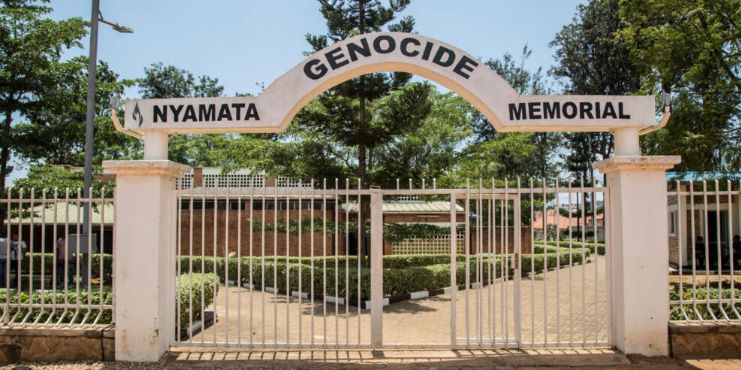
"This is one of six official genocide sites in Rwanda. The ground you're walking on was originally owned by the Nyamata Parish but was desacralized by the Roman Catholic Church two years ago. Mass graves are situated behind the church, which now contain the remains of forty thousand genocide victims. This number includes those who were killed inside the church, as well as others who were exhumed from surrounding areas." Leon went on to explain how he was one of hundreds who sought sanctuary within the walls. He showed the group the exact spot where he was slashed by militia blades inside the sacred space and left for dead. Leon credited desperate prayers to the Blessed Virgin for his miraculous survival. Joy and Ken then joined the great cloud of witnesses—those who would bear testimony to an undisputable genocide of unmitigated evil. They walked into a stained-glass sanctuary, now stained with effusions of human blood. Dark splotches on floors and walls and spatters on ceilings and statuary gave stark evidence of a human slaughterhouse. They stepped into a warehouse mausoleum, an extended charnel house packed with the human remains of the thousands who sought a futile refuge in this house of God. Displayed in room after room, sorted on table after table, and placed in stack after stack were laid out shattered skulls and broken femurs. Some skulls were arranged in pyramids like cannonballs. Skeletal remains enclosed in a parchment of skin, powdery white with lime, showed patches of hair clinging to tops of heads. Most of these corpses were recovered from latrines, which had served as hasty burial pits. In a touch of the macabre, a Catholic rosary dangled from one skeletal hand. A large room contained an assortment of infant-sized corpses; another a collection of killing implements such as machetes, clubs, hammers, and spikes. What struck Ken most was the pervasive odor—musty with corruption, chemical with preservation, and made doubly noxious with manifest wickedness. Stepping into the fresh air, Ken stomped his feet to remove any trace of the odorous lime. He noted the banners announcing in French, English, and Kinyarwanda, "No! to the Deniers. No! to the Revisionists." Ken added more no's to the guest book. After signing his name, he scribbled, "Know Jesus, know peace. No Jesus, no peace." He muttered to himself, Trite but true. Then he spoke to Eric, "My friend, I needed to come to this awful place. I needed to see for myself this depth of human depravity. I feel I'm now fully committed to doing whatever I can to bring reconciliation to the people of Rwanda. Joy and I will return next summer. We know only the gospel of Christ can heal this shattered nation." 7. Gihembe Refugee Camp Christian Life Frontiers made one final stop before departing Rwanda. This was at the Gihembe Refugee Camp located near the border city of Byumba. The bus parked outside this barbed-wire enclosure, and about a dozen hardy visitors shuffled toward the entrance. Eric explained the identity of the inhabitants this way: "The Banyamulenge are a kind of Tutsi people that migrated into Kivu Province a hundred years ago. They consider themselves Congolese, although they speak a dialect of our Kinyarwanda language. I have no trouble understanding their speech. In 1994, when the ex-FAR crossed into Bukavu and Goma, Hutu fighters began to hunt down the Banyamulenge. I guess once the killers got the taste of Tutsi blood in their mouths, they continued to be thirsty. A few thousand of these peaceful people were slaughtered across the frontier in Kivu. The only way to protect them was to get them out of Congo and into Rwanda. My government offered this slice of land as a sanctuary, and the UN High Commissioner for Refugees opened this camp just last year. Our expectation is that the refugees will return to Congo when it's safe." As Ken and Joy listened to these words, they peered through a maze of cyclone fencing. Their eyes were met by smaller eyes peering back at them. To the camp's throng of children, the appearance of bazugu—white-faced foreigners—was an occasion of great amusement. The missionaries passed through a checkpoint on the way inside this UN encampment and were greeted by a delegation of escorts and interpreters. Gihembe Camp turned out to be a makeshift village of ten thousand displaced persons: a dense warren of plastic tarp and timber shelters, some serving as dormitories, some as dining facilities, and others as clinics or schools. Green tarp seemed to serve as walls, while blue tarp provided roofing. All tarps, jerrycans, and fabric sacks were stenciled with a bold "UNHCR." Ken paused at a barren area of red soil. His eyes followed the action of barefoot boys kicking a homemade soccer ball constructed of compressed plastic bags wrapped in twine. As Ken scoped the grounds, he discovered Joy and Lili handing out hygiene bags of soap, shampoo, and toothpaste. Ken snapped long-range photos of his wife's beaming smile, veiled behind a vast sea of ebony faces. These memorable pictures became the centerpiece of his "Where's Waldo?" slide presentation. The visitors consumed their lunch in the camp restaurant. To get to this place they passed through a gauntlet of grabby kids and tiptoed over a wooden plank that bridged a sewerage trench. The canteen turned out to be a cluster of small rooms surrounded by barbed wire. The walls were built of sticks and mud. A single small window provided just enough illumination to see across the wooden table. The dozen missionaries drank warm soft drinks and ate the mushy beans and rice provided by the camp cooks. As they griped about the food, a missionary lady opened her small backpack and pulled out a tube of something. Ken thought she was going to brush her teeth. But this was not toothpaste but a tube of gochujang. Eleven Koreans clapped in delight as she passed around this important condiment of Korean cuisine. Ken whispered to Joy, "I'm experiencing a kind of double culture shock, with one wave crashing from Africa and another from Asia." After the meal, Ken stood in the center of a plaza where tufts of grass struggled to sprout from trampled soil. He taught from John chapter nine—the story of the woman taken in adultery. Ken recruited a female bystander as his visual aid. His experience seemed Biblical. At the appropriate verse, Ken mimicked Jesus by bending over and with his finger writing on the dust of the earth. A few minutes later he picked up a fist-sized stone, shouting, "He who is without sin among you, let him first cast a stone at her." When he had concluded his gospel message, he spoke to Joy, "These people may be unfamiliar with the Bible. Yet, they inhabit Biblical times." The camp was overflowing with children in search of diversion, and the foreigners appeared as a circus arriving in town. To maintain order, one of the camp elders wielded a long stick in his right hand. His job was to keep the little ones at bay. He didn't hesitate to smack a few unruly kids who encroached upon the space of the speaker. As Ken later joked to Fred, "Now I can relate to Jesus even more. He moved offshore in a little boat just to put some distance between himself and the throng. I had to do something like that. I can also understand why his disciples chased away little children. I'm guessing maybe Pastor Simon Peter even carried a stick like the stern-faced disciplinarian." After two days of joyful exhaustion, it was time to leave Gihembe Camp and catch the return flights to San Francisco. To Ken it seemed he was at the bottom of the deepest ocean and was about to ascend to the far-above surface. 8. Comparing Notes The twenty-two-member mission team spent one final night at the cavernous church in Uganda. Jonathan availed himself of this opportunity to pester Missionary Park with complaints, many in regard to Ken's disregard of his dignity. Dusan erupted in anger when he learned he would not be able to carry an enormous drum back to America. Bryan left the cowhide monstrosity with a church caretaker. The exhausted team straggled into Entebbe Airport a few hours before their midnight departure. There were open seats on the large airliner, so Joy rested her head on Ken's lap during the nighttime flight to London. After a five-hour layover at Heathrow, they continued their homeward journey. For this leg of the flight, Ken sat next to Bryon Baek. Next to his was Dusan, absorbed in his own universe, headphones in place, eyes closed, and oblivious to the outside swirl. Bryon asked his aisle mate what he thought about the Rwandan churches. "Different, joyful, amazing, so exuberant!" Ken gushed. "I think about the passage in John where Jesus tells the Samaritan woman, 'True worshipers must worship the Father in spirit and in truth.' These are like the two wings of a bird. Proper worship requires both wings to soar in the heavens. It seems to me, as a longtime Baptist living in America, I have a grasp of Biblical truth, but, sorry to say, not much of a fervent spirit. On the other hand, my African brethren seem to have an abundance of bubbling spirit but a poverty of gospel truth. "But think about it. Consider the blessings of my bookshelf, full of commentaries, devotionals, and writings of C.S. Lewis, all in my native language. Now compare these riches to a rural Rwandan. The Bible itself may be available in his native tongue, if he can read at all, but not much more than that. That's why I think this kind of international Christian intermixing is inspirational to us, educational to them, and beneficial to both. Together we can soar like eagles with two functional wings." Bryon then told Ken his favorite church story. "My team of four went way out into the bush, beyond the grid of pavement and electricity. We walked a mud trail for ten minutes following a city pastor who was expanding his outreach into the countryside. The primitive building was of pole and mud construction fitted out with an iron roof, woven mats over a dirt floor, rough-hewn benches, and colorful fabric walls. "I caught about half the sermon through my interpreter. I understood it to be about the Prayer of Jabez as a means to prosperity. The preacher asked his flock for all the tithe money they could gather. I found it appalling. I asked my interpreter why the preacher needed so much cash. My guide told me, 'In Africa wealth is a sign of success; more money equals more prestige.' I recognized this religion as a kind of heterodoxy, the kind of prosperity gospel that's so prevalent on Christian TV in California. "I also asked my interpreter, 'What's the biggest financial need for this humble church?' His answer surprised me: petrol. He told me the pastor did not want to perform with traditional drums and plucked strings. He wanted electric guitars, keyboards, and microphones to attract a local crowd. That required electricity, and electricity required a generator, and a generator required gasoline. Every Sunday about two jerrycans of expensive petrol powered the preaching. The pastor underscored his penchant for modernity by presenting Dusan with a large old-fashioned drum, and yesterday you witnessed the temper tantrum caused by that unsolicited gift." Ken and Bryon continued to talk for a few more hours. When Dusan began to drool, his father removed the boy's headphones. Bryon excused himself and pulled his mask over his tired eyes. Maybe I should get some sleep too, Ken thought. He lowered his tray table, positioned his backpack and neck pillow under his folded arms, and soon joined the sleeping chorus.
When the cabin lights flashed on, Ken rose from his aisle seat and fumbled his way to the restroom. He splashed cold water on his face and dabbed his nostrils with a cotton swab. He glanced down to notice a powdery smudge. He recognized an unexpected souvenir of red dust and redoubled his pledge to return to the Land of One Thousand Hills. | ||||||||||||||||||||||||||||||||||||||||||||
Mission 1999
1. Lessons Learned The missionary experience transformed both Joy and Ken. The couple began to advocate for Rwanda at churches and various fundraisers. They continued to attend their Baptist church on Sunday morning but in the afternoon drove into San Francisco to participate in a Korean Presbyterian service. Joy was able to praise God in her native language while Ken led a Bible study for English speakers, mostly husbands of Korean wives. As their faith blossomed, their marriage strengthened. In growing nearer to God, they grew closer to each other. Once, when Joy went out shopping with Madison, she confided to her daughter, "This doesn't bring me pleasure like it used to. I think about the poverty in Rwanda—how much this one hundred dollars can provide for them—and hesitate to indulge myself. It seems indecent." She termed her ailment the Macy's effect. As Ken spoke in front of groups large and small, he shared from his heart the four things he had learned while on a mission to Africa:
2. Celebration 99 Throughout the remainder of 1998, Ken and Joy helped Missionary Park in the planning for "Celebration 99," an evangelical effort focused on Uganda, Rwanda, Congo, and Burundi. The couple often addressed large congregations, recruiting short-term missionaries for Christian Life Frontiers. The two went on the road to speak in Los Angeles and Denver. Ken showed visuals of their mission in Africa, of crusades, of genocide, and of the flocks of children at the refugee camp. He challenged his audience to find the lone ivory face in the sea of ebony smiles. "Where's Waldo?" he would joke. "Maybe you should join her next summer," he would enjoin. When Joy spoke to her Korean audiences, her final slide was from the Gospel of Luke: "The harvest is plentiful, but the workers are few. Pray the Lord of the Harvest to send out workers into his harvest field." Indeed, the harvest field in East Africa had become their consuming passion. When the new year arrived, Jefferson phoned his parents, reporting he had been provisionally accepted into the Foreign Service. He would first have to graduate from Princeton in May and then serve an internship in September. He anticipated a few empty months in the summer and phoned his parents, asking if it would be okay to accompany them to Africa. "It would be a great practical experience," he added. Of course, both mom and dad were elated to have their son's company. Five months later, with graduation behind him and armed with a degree in international studies, Jeff returned to California. He volunteered as a special assistant to Missionary Park. Jeff's Korean language skills served him well as he strove to solve problems for the sixty-five missionaries traveling with Christian Life. In anticipation of his upcoming career, Jeff made arrangements to visit US embassies in Kampala, Kigali, and Bujumbura. Once in Africa, Jeff would lead seminars in good government—something sorely needed in all corners of the continent. Because of the large number of travelers, the short-term missionaries departed California in three groups. Fred and Jeff left with the first contingent of twenty; Ken and Joy led a second group of thirty-one; and finally, Bryon led a group of twelve young Korean-Americans who composed the Hallelujah Soccer Team. These young men would compete with local African teams and promote the Christian gospel. The celebration kicked off on Saturday, June 19, in Kampala. The venue was the new Mandela National Stadium. Fifty fans of Hallelujah Soccer cheered as their visiting team played a local football club. Community pastors brought in several thousand of their congregation to enjoy the sport, then celebrate the gospel. Ken was pleased to reacquaint with Victor Kwizera, who sat next to him in a stadium seat. For although he enjoyed his activities in Uganda, his heart was fixed on the people of Rwanda. After a night in Kampala, Ken and Joy bused south with Victor to Butare. For a second year, that university town became their mission base. Once again Ken was teaching and preaching to pastors while Victor provided the interpretation. Joy led a seminar for women. She also met on campus with professors of technology. Once again, Pascazia proved to be her interpreter, traveling companion, and especially trusted friend. Jefferson flitted from city to city with Missionary Park, visiting embassies and assisting the Hallelujah soccer team. Ten days into the mission, the team arrived in Butare for a contest with the National University.
3. Like A Different Planet Jeff couldn't stop talking about his recent experience in Congo. "It was surreal, dystopian. The city was in ruin and the infrastructure in shambles." He was about to explain more to his mom and dad but halted. "Hold on. Let me read you my thoughts." With that, he opened up his journal.
Joy stared at her son in admiration. "Make sure you save that story and keep up your journal writing. I bet that book in your hands is the first of dozens you'll be filling up." 4. Rock, Paper, Scissors On the following day, the sports venue shifted to the Butare stadium. Ken was having the time of his life, preaching, cheering, and even dancing in the aisles. He glanced at his wife to his right and son to his left. "I was born to do this," he whispered to no one in particular. However, his grateful eyes shone upward, so maybe his utterance was directed to his heavenly Author and Finisher. Jeff led a government seminar in the university auditorium. As the contingent from Christian Life took their seats, Pascazia pointed out to Joy, "Look over there. That's the university president. And see, in the front row, there's our governor and mayor. It looks like the whole place is packed with public officials." She concluded, "They must have made today a holiday. This is a good omen. Our government is serious in making Rwanda a better place." As an icebreaker, Jeff called Pascazia onstage to partake in a game called rock-paper-scissors. The local officials laughed as she explained the rules in Kinyarwanda. Jeff then formed the audience into two-person competitors. Losers sat down while winners stood for the next round. The final two standing joined Pascazia on stage for a final face-off. Jeff expounded, "Believe it or not, that was an exercise in nation building. In the United States we have three independent branches of government: executive, legislative, and judicial. They function as a kind of rock-paper-scissors, so no single person can monopolize power. The president vetoes a law; the congress impeaches a president; the court nullifies an act. This is called checks and balances and is one important feature of democratic government." The seminar closed with an unabashed Bible teaching. Ken walked to the podium with a white towel in hand. He spoke briefly from the Gospel of John. "I'm a follower of Christ, and in all things, Jesus is my example, even in the realm of public service. On the day He was betrayed, like a walking illustration, the master of all masters took a towel just like this one and washed the dirty feet of his disciples. Think about that humility! "In a sense, you are the leaders of this reborn Rwandan society. Never forget the towel. Never forget the word 'servant' in the term public servant." As the seminar concluded, Joy noticed her son shuffling toward a young lady. "Ah," she said to herself. "That's Fred's niece from Denver. I wonder if there's any chemistry going on." She decided to sit next to the young lady's mother during the flight home.
5. Recipe for Genocide Mission 1999 grew to a close at Entebbe. For the flight leg to London, Joy asked Ken if it would be okay for her to exchange seats and converse with a new Korean friend. Ken was puzzled but acquiesced. He and Jeff sat side by side with a Korean man at the window seat who introduced himself as Fred Park's brother. He didn't say a word, just looked out the window. Ken surmised Joy was now seated next to this man's wife. Of course, father and son were oblivious to female machinations. Jeff had organized some thoughts on paper, perhaps the germ of a master's thesis. He glanced at his dad, then asked, "Can you help me talk this through?" After a nod from Ken, his son cleared his throat and read the provisional title, Recipe for Genocide. "I've been struggling to wrap my head around what happened in Rwanda in 1994, and I've come up with four ingredients for the genocide: human depravity, tribal identity, government complicity, and international apathy. First off, I think the base ingredient for any evil undertaking is human depravity. That's universal. That's undeniable. That's even biblical." Ken reached for his pocket Bible. Jeff looked up from his notes. "I recognize this as a religious concept, so I may have to disguise the language to publish in the secular academic world. Yet, I believe every human is born with this tendency to commit evil, to act out the worst of our nature, and to abuse other people whenever given license. Virtue must be taught, but vice arrives without invitation. What do you think?" Ken agreed. "The original ingredient of all genocide flows from original sin. The people of Rwanda are no different than any people anywhere in the world." He thumbed to the final plaintive verse in the book of Judges: "In those days there was no king in Israel: every man did that which was right in his own eyes.' "What can that lamentation mean except that whenever a person does what is right in his own eyes, he inevitably does what is evil in the eyes of God? Yes, each of us is full of evil imaginations. We can't help ourselves. What happens in the big city when the lights go out? Good things or bad things?" Jeff added, "Plus, our disordered nature can be inflamed by people around us and especially by those in authority over us. We tend to act out our mischief in the company of a violent mob. I think human depravity must take center stage in such mass killing." He returned to his notes. "The second ingredient of genocide is tribal identity. That's the notion that your tribe, race, or community is superior to others; the doctrine that your identity group enjoys rights and privileges that others do not. It's the reverse of loving your neighbor as yourself." Ken expounded. "Indeed, tribal identity is something we Christians must oppose, whether it shows its ugly head as Tutsi versus Hutu in Rwanda, white versus black in America, man versus woman in feminism, or bourgeois versus proletariat in communism. Whenever your primary allegiance shifts away from God, or even humankind, to an earth-bound group, you descend into tribalism. Cold-blooded murder can occur by a single depraved person rising up against another, but genocide requires something in addition. Genocide requires one tribe seeking to extinguish another." Jeff continued to the next point. "The third ingredient of genocide is government complicity. It's my contention that governments are established to counteract the negative effects of tribal identity and human depravity. So, what results when a national government establishes tribalism as law? Genocide happens! Rwanda happens! When Hutu Power gained control in Rwanda, a clique of leaders became complicit in crimes against humanity, fully embracing tribal hegemony and unleashing a wave of depravity. They forfeited their right to govern." The preacher in Ken jumped in, his passion piqued. "In Romans, chapter 13, the apostle tells us, 'Everyone must submit to the governing authorities, for there is no authority except that which God has established.' I believe that's correct. Human government is God-ordained, but it must be established by majority rule and carried out with respect to minorities. There must be equal justice under law." The historian in Ken pontificated, "Our founding fathers framed the purpose of government upon these four pillars: 'to form a more perfect union, to provide for the common defense, to promote the general welfare, and to secure the blessings of liberty.' Thomas Jefferson and James Madison said it best. I don't think I can articulate it any clearer than these framers of the constitution." Jefferson Taylor—namesake of Thomas—waited for a pause in his father's political sermon. "The last ingredient of genocide is international apathy. I contend this ingredient is a modern innovation. Genocides have occurred throughout the millennia, yet only in the past hundred years has mass murder inside the boundaries of one nation become a moral concern to people inside another." He asked rhetorically, "Could the United States or Great Britain have stepped into Rwanda to prevent the genocide against the Tutsi people? Probably, but nations instinctively behave in their self-interest. It would have taken a superlative act of national resolve to rescue people who are not your citizens. I'm not surprised the international community stood by as a million unfamiliar people were exterminated. It was simply not in their self-interest to risk an intervention. "And it doesn't matter if the General Assembly of the United Nations ratified an official convention against genocide. After all, in 1994 Secretary-General Butros-Ghali did not command his UN army. My thesis contends these four ingredients, all occurring simultaneously, combined in a perfect storm to unleash a horrific genocide in Rwanda." Ken stretched his arm around his brilliant son. "That was quite an exposition. There's only one additional ingredient I might suggest, demonic activity. But given the secular climate of academia, it's probably wise to set that component aside." Ken sighed, "I wish I had your sense when I was twenty-two. But when I was your age, I was on the prowl for a wife. I'm glad I found your mom when I did. Say, Jeff, is there any news on that front?" Jeff hesitated, then grinned. "Let me tell you about Abigail." The man in the window seat smiled in silence as he overheard rhapsodic praise of his daughter. | ||||||||||||||||||||||||||||||||||||||||||||
Mission 2000
1. Distant Drums Once resettled in California, Ken and Joy resumed the routine of their teaching careers. Yet, distant drums continued to echo in their ears, and visions of Africa sparked in their eyes. They both embraced the far-off nation of Rwanda as their long-term commitment. For a brief season, their empty nest refilled and the family of four dwelt under one roof. Jeff was awaiting admittance into the foreign service, reclaiming his high school desk. His obsession was in learning the Swahili language. His distraction was a young lady in Denver named Abigail Park. Madison was getting her derailed life back on track. For a time, she too was living at home, now enrolled at Sonoma State University, commuting with her mom up Highway 101. A resurgent love of art consumed her soul, revealing itself in paint and plaster. With the advent of the new millennium, the nest emptied once again. Jeff left for DC for an internship, settling on a consular career. Madison moved away from the convenience of home to relocate to an art colony near Napa. Like a lunar cycle, the missionary moon waxed toward its fullness. Ken and Joy increasingly spoke in churches, collected donations, and recruited missionaries. Roger had intended to join his brother for the mission, but an unexpected summer class detained him in Portland. In his stead, Roger volunteered his firstborn son, Caleb. 2. MissionMates Fred Park had altered the pattern of previous missions. For the summer of 2000, Christian Life Frontiers would confine its outreach to four big cities: Kampala, Kigali, Bujumbura, and Goma. Butare wasn't even on the radar. The largest megachurch in Korea would take center stage, bringing along their extravagant resources and their coterie of congregants. Fred's strategy was to partner with this super-church to boost the prestige of his ministry. Joy was saddened by this turn of events since Butare had grown close to her heart. For this reason, she made special arrangements to meet up with Pascazia at the National University. Ken was disheartened, telling his wife, "If we ever dig our well in Africa, let's choose a single spot and dig it deep." Over four weeks in July, Korean evangelical teams held high-profile crusades at stadiums in each of the four big cities. Ken was relegated to the position of a warm-up speaker. The keynote events proved complicated because Korean evangelists spoke only their native tongue, which was then interpreted into English, which was in turn delivered into the local language. With fast-talking preachers and reverberating sound systems, Ken experienced a Tower of Babel. Caleb hung out with Missionary Park, spending a week in each metropolis, assisting as he was able, making quick friends, and exploring city streets. Unfortunately, Caleb spent his seven days in Kigali confined to a hotel bed, sick as a dog. He later advised his uncle Ken, "Never eat the salad. I think it was the mayonnaise sauce that did me in." Ken and Joy were unhappy with the unfolding of Mission 2000. After conferring on the matter, the two decided to skip the leg to Goma and instead dig a well at the National University in Butare. Fred Park was not pleased with this declaration of independence and voiced his displeasure. Ken then told Joy, "Maybe this quarrel is a sign we should strike out on our own. I have this idea. What would you think about matching up students from Rwanda with students from the USA?" With his new digital camera, Ken took fifty portrait photos of Christian students, each accompanied by a brief biography. As he told Joy, "Maybe these Rwandese could correspond with Americans like pen pals. I'm thinking we could raise support, and some of our California students could even accompany us here to Butare. Something like this has proven successful with little kids in orphanages. Maybe it can work as well for university students." Ken was paying close attention to his interpreter. "Is it possible for me to partner with Victor Kwizera in a Christian ministry?" Ken had heard stories of Rwandan shrewdness toward bazungu and asked himself, "Is Victor trustworthy? Does he possess the integrity of a faithful Christian?" He was unsure. In preparation for a Sunday sermon, Ken discreetly studied Victor from across a wooden table. His counterpart appeared engrossed in thought, thrashing through his Kinyarwanda Bible. Ken observed smudged text, underscored verses, notes scribbled in margins, and bookmarks tucked between pages. He concluded, "A well-worn Bible is the sign of a God-fearing man." Victor also thought well of Ken Taylor, calling him Mzee Ken. "Your big hat makes you look just like the president of Uganda, Yoweri Museveni. You stand out like a leader with this mzee hat." On the long return flights to California, Ken put his thoughts to paper, sketching out a nonprofit organization with Victor as the agent in Rwanda. He asked Joy, "What do you think of calling it MissionMates?" And with a nod of her head, it came to pass. Once back home, Ken went to work with gospel gusto. He registered the name "MissionMates" (one word and two capital M's) with the state of California, creating a charitable nonprofit organization—a 503 (c) (3). Madison helped him create a website (www.missionmates.org) along with a flashy logo. He established a board of directors with himself as president, his brother as vice president, Joy as treasurer, and Lili as secretary. The first meeting was held on October first, with Roger phoning in his input from Oregon. Out of fifty Rwandan applicants, he selected twenty of the most appealing, ten female and ten male. He polished their narratives and set out to elicit financial support for their living expenses. He spoke at his home church, at Korean churches, and at his College of Marin. His pitch typically ran, "These students are dirt poor! Their meager dollar-a-day stipend barely covers food expenses. Most own only two tee shirts, one is on their back while a second dries on a clothesline. These struggling students are the future of Rwanda. As much as foreigners may contribute to national success, these men and women can do so much more. I truly believe if you want to help the needy in Africa, you should invest here. There is no better bang for your buck." 3. Christmas Appeal Ken raised sympathy, but not much money. Only twelve students were adopted at twenty dollars per month. Some supporters gave donations of clothing; others, a single cash contribution. By December, the amount pledged stood at $240 per month. At Christmastime, Ken mailed out this fundraising appeal:
The Christmas season brought a flood of good tidings from Jefferson. First, he was sworn into the United States diplomatic service. Abigail sat among the cheering throng at the State Department celebration. Jeff said he was the last of the Clinton-era diplomats to take the oath. Second, Jeff proposed marriage to Abby, and she accepted. He sent out a picture from the Capitol steps of himself on one knee extending an engagement ring toward a welcoming hand. The couple announced a wedding date for the following September, when the bride-to-be planned to complete her studies as a nurse practitioner. The engaged couple arrived in California in January. Jeff announced his first assignment would be as a consular officer in Sudan. He would be studying Arabic before shipping out to Khartoum. All the news on this front was positive. Maddy was also thriving, making the dean's list, discovering herself, and dropping by the house a few times a month. With her children stepping up the ladder of success, Mrs. Taylor embodied the joy in her name. | ||||||||||||||||||||||||||||||||||||||||||||
Mission 2001 As the months rolled forward, MissionMates 2001 gained little traction. Only Ken, Roger, Joy, and Lili ended up buying flight tickets to Kigali. Ken took to calling his little nonprofit a mom & pop enterprise. At a mission get-together in May, Roger and Ken set in motion an international student conference while Joy and Lili prepared to teach lessons from the Joyce Meyer book, Beauty for Ashes: Receiving Emotional Healing. 1. The Sunflower Project Roger Taylor held an agenda beyond teaching students. As a Ph.D. aspirant at the University of Oregon, he chose to specialize in Christian ethics, gathering material for a potential dissertation on the problem of evil and moral choice. Over the phone, he asked Ken if he had ever read a book called The Sunflower: On the Possibilities and Limits of Forgiveness, a philosophical biography written by Holocaust survivor Simon Wiesenthal. After a negative reply, Roger read to him a synopsis:
Roger concluded the phone call, "I want to recast this story and ask similar questions of forgiveness but in a Rwandan context. Do you think that will work?" 
In mid-June the team of four headed to Africa. Upon their arrival Roger set about to accomplish his Sunflower project. He recruited Eric to help devise a scenario along the lines of Wiesenthal's dilemma. This was the story as transposed from a European holocaust to an African genocide:
After Eric pondered the words that he had helped to compose, he spoke to Roger, "I'm not sure how even I would respond to such a question, one, two, or three. This situation strikes close to home. You know I witnessed with my eyes a militiaman kill my wife and brain-damage my little girl." He mused, then added, "Tell me, Roger, if you were in the shoes of Flaurien, how would you respond to this difficult question?" Roger began slowly. "You know I've been thinking about the Sunflower question for several months, and now we've layered upon it this Rwandan version. On reflection, I've concluded a proper response must take into account three things: the precision of words, my understanding of Scripture, and the condition of my heart. "First, let me clarify some words for you. I would have compassion for Augustin no matter what. I would treat his wounds and listen to his confession. As a Christian, I must show compassion toward all who suffer. Compassion is what the Good Samaritan showed toward the bleeding Jew on the road to Jericho. But compassion is not the same as forgiveness. "Second is the word absolution. This is a term used in some religious circles for one who forgives sins when he is not personally offended. To absolve means to forgive en masse. I don't think I possess that power, even as a member of the victim tribe. To absolve is God's prerogative. "And so, on a technical level, I would not forgive Augustin because I could not. Before our fictitious encounter, I did not know the man, and he didn't know me. And as I said, I don't think I have the standing to absolve his sin. "However," and here Roger smiled, "that's not the real question, is it? You really want to know this: 'If I had the power and standing to forgive him, would I?' I think my response must be yes. I've come to see that forgiveness is a reflection of my soul's condition. Not to forgive is to hold onto bitterness and resentment. On this ground, and as the Gospel commands me, I must forgive all who ask—and even those who don't. After all, Jesus forgave his tormentors, even from the cross, and He Himself taught me to pray, 'Forgive us as we forgive others.' "Now understand me, Eric. My offer of forgiveness does not release Augustin from the consequences of his actions. I could never condone his atrocities. To the state he is accountable for his crimes, and to God he is accountable for his sins. Plus, forgiving Augustin does not mean that I like him or trust him. To me, forgiveness means I forsake all revenge and free myself from all bitterness. I submit to God to be the judge of his soul. For all these reasons and with these caveats, I will check box number one: Yes, Augustin, I forgive you." When Roger tallied the results of his Sunflower Project, he counted 49 yes votes, 11 no, and 25 not sure. That result showed a greater tendency to forgive among Rwandans than those who responded in Wiesenthal's book. As Ken reviewed the results, he queried his brother, "How about my response? If the genocide leader had asked me, 'Will you forgive me?' I might say this, 'No, I can't do that, because you didn't harm me, but I can introduce you to the one who can forgive you.'" Ken pondered, "And what if the génocider said, 'I've already asked God. I haven't heard back from Him yet. But I really want to know, Ken, do you forgive me?'" The brothers' theological back-and-forth continued into the night. 2. Joseph in Africa While Roger was partnering with Eric, Ken met with Victor, Daniel, and Pascazia. These three Rwandese agreed to form an independent board of directors, calling their nonprofit MissionMates Rwanda. This local board would oversee donated funds and supervise employees within the country. Eric joined this board at a later date. Ken collected another twenty university students to join the African contingent of MissionMates. He took their photos and collected their biographies. He also handed out token gifts on behalf of the twenty American supporters. During the second week of MissionMates 2001, the Taylor brothers conducted the international conference. They marveled as an audience of 200 students filled the NUR auditorium: 100 from Rwanda, 50 from Uganda, 35 from Burundi, 15 from Congo, and a few each from Tanzania and Kenya. Ken and Roger determined to teach about leadership in a way that might inspire African pride. With this in mind, they presented a curriculum called Joseph in Africa: How God Builds Character. Taken from Genesis 37 to 50, each of the ten lessons represented a page in the life of Joseph while he sojourned in the land of Egypt:
The conference was a smashing success. The Rwandan foreign minister dropped in, took the lectern, and spoke a few words about Joseph. Roger delighted students by donning a golden King Tut headdress purchased in the States. Dozens posed for portraits, smiling like a pharaoh. As in most Biblical expositions, Ken as the teacher benefited most from Joseph in Africa. He told his brother about the three P's. "I really don't know a subject until I pray, prepare, and present." 3. Woman at the Well While the international conference took place in the university auditorium, Joy teamed up with Pascazia to lead a women's Bible study at the Anglican church. After Joy taught about Ruth and Boaz, it was Pascazia's turn to take the pulpit. She titled her message Why I Follow Jesus. "I am a woman," she opened. "My gender represents about half the people on this planet." She gestured to her audience. "And how has our half of the world been treated throughout time and across the earth? Not very well, I'd say. "I spent some of my early life in Zanzibar. This island was once the center of slave trade for the Muslim world. I can tell you that even today in that part of Tanzania, non-Muslims and women are treated as second-class persons. "That is not the way of Jesus! His words resonate with my soul at the deepest level and demonstrate a universal ethic above any in the world. Let me show you what I mean. Open your Bibles to John 4:5. We'll consider Jesus's encounter with the Samaritan woman at the well." Pascazia read through verse 26. Then she described the person who drew water at the well. "Picture yourselves as women at Jacob's Well and consider the four barriers that Jesus demolished with a single conversation." "First, the person our Lord encountered was a woman. Do you grasp the significance of that? Jesus was a male, and he actually initiated a spiritual conversation with a female! That was revolutionary at the time, even subversive. Jesus went on to explain spiritual truths with a woman that he did not even teach to his disciples!" With her foot, Pascazia pantomimed kicking over a wall, that she called the gender barrier. "Next, the woman was from a different race than Jesus. Our Lord was from the Jewish race and wore Jewish attire. She was a Samaritan, a race the Jews despised as half-breeds. The Jews had no dealings with the Samaritans. Jews spat out the word Samaritan as if it were a curse. They would rather walk around the region of Samaria than pass through its midst. If your minds move in the direction of Rwandan tribal hatred, you catch the ugliness of this dynamic." With her foot, Pascazia kicked over a second imaginary wall. "Third, we learn the two speakers were from different religions. Jesus tells the Samaritan woman His people worship in Jerusalem. She responds that her people worship on the mountaintop. Jesus freely speaks with this person anyway. BOOM! He kicked over the religious wall too." The fourth wall we see is social class. Jesus was a famous rabbi with at least twelve followers. He was a well-respected Son of David. What about the woman? There are hints in the text about her social status. She came to the well alone. Let me ask you, ladies, do traditional Rwandan women draw water alone or in groups? And when do you walk to a well? Is it at the heat of noon or in the cool of morning? We can assume this woman was shunned by the people of Sychar. Plus, we learn she was married five times and was now living out of wedlock. How scandalous it was! Yet, Jesus, knowing all this, chose to speak with her." Pascazia kicked down a fourth wall. "Jesus shocked the world," Pascazia shouted. "He changed everything, and He did this two thousand years ago. There is nobody else like Christ, never has been, never will be. I don't follow Buddha, or Mohammed, or the preacher down the street. Jesus is my role model. He alone is my sovereign. I will follow Him to my death!" She paused. "And to eternal life on the other side." "And who should you ladies witness to? Only to people like yourself? No! Break down those barriers. Kick down those walls! Talk to people of different genders, races, religions, and classes. Jesus did it, and so should you." Joy Lee Taylor heard the words through the interpretation of Daniel Mugisha. She sat amazed at the spiritual depth of her closest African friend. 4. Season of Weddings While in Rwanda, the missionaries witnessed the wedding of Victor and Clementine. On a Monday morning, they accompanied the couple to a courthouse where the two registered their marriage, signed papers, and—by holding onto a Rwandan flag—pledged allegiance to their nation and its principles. As is the custom in much of Africa, the newlywed wife did not adopt the second name of her new husband, that is, Kwizera, but kept her birth name of Clementine Ndayambaje. Ken joked with Victor, "How many cows did you have to pay for this beautiful bride?" Victor answered in a serious tone, "That's why it's so difficult to marry in my country. It can take an average man five years to gather enough cows to pay a bride's price, and as you can see, my Clementine is way-way above average. Since the day I met Clemi in church, I've been saving, borrowing, and begging." Ken then handed Victor a wedding card with five Benjamin Franklin cows. "Maybe this can help." On Saturday morning they joined in a traditional ceremony in Kigali at an outdoor wedding venue. With three hundred guests in attendance, the newlyweds were arrayed in Tutsi garb, Victor posing with a spear and shield. To symbolize their union, Victor and Clementine sipped sorghum beer from a common wooden jar. Finally, there was a church ceremony with a tuxedo and wedding gown. Ken met Clementine's mother, Adeline, and two older brothers. He heard the story of Andrea and how she, as a newborn, was rescued from the arms of her deceased mother. The precocious young girl was now seven years old. Ken took dozens of pictures and later joked with Victor, "I'm going to tell my church people you've been married three times!" Then after a pause, "Of course, all three times to the same woman." Soon MissionMates 2001 was complete, and the team returned to California. Immediately a second wedding burst upon the horizon. On September 6, Ken and Joy flew out to Denver to celebrate the nuptial vows of Jefferson Taylor and Abigail Park. They were greeted at the airport by Jerry and Susan, parents of the bride. Saturday, September 8, was filled with tuxedos, gowns, flowers, photographers, and well-wishers. The bride and groom glowed resplendent in their wedding attire. Jefferson vowed to love his wife as Christ loved His church, while Abigail promised to give respect to her husband as unto the Lord. Madison sparkled as bridesmaid while Caleb stood tuxedoed as groomsman. Joy and Susan donned traditional Korean hanboks, while other wedding guests wore contemporary attire. It turned out to be a rapturous day all around. During the reception, Jerry informed Ken he had approved of his new son-in-law the very first time he laid eyes on him. "Do you remember that trans-Atlantic flight in 1999? Your son didn't even know who I was, yet within my hearing he spoke all those honorable words about my daughter. What's not to like about such a gentleman?" 5. A Honeymoon to Remember After the wedding on September 8, the newlyweds departed to the nation's capital for a honeymoon. That romantic interlude was intended as a segue to their new life together as a diplomatic couple in Khartoum. On Tuesday morning, Jeff and Abby strolled from their hotel room in Arlington, Virginia. Jeff suggested they take a two-mile walk through the national cemetery. As they ambled toward the Tomb of the Unknown Soldier, they paused to note a cluster of policemen in frantic conversation. Next, they observed swirling strobe lights of military vehicles. Then at 9:37 a.m. they heard an ear-thumping explosion. Their heads spun to the southeast to observe a burst of flame and a rising plume of smoke. What could it be? As they rushed in the opposite direction toward their hotel room, they overheard snatches of conversation. "Terror attacks in New York City! Passenger jets crashing into skyscrapers!" The world seemed to shift on its axis. The Hilton hotel was in panic mode as the couple ran up four flights of stairs, entered their honeymoon suite, and turned on the television. There they sat, transfixed to the screen, for the rest of September 11, 2001. Abby managed to phone her mother, report what they had witnessed, and establish they were safe in a hotel room. Jeff called his father, saying he didn't know what might happen next. However, he figured he would not be traveling to Sudan any time soon. Jeff got word from the State Department that he should shelter in place until further notice. After two nights, Abby agreed to share their spacious suite with an unhoused diplomatic couple. And so, fourteen days passed in a sumptuous honeymoon suite underwritten by the new Secretary of State, Colin Powell. Every day they walked down Sheridan Avenue until they reached the barricades. Staring up into a sky void of aircraft, Jeff knew the nation he loved had entered a brave new world. Jeff and Abby became friends with their hasty roommates. For Jeff, those details of 9/11 were indelibly imprinted upon his mind. He would retell this world-shattering story for the remainder of his years. On September 14, the US Congress authorized the use of military force against terrorists; on October 7, President George W. Bush began a war in Afghanistan; and on December 7, the city of Kandahar fell to coalition forces. It was two days after that benchmark when Jeff and Abby finally arrived at their consular posting in Sudan. The year of 2001 ended on notes of resolution, prayer, hope, and wish. Ken resolved to redouble his efforts on behalf of MissionMates, to witness his faith on a California campus hostile to God, and to knit his family closer together. Jeff was in regular communication with his parents via email. He asked everybody in his circle to pray for peace in his Islamic corner of the world. The place was both unsettled and unsettling. Madison was upbeat about her college work and her art exhibitions, as well as a new relationship now budding with a MissionMates correspondent. "Could this African doctor-in-training be the right man for me?" Finally, Joy Lee wished 2002 would prove to be better than 2001 and that the upcoming year would usher in more happiness and less sorrow than the terror-struck one now passing. But would it prove to be so? | ||||||||||||||||||||||||||||||||||||||||||||
|
Mission 2002
1. A Mission of Nine As winter warmed into spring, prayers of the previous year seemed to take root and sprout. The number of MissionMate pen pals rose from twelve to twenty-six, bringing monthly pledges up to $520. With that increase, Ken figured he'd have to sign up even more NUR students during the coming summer. The world situation settled into a new normal. Jeff reported that with upgraded security, his duty in Khartoum became less insufferable. The exciting news came from Abby, who reported a baby on the way. The unborn appeared to be conceived at Christmastide and was thus due around their first anniversary. Madison proved to be a great help in recruiting Sonoma State students. She herself agreed to participate in Mission 2002 and signed up three friends from her Bible study. With a Korean couple and a tablemate from Ken's men's group, the number of travelers blossomed into nine. Of course, Madison entertained a special reason for traveling to Rwanda. The young man's name was William Bazombanza, a Rwandan by parentage but a Burundian by birth. William was part of the Banyarwanda diaspora, a youth who had returned to a homeland he had never called home. Through email correspondence, William presented himself as a devout Christian, a third-year medical student, and a successful grant writer. Maddy was intrigued but cautious. Joy celebrated the prospect of her first grandchild. What could be better than that? However, she grew prickly about the title "halmoni"—grandmother. She told Ken, "Being a Korean halmoni means being an old woman, and I'm only forty-eight." Joy harbored mixed feelings concerning her daughter's pen pal. Her objections were more visceral than rational. It was never a racial issue. After all, Joy herself had found a husband on a distant continent. The best an anxious mother could do was to wait and to pray. When the school year ended in May, the mission team gathered at a place called Prayer Mountain near Santa Cruz. Overseen by a Korean widow, the hilltop retreat provided a place to lodge, to gather, to stroll, and to plan. Bold Bible verses were placarded to redwood trees, and flower gardens sloped up hillsides. Ken said, "This is a sanctuary where scripture intersects nature." For Mission 2002, Ken and Joy planned to meet with the local board of MissionMates Rwanda, rent a large house, and hire full-time staff. Ken understood that of paramount importance would be the employment of trustworthy Rwandans. He further understood that uncovering such people in a cross-cultural context could prove difficult. Might Victor be such a virtuous person? Madison, along with her college mates Ryan, Kristen, and Terri, planned to spend most of their energy on campus. They would lead Bible studies, recruit pen pals for MissionMates, and soak in the culture. As minimal English speakers, Mr. and Mrs. Choi journeyed along to observe, take photos, and share their kimchi with Joy. Elder Frank Simmons would hang out with Ken and participate as he was able. He joked with Ken, "Traveling to Africa has always been the final checkmark on my bucket list." 2. Land of Imana On June 14, the nine missionaries, along with nine hundred pounds of luggage, took flight to Africa. Victor, Eric, and Pascazia met the arrivals at Kigali Airport. Accompanying this trio was a winsome student named William. The young man politely introduced himself to the whole team. He opened his fine leather briefcase and presented Maddy with a small gorilla woodcarving. "This is just a thank-you for being my pen pal." William went on to share how he was considering changing his career path from medical doctor to Christian pastor. "I have a real knack for writing grants and raising funds," he declared with pride. Madison didn't know what to make of that comment while Pascazia probed deeper with a few questions in Kirundi—the national language of Burundi. As the missionaries traversed the central highway, they gazed at the sights and swayed to the sounds. Elder Frank remarked to the group, "What a beautiful country Rwanda is!" Victor took this opportunity to voice his favorite proverb, "Yes, that's true. Imana spends the day looking after the whole world, but every night He retires to Rwanda for rest." Ken was familiar with the adage and couldn't resist teasing his interpreter, "Perhaps so, Victor. But back in 1994, for at least one hundred days, it appears Imana was resting at night in another part of the world." Once in Butare, the caravan of one minibus and two private cars pulled beside a large house on Cyarwa Road, just south of campus. Eric announced, "This is the house we rented for $120 per month. The old man who owns it lives in Kigali. I think he evicted his lazy son so you could move in." As they walked through the front door, they were greeted by three new faces. Pascazia introduced Immaculée as the hostess of the house, Jacques as the watchman, and Robina as the housekeeper. Victor would serve as the campus liaison and Bible teacher. These were the first four employees of MissionMates Rwanda. The brick house was a substantial structure with two bedrooms downstairs and two upstairs. The Taylors and Chois moved into the ground-level rooms, while the three young women and two bachelors occupied rooms up a flight of stairs. They all shared a single downstairs toilet. Ken and Joy Taylor met with the Rwandan board to develop a mission statement. The final draft read: "The purpose of MissionMates is to lift up Rwanda's next generation of Christian leaders that they may usher Africa into a brighter future. The mission house is intended to be a resource and refuge for students at the National University and an outreach to the local community." To meet this dual purpose, two groups began to gather on the premises. The first assemblage consisted of university students, organized by Victor with the assistance of Ryan. William played gospel songs on his guitar and continued to voice interest in Christian ministry. Over several evenings, a dozen young people gathered in the super-sized parlor for songs, sermons, and Bible study. As hostess, Immaculée supplied refreshments. Elder Frank loved to preach to this buoyant group. The students got to calling the old man Moses because of his white hair and beard. Joy dubbed the second group morning mamas. This assembly would gather at first light on their way to toil in the local fields. Immaculée and Pastor Daniel recruited these diggers as they ambled down Cyarwa Road at the first streaks of dawn. Joy and Robina provided hot tea and sometimes a snack. Jacques the watchman pounded the drum as the women clapped, sang, and gave testimonies. By 6:30 a.m., the hard-working women stepped out the door with hoe in hand, many with a baby on back. Maddy, Kristen, and Terri helped minister to these women and showered them with affection. The college girls became unofficial members of their cooperative. On the first Sunday morning in Butare, the whole team attended the Anglican church of Pastor Daniel. Each visitor stood to greet the congregation, Moses with many words and the Chois with just a wave and smile. After the service, the group gathered at the next-door parsonage of Daniel and Esperance. The pastor voiced sadness because he soon would be stepping down from his position. As he explained, "I was demoted by my bishop for speaking out during the genocide." He paused, "I am twice rejected, first by my Hutu people in 1994 for protecting Tutsis, and now I am rejected by my Anglican church for naming some of the complicit priests." For an hour, Daniel and Pascazia regaled their American audience with harrowing tales of survival. The most exciting story turned out to be the bus ride of a disguised Pascazia into Burundi. The most heart-wrenching was the pursuit and death of her husband, Francis. Before closing the conversation, Pascazia promised to take the four students to the University Memorial. "I'll show you his picture in the panel of martyred professors." Daniel introduced his groundskeeper, Gaston. The pastor explained how he had befriended the young man in church. "I just sat next to him, and he started to talk. He demonstrated a way with animals, and now he looks after my cows, goats, and chickens. He tells me he's Banyamulenge from Congo and was forced to be a boy soldier. He didn't get much of an education, but now he's studying hard, hoping to enter the National University."
3. Briefcase Pastor After lunch, Daniel walked the group about a mile down Cyarwa Road where the gravel turned to dust. He and Esperance provided a tour of goat pens, cow enclosures, sorghum fields, and a banana grove. He was especially proud of his experimental crops. "You know I spent a few years in England and still have friends there." Maddy interjected, "So, is that how your English language got so good?" Daniel responded with a positive nod. He went on to explain the unique nature of each plant in his special corner. "My friends from abroad are sending me different strains of crops. I'm planting them to see what will grow in our unusual climate. Much of my harvest goes to support the AIDS widows who gather at your house in the morning." Terri jumped in, "What? Those women have AIDS?" "Yes, most are destitute Hutu villagers. Many of their husbands died from AIDS; others are now serving time in prison for genocide crimes, while some husbands have run away to Congo. The government has helped these women to form a cooperative and has provided some acreage in the valley to cultivate. I help them to organize, manage meager funds, and speak with local officials on their behalf." He hesitated as if unsure whether to continue. "My government is enlightened, but I have concerns. Tutsi widows and orphans have been provided with scholarships because they are genocide victims, but poor Hutu widows like these receive minimal aid. It's true that many of their husbands, brothers, and sons were part of the killing machine, but that time has passed, and we should be treating all people as Imana's children." Ken could see that Pastor Daniel was doing much good work and wanted to encourage him. Joy asked if he had ever applied for support from a non-governmental organization (NGO). He laughed and told them he had once attempted to receive NGO money. "The only way to get dollars from foreigners is to pay a bribe to local officials who sign off on the grants. I refused to pay such bribes. But with the new unity government in place, maybe I'll apply for grants again." Daniel described one unscrupulous pastor whom he knew and who had paid a bribe to get foreign money. "In truth, my former acquaintance didn't preach or oversee a congregation at all. Instead, he operated his church out of his briefcase. There are many such preachers in Rwanda. We call them briefcase pastors. Such scoundrels pay about one-third of their NGO grants in bribes, put another third into their pocket, and use only the remainder to help needy people." Joy jumped in the conversation, "It sounds like he was an opportunist, schmoozing with Americans to bilk them of money. Daniel, you'll have to help us as we evaluate Rwandans we can trust." At this point, Ken was fingering an envelope in his pocket. However, he was reluctant to give Pastor Daniel this designated gift of $100. He placed the cash inside a new briefcase along with a roll of tape, a stapler, and a box of pens. Daniel humbly thanked his benefactor as he received this unexpected gift. Ken asked, "And does this officially turn you into a briefcase pastor?" Meanwhile, Joy was focused upon furnishing the house. She and Pascazia visited the market nearly every day, buying plastic chairs, wicker mats, kitchenware, bedding, and wall hangings—all in an attempt to transform the lazy bachelor house into a multi-use mission center. On one of these shopping sprees, Pascazia spoke to Joy at an internet café. She began, "My friend, you know my hometown is Bujumbura in Burundi." "Yes," said Joy. "Ken and I were there once. We ate the bulombora fish along the shores of beautiful Lake Tanganyika." Pascazia smiled at the remembrance, then frowned. "You know that William Bazombanza is also from Bujumbura. Right?" "Yes, that's correct." "I hope you're not offended," she continued, "but I did some research on my own. I recognized that young man—something about his voice and manner. It turns out his mother was a friend of my family in the years before the genocide. My sister Sonia knew his parents much better than I did. "Now Joy, you are my true friend, and I know how much you love your daughter. I'm not a stupid woman. I know there is romance in the air between Maddy and Willie. I sensed something was wrong when I first met him, so I did some investigating of Mister Bazombanza. I'm sorry to report I was right about something being wrong." Joy rocked in her chair. "Go on." Pascazia reached across the table to grasp her hands. "First, William is not a medical student in Kigali. He goes there sometimes to work at the Hotel des Mille Collines as a busboy. That's what Sonia told me. Also—and this is harder to say—Sonia reports he keeps a girlfriend there who works at the front desk. Oh, Joy, please forgive me if I am out of line in telling you this news and I won't say another word." After silence and a tear, Joy responded, "No, Pascazia. You're everything I could hope for in a friend. You know I've been praying every day in regard to Madison's happiness. Your snooping was an answer to my prayers." Joy collected her thoughts. "I want to do the right thing. I don't want to hurt Maddy or even Willie. So, please do this for me. Talk with William in private to confirm the story. I don't wish to embarrass him, but if what you say is true, ask Willie to write a goodbye note to Madison, that we will deliver to my daughter. We can be with Madison when she opens the envelope. Urge Willie to go back to Kigali and never contact my daughter again. If he does that, we promise to keep his deception private." Pascazia smiled. "I think that's a wise plan, and you are a kinder person than I would be if I found myself in that same situation with my daughter, Beatrice." Joy answered, "I think I know my child well enough to expect her heart to be crushed for a season, but she's an overcomer. He is truly a charming guy—might I say a lady's man—and his attention has been flattering, but Madison is old enough to know that character is what really matters in a man." A few days later William left town, and Madison read the goodbye letter. Her eyes grew misty, but she told her mom she had never given her heart to this African pen pal. "I like him well enough," she said, "but I've always been a tad suspicious of his motives." When Ken finally got wind of the romance gone awry, he confided to his wife, "William was polite to me, and he claimed to be a follower of Christ. All well and good, but I saw the briefcase he was carrying. He proudly pulled out of it an English dictionary, a medical book, and a Bible. When I casually glanced through the Bible, only the name of some French hotel was stamped on the front cover. I couldn't find a single wrinkled page or underlined verse. You know, I can tell a lot about a person's heart by the condition of their Bible." 4. Ethnographic Museum Pascazia volunteered to lead members of the mission team on a private tour of the ethnographic museum. She opened a few locked cases to pass around artifacts of pre-colonial Rwanda. Maddy tapped on the drums until Victor told her the nature of the round objects that dangled from the cowhide. As a historian, Ken scrutinized all the documentation available in English. He learned that every Rwandan village had once possessed a community drum. Often, when a conflict arose between two towns, warriors would fight each other with arrows and spears. But rather than kill, their object was to capture their neighbor's big drum. If they succeeded, they won the battle. The brochure said, "The losing side was like a roaring lion but without teeth." Pascazia then led them down basement stairs into a storage container. She gestured toward a wicker and velvet sofa. "That's where the last queen of Rwanda spent her final moments. For six days Rosalie Gicanda and her old handmaids lay hidden in this locked vault. Finally, some Hutu staff betrayed her. The frail woman was over sixty years old, yet soldiers sexually assaulted her and dragged her behind the building." Then in silent procession, the group walked outside to face east, looking over a forest of eucalyptus. "And this is where they killed her and the other helpless women. I saw their lifeless bodies stacked over there. Let's look at the marker." And there it was: "Rosalie Gicanda–1928 to 1994. Wife of King Mutara III Rudahigwa (1942 to 1959)." Pascazia passed around an enlarged photo of Queen Rosalie. At that moment, nine missionaries joined the great cloud of witnesses to a genocide that spared no Tutsi—not even a queen. At the next student Bible study, Ken spoke of the queen dowager and about the village drums. "I pictured in my mind a battle between Jesus and the devil. After Christ's victory on the cross, Jesus marched straight into hell and took the enemy's giant drum. Satan is helpless these days but still making a lot of noise. He has no power over you. He can roar and scare you, but the lion has no teeth." 5. Visit to the Batwa Three days before their return flight, the nine missionaries paid a quick visit to a local Batwa compound. Eric and Pascazia led the convoy to this collection of Rwanda's original inhabitants. As of 2002, most Batwa survived on government reservations in a fashion similar to that of Native Americans. The outsiders walked the last hundred meters to the settlement because the roadway became undriveable. In a long cinder-block building of eight rooms, the group visited eight families of a related clan. After ministering to their spiritual needs with prayer and preaching, the MissionMates team ministered to their physical needs. Ken brought along a Polaroid camera and took one picture of each family. Some consisted of only three members. Others had as many as ten. Joy gave the instant photo to the oldest person in each family. For many, this was the first time they had seen a likeness of themselves. They danced in delight. The patriarch in one family smiled broadly for his picture, showing off his mouthful of decaying teeth. The photos revealed twenty-four little kids as well as six pregnant women. Ken explained to Eric his folksy remark: "That's two dozen in the barn and half a dozen in the loft." Madison provided small toys for the children, and Ryan brought a soccer ball as a community gift. The young man then joined the kids in kicking the ball up and down the dusty pathway outside their building. Ryan would punt the ball deep into the banana grove, and a dozen boys would chase after it. Mrs. Choi gave away scissors to several women and asked Pascazia how they would use the implements without paper to cut. The Rwandan replied, "Hair cutting is their first priority." Pastor Eric brought six Bibles to hand over to community elders. Of course, all thirty adults held out expectant hands. But Eric was clever. Before he placed one in a Batwa's hands, he required that person to read out loud the Kinyarwanda verse printed on the inside cover. One woman stomped away in anger because she wanted a book but was unable to read. Finally, Ken had one last item to pass out. This gift was a worn pair of sport sneakers that a soccer player had left at the MissionMates house. As Ken gazed over the sea of faces, he spotted an old man in raggedy clothes. Up until this point, the old fellow had just looked on as a spectator while others were receiving goodies. Ken summoned him forward and asked him to put on the shoes. The man was so excited he began to shake. The rest of the Batwa broke out into laughter. Apparently, this person carried a reputation as being a bit crazy. The shoe recipient didn't comprehend footwear, so Ryan dropped to one knee to loosen and then to lace up the sneakers. This gesture of kindness did not go unnoticed by Maddy. The raggedy man jumped in the air, the corners of his mouth meeting his ears in a grin that would not stop. Eric explained to the missionaries that these shoes were the first ever this sixty-year-old man had ever placed on his gnarled feet. The missionary group left this neglected settlement with all the Batwa dancing and waving to the departing vehicles. Joy remarked, "Not only did we give them physical goods, but also hope that better times lie ahead." She posed for a parting photo with the women and pledged to return to the same settlement in 2003. Her final words, as interpreted to the exuberant Batwa, were these: "Look at me closely. No doubt you will see this mzungu face once again." 6. Bicycle Taxi A common mode of transportation in the town of Butare was the bicycle taxi. This sturdy conveyance featured a padded seat above the rear tire and foot pegs welded to the frame. Riders would grasp the pedaler's seat or wrap their arms around his waist. In recent years these cyclists were restricted to off-pavement use. In a collision with a motor vehicle, a cyclist always bore the brunt of injury. Jacques the nightwatchman augmented his meager wage by earning a few coins pedaling his bike in the daytime. Along with a dozen buddies, he would hang out at the bus stop located at the terminus of Cyawra Road. On June 28, 2002, Joy, Pascazia, and Madison began a long walk to the downtown market. They planned to return by cab with a final load of house furnishings. However, Maddy wanted to experience a bicycle ride before her return trip to America, and it only cost fifty francs per person! Joy recognized Jacques and straddled his padded rear seat. The other two found cyclists and raced ahead of Joy, bumping down a dirt road parallel to the blacktop. The three women chatted carefree as the men churned the bikes forward. Maddy was loving it, her long hair swirling in the breeze. About halfway to the market, a 4x4 truck barreled through an intersection. The driver swerved to avoid the lead bikes but struck Jacques' bicycle full force, propelling the cyclist through the air into a vegetable garden. The bike was discovered mangled under the truck's carriage, while Joy was found crushed behind a rear tire. All were in shock. The young driver quickly exited and then sat on a stone wall with his face in his hands. Jacques was conscious but unable to walk and bleeding from the head. Pascazia took command of the situation. She ordered the driver back into his truck and told the two bicyclists to gently place Joy into the truck bed. With assistance, Jacques managed to sit in the passenger seat. Pascazia hopped into the truck bed and cradled Joy's head in her arms. Madison was hysterical with tears at one moment, the next numb in disbelief, then angry with the driver. Pascazia spoke to her, "I know the way to the trauma ward at the university hospital. I'll go there with your mom right now. Don't worry. Keep the faith. This bicyclist will rush you back to the house. Tell your father what happened and to meet us at the hospital. This guy here will explain the situation in our language." She then spoke a few words to the distraught cyclist. Before breaking away, Maddy wailed, "Is my mother dead? She looks so bad. Can you tell?" Pascazia was knowledgeable enough to feel for a pulse with a grasp to the throat. She shouted, "I think she's alive. Her eyes are still fluttering. Hurry. Go to your father now. Pray all the way. Tell him to meet us at the hospital." Maddy shot down the dirt road on the back seat of the bicycle taxi. In fact, Pascazia had felt no pulse at all. 7. Grief beyond Measure Back at the house, Ken and Victor were sitting in the parlor engaged in light conversation. Ryan and Frank were upstairs packing bags. Terri and Kristen were with Immaculée in the side yard passing out final sweets to local children. The Chois were strolling somewhere in the neighborhood, taking last-minute photos. At about 10:00, Ken heard a bicycle clatter to a stop just outside the front door. A young man rushed in babbling something in Kinyarwanda. All the native speakers rushed to his side, eyes wide with disbelief. With tears streaming down her face, Madison ran into the arms of her father. She could hardly choke out the words. "Oh, Daddy! There's been a terrible accident. Mom was on the back of a bicycle when a truck hit her and ran her over. She's bleeding and unconscious. Jacques was hit too, but he seems to be okay. Pascazia took Mom to the hospital. We have to go now. We have to see if they can keep her alive." After a sob, she added, "And it's all my fault. I'm the one who insisted we ride into town on those stupid bicycles." Victor was hearing the same story in two languages. He sent the bicyclist to fetch a taxi cab, then hugged Ken, saying a car would take them to the hospital right away. Ken responded, "Yes, we'll do that. But first let's call all us Mission-Mates together for a circle of prayer." Once gathered in the parlor and appraised of the situation, the six Americans and six Rwandans formed a circle. Maddy sobbed as Ryan tried his best to console her. Elder Frank pleaded with God to hold Joy in His arms and keep her alive. Like the concerned friends they were, Terri and Kristen cried along with Madison. Two taxis appeared outside the house on Cyarwa Road. Victor, Ken, Madison, and Frank piled into the first, while the second carried Immaculée, Terri, Kristen, and Ryan. Sobs, sighs, and muttered petitions reverberated all the way to the hospital gate. Victor took charge, speaking with sentries and admission nurses. After rushing down a corridor, they spied Pascazia sitting head down outside a closed door. She burst into tears at the sight of Ken and Madison. She looked Ken in the eyes. "I'm so sorry! So sorry!" Ken pleaded for a positive response, "How is she? She's still alive, right? Am I right?" "I don't know," she fudged her response. "It doesn't look good for her. The doctor is examining her right now. He said he'd be out soon to give a report. We'll have to wait." In fact, the wait was short. Dr. Carlos—a trauma specialist from Cuba—swung open the door into the waiting room. "May I speak to the family alone?" His somber tone and manner let all know that the news was tragic. Ken and Madison followed the doctor into a private room where he asked them to sit on a worn couch. "I'm sorry to say this, but the lady has died. Her chest was crushed, and her ribs pierced her heart and lungs. There was nothing I could do." He paused. "Given the extent of her injuries, there's nothing any hospital in the world could have done. It appears she died immediately. I don't think she suffered. I'll give you a full written report tomorrow. Again, I'm sorry for your loss." When Ken and Madison rejoined the group, Victor introduced his military colleague, Colonel Ntwari. "This man is a good friend of mine. He'll do anything he can to help us get answers." Victor also introduced the police chief, Oscar, and interpreted his words to the effect that the driver was being detained at police headquarters and his truck was impounded pending investigation. With a notebook in hand, the police chief then commenced a long conversation with Pascazia. Only Madison and Ken were permitted to see the deceased Joy Lee Taylor. Her body lay on a gurney, tightly bundled in a white sheet from neck to toe. The top of her head was bandaged, but her face appeared undamaged. Her eyes were shut tight as if in a profound sleep. However, when Ken put the back of his hand to her cheek, her flesh was cold to the touch. Ken's face contorted in grief, and in a dam burst of emotion, he wailed without restraint, "Oh, my love, my life, how can I possibly live without you? You are everything to me." The motherless child stepped back in a subdued sob as her father looked upward to heaven, a torrent of tears streaming down his cheeks. Before returning to the house to navigate the troubled waters that lay ahead, the missionaries all paid a visit to Jacques. He sat upright in bed, awake and stable, with a cast on his leg, a drip in his arm, and a wife by his side. When Victor informed him of Joy's death, Jacques convulsed into tears. "It's not my fault," he shouted to Victor. "It happened so fast! I didn't even see the truck coming at me." When they returned to the house, Pastors Eric Nshimiyimana and Daniel Mugisha were sitting at the dinner table sipping African tea. Various friends, university students, and morning mamas joined them, concern etched on each face. Mr. Choi sat in shock with his wife. He apologized to Ken for not being present at the hospital. Madison retreated to her bedroom to grieve in private. Ken pulled himself together to manage the crisis. He gathered around himself Frank, Eric, Daniel, and Victor. Ryan Roberts asked to join the group. They clasped hands to pray, Frank taking the lead. The man they called Moses petitioned God to provide grace, courage, and wisdom on how to proceed in this awful hour. Victor spoke first. "The death of an American citizen is a big deal in Rwanda. The local police and doctors are on edge. I told the hospital chief that Mr. Taylor planned to ship the body back to America for interment. He told me no one in Butare has the necessary credentials to embalm a body for international shipment. He asked to make immediate arrangements to transport Mrs. Taylor to Kigali. You'll have to sign papers for that." Ken nodded his consent. Victor continued, "The administrator will be here in the morning. He will bring Doctor Carlos' report and a stack of papers for your signature. Your wife should be in Kigali by tomorrow night." At the word wife, Ken descended into an abyss of grief. Eric entered the conversation. "The Assemblies of God has a big church in Kigali. I've talked to my friend, Apostle Anselm. He is willing to host a funeral next Wednesday on July 3. Will that be okay? I can make arrangements for you." Again, Ken nodded his agreement. Ryan spoke up. "Pastor Daniel advised me to phone the US embassy. I spoke with a consular officer named Judy Adams. She was sympathetic and said she will personally drive to Butare to speak with the doctors." Ryan looked at his notes. "She explained it was part of her diplomatic duty to investigate and complete a form called Report of the Death of an American Citizen Abroad. She also said she would contact the ambassador in Sudan to support your son for emergency travel to Rwanda." Ryan continued, "Sir, I've taken the liberty to email Jeff. Madison gave me his address. I hope you don't mind." "Not at all," Ken replied. "Please continue. It's difficult for me to type out words right now. I need a right-hand man to do my correspondence. Thank you, Ryan." Ken then gathered the other MissionMates around the table. "You're scheduled to fly home tomorrow. I suggest you stick to that plan. Frank here is making arrangements to hold a funeral for Joy at our church in a few weeks. There's no big reason for you to attend one funeral in Rwanda and then a second in California. Please, my friends, I encourage you to return home." Five of the six agreed, but Ryan spoke up, "Sir, I want to stay. I think I can be of some help, and, anyway, Madison needs support." At about 6:00 p.m., Eric and Esther met the group of five returning missionaries to escort them to the Kigali airport. Their flight would leave for London about 2:00 a.m. Elder Frank prayed once more and vowed to keep Ken informed of funeral arrangements. Ken asked one final favor of his church friend, "Joy and I never made burial plans. Frank, could you investigate and locate a suitable cemetery in Marin County? I would like some options." "I'd be happy to," Frank responded with sadness. After dark, several NUR students lit a fire of logs in the front yard. Eric explained it was a traditional custom of mourning. People sat in quiet remembrance around burning embers until well past midnight. One of the late-night arrivals was consular Judy. After extending her condolences, she explained protocol to Ken. She had investigated the matter and learned Joy was a fully vested employee of the California State Retirement System. As a benefit of her employment, her remains could be transported back to the US at no cost. "This is a real value to you," she remarked. The twelve hours of darkness seemed never-ending. For Madison and Ken, if sleep came at all, it descended in fits and groans. 8. A Funeral in Africa On Saturday morning, three missionaries gathered for breakfast. Judy dropped by to say she would be accompanying the remains to Kigali. A hospital administrator showed up at the house. Victor helped with the interpretation and pointed out the places where Ken should affix his signature. There was just enough cash in the MissionMates account to cover the cost of the hospital. Victor and Pascazia accompanied the morning convoy to the Isano Hotel in Kigali. When Ken entered the lobby, he recognized the familiar form of Jefferson, standing with arms outstretched, eyes swollen in sorrow. Abigail stood at his side, her eyes downcast. With Maddy joining in, the four embraced and wept. There was so much to discuss, but any talk about Joy led to unquenchable tears. Madison brought sunshine to faces when she mentioned Abby's obvious maternal condition. Jeff spoke up, "We both plan to attend the California funeral, but I'll be returning to Sudan alone. Obstetrics aren't the best in Khartoum, so Abby will be spending the last two months of her pregnancy in Denver." Abby added, "It's a season of sadness and joy for my parents." Judy dropped by the hotel in the evening, and Jeff talked with her late into the night. The conversation ranged from details about the handling of his mother's death to her fifteen years' experience in the diplomatic service. On Sunday morning the contingent of Americans, now numbering six, attended the Assemblies of God church. Ken spoke with Apostle Anselm, who was pleased to open his facility for Joy's funeral. Jeff and Madison worked with Victor on a list of speakers. Eric and Daniel arrived Sunday night after fulfilling their church responsibilities. On Monday and Tuesday, the Taylor four prepared their hearts and minds for the Wednesday morning funeral. Besides these principles, Daniel, Eric, Victor, and Pascazia would all participate. A representative from the NUR students and the Morning Mamas would also say a few words. About two hundred mourners were in attendance on Wednesday morning. Maneuvering on crutches, Jacques fitted himself into a front-row seat. The closed casket of Belgian manufacture was placed to the left of the platform. Pastor Eric held an agenda in his hand and called out the names of speakers. After songs and testimonials, Madison walked to the podium, stifling tears. "Thank you so much for being here to honor my mom in this way. As sad as this is for me, this was God's time for my mother to go. She was right in the middle of doing what she liked to do best and what she was called to do." Jeff spoke with a quiver in his voice. "Imagine that God appeared to my mother two weeks before her death and said to her, 'My child Joy, I will be taking you home in fourteen days. Because you have led such an exemplary life, I grant you to spend the next two weeks in any way you choose.' I suspect my mom would have chosen to spend the time exactly as she had lived it, working in Africa, assisting the poor, and hugging babies. She had no greater joy. That was my mother. She lived out her name to the end of her life." Ken held up his Bible for all to see. "Let me read the words embossed on the front cover of this book. They're from Jeremiah 29:11. 'For I know the plans I have for you declares the Lord, plans to prosper you and not harm you, plans to give you hope and a future.' I had my plans and Joy had hers, but God had different plans. We are not the authors of our own biographies. God designed the course of Joy's life as he has designed my own. And our ways are not His ways." Daniel spoke a final prayer, and the ceremony ended. As the attendees exited the church, they walked past the casket for a final tribute to Joy Lee Taylor. Ken, Jeff, and Madison placed their hands on the metal box and wept their goodbyes. Judy was in attendance, and she accompanied the hearse to the airport for its flight to San Francisco. During an elaborate meal in Anselm's house, the family reminisced about Joy. Madison continued to struggle. She could not forgive herself for recommending a bicycle ride, and she confessed continued hostility toward the truck driver who barreled through the intersection. Pascazia then shared her experience when Francis was murdered. "I hated those killers. I cried out to God for weeks. I wanted them dead. Then Pastor Daniel reminded me that unforgiveness is like a poison you give to others, but it only harms your own soul. I determined in my heart to forgive. Only then did I begin to heal. I believe that's what's happening across my country. I think that's why Rwanda is on the mend. Reconciliation is the sole path to wholeness. It must be that way with you, Madison. It's so difficult, and talk is so cheap, but you must learn to forgive like a Rwandan." As dinner was breaking up, Ken spoke to Eric and Pascazia. "I'm just like you now. My spouse has died in Rwanda." With a grimace he added, "And that's one club I never wanted to join." The next day was July fourth, a public holiday both in America (Independence Day) and in Rwanda (Kwibohora), the day in 1994 on which Kigali was liberated. Jeff wanted to see the site of the accident, so the group made the round-trip car ride to Butare. Pascazia led the four on foot from the bicycle lot to the dusty intersection, a distance of one hundred meters. Madison sobbed as she described events and pointed out places. The grievers joined hands around the spot where six days earlier had lain the broken body of Joy. Curious bystanders looked on as teardrops muddied red dust. Judy caught up to the group at the Kigali airport and delivered to Ken twenty embossed copies of Joy's death certificate. He clutched them to his chest. "It's here in writing, in black and white. My mind can't accept it, but it must be true." Ken also surrendered Joy's passport to Judy, who punched holes through the booklet and returned it into Ken's possession. "It's like you're punching holes through my soul," he shuddered. 9. A Funeral in California During the long flight to Paris, Ken gazed upon the dark Mediterranean. Joy's absence appeared as enormous as the sky out his window, spreading from horizon to horizon; his sorrow seemed as deep as the sea below his feet. He located a lament from Job: "Oh, that my grief were thoroughly weighed, and my calamity laid in the balances together! For now, it would be heavier than the sand of the sea." Jeff applied his writing talent in composing an obituary. He wanted to post it in the Marin Independent Journal the moment of arrival. "One-week heads up is not a long time. I think we should run it for three days." Arriving at the San Francisco airport, Elder Frank Simmons met the party of five. Ryan's father assisted as a second driver. Once inside the Mill Valley home, Joy's absence loomed as a hovering gloom. Her furniture, her books, and her clothing all lay undisturbed, a mute testimony to the life force that once animated the Taylor household. Over the following days, friends dropped by to offer solace and practical assistance. Caring congregants dropped off casserole meals day after day. Barry Stricker, senior church pastor, provided the spiritual and material support of a good shepherd. Jeff made a checklist of people to contact and places to go. Madison took charge of her mother's personal effects, hanging on to a few items, donating a closet of clothing, and packing away dozens of cardboard boxes for future determination. On Thursday, distant family began to drop by for condolences. Roger, Rose, Caleb, and Laura checked into a local hotel. Joy's older brother from Korea and younger sister from Virginia came by the house with their families. Ken's east-coast sister, Ellen, appeared and apologized for her long estrangement. "My life has been so screwed up that I've been ashamed to share it with my religious brothers. But, Ken, I need to be here for you." At 10:00 a.m. on July 13, First Baptist Church of Mill Valley was filled to capacity with mourners of every stripe. In the foyer, Madison passed out remembrance cards with a photo of Joy and the following prayer:
At forty-eight years old, Joy had passed away at the peak of her academic career. Dozens of fellow faculty members and tearful students were in attendance to pay their respects. Joy Lee had been fully engaged in her community: hiking clubs, yoga classes, Korean writing, Bible teaching, and lately, Myspace blogging. A multitude of these acquaintances dropped into the church service. Roger took on the role of MC, calling person after person to walk forward to celebrate Joy's life. When Ken stood on the platform, he spoke of human existence as a transient moment. "On Joy's gravestone it will read 1954 dash 2002, a birth year and a death year connected by a small horizontal stroke signifying her forty-eight years of life. What are you doing with your dash? What are you doing of eternal significance? Today, as we heard many people pay tribute to Joy, I was amazed at the eternal consequences of her life—of her involvement at her university, of her compassion with her family, and of her evangelism in Rwanda." "Joy's life was cut short; yet in the years God gave her, she accomplished much because she loved much. I have no doubt that Joy Lee Taylor will hear those words spoken by her heavenly Father, 'Well done, good and faithful servant! You have been faithful with a few things; I will put you in charge of many things. Come and share your master's happiness!" After Ken's tribute, there were benedictions in English and in Korean. Then the family departed as the congregation sang It Is Well with My Soul. Fernwood Cemetery lay only a mile down the highway, thirty acres of greenery bordering the national forest. With a motorcycle escort, a few dozen vehicles followed the hearse for a brief graveside ceremony. A brother, a son, and four nephews served as pallbearers. After a prayer and a song, the casket was lowered into the ground. Flowers and soil were dropped into the pit. The ritual of parting was complete. The dance of death had taken its final step. A capstone family gathering assembled at the Taylor home. Ken confessed to his brother that his heart was too broken to preside over the nonprofit ministry called MissionMates. Roger told him not to worry, and he would gladly assume leadership. Overhearing the conversation, Ellen, the prodigal sister, asked, "What can I do to help you two guys? Your strong faith and loving words have inspired me to give God another chance. It had been years since I had set foot in a church. I had forgotten what love could be found there." The next morning, Madison drove Jeff and Abby to the airport. Her brother was bound for Sudan via DC, and her sister-in-law was going to Denver for a baby delivery. As Madison gave Jeff a final hug, she remarked with a tear, "One of the saddest parts of Mom's death is that she never lived to see her first grandchild." Jeff rejoined with a smile, "Granddaughter, in fact. And her middle name will be Joy." 10. Heartbroken The accumulation of weeks and months acted as a balm of sorts. Time did not remove the psychic wounds but did harden them into scars. Ken constructed a wall of remembrance by repurposing CD jewel cases, fitting a five-inch square photo of Joy into each frame. The acrylic wall gallery began at forty pictures, then expanded to eighty, then culminated at one hundred. Ken continued to work at the College of Marin, sometimes for long hours. The workplace held fewer ghosts than the homestead. Madison stayed with her father in the house and commuted to Sonoma State. Her relocation was part out of convenience and part mutual comfort. They attended the Baptist church most Sundays, although Maddy did worship in Sonoma on occasion, sitting with Terri, Kristen, and especially Ryan. The newly minted widower found great solace in the Hebrew poetry of Psalms, Job, and Lamentations. The words expressed the gnawing ache in his soul and the dark place enshrouding his spirit. In a counterintuitive fashion, the gloomy words lifted his soul out of gloom.
Because of the proximity of Fernwood Cemetery, Ken often dropped by Joy's gravesite. In late August, the headstone finally arrived. To maintain the natural setting, Fernwood requested a boulder serve as its marker. Joy's brass inscription held nineteen words of Scripture: "I have glorified God on the earth. I have finished the work that He has given me to do" (John 17:4). Ken often read the words and sighed amen to the affirmation. The long season of sorrow was interrupted by a single burst of celebration. The way Abby told it, she "labored all day on Labor Day Monday, but the newborn didn't make her appearance until the wee hours of Tuesday." Emily Joy Taylor came into the world on September 3, 2002, sixty-six days after her grandmother had left it. Two weeks later Ken and Madison flew to Denver. Jeff had joined his wife and in-laws, looking with awe upon this handiwork of heaven. Ken considered the words of the preacher in the book of Ecclesiastes: "To everything there is a season, and a time to every purpose under the heaven: a time to be born, and a time to die; a time to plant, and a time to pluck up that which is planted." Ken first became aware of those verses in 1965, when a rock group called the Byrds sang the ancient words as lyrics to the pop song Turn, Turn, Turn. "How odd," he mused, that such thoughts should return to mind in this season of birth and death. When did his season of grief end and a season of sorrow begin? Ken reckoned it happened that morning when upon awakening, his first thought was not about Joy's death but about his plans for the day. Ken remained undecided if this transition was a good sign of his healing or a bad sign of disloyalty toward his wife. At year's end, he sat at his computer to compose a December letter:
| ||||||||||||||||||||||||||||||||||||||||||||
|
Mission 2003
1. Roger Alone Ken Taylor took seriously the counsel of Pastor Stricker. The widower allowed his heart time to heal. For a full year after Joy's death, he avoided impulsive decisions. He held on to his job and did not sell his house nor move his residence. Ken sought ways to honor his late wife, yet not idolize her. He desperately missed Joy and wore her wedding band on his little finger. He longed for the feminine touch yet resisted any rebound relationship. His mind had to move Joy from the present tense into the past tense, from "She is my wife" to "She was my wife." In addition, he chose not to return to Rwanda, at least not for the time being. Ken was pleased to learn that in February Victor and Clementine had become parents to a daughter they named Naomi. He emailed his Rwandan friend, sending along a gift of one hundred dollars accompanied by the note, "As arrows are in the hand of a mighty man, so are children of the youth. Happy is the man that hath his quiver full of them" (Psalm 127). In the meanwhile, Roger Taylor embraced his appointment as president of MissionMates. He seized the baton passed on to him by his brother and began planning a solo trip to Africa. After discussing matters with his doctoral advisors at the University of Oregon, Roger decided to shift the focus of his ethical inquiry. He concluded the problem of evil could be better approached not by polling the victims of genocide but by interviewing its perpetrators. Roger was able to acquire release time for the entire summer of 2003, and on May 31 he traveled to Rwanda for his second tour. He kept up regular correspondence with Ken and posted his observations on an internet platform called Blogger. 2. Two Crises Upon his arrival in Butare, Roger encountered dual emergencies. First, Victor told him MissionMates Rwanda would have to find another house. "It's crazy," Victor expounded. "I didn't realize this, but the old man who owns this house, it was his son who drove the vehicle that killed Mama Joy. Pascal—that's the young man's name—demanded to his father he move back into this place. And his father said yes. So, we must go. Don't worry. Pastor Eric found a better house just down the road from here." Eric piggybacked on his comments, "Please tell your brother Ken about the situation. Pascal was found guilty of vehicular manslaughter. His father, who is a rich man, tried to get him released, but Professor Pascazia Kubwimana was a powerful witness of the crash, and Colonel Bruno Ntwari sat in the courtroom to make sure the process was not crooked. Pascal lost his driving privilege for five years. He was put in a local jail for six months and must be on parole for another year. He cannot drive a car; his movement is restricted to Butare; and he must report to the judge once a month. That's why he wants to move back here, more room for him to lounge with his gang of friends. But the house does belong to the old man, and we must move out next week as directed." Eric plunked the eviction notice on the table for Roger to inspect. Listening to the talk, Daniel shook his head. "Look, Pascal is not a bad fellow. I know him and his father. Joy's death was an accident, unintentional. I pray that Ken has forgiven the boy." Over the next few days, Victor recruited a dozen students to carry household goods to the new residence. The house was larger than the one vacated but hid a host of unexpected problems. Once relocated, a second crisis hit concerning Immaculée, the house hostess. Roger posted on Blogger about these twin issues in an entry he called Standards.
3. Taking Counsel Before beginning his doctoral research, Roger sought the counsel of local advisors. Daniel recommended Professor Kubwimana. As a lawyer, she was most connected with the criminal justice system. He added, "Did you know she'll be selecting judges for our special courts? These local officials will be called inyangamugayo. In our language, that means 'one who detests dishonesty.'" Victor suggested Roger include Colonel Ntwari among his consultants. "For two years after the genocide, this army officer was in charge of our local prison system. He knows important people in the capital, including Warden Mkele. He can help you gain access to Gikondo Prison in Kigali." Along with the professor and the colonel, Victor became part of this unofficial committee, serving as the researcher's interpreter and prison escort. As Roger had requested, Pascazia brought facts and statistics to the first meeting. "Here are some things you need to know before you enter our prisons. First, back in 1994, when my country began to deal with perpetrators of the genocide, we had next to nothing. Everything was destroyed. Many of our best judges and lawyers were dead. Yes, most of them were Tutsi, but all fair-minded Hutu scholars also perished in the holocaust. Plus, many of the courtrooms were wrecked and office supplies ransacked." Victor quipped, "I can vouch for that. When I first entered Kigali, I couldn't even find a pencil to write with. Our government opened shop with nothing, zero." Pascazia went on, "After the national catastrophe, Rwanda possessed only six prisons with a listed capacity of 18,000 inmates. What could we do? After just a few months, they were filled with over 100,000 men and women accused of horrific war crimes. Plus, we were processing about one thousand criminals every month. Yes, my government really did pack them in, elbow to elbow. The conditions were terrible. But again, what could we do? After a few months and a quick assessment of accusations, our justice minister released about half back into their communities—all low-level offenders. They could be monitored and dealt with at a later time. Many in the villages did not understand this prisoner release. We tried to keep the worst violators incarcerated. Professor Taylor, I am a big supporter of American concepts like habeas corpus, due process, and a speedy trial, but with so many potential perpetrators and so few judges, our options were limited." She sighed and handed Roger a packet of notes. "You can read through these later, but just look at the first page. I've outlined our system for you. It's complicated, but think of it as having three parts. The first part is our national government. Right now, the Rwanda Correctional Service keeps about 120,000 Rwandan citizens in lockdown. These prisons are grossly overcrowded and filthy. You'll see that when you go inside. I apologize ahead of time. I can say with all frankness we do not want to retain these people. They're a drain on our resources. We don't want to feed and house them. Truly, I assure you, our goal is to rehabilitate and reintegrate. "You can see I have listed the second part of the justice system as the International Criminal Tribunal for Rwanda (ICTR). That's the one that meets in Arusha. Here's the background on that. Many of the key génociders fled the country as Hutu power began to collapse. They were like rats abandoning a sinking ship. Some went to Europe, especially Francophone nations like France and Belgium. Others fled to neighboring countries like Congo and Kenya. My government located many of these runaways and asked foreign powers to return them to Rwanda for trial. However, the United Nations stepped in, uninvited by us, and set up its tribunal in Arusha. My country objected to this action. What, are we incompetent? After all, these were Rwandan perpetrators who committed crimes on Rwandan soil against Rwandan victims. We did our best, but we are a small country, and the UN is almighty. Therefore, captured génociders were extradited to a prison in Tanzania. International authorities did catch some of the big rats, but many got away or are still hiding." Roger spoke up, "How many prisoners are at the UN Tribunal?" Colonel Ntwari answered that question. "According to the latest information, the number is ninety-three. I'll be going to Arusha in a few weeks as a representative of my government. I'm hoping I can escort some of these suspects back to Rwanda for trial." Pascazia continued, "The third part is most intriguing to me. Have you heard the term Gacaca? No? It can be translated as "short grass" and refers to a public space where neighborhood elders used to gather to solve local problems. Think of the term as "meadow" or "forest clearing." Our president, Paul Kagame, has endorsed this traditional system of courts to try low-level genocide suspects. "I'll be identifying respected leaders to serve as Inyangamugayo judges for Butare Prefecture. The courts are organizing now, and soon we will hear the trials of suspects. Local citizens will give perpetrators the opportunity to confess their crimes, show their remorse, ask for forgiveness, and maybe receive mercy—all in front of the same community they once offended. It's all about reconciliation of our people, Hutu and Tutsi alike. These gacaca are happening in open clearings across Rwanda. I'm proud of my country for coming up with this practical solution." Roger queried, "What about those who committed serious crimes? What if you run across someone who is a mass murderer or a planner of genocide?" Professor Pascazia answered, "Our court can remand those people to the legal system for trial, but we estimate we can resolve nine of ten cases at the local level." Finally, Roger asked, "What happened to the worst of the worst? I heard there were some executions at one time. Are they still going on?" The colonel answered, "Executions happened once, but no more. Back in April of 1998, twenty-two génociders were shot by a firing squad. Notorious figures like Froduald Maramira and Silas Munyagishali were put to death. I myself was a witness to the procedure. Our government received so much international criticism, we soon passed a law stopping all capital punishment. I think we were the first country in all of Africa to do that." He ended the session with a wry smile. "We went from condemnation to commendation all in one week."
4. Gikondo Prison Roger Taylor resided in Kigali for over three weeks in June of 2003. Victor Kwizera functioned as his interpreter, escort, sounding board, and confidant. The colonel accompanied the two men through the front gates of Gikondo Prison, where they met Warden Mkele. The two RPF fighters caroused as old buddies, hand shaking and back slapping. Roger and Victor were then issued badges and granted access to a prison classroom. As Victor winked to Roger, "In my country it's not so much what you know, but who you know." On the next day, the warden accompanied the three men on a tour of the prison grounds. As they walked, the warden told his guests how the Belgians had built the prison in the 1930s and had designed it to house a few thousand lawbreakers. He reported the population once topped an incredible 50,000 but now was stable at about 20,000. "Yet overcrowded still," he shrugged. The facility was encompassed by a massive concrete wall, but inside, the prison space appeared communal. As Roger glanced around, he noted pink-pajamaed prisoners filling every nook. Their demeanor ran the gamut. Some youngsters stooped in small knots, talking and joking. Several older men seemed lost, crouched in corners, eyes vacant, staring into space. A few of the weakest rested on canvas cots stacked four high, affording just enough room to sandwich skeletal bodies in sideways. Noticing a wheelbarrow in motion, the warden shook his head. "Yes, two or three corpses are carried out every day, mostly victims of AIDS or malaria." Victor posted a small paper on a bulletin board soliciting participation in a discussion group. The notice read, "Professor Roger Taylor, from America, desires to interview prisoners in regard to their participation in the genocide against the Tutsi. As an incentive, you might be granted an early parole from prison. Talk with a chaplain to sign up for this group." Dozens of the internees responded. The first week of interviews did not go well. At first, Roger spoke with inmates in one-on-one sessions, his cassette player recording the words. He figured privacy might lead to frankness. However, single interviewees appeared evasive and tight-lipped, more interested in gaining early release than in detailing criminal motives. As Victor interpreted the words of a dozen men, the stories melded into one: "I am a good person who did bad things for one hundred days. It was not my fault. I obeyed those in authority over me. If I am released, I will never commit a crime again." Roger then changed strategy. He supposed men might loosen their lips amongst a group. Perhaps a dozen might talk where one would not. However, this method did not pan out either. As strangers to each other, makeshift groups proved suspicious. Maybe one of the fellow inmates was really a spy. Maybe the mzungu would report their words and land them in deeper trouble. Victor suggested a third strategy. "Remember when we walked through the prison? Did you notice those small cliques, five or six in a tight circle laughing among themselves? Maybe that will work best. Let's go back into prison and talk with some of these guys. I don't think they'll be suspicious of each other, and as we have observed, they are loud-mouthed in their own company." Victor identified a clique of seven men. Their boss was a tough talker named Cyprien, whose ID showed him to be thirty-three—twenty-five at the time of the killing. His followers appeared a few years younger. These men met with Roger and Victor for five sessions. At each encounter, the researchers provided the inmates with a small gift: fruit, soap, pencils, vitamins, or socks. The first few sessions followed the pattern of the others. "We are good people who did bad things, and we are sorry. We only followed orders. It was not our fault." Cyprien did most of the talking for the group, but if another spoke, he would glance at his boss for a nod of approval. Victor loosened up the seven by telling funny stories about his boyhood—stealing bananas and such. They got to telling stories about themselves and finally crossed the boundary to tell stories that occurred during the one hundred days. At the third meeting, Cyprien finally spoke of the genocide. "Yes, some of us killed Tutsis, but the judge in our town told us, 'From now on, you are to do nothing else.' Do you understand me? That was our job. The judge wore his fancy robe of authority and spoke from a high table. We talked no more about farming. Worries let go of us. His words were the only truth our universe contained. "But once it got started and encouraged, the authorities were not able to control our behavior. We were like savages. The massacres soon became extraordinary, cruel, and beyond all reason." He added, "Misters Kwizera and Taylor, we are trusting you to show favor on us. We have no power. You have it all, so we must trust you to do right by us." At the fourth meeting, a tall man with broken teeth looked toward his boss, then spoke with hesitation, "As a group, we had stopped seeing Tutsis as humans or even as creatures of God. We prayed for ourselves, for a better life, but never for our victims." Another added, "When the whites and priests left our town, we could kill without drawing evil looks. I even killed to get a sheet metal roof. Once you cross that line of murder, I'm sorry to say it becomes easy." Ken asked about rape. After a moment of furtive glances, Cyprien spoke up, "Yes, that was a part of it. The attitude was like this: If you're going to kill this Tutsi girl anyway, why not have some fun with her first? Sexual intercourse is fun, right? It's a God-given urge." Another broke in, "And if you are going to kill them anyway, why not steal everything they own? They won't need it under the dirt, will they?" The tall man with broken teeth resumed the thread of his conversation, "I've had time to think about this in prison. I even tried to explain it during my trial. During the one hundred days, there were two kinds of rape. The first was vicious and quick. You ravish her, maybe torture her, then toss her away like an empty banana skin. That's one kind. "The second kind of rape is more difficult to explain. Yes, you assault the female and humiliate her but hesitate to kill her as you are told. Maybe you hide her in the bush. Then you feel sorry, or have compassion, or maybe just enjoy her body. This rape victim becomes a kind of slave-wife, even if she is Tutsi. You protect her; she follows you; she cooks for you. She knows what she must do to survive." Cyprien broke in, "Hah! Sabantu, you're talking about Odette in Gitarama, aren't you? Did you really fall in love with that light-skinned Tutsi girl?" Sabantu flushed in embarrassment. Cyprien stopped his teasing and continued in a more sober tone. "Sorry, Sabantu. I too was disappointed when the Interahamwe found her hiding and hacked her with machetes. I saw how you wrapped her, wept for her, and put her under the ground." Sabantu put his head in his hands and remained sullen the rest of the afternoon. To change the subject, Victor asked, "Is there any Hutu who refused to kill?" One in the back row answered. "Once when we were chasing Tutsis through the forest, we surprised three men in suit coats. We asked for their ID cards, and they were Hutu like us. I said, 'Then prove yourself in a hunt. It will be fun. Maybe you can chase down a girl for your pleasure.' One said, 'We are Pentecostals. We are forbidden by God to kill.' I replied, 'But all those White priests are gone, and our priests say it's permissible.' He replied, 'You did not understand my words. It's not a priest or preacher who forbids killing, but God Himself. We cannot do what you ask." Cyprien built on that story. "That's true. I had a big stick and beat them. Still, they wouldn't join us. I thought about slicing them, but then I heard a whoop. We had cornered a Tutsi, so we left the Hutu traitors at the crossroads. I don't know what happened to them after that." Roger asked, "Did you ever complain about having to kill your neighbors?" A wise guy slouching in the back responded, "No, we adjusted our lives to that. Here's what we did grumble about. Every few days an Interahamwe leader would visit our neighborhood and demand a contribution of money. We resented that tribute. We had stolen that money fair and square and didn't want to share it, but they had bigger guns than we had." The other six shook their heads yes in agreement with this comment. They each thought that shake down was a great injustice. At the final meeting, Roger probed his audience in regard to torture. "Let's concede you are foot soldiers in service of Hutu power, just doing your duty as you understand it. It was a war, you tell me. You explained to me that you followed orders to kill. Okay, I understand that soldiers are supposed to kill during a war. But did any of your genocide leaders command you to torture, to intentionally inflict bodily pain on another?" There was silence and thought. Finally, Cyprien spoke, "I will be honest with you. My soul is dark on this topic. I admit to killing, raping, and looting. All that is true, and to some degree, I can justify these things as acts of war. But I am honest. I also tortured my neighbors for pleasure. I can no longer understand that part of me. I was not a sadistic person before the one hundred days of madness. "Torture became a supplementary activity for us, a kind of recreational break. We worked so hard in the daytime and had to unwind. We looked for amusement. These raucous village jamborees were quite popular. I hate to say this, but it was mentioned already. Since these Tutsi vermin would be dying anyway, we reasoned we should squeeze out as much juice as we could before we put them in the graves. We raped them and stole their goods, and they entertained us. How? By them begging for mercy and screaming in agony. We laughed at their anguished faces. Our broken souls figured this torment was hilarious. We competed for ways to elicit screams from our victims." The hard-boiled Cyprien hung his head, and with this confession, exhaled a deep breath. Degris Simbi, short and pockmarked, spoke for the first time, "God allowed Satan to win the match. Therefore, it is God alone who can judge us. Yes, we obeyed our leaders instead of God. We took pleasure in inflicting pain and death. "I can't imagine any human forgiveness capable of drying up all this spilled blood. I seek only God to forgive me. That's why I ask that of Him every day, offering Him all my sincerity, without hiding any of my misdeeds from Him. I don't know if He says yes or no, but I do know that I ask Him very personally." Roger rose to his feet, thanking the men for their frankness. Victor reassured the seven he would do his best to gain them an early release on the basis of their contrition. As a final gesture of his devotion to God, the interpreter-evangelist placed his hands on each man and prayed God's will be done in each of their lives. The next day, Roger emailed his brother:
5. The Milgram Research The prison recordings were completed by July 1. Roger and Victor returned to Butare and invited Pascazia to listen to five hours of cassette recordings. The professor honed and clarified Victor's English transcript. As she drank in her Kinyarwanda language, sometimes she laughed; sometimes she wept. At times her face appeared puzzled; at other times red hot. At a few places, Pascazia had to rewind and replay the tape recording. She mused, "Did those bizarre words really come out of this guy's mouth?" Upon completing the final tape, she shared this conclusion with Roger: "At most times these guys sound like sane and likeable fellows, profane for sure. But then they swerve into evil, beginning to laugh so casually about murder and rape. This behavior is odd to me, incongruous. In some moments they accept a little bit of responsibility, but their continuing excuse seems to be that they obeyed those in authority over them. How can I make sense of their actions?" Roger asked Pascazia and Victor, "Have you heard about a psychological study called the Milgram Research?" They shook their heads no. Roger set some illustrations on the table before them and went on to explain. "Here, let me read from my notes. The study was conducted in the early 1960s at Yale University. Stanley Milgram examined people's willingness to obey an authority figure, even when that obedience caused harm to others." 
Victor quipped, "You mean, like in Rwanda?" Roger nodded and continued, "The study involved three participant types: the experimenter, the learner, and the teacher. The experimenter was in charge of the procedure, gave orders, and wore a white lab coat. The learner was an accomplice who worked with the experimenter and pretended to receive electric shocks. The teacher was the uninformed volunteer who thought the pseudo-shocks were real. "Together the experimenter and learner worked in league to deceive the teacher, who was the actual subject of the research. The original study involved forty participants who were instructed to deliver electric shocks to victims. The learners pretended to receive shocks. The false electricity was delivered via a shock machine and ranged in severity from slight shocks to severe shocks." Victor interjected, "So the three people were like a genocider, a victim, and a perpetrator. Am I tracking you?" He studied the diagram Roger had set before him, illustrating a triad of three positions. "That's right," Roger went on. "I'll use your terms. The genocider instructed the perpetrator to administer electric shocks to the victim whenever he gave a wrong answer. The shocks started at a low level and increased in intensity with each wrong answer. The victims were not actually receiving shocks, you understand, but they pretended to be in pain and begged for mercy. Despite this, the genocider instructed the perpetrator to continue shocking the victim." He paused. "Can you see how this research sheds light on what happened in Rwanda?" Pascazia held the diagram before her eyes. Roger continued reading, "The results of the Milgram experiment were shocking." He paused and smiled at the pun. "Despite the learner's protests, the majority of volunteer participants continued to administer shocks to the maximum level, even when they believed that the shocks were causing serious harm. That is, despite the cries of pain and protest, the majority of participants continued to deliver shocks up to the maximum level, demonstrating high rates of obedience to authority figures. "And you might find this interesting. One important aspect of the research turned out to be the role of the experimenter's uniform. The lab coat served as a symbol of authority and expertise, creating a sense of credibility and legitimacy for the experimenter. By wearing the white coat, the authority figure appeared more knowledgeable and trustworthy, which influenced participants to follow their instructions more readily." Roger read the concluding remarks. "The Milgram experiment remains a significant and influential study in the field of social psychology, providing valuable insights into the power of authority and the limits of individual autonomy. It demonstrates that ordinary people are capable of inflicting harm on others when instructed to do so by an authority figure and continues to have an impact on our understanding of obedience, authority, and human behavior." Pascazia asked, "Can I make a copy of these few pages? Obedience, authority, and human behavior, huh? This does help me to understand what went on in my country. It also eases my mind somewhat that such things can happen even in America." Handing her the papers, Roger replied, "Yes, this kind of evil is not unique to Rwanda. Those of us with a Christian conscience must constantly be on the lookout for wicked experimenters like those in this study. We must re-educate pliable teachers who obey authority figures in opposition to their moral conscience. Especially we must guard our hearts. Ultimately, we must all learn to apply the Golden Rule: Do unto others as you would have them do unto you." Just before leaving Butare, Roger had the opportunity to observe an icyunamo—a week of mourning to remember the genocide against the Tutsis. Colonel Ntwari, Pastor Eric, and Pastor Daniel all took part in the commemoration program—the kwibuka. The ceremony was festive but solemn. Victor served as interpreter, explaining that every year more genocide victims are discovered throughout the country and exhumed. During the week of icyunamo, these human remains are re-interred with long-denied dignity. The sight of caskets being lowered into graves underlined to Roger the connection between the perpetrators he had been interviewing and their long-deceased victims. 6. Zigzag to the Truth Roger met with his three advisors before his return to America. "I hope to use these prison interviews as a basis for my dissertation. I plan to acknowledge each of you when it's published, and I'll give you a copy. "I find a core of truth in what the inmates have told me. I cannot dismiss their consistent testimony out of hand. These are my three observations. First of all, they state they are basically good people. I think that means—according to their reckoning—they had never been in trouble with the law. Some of them were even regular churchgoers. Until Habyarimana's plane went down, they had never before murdered, raped, or looted. I think that's accurate. Do you think that's true for the most part? "Second, most inmates in Gikondo Prison do admit to committing horrible crimes during the one hundred days, even vicious crimes like murder, rape, or torture. It's an undeniable fact. The thousand corpses I have seen with my own eyes could not have killed and buried themselves. "And third, once the inmates in Gikondo Prison are released back into their communities, I believe they pose little risk of relapse. They seem to revert to their pre-genocidal selves. That's already been proved true. The recidivism rate is next to nothing. Oh, I can agree there will be lawbreaking like public drunkenness, petty theft, or domestic abuse, but crimes against humanity? Not likely; not here in Rwanda anyway. I view my philosophical task as fitting together these three impossible puzzle pieces: good-evil-good again." He put down his notes. Colonel Ntwari responded first. "I think what you say is mostly true, and that is the puzzle. The Hutu killers I have spoken with were not bloodthirsty murderers before the genocide. Yet, leading up to the catastrophe, they were being groomed to exterminate Tutsis. They were bombarded with propaganda. The killers harbored hatred and racism in their hearts, but those cannot be counted as crimes. "I also think the four-year war between my RPF and the FAR contributed to what happened in my country. As a soldier myself, I believe genocides usually occur in the context of war. You see, war suspends the rule of law; it normalizes savagery; it fosters fear and delusion; it reawakens old demons and unsettles human values." He grinned. "You know it's easier to hide a dead body resulting from a massacre when other bodies from a battlefield are actively being put into graves." Victor gave these words his full attention. "Professor Taylor, I agree with all that has been said. These three observations also puzzle me. I hope when you are back in America you will listen closely to this conversation and maybe come up with a solution. "Let me say one more thing about the colonel's comment. I think it's true that genocide requires a battlefield. I knew twin brothers, both Hutu Interahamwe. They were in prison together and alike in many ways. One is returned here to Butare—Pascazia knows him—and he is a model citizen. One could not guess he was ever a killer. His brother took a different course. He remains a fighter to this day, hiding in the Congo hills and killing people. War and genocide seem to go hand in hand." Colonel Ntwari nodded his agreement. Victor was troubled. "But who is then responsible? I think the genocide was the result of plans formulated by collective decisions. It's difficult to place the responsibility upon one person's shoulders, like an Adolf Hitler in Nazi Germany. Our genocide was rooted in a history unique to Rwanda." Finally, Pascazia joined in, "Yes, Victor, our historical reality is particular to our time and place. That's why it's so difficult for foreigners like Roger here to grasp our truth. Our customs, traditions, culture, and language are so different from Western ways. "And yet, and yet, God created all of us in His image—Black and White—and each of us is responsible to Him for our actions. Our Great Creator put into the hearts of every human being a moral compass. To be human is to be rational which is to be moral. Each inmate in Gikondo prison knows in his heart it is wrong, even wicked, to kill, or to torture, to abuse another person. They don't need a lawbook to tell them that. It's a property of being human." Pascazia opened her briefcase and retrieved her English Bible. "Not only am I a student of the law, but also a student of God's word. Here's what it says in Romans One:
"Roger, you're a professor at a seminary. What do you think? Do these perpetrators of violence have any excuse before God for their atrocities?" Professor Roger Taylor was embarrassed. He recognized that the academic aspect of his intellect had become unmoored from its biblical anchor. After a moment of reflection, he replied, "I think my mind was stuck in my ivory tower. Thanks, Pascazia, for returning me to earth, or rather, should I say, elevating me to heaven." She laughed to herself and then continued, "That's okay. Sometimes I get so caught up in my historical research I forget God Himself is the author of history. I get so deep into jurisprudence I forget He is the ultimate lawgiver. I must remember to turn to God for complete understanding." She held up three fingers. "As a woman who has this finger in the history book, this one in the law book, and my thumb in the good book, allow me to make a few of my observations. You can do with them as you will. "The legal journals that I've been reading have made a distinction between these two: retributive justice, that is based on punishment, and restorative justice, aimed at reconciliation. I think this is a proper distinction, especially here in Rwanda. So then, we have two questions before us. First, 'What is the appropriate punishment for wrongdoers?' and second, 'How can we rehabilitate and reintegrate these lost souls back into their communities?' I think the second question is more important than the first." She asked the others, "What do you three think about the first question? What is the proper punishment for the perpetrators?" Roger scooted back his chair. "I'll defer this question to you. This is Rwanda and it is for Rwandans to decide." Colonel Ntwari took this cue. "Our country has devised a three-tiered system for dealing with genocide criminals. Category One is for the authors, mass killers, and ringleaders, so to speak. Category Two is for followers who committed serious crimes, even up to murder, but claim they were under duress, obeying their superiors. And Category Three is for property crimes, abuse, intimidation, and things like that." Victor picked up this thought. "It's a challenge, but we strive to determine the exact nature of the crime, then apply the fitting punishment without bias. That's our goal, but sometimes we make mistakes." Pascazia re-entered the conversation. "A judge like myself must take so many things into account before sentencing. What is his age and mental condition? And especially, how much pressure did a leader apply to commit a crime? But remember, all of these mitigating circumstances do not mean a crime has not been committed. No, but rather the punishment must fit the crime. "In all these deliberations we must strive for truth. As our president reminds us, 'Truth passes through fire, but it does not burn.' Our road to reconciliation must begin with truth." Colonel Ntwari scoffed, "What is truth?" Professor Pascazia was startled at his words. With a tease she replied, "Why, Colonel, I didn't know you could quote the Bible. Those are the exact words spoken by Pontius Pilate. He asked Jesus that same question, but the Roman governor did not give our Lord a chance to reply. However, in another part of the same gospel, Jesus says this: 'I am the way, the truth, and the life.' So, Bruno, to answer your question, the way of Christ is the way to truth." The colonel muttered and shook his head at her religiosity. Looking at his fellow soldier, Victor addressed Pascazia, "Thank you for your witness to my friend." Roger rose from his chair and said, "That's a good Biblical note on which to close this conversation." As they were walking through the exit, Victor pulled Roger aside. "You know the colonel's wife died during the war. He doesn't talk about it much." His face changed to mirth. "And he has been pursuing the professor as a second wife. She's so witty, well-spoken, and still beautiful, even in her forties. She would be quite a catch to anyone lucky enough to reel her in." Victor added, "You know, at one time my colonel asked her to be his guest at a military luncheon. Do you know what she said to him? 'Yes, I will do that if you will be my guest as I put flowers at the memorial plaque to my late husband.' That put a damper on his romance. Yet, they remain friends, even playful intimates." 7. Back Home Within a few days, Roger was heading back to Oregon with a suitcase full of cassette tapes, a head full of conjectures, and a heart full of appreciation for his African friends. As the year passed, Roger plugged away at his dissertation. Back in California, Ken wept his way through the one-year anniversary of his wife's death. It lay at the back of his mind to do something special for Joy, to make some monument, and to establish some lasting legacy. Rwanda might be the right place, but Ken puzzled at how he might accomplish that. He still shouldered expenses, especially a large mortgage. Plus, his position at the community college was untenured, always a contract semester-to-semester. He did count himself as blessed, however. Joy had worked at Sonoma State from 1982 to 2002, exactly the twenty years needed for vestment. His inherited retirement check was sufficient to keep his head above water. As the calendar advanced and the grief receded, the widower regained his footing in life. | /tr>||||||||||||||||||||||||||||||||||||||||||||
Mission 2004
1. Call out of the Blue In January of the new year, Joy's sister phoned from Virginia. Pam asked for some of Joy's papers, especially those written in Korean. Ken saw no problem in doing that. After a few minutes of small talk, Pam hinted that her sister might be a wealthy woman and asked if she might borrow some money from her estate. It was to help her daughter in college, she said. This was news to Ken, but he responded with nonchalance. "Okay, let me think about that. First, what do you know about your sister's finances?" Pam was hesitant to share such information. "She used to talk with me in our Korean language; she said she invested in Microsoft in the eighties and Apple in the nineties, with Samsung too, I think. You do know how much she was into technology stocks, right? I remember her saying how undervalued Apple was. I know for sure she bought nine thousand dollars' worth in 1983. I thought she was crazy, but I follow the market. Do you know how much that's worth? She wanted it to be a secret, so she invested with some Korean bankers. From what I can figure, it must be worth a fortune today. I'm just asking for a little bit. It's to help out her niece Nancy." Ken was shocked at this information. It came as a revelation to him. "Tell you what," he said. "I'll give the matter some serious consideration and get back to you. I promise." After hanging up on Pam, Ken gathered Joy's papers together. He located three envelopes filled with certificates and Korean-language explanations. A year earlier, he had struggled with so much grief that he set the foreign papers aside. A day after the revelation, he contacted Lili from Sausalito. He knew she worked at Wells Fargo Advisors and figured she could help him interpret the financial papers. As Lili sat in his living room, tears welled in her eyes. "The last time I sat here, your wife served me tea. I miss her so much." Ken offered her a tissue, pressing another to his eyes. He then placed three manila parcels on the coffee table as well as six unopened envelopes. "I've been pestered by this Korean bank since she died. I opened one but couldn't read it. I figured it was some kind of junk mail, so I put it with the rest of her stuff. I did plan to contact them someday to inform them Mrs. Taylor was deceased, but never got around to it. She's gone, Lili, so it's okay with me for you to open them up." 2. Unexpected Windfall Lili examined the documents as Ken sat by reading his newspaper. Finally, Lili smiled and looked over her reading glasses. "Your wife was a shrewd investor." She put down her calculator. "Did you know she had been investing since 1982? I'm not certain, but I see a few million dollars here. The American investments like Apple and Microsoft have returned ten-fold, but these Korean stocks are unbelievable—Samsung, LG Electronics, and SK Hynix. Wow! However, there may be some difficulties. All of these are in Joy's Korean name—Lee Il Sung. It will be a hassle to convert them into your name and into American dollars. I suggest you hire a lawyer." Ken stood amazed. "How much did you say? She did mention investments from time to time, but I figured it was just 401k funds with her college. She also talked about buying a house for Jeff and Abigail, but I had no clue what she was up to." Lili chuckled, "You know it's a Korean custom for a wife to squirrel away secret money, 'just in case,' so to speak. Joy happened to be exceptionally good at it." Ken took the advice of Lili and hired Albert Swansen, an estate planning attorney and friend from church. The drawn-out process involved a notarized death certificate, a marriage license, citizenship papers, a Seoul-based lawyer, and a threat to sue. Finally, after four months, the Asian account was closed, and 3.3 million dollars in stocks flowed into the newly established Ken Taylor Family Trust. The beneficiary shook his head. "What a wonder she was." Albert suggested he leave the money in place. "It would cost you in capital gains to cash them in, so my advice is to go ahead and pay off your mortgage and whatever other debts you have, but let the rest grow." Because Jefferson and Madison were included in the trust, he informed them of their mother's financial largesse. He asked his kids not to talk about the money. "It's not secret, but private. It will be available when we need it." He let Albert manage the trust and tried his best to live upon his salary and pension. 3. Six on Mission Ken phoned Roger in March to let him know he was prepared to return to Rwanda. "The tug on my heart is as strong as ever. I've been away long enough. For sure, it'll be different without Joy at my side, but I know it's something she'd want me to carry on. Roger, I can resume my responsibilities. You're invited to join me in Africa, but I can go it alone as well." "Of course, I'm going," laughed Roger. "Remember? I'm president of MissionMates. I've given this situation some thought. I've established a board of four quality people. I don't want to lose any of them. Why don't you step into a position called senior advisor, and I'll continue to handle the day-to-day affairs as president?" Ken pondered that for a moment. "Okay," he quipped. "Maybe we can be like the Castro brothers in Cuba. Fidel retired from his official position and handed over the day-to-day running of his island to his little brother, Raoul." After a groan of acknowledgment, Roger continued, "Also, Rose is interested in going with me. She wants to work with Pastor Daniel and his experimental garden." "So, you told her about Daniel's ministry?" "Of course, she's an ardent gardener herself. She's already in correspondence with him, figuring out what seeds will grow in a misty tropical highland. She even donated some money to buy pigs. Daniel tells her they can produce more meat than cows or goats." After more conversation, Ken informed his brother about his financial planner. "Albert's a lawyer from church who manages my trust. I told him about MissionMates and our work in Africa. When I mentioned the word Rwanda his eyes lit up. "'You know,' he said, 'I just read an article in a professional journal about that country. Terrible about that genocide, but now they're establishing local courts, something called Gah-ka-ka.'" "'It's pronounced Gah-cha-cha,' I told him. Then I mentioned Pascazia and her work with the Gacaca. Albert asked me for the proposed dates and mentioned that his wife might want to join us. So, there you go. Maybe, there will be five going on Mission 2004." Ken remembered his promise to his sister-in-law. Without Pam's phone call, he may never have learned about Joy's secret investments. He prayed for a way to honor his wife, help her sister, and impact his niece. He finally wrote this letter and mailed it to Virginia.
Her parents gave their blessing, and Nancy became the sixth to go on mission to Africa. Two teams soon took shape. Ken would partner with Victor to recruit students for MissionMates. Albert and Linda Swanson would accompany him to focus on the justice system in Rwanda. Pascazia agreed to sponsor this effort. These three Americans reserved rooms at the MissionMates center near campus. Rose had her heart set on gardening with the women's co-op. She would be staying with Pastor Daniel in the countryside. Roger shared a humble room with his wife and planned to preach in rural churches. Nancy decided to join the farming team.
4. A Crash Course in Preaching Ken was confident of his teaching ability. After all, he had won achievement awards for his classroom prowess. However, he realized he needed to strengthen his preaching. Before leaving for Africa, he scheduled four meetings with the pastor of Mill Valley Baptist Church, Dr. Barry Stricker. He respected his pastor, being especially fond of his witty one-liners: "A text without a context is a pretext," "Every translation is an interpretation," "They won't care that you know until they know that you care," and "I was educated beyond my intelligence." During their first session, Barry handed Ken a slim book by Alistair Begg called Preaching for God's Glory. "I'm a big believer in sequential expository preaching," said Barry. "You stick to scripture, word by word, Sunday after Sunday. You read the word; you digest the word; then you present the word to your listeners. I'm not an advocate of topical sermons, storytelling, biographies, or inspirational talks." Begg's style of biblical preaching appealed to Ken, and he took the lessons to heart. During the second session, Barry introduced three simple phrases: What? So What? And Now What? "What? has to do with simple teaching," Dr. Stricker expounded. "You exegete the words correctly in the context of place and time. You explain clearly what the words meant to the original listeners. I bet this is your bread and butter as a college lecturer. "So What? has to do with preaching. It's a step beyond mere instruction. You answer the why question. Why is this material important to learn? It involves hermeneutics, the art and science of interpretation. A good preacher does not stop at the mere What, but moves a step forward to So What? "Proposing the question, Now What? transforms the preacher into an evangelist. You ask the listener to act boldly, to repent of sin, to accept Jesus as Savior, to be baptized, or to stretch in ministry. Ken, I hear you telling me that you will be an evangelist in Rwanda. Without an exhortation to immediate action, you can be a preacher, but not an evangelist." Ken asked, "Where does an apologist fit into this scheme?" "Good question," Barry exclaimed. "Most preaching is a positive proclamation of the faith, while apologetics is defensive in nature. I would think most apologetics center on the What? functioning as a lecturer. An apologist may sometimes address the So What? but seldom the Now What? During the third session, Barry addressed three aspects of an effective preacher: the text, the sermon, and the delivery. He handed Ken an evaluation checklist he had once developed to grade the quality of preachers. Barry called Text the foundation of the message. Was the expository sermon derived from Scripture? Did the preacher demonstrate knowledge of the text and remain faithful to it? Was the text in a preachable unit? He called the Sermon the content and structure of the message. Did it display a structure that was easy to follow with a recognizable beginning, middle, and closing? Did the preacher include an adequate explanation of the text and its context? Did he include appropriate illustrations and transitional sentences? Did he urge us to take an action, to change our lives? Barry noted that the, "text and the sermon could be fully evaluated by reading a transcript of the message." Barry emphasized Delivery, how the message was communicated. Did the preacher quickly establish rapport and credibility with his listeners through eye contact, gestures, facial expression, posture, movement, dress, and voice? Did he show passion and humor, maintaining the interest of the hearers? He summarized, "Some people don't like to hear this, but a good preacher must be a good performer and rhetorician. He must master the human skill of enthralling his audience." For the fourth session, Barry called on the help of three teenagers eating pizza in the fellowship hall. "I need you guys for just a minute," he told them. "I want to show Mr. Taylor a living illustration." He placed one chair in the middle of his office and asked Ken to sit. "You are the preacher, got it?" He asked the three helpers, "Who is this?" The return call was "the preacher." Barry handed a Bible to a girl who stood to Ken's left. He then placed a boy to Ken's right and another boy to stand behind the chair with hands on Ken's shoulders. "Okay," he said. "Here goes the illustration. Jennifer, you represent Scripture. You never change; you're as solid as a rock, the same yesterday, today, and forever. Mickey, to the right, you represent today's church in 2004 in Mill Valley, California. You're in constant flux; long hair one month, short hair the next. Now, behind the preacher, Skyler, you represent the Holy Spirit, the One who will guide the preacher into all truth." "So, Ken, with those hints, what's the job of the preacher?" Ken considered for a few moments. "I receive the unchanging scripture with my right hand." (Jennifer gives Ken the Bible.) "I hold it tight and interpret it with the help of the Holy Spirit, who has my back. Then, I present the never-changing message to an ever-changing congregation." (Ken hands over the Bible to Mickey.) "Hey, Ken." Barry shouted. "You rock! That's your challenge. That's your calling as a preacher of God's word." The three teenagers scampered out of Barry's office, happy to have helped their pastor. Ken stuck around to discuss missionary work and all he had absorbed in the sessions. He would remember the four-person illustration for the rest of his years.
5. The First African Christian When the missionaries set foot in Rwanda, they rested one night in the capital. On the next afternoon, Victor transported team one to the MissionMates building while Daniel escorted team two to his rural farming compound. Mission 2004 kicked off with a rally at the university stadium. On Saturday evening, about three hundred students packed into the wooden bleachers. A few vervet monkeys climbed in the rafters. As Roger stepped to the podium, dozens of young people remained up front singing and dancing. He joined the celebration, stepping into an extended conga line. After a few minutes of sweat, he took the microphone. "God is good!" he shouted. The crowd exploded, "All the time!" After five rounds of this call and response, the exuberant crowd quieted. The speaker introduced himself. "My name is Roger Taylor. I'm Ken's little brother. I'm from America, and I'm so happy to be standing among you here in Rwanda. And this is my wife, Rose." Pastor Daniel interpreted his words into Kinyarwanda, and the group stood to cheer. When the students had taken their seats, Roger proceeded. "Yes, I'm standing in Africa." He paused. "And did you know the first non-Jewish convert was from this continent? As a matter of fact, this man looked more like you than like me. Today I'm going to speak about the birth of the African church—more ancient than the church in Rome or in Greece." This assertion caught the attention of the audience. Roger read from Acts chapter 8:26 to 40. He then exposited, "We learn from these fifteen verses how an angel of the Lord directed the deacon Phillip to go to a desert crossroad and wait for further direction. That's a sermon in itself: 'Go to the place where God directs and wait patiently for further orders.'" He continued with his exposition, "Phillip waited until he spotted an expensive chariot resting at the crossroad. The Holy Spirit nudged him to the side of the charioteer. The evangelist overheard the man reading from a scroll. Phillip recognized the words of Isaiah chapter 53. Phillip was bold and asked if he could help the man understand the difficult passage." Roger then explained the identity of this African sojourner and why he might be traveling to Jerusalem. "He was treasurer over all the wealth of Ethiopia, a rich man in his own right. He was on his way to Jerusalem to purchase an expensive Hebrew scroll." Roger gestured toward the audience, "Maybe you'd like to stand in the shoes of that rich African man, but probably not. Let me explain. Because the Ethiopian ruled the court of the powerful Queen Candace, he was required to be a eunuch." Roger then described the emasculating surgery. The men grimaced as the women grinned. Roger continued, "This eunuch appeared rich and powerful on the outside. Yet, he could never marry or procreate. Other men might honor him to his face but scorn him as a half-man behind his back. This well-educated eunuch was drawn to the God of the Jews and sought Him in Jerusalem." "And what is the significance of Isaiah 53? This chapter of prophecy perplexes Jewish scholars even to this day. It obviously talks about the promised Messiah but describes Him as a suffering servant. What could this mean? Perhaps that phrase struck the eunuch. Could the messiah be like himself, a man of sorrow with no descendants? Who could the messiah be? "Phillip answered the eunuch's questions before he had a chance to ask them. When the evangelist concluded, the man became so eager to follow Jesus Christ that he halted the chariot and directed Phillip to immediately immerse him in water. In this way, an Ethiopian became the first gentile to embrace the Christian faith and be baptized into Christ's church. The story ends with Philip vanishing and the eunuch rejoicing." At the close of the rally, a monkey invasion took place. Scores of the critters clambered onto the roof. A few little ones were pulling at audio cords. A guitar player was shooing them away. Nancy loved it, snapping picture after picture. "But please don't toss them any more bananas," a musician urged.
6. Spitting Beans Rose Taylor was not only an avid gardener but also a talented writer. After listening to Victor Kwizera tell numerous colorful tales of his childhood in refugee camps, she asked him for a story she might publish back in the States. Rose wanted to publicize the cause of MissionMates through storytelling. The anecdote that most caught her fancy was one called Spitting Beans:
Rose helped to compose an addendum to Victor's story:
 Before the end of the year, Spitting Beans was published as an illustrated children's book and listed on Amazon. 7. Pursuing Transitional Justice While Victor told stories and Ken spoke with Christian groups, Albert met with Pascazia to inquire about gacaca trials. Linda switched on the tape recorder as Albert asked, "Can you explain to me how these traditional tribunals came into being?" Pascazia began, "Before the genocide against the Tutsis in 1994, Rwanda had a French-style court system with proper judges, attorneys, prosecutors, and courtrooms. You would recognize it in America. The laws might be different, but the procedures were much the same. During the one hundred days of genocide, our best judges were killed, our court facilities were destroyed, and our prisons were filled to overflowing. What could we do? "To deal with this national crisis, our government revived an old tradition in Rwanda, something called Gacaca. The word can be translated as short grass and refers to a forest clearing where village elders once gathered to solve problems. This was our grass-roots justice system before colonization." Albert followed up with this question: "So, has Rwanda abandoned its Western style of justice?" "Not at all," she responded. "The modern gacaca is designed to augment our justice system, not to replace it. The courts have a limited scope and duration." "And what is that?" inquired Albert. "Only those accused of crimes under the rubric of genocide against the Tutsis can be tried in a gacaca. Also, the crimes must have taken place during the calendar year of 1994. Of course, this does not mean that all victims must be Tutsi. My husband was killed, and he was Hutu. It does mean that all crimes must be genocidal in nature, the evil goal being to exterminate an ethnic group. The suspects must be authors, directors, or perpetrators of genocidal acts, such as killing, abusing, raping, or looting. "Let me add this too. The era of the gacaca will come to an end when the government has adjudicated all the cases. The expectations are high for these courts. We hope gacaca can process the huge backlog of incarcerated inmates in about six years." Albert commented, "That's an ambitious goal." Then he added, "And who will preside over these gacaca trials?" Pascazia smiled. "We are returning to our roots. The presiding judges are called in our language inyangamugayo, a word that can be interpreted as those who detest dishonesty or perhaps better persons of integrity. Unlike law-trained judges in American courts or in our Rwandan courts, gacaca judges are elected from the community. They are not lawyers but have earned the esteem of their neighbors. "Gacaca judges receive about ten days of training in how to categorize crimes and how to conduct proceedings. Judges will permit anyone in attendance to give testimony or to cross-examine a witness. They will ask questions themselves and give perpetrators the opportunity to confess their crimes, show their remorse, ask for forgiveness, and maybe receive mercy—all in front of the same community they once terrorized. It's about the reconciliation of our people, Hutu, Batwa, and Tutsi alike. Albert asked, "Here's a question for you. You say a goal of the trials is the reentry of perpetrators to their communities. You also said in Rwanda there is a great emphasis on confessions. Isn't this a lot like plea bargaining in America?" She thought for a moment. "Although, on the surface, the confessions seem similar to plea bargaining, this confession has more to do with reconciliation. The gacaca process is defined as, 'confession, guilty plea, repentance, and apology.' "Let me add. Amnesty after full confession is generous and promotes a great motivation to confess because of a reduction in penalty. Truthful confession also provides a way for victims to learn the facts about the death of their loved ones. I can't tell you how important this is to some survivors." Albert asked, "So does the gacaca function as a kind of truth-and-reconciliation commission, like what happened in South Africa?" "Yes, it does. That's one aspect of gacaca. Most prisoners who confess and apologize can reduce their sentence by half, and this can be done in community service rather than incarceration. It means that many of those in prison can be released immediately upon confession. They reenter society quickly. Our gacaca is designed to balance the twin virtues of justice and reconciliation." Albert glanced at his wristwatch. "Okay, one final question. I've heard you make a distinction between these two: retributive justice, which is based on punishment, and restorative justice, aimed at reconciliation. If you had to pick just one, which of these is the overriding goal of gacaca?" She collected her thoughts. "In the context of Rwanda, such a question does not have a proper answer. Both of these terms of justice—retributive and restorative—are in the Enlightenment tradition of individual human rights. When the spotlight shines on a single person, such a question may possess a meaning. "But let me ask you, Albert. What if the spotlight widens to include a nation as an integrated whole rather than a collection of individual souls? What kind of justice could we be talking about? Let me pose this question in another way. Suppose every single Rwandan, all ten million of us, received an individual dose of justice. Would that impossible dream heal our nation of Rwanda and make us whole?" At this point, Linda spoke up, "Maybe so, but probably not. Fixing each individual member, even to perfection, will not guarantee the whole will run in perfect order. The members have to work together in harmony."
Pascazia laughed. "Maybe you're the philosopher in the family. Let me share this opinion with you. This is my understanding of what kind of justice we need in Rwanda. It's neither retributive nor restorative. It's bigger. It's called La Justice Transitionnelle. Albert read through the first page.
8. The Gacaca Experience 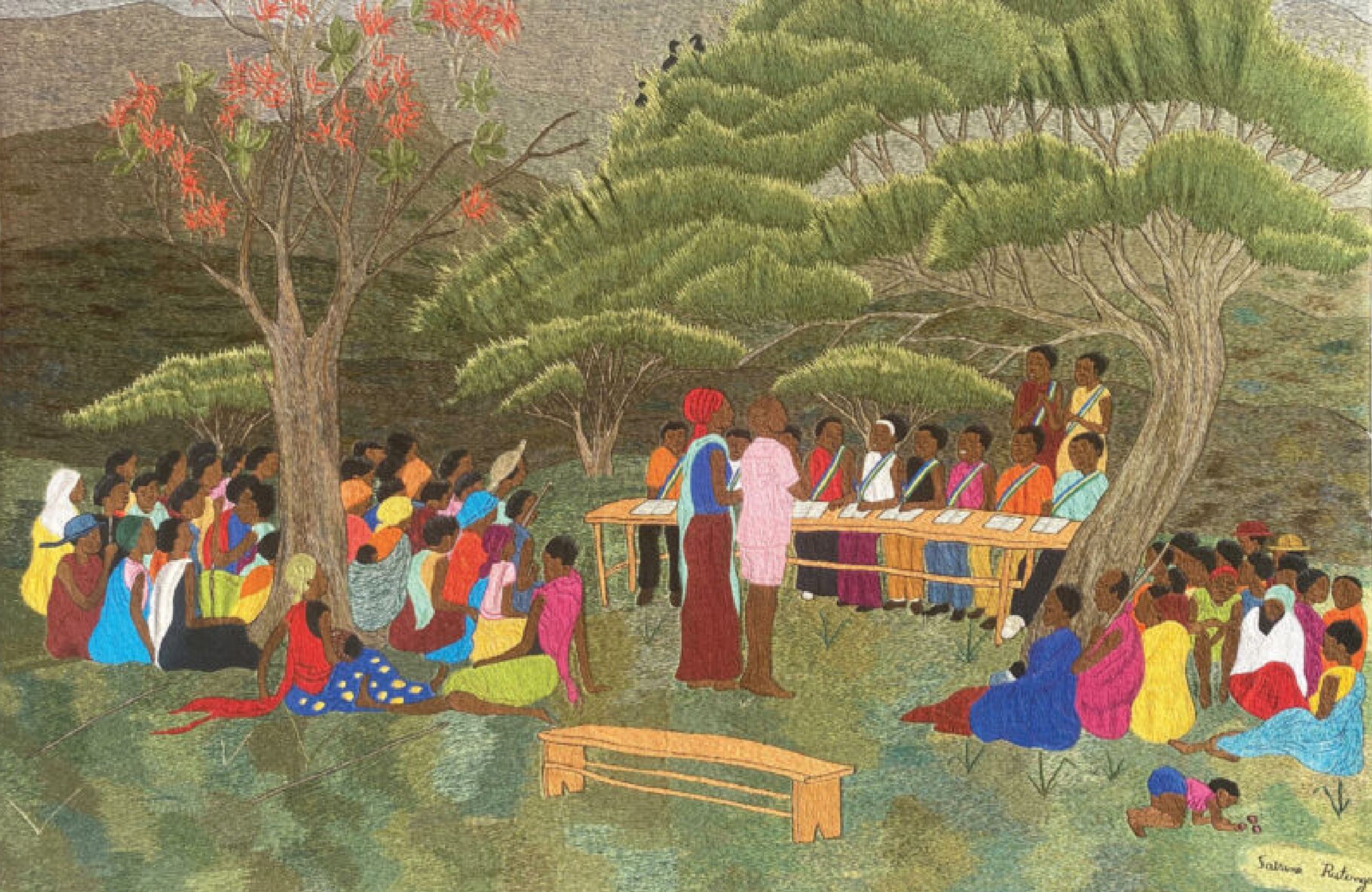 Pascazia invited all six missionaries to attend a gacaca trial. In the city of Butare such trials were held on Wednesday afternoons. Shops and schools were shuttered so every adult could witness the act of justice being meted out. On July 21, the group walked to a local school a few blocks from the MissionMates house. Ken noted that tables and chairs from the classrooms had been repositioned onto the grassy inner court. About fifty participants were seated in the chairs or on benches. Another hundred or so stood, crouched, or sat on mats. This cloud of witnesses appeared to be common people: men in soiled work clothes and women wearing tee-shirts over skirts of colorful fabric, many with bright headwraps. A banner shouted Inkiko Gacaca: Ubutaabera Bwunga—"Jurisdiction of Gacaca justice is supported here." One sensed an atmosphere of celebration. At exactly two o'clock, seven judges strode forward in solemn procession, wearing sashes that proclaimed them as the inyangamugayo. They took their seats behind a long table facing the spectators. Pascazia pointed out the four male defendants sitting in pink prison shirts and shorts. She reported they were cohorts in a killing gang. Thus, the prisoners sat in the midst of the community they had once victimized. She also pointed to the defendant's family, who clustered around the pink-clad defendants. Albert looked around, asking her, "Are there any armed guards present?" "Oh, yes, but they're standing outside by the entrances. You walked right past my friend, Colonel Ntwari." He then asked, "And where are the attorneys?" She paused. "Sorry. There is no legal counsel. In the tradition of gacaca, the judges lead in the questioning of both defendants and witnesses. Our inyangamugayo fill the roles of judge, jury, and prosecutor. And look. The judge on the end also serves as a court reporter. She'll be recording the testimony in longhand. Later on, these four defendants will sign off on the documents for accuracy. It's part of my job, as a licensed lawyer, to review them all later. I can tell you that's a lot of reading!" Albert sighed, "So what I'm seeing is justice without lawyers." A hush fell upon the assembly as the trial got underway. All stood facing the national flag as many sang the anthem. Then followed an introduction of the judges and other dignitaries. Next, the first defendant was called forward. Standing alone, hands clasped meekly to his front, the prisoner in pink gave his full name and place of birth. The lead judge read out the charges, and the defendant responded. Gleaned from a later reading of the official transcript, this is what the first defendant said: "I regret misjudging events, and I regret the people who were killed. I thought wrong, I went wrong, and I did wrong. An evil is still spoiling my life, and my days are steeped in misery. "You will never see the source of this genocide. It is buried too deep in grudges that I was the last to inherit. I came of age at the worst moment in Rwanda's history. We were taught to obey absolutely. We were raised in hatred and stuffed with slogans. We are an unfortunate generation." This is how a second defendant spoke: "Yes, we did those things that you charge us with. It goes beyond human imagination, so it is too difficult to judge us—too difficult for those who do not share our situation. Therefore, I think we must be farmers like before, this time with good thoughts; we must show our regrets at all times; we must give a little something to those who have suffered and leave to God the too-heavy task of our final punishment." After a long silence, he continued, "Deep down we knew that Christ was not on our side, but since He did not speak through a priest's mouth, that suited us. We were abandoned by all words of rebuke." Before each defendant left the docket, people in the audience were invited to ask questions or testify. Albert observed one young man question a defendant with the skill of a cross-examiner. He also witnessed an older woman who could only weep as she commented on the proceedings. Pascazia whispered that three of the weeping woman's children had perished at the hands of the prisoners. Before sitting down, however, the woman pointed to the defendants and shouted out a verse from Psalm 44. "Because of you, we are slain all the day long. We are counted as sheep to the slaughter." A third defendant did not seem disturbed by the killing. He appeared confused and detached, as if it were not himself who committed the crime but a stranger he could no longer recognize. The final defendant disputed the specific charge of genocide. "Yes, we killed, robbed, and drove away Tutsis, but I never thought of extermination. It is the intellectuals who emancipated my thoughts by planting the idea of genocide in my head and sweeping away my hesitation. I am not a génocider!" The proceedings ended about three o'clock. Albert observed twelve people line up to address the judges, stating the name of the deceased and indicating some amount of compensation. He noted an air of sadness, loss, and memory. It appeared the lust for vengeance had subsided. Several of the men began to carry the chairs back into the classrooms. Pascazia debriefed the group. "So, what do you think?" Roger replied first, "It was an echo of what I found in Gikondo Prison. I saw the men in pink pajamas stand so meekly and speak so softly. One could never guess the debauchery of their crimes." He shook his head. "To me such criminals remain a fearful mystery." Rose spoke of the dignity that surrounded the proceedings. "Once my brain worked past the utter foreignness of clothing and language, I saw humanity at its best coping with humanity at its worst." Albert spoke of two concerns. "I'm shocked there was no legal counsel for the defendants. How can that be fair? Three of the four suspects were farmers. I understand they could read and write, but barely. Could they even understand the charges brought against them?" Pascazia responded, "The judges take education into account when sentencing the accused, but illiteracy cannot be an excuse for criminality. Sadly, if that were the case, half the people in my country would be innocent on the grounds of illiteracy. Don't you remember? The judge asked each man if he recognized his action as wrong. Not one denied the evil in his deeds." Albert then spoke of fairness. "I've been reading about the gacaca in the European press." Pascazia rolled her eyes as Albert continued. "Why is it that no soldiers of the RPF are on trial? Certainly, at least a few committed crimes during the one hundred days. Is the government protecting them?" "I read the same press as you do," she said. "It is a problem for us. Our soldiers as a whole were very disciplined. Everybody will give testimony to that. Yet, there was a war simultaneous with the genocide. I can tell you this. I don't know of a single enemy fighter who is on trial for killing our soldier in combat. In war people die, even women and children. That's the sad nature of war. Yet, war does not equate to genocide. "Let me use Kibeho as an example. Maybe one hundred thousand people were concentrated in a tight camp; maybe five thousand of these were Interahamwe terrorists. These armed criminals refused to surrender but used unarmed civilians as human shields. This is true. It is undeniable and unfortunate that so many innocents were killed. But the fault lies not with our army troops but with the Interahamwe." Albert considered and probed, "I understand there were also extrajudicial executions and even soldiers gone berserk who machine-gunned unarmed civilians. What about that?" "Mr. Swanson, I'm not an apologist for the gove rnment. I can't answer those questions. I do understand many RPF in uniform were held accountable for their misdeeds and faced military trials, but maybe not enough. However, I do support the scope of our current gacaca trials. They must be limited to crimes of genocide and crimes against humanity. Yes, there were violations against some Hutu people, but that did not constitute genocide. The premeditated massacres were only launched by the majority people against the minority. I believe that with my heart." 9. A Pig Test Mission 2004 was winding down. On Thursday the group honored Pastor Daniel by gathering at his mission compound. His plot of land stood at a crossroads beyond which the crumbling blacktop and electrical wires came to an end. From this place on the edge, he and Roger had been ministering to rural families off the grid. Rose was happy to introduce the mushroom sheds, which a few local women had constructed. "They just require cow dung, water, and darkness to flourish," she told the group. "The ladies of the co-op are selling these beautiful mushrooms at the Ibis hotel in Butare." Pastor Daniel was keen to show off the pigs. As the six missionaries kicked up dust along the gravel road, Daniel shared his joy. "These women are so pleased you could see them before you leave. They really wanted to thank you in person for the MissionMates pigs you funded." He explained how pigs were not the traditional meat source for Rwandans. They raised goats, cows, and chickens for food. But pigs provided two added benefits. They devoured garbage and produced large litters. He mentioned to Ken, "We had twenty women in our co-op, but only enough money for six pigs, and everyone wanted one." Roger entered the conversation. "How did you determine who would get the pigs?" A smile broke on his face. "I invited all the women to see the pigs at my house. Each was in its cage made with sticks and twine, all material you find in the bush. When the widows arrived, I explained to them, 'I will visit each of you next Sunday after church. Whoever has built a pen like this will get a pig.' Five days later, when I went to their homes, only four women had made stout pigpens. I gave each of them a pig. I still have the other two at my home." Soon the group turned toward a humble residence. An excited widow escorted the six foreigners into her backyard. She proudly showed off her pig cage. As Ken stared through the wooden bars, he thought, "It's charity to provide my Rwandan friends with resources, but wisdom to allow a godly man like Daniel to distribute them."
9. Moving Forward Each person on the mission team spoke with fondness of their experience in Rwanda. Once back in California, Albert and Linda presented on a Sunday evening. They projected photos and talked in glowing terms of their new collection of far-away friends. Ken received a note from niece Nancy. She thanked her uncle for his kindness and support at Virginia Tech. In late August, Ken traveled to Eugene, Oregon. He congratulated Roger as his brother became a Doctor of Philosophy. His dissertation, titled Ethics on Trial: Right and Wrong in the Fog of Genocide, wove together scholarly research and personal observation. In October, a baby boy was born to Jefferson and Abigail. Ken and Madison met little Cody over Thanksgiving. Victor Kwizera sent out an email at year's end: "Clementine and I are naming our second girl Nathalie because she was born on Christmas Day. I have another arrow in my quiver. Ha-ha." | ||||||||||||||||||||||||||||||||||||||||||||
|
Mission 2005
1. A Change in Direction The new year heralded new challenges. Ken had recently enrolled twenty-two Rwandan students as MissionMates. He collected their photos and buoyed their expectations. However, it proved impossible for him to find American counterparts. As a matter of fact, three sponsors dropped their monthly support as of January. The ratio now stood at seventeen sponsors to fifty-nine registered students. The trend did not bode well. After discussions with his brother, Ken figured three factors militated against MissionMates' success. First, neither he nor Roger was a marketer. Teachers and scholars yes; salesmen and fundraisers no. The two contemplatives had difficulty in selling their product. Second, a significant portion of nonprofit support was vanishing. With Joy as a Korean champion, one-half of the donors had attended Korean churches. Without Joy as a cheerleader, such support was falling to the wayside. And finally, in retrospect, the foundational concept seemed ill-conceived. Ken had to admit that compassionate Americans were more likely to respond to pictures of sad-faced children than appeals from struggling students. That was a reality. MissionMates strove to retain its existing sponsors but shifted its focus to local ministry, promoting evangelism to the university and outreach to the community. A second problem emerged, this one from Butare. The Rwandan landlord was doubling the house rent from $200 to $400 per month. Victor commented these increases were likely to continue. Over the phone, Roger floated the idea that MissionMates might construct its own facility. "That would eliminate rent increases but would require an influx of money." He groaned. "I think that means some kind of fundraiser is in our future." His closing words to Ken were, "Just pray about it." As Ken meditated, his mind kept returning to the Taylor Family Trust Fund. Indeed, it was Joy's money. "What would be her wish?" After speaking with Jefferson, Madison, and Albert Swanson, he decided to honor his late wife by building a legacy for her in Africa. Roger was astonished as Ken revealed to him the source of his generous donation. "Manna from heaven," expressed his brother's wonderment. In turn, Attorney Albert surprised Ken by pointing out numbers on his tax form. "Take a look here. Your late wife paid about $7000 for this one Korean stock. It's currently valued above $110,000. Rather than cash, it would be prudent to donate this appreciated stock to MissionMates. You benefit by avoiding capital gains and by remaining in your present tax bracket. Yet, you get the full value as a deduction. At the other end, the nonprofit sells the stock at full market value and is not subject to tax. It's a win-win!" Ken corresponded with the Rwandan board of MissionMates, who at once began to search for property near the university. They concurred that $200,000 would be sufficient to purchase a large plot of land and construct a top-notch two-story building.
2. Recalibrating the Ministry Since the focus of MissionMates had shifted from recruiting university students to constructing a new facility, Mission 2005 took on a new complexion. Ken and Roger would travel alone, collaborate with the local board, and select a piece of property as the future home of their nonprofit. When they arrived in Rwanda in mid-June, Victor Kwizera and Eric Nshimiyimana met the brothers at the airport. Ken inquired about Pascazia. Eric filled him in, "Oh, she's in France, working for the government, trying to extradite genocide runaways." During their night in Kigali, the four worked out a two-week agenda: 1. Preaching in churches on two Sundays, 2. A three-day conference from Thursday through Saturday, 3. Daylight searches for property, and 4. Evening meetings with NUR students and local pastors. Eric knew a real estate agent and had been looking for properties on behalf of MissionMates. When Ken spoke to the local board, he expressed a desire that the property be titled in the name of MissionMates Rwanda. "We in America can purchase the land and finance the construction, but we want you—our Rwandan friends—to take ownership and primary responsibility. We must trust your abilities more than ours to proclaim the Gospel to your people. It will not be a parent-child relationship, but sister to sister." Eric and Victor were impressed. Daniel spoke on behalf of the board, "Brothers Roger and Ken, we will not let you down. We're grateful for your trust and will return it with faithfulness. We'll collaborate in all things." Over five days, the team looked at five properties. The old Anglican school was too large. The open plot of land near Daniel was too remote. The owner of a small lot near the front entrance of the university was asking too much money. And the two remaining lots would require construction of expensive access roads. On the sixth day, Roger asked about a large vacant lot on the main highway near the back gate of the university. Eric and Daniel looked at each other, not sure how to respond. Victor broke in, "You mean the one near the petrol station?" After a nod of acknowledgment, Eric said with hesitation, "We can check on it tomorrow, but there may be complications." "What do you mean?" Roger queried. "The government is in dispute with the owners about a clear title. That's why it's been unsold since the genocide, but we'll investigate for you." And there the matter sat for a week.
3. Theodicy Since the death of Joy, Ken had been reading and writing on the subject of suffering. He proposed the 2005 apologetics conference address the issue of theodicy, that is "the vindication of God's justice in the face of human suffering." Ken had been wrestling with God and had the bruises to prove it. His go-to book of the Bible had become Job, whose utterances came to express the feelings of his heart:
Roger suggested a title from Job 1:8, "Have you considered?" He agreed that Ken would build a case for theodicy from the Old Testament while he focused on New Testament apologetics, mostly from First Peter, an epistle addressed to a suffering church:
After Ken and Roger had addressed the conference as scholars setting forth Biblical arguments, Eric spoke of his personal experience of Christian suffering. The Pentecostal pastor told the assembled audience of his survival in the Bisesero forest, the birth of his daughter Hope, and the killing of his wife Rachel. "Sometimes, if you allow it, extraordinary suffering opens the heart to extraordinary joy." Eric led Hope onto the platform. "This is my daughter. She was born on day fifty of the one hundred days. Hope entered a world of unimaginable evil." "Let me inform you in Cyangugu Prefecture, the war did not stop on day one hundred. Army and militia troops were still escaping into Zaire. One of the fleeing Interahamwe killers found me and my son Marco. This baby girl was at my wife's breast. The killer ripped Hope from her mama's arm and, like a piece of trash, threw her to the ground. He ruthlessly murdered the love of my life and left this little girl with a damaged brain. "Hope is now eleven years old, but she cannot speak. Here she is! Look how beautiful!" Eric gestured with emotion. "She can smile and laugh and hug, but she has no words. The doctors tell me it will be like this for the rest of her days. It has not been easy for me." Tears flooded his eyes as he gazed upon this sliver of a girl with a radiant face. "I can tell you with all honesty my heart bursts with love for this child. And she herself is like a love machine. She brings joy to everything she touches. God has given her this gift. "I cannot explain to you the mystery of suffering. From my experience, I can tell you this: Whenever it is you may emerge from the dark tunnel, and when you step into the light on the far side, you will have a better understanding of God, your faith will be strengthened, and by His grace you will find His joy." 4. Evil-Choice-Love-God In addition to the apologetics conference, Ken taught classes on the back lawn of the MissionMates house. As a seasoned instructor, he repurposed his conference material and continued to teach from the book of Job. He summarized his study by saying, "I believe this book of wisdom shows us suffering is a philosophic problem that cannot be 'solved.' At best it can only be 'resolved.' And we see in Job it was resolved in the final chapters through a personal encounter with the whirlwind, who is the living God. I want to tell you from my heart, on the basis of what I do know about God, I can trust Him for what I do not know." He paused, then continued as a novel thought leapt into his mind. "For the past year I have been comparing myself to Job. Satan visited Job twice. The first time, he stripped Job of his wealth and children. On his next visit, Satan ruined his health. Even Job's friends turned against him. Who knows the only thing Satan did not remove from Job?" A student in the back raised a hand. "His wife." Ken responded, "That's right. I'm done identifying with Job. I've had it! I didn't lose my health. I didn't lose my wealth. I didn't lose my friends or my sons. The only thing I did lose was my wife. You can call me the 'Un-Job.'" A few days later a MissionMates student greeted Ken as he was strolling through the university. "Hello, I really enjoyed your class. Do you remember my name?" Ken paused with embarrassment. "Well, I remember your name. You're Doctor Un-Job." The two shared a smile. Dr. Roger Taylor also taught apologetics under the corrugated metal roof. He told Ken his intent was to teach somewhere between Sunday school and seminary level. Roger had written four words on index cards: evil, choice, love, and God. First, he held up the word evil. "Why is there evil in the world?" he asked. "Because there is choice. God did not create mechanical robots. He gave us the freedom to choose Him or reject Him. The greatest gift a human being possesses, the attribute that sets us apart from animals, is moral choice. There is evil in the world because God in His wisdom granted each of us freedom to follow Him or to reject Him. Evil can be thought of as defiance of God's will." He then held up the word choice. "Why is there choice? Because there is love. God desired creatures who would love Him, not out of compulsion but out of choice. Love cannot be forced. Can you imagine genuine love without the option of rejection? I can't. Love must be bestowed upon the beloved without coercion, or it is not love at all." Next, Roger held up the word love. "And why is there love? Because there is God. Love is the cardinal virtue, a defining characteristic of God Himself. The Bible tells us in 1 John 4:8 that 'God is love.' Before the foundation of the universe, the Father, Son, and Spirit existed in a community of mutual love. And when God created man and woman in His image, love was intrinsic to that image." He held up the word God. "Why is there God? There must be God, because we have breath and are able to utter the question, 'Why is there God?' Our Heavenly Father is a self-existent entity, beyond explanation, a non-contingent being, beyond finding out. In Job, chapter 35, scripture tells us if God should 'gather unto himself his spirit and his breath, all flesh shall perish together, and man shall turn again unto dust.'" Roger reversed the order of the four cards, displaying them one after the other. "God exists; therefore, love must exist. Love exists; therefore, choice must exist. Choice exists; therefore, the possibility for evil must also exist. In a roundabout way, I recognize the goodness of God because I experience the pain of evil." He summarized his talk by saying, "We may not live in the best possible world, but this world may be the best possible means to step into the best possible world to come." After the students left their chairs, Ken pondered the message his brother had delivered. Even after three years, the specter of Joy's death continued to haunt him. Through the four cards, he caught a glimpse of how his suffering might be a logical outworking of God's perfect love. He reminded himself, "God did not create me to be happy, although that may happen. God created me to be holy and that's an entirely different matter."
5. An Unlikely Site Eric invited Ken and Roger to the vacant lot. The site was overgrown with weeds and strewn with ash heaps, evidence of its use as a community dumping ground. A ragged squatter peeked from behind a plastic tarp hung between crumbling boulders. Colonel Ntwari picked his way through the rubble and joined these three. Roger asked Eric, "Why has this plot been a derelict wasteland for so long? Why hasn't anyone built on it?" Ken was surprised at Eric's response. "This land once belonged to Theodore Sindikubwabo. He was president of Rwanda during the one hundred days of genocide." Ken responded, "What? Do you mean he lived here during the genocide?" The colonel answered, "No. Dr. Sindikubwabo owned this house when he was on the faculty at the National University. He was a teaching doctor for many years before he became the minister of health and then got elected to parliament. In 1994, when Juvénal Habyarimana was killed, military officers promoted him to president. He was just a figurehead, a murderous man, and a puppet of the military clique. "After the war, the RPF chased this once-powerful figure into the Congo, where he died in 1998. The army couldn't get the man, but we did get his house. Dr. Sindikubwabo was so hated, the local residents cheered when we demolished his mansion and burned all the pieces. The status of the land has been in dispute ever since. Who owns it? The nation of Rwanda? An heir of the disgraced former president? I did some digging and learned his daughter in Kigali still holds interest in the land. No Rwandese wants to buy it, so she was happy to learn that some Americans were interested. Yes, she is willing to sell—and at a bargain price." Roger marveled at the irony and prophesied out loud, "On this site where genocidal hatred once reigned, Christian love will flourish. On the ground where terror once spread, the gospel will multiply." Ken added, "It reminds me of what Joseph said to his brothers, 'You planned evil against me; God planned it for good.'" 6. Clean-Up Day On the morning before their departure, the brothers joined in an Umuganda, that is, "a clean-up day." Once a month, all shops, farms, and schools shut down to beautify public spaces. An army of volunteers was picking up trash, unplugging ravines, and trimming trees. As Ken and Roger plucked up garbage near their rental house, Victor boasted, "We Rwandese are extremely patriotic. It is our village tradition to join forces and contribute our labor to the needs of the community. We want our country to shine among African nations." He went on, "Just last year, President Kagame outlawed plastic bags in Rwanda. Overnight the shops stopped providing them, and the government prevented them from crossing our frontier. Those flimsy white bags were always blowing in the wind, a real nuisance—African tumbleweeds. We are better off without them." Ken probed his friend. "So, Kagame decreed and his people obeyed without question?" "Yes," replied Victor, "as I've said, we are a law-abiding society." "I'm not sure it would be so easy in America," Ken grinned. "We value our independence and don't like to follow orders." Victor clicked his tongue in disapproval. "Yes, I suppose that's true. But don't you like our cooperative society better?" "Perhaps," Ken paused in thought. "For most things, obeying leaders is a moral responsibility." He tweaked, "But didn't it happen once that instead of ordering the elimination of plastic bags, your leaders ordered the elimination of an entire ethnic group? Maybe following orders isn't always a moral imperative. Maybe it's the case that law-abiding citizens make genocide easier." Victor looked at him askance. "But picking up trash is good, isn't it?" Ken responded, "Yes, but following directions from on high without questioning may not be." They each fell into silent contemplation. 7. Beauty from Ashes Back in the States, Ken received continual updates of the possible land purchase. MissionMates Rwanda opened a bank account, and Roger worked out a way to wire money into the account. After several phone conversations, Roger decided to travel to Butare to oversee construction. "I'm on semester break in January," he explained. "I'll be taking along my nephew, Aaron, who has agreed to stay on as my eyes and ears. He wants to see Africa, and this will give him a chance." In November, the vacant lot was finally purchased for $15,000, and Victor was emailing photos of surveyors and of heavy equipment leveling the land. A dream was taking substance; a seed was sprouting; beauty was emerging from ashes. | ||||||||||||||||||||||||||||||||||||||||||||
|
Mission 2006
1. New Year Flight At the stroke of midnight, the British airliner passed into Algerian airspace. Over the speakers, a voice pronounced the first moment of 2006. Flight attendants tooted kazoos and offered champagne to sleepy passengers. Roger Taylor clinked a plastic cup against that of his aisle-mate. After a "Happy New Year" toast, Roger handed over his un-sipped beverage. Aaron chided, "Ah, uncle! Won't you even celebrate the new year with me?" "It's not that I'm against having fun. You'll be seeing a lot of shouting and clapping in Rwanda. It's just that my friends in Africa manage celebration without intoxication." Aaron Michaels was twenty-two, happy-go-lucky, and underemployed. Roger's sister-in-law had raised the boy in church, but a faith that once burned in the child's heart had waxed dim. Roger was hoping a missionary experience might fan that spark back into flame. Roger's plan was to remain in Butare for only a few weeks, establish a position for Aaron as construction manager, then return to the USA, where he would be shipping building material to Rwanda. Aaron agreed to his uncle's scheme and looked forward to living with the natives for five months. That would be the time when Roger and Ken returned to Rwanda in June. That was the plan, but as Roger glanced at his sipping nephew, he wondered if such an idea represented more foolishness than faith.
2. The Parable of the Builders The first task in Kigali was to visit the money changers. Roger and Aaron had each hand-carried nine thousand dollars into Rwanda. These 180 Ben Franklins would fetch a better exchange rate on the gray market than at an official bank. While the two Americans caught up on sleep, Victor and Eric filled a backpack with Rwandan currency. "Much better than Ecobank," was Eric's comment. The next day, still in Kigali, Victor hired two trucks to haul material to the Butare construction site. Roger was delighted to see the transformation of the grassy corner lot. The land appeared level with twelve holes dug deep to support the heavy concrete structure. The plot was fenced off with a makeshift guardhouse established in a corner. A stern man with a badge looked after the stacks of stone, rebar, sand, and cement. At the rented MissionMates house, the two met Gaston Sebagabo. The once Congolese goatherd had matured into an accomplished university student. Being about the same age, Aaron took a liking to Gaston, who soon functioned as his local guide and interpreter. After surveying the construction site, Roger determined to make a promotional video for use back in America. He wrote out a script called The Parable of the Three Builders and recruited four men as actors. Pastor Eric served as the passerby, Pastor Daniel was worker number one, Victor was worker number two, and Gaston was worker number three. He and Aaron handled the cameras and post-production. The three-minute video was thus recorded:
3. Acting in Love Although his focus was on blueprints and construction, Roger also carried out his great commission to "go into all the world and preach the gospel." He lectured on campus from the Book of Acts and preached at the Assembly of God on three consecutive Sundays. His theme centered upon the spiritual richness of the African church and prophesied a time when Rwandan Christians would travel abroad to minister to a spiritually impoverished America. The day soon arrived when Roger packed his bags for a return trip to Oregon. On that last morning, a dispute arose concerning the consumption of alcoholic beverages. As Daniel reported the incident, while on a tour of downtown Butare, Aaron invited Gaston to a glass of Primus beer. Gaston was reluctant at first but soon imbibed. Upon his return home, Pastor Daniel smelled the beer on Gaston's breath and made an inquiry. With bags sitting at curbside, Roger joined Aaron, Gaston, Daniel, and Victor in a forum on alcohol. "What's the big deal?" Aaron pouted. "I know enough Bible to say God does not condemn drinking. It's not like I'm breaking one of the Ten Commandments." Roger replied, "I agree with you. People in Biblical times drank wine. As I read Scripture, the sin is not in drinking but in drunkenness." Victor shook his head in disagreement. "There is no such thing as a drinking Christian. Period!" Gaston shot back, "But even Jesus consumed alcohol. It's part of the Eucharist—bread and wine." Daniel asked for calm. "There is Scripture, and there is culture. We do not drink in my house, and I urge the people in my parish to take a pledge of abstinence. I've traveled to Europe and America, and I understand their culture of drinking. Our situation is different here in Rwanda." Roger asked him to expound his thoughts to Aaron. Daniel continued, "When you look at the common people of Rwanda, like the ones who work in the fields and small shops, you discover drunkenness is a big problem. I work with twenty poor women in the co-op. Most of them don't have a man in the house. Why? I can tell you, quite honestly, the issue often begins with alcohol. "I know one woman. You all have met her. Last year her husband abandoned her with two little children. She works in the potato fields with a hoe and earns a few dollars a day. Her man used to attend my church, but he began to hang out with his bar buddies. They offered him a sip of banana beer. He drank it and liked it. Soon the habit was costing him two dollars a day. His wife scolded him because his kids were going hungry. In a fit of rage, he left the family, paid for a prostitute, and got AIDS. He reconciled with his wife just long enough to pass the disease on to her. "He's gone again, and the household is ruined. That story is all too common in Rwanda. That's why I tell my people it's better not to drink at all." Victor rejoined the conversation. "That's my story too. My mama had to raise me and my sisters because my father was a drunkard. Aaron, one thing you must understand is this: for the poorest, it's often a choice between a bottle of beer and a meal for a child. I do not want to encourage drinking in my country either by my words or example." Aaron responded, "But it's okay if I drink in private, isn't it? I'm not sinning. I'm not breaking a law in your country, am I?" Roger spoke softly to his nephew, "I can't command you to abstain from alcohol while in Rwanda, but I'm asking you to make this sacrifice as an act of love for the sake of the local people. Whether you like it or not, you're an example—a role model. You're conspicuous because you're a white American. Plus, the people of Butare know you are affiliated with Christian missionaries. They look up to you. If they see you drinking beer, that gives them permission to follow suit. Your actions may undo what a local pastor has been preaching for years to the men of his church. It may even ruin a family." Roger then opened his Bible to Romans, chapter 14. "Maybe these words are pertinent to our discussion."
Daniel thumbed through his Bible. "This is a verse I find useful. It's in First Corinthians.
"Aaron and Gaston, beer might be permissible for you two, but I don't believe it's beneficial. It can be a stumbling block that causes your brother to fall. Because of this, I am asking you to act in love and not to drink." Aaron remained unconvinced, but for the sake of harmony, he said he would comply. 4. Cargo Containers Upon his return home, Roger worked to acquire cargo containers for shipment to Butare. These metal monsters were forty feet long, eight feet wide, and eight and one-half feet tall. Roger was able to use a corner of his church parking lot to stage the transport. Ken Taylor agreed to underwrite the cargo expense of eight thousand dollars, about half for sea transport to Kenya and half for overland conveyance to the building site. An outfit called Air 7 Seas dropped off the container on April first, giving MissionMates one month to stuff it for transport. This first container carried donated items of clothing, furniture, and bedding, augmented with pre-framed windows and doors. Plywood, rebar, shovels, and picks completed the first consignment. When that container was carried away, a second was dropped in its place. This one was packed to the top with construction material: wooden planks, ceramic tile, copper wire, glass block, and kitchen appliances. Ken uploaded a memorial plaque he had specially designed for Joy. There was just enough space in the back to pack a donated motorcycle. On May first, that container left the church lot bound for Africa. The plan called for Roger and Ken to be in Butare when the second consignment arrived. According to the Air 7 Seas agent, that would be around June 20. A few weeks before that date, Aaron returned to his parents' home in Seattle. He said his early departure was due to his acceptance at graduate school, but after further probing, Roger learned there was more to the story. His nephew felt out of place with MissionMates, his passion not being in Christian ministry but in international business. Plus, he considered the mission rules too harsh, especially abstinence. Four months was too long for him to go without a cold beer. Aaron also debriefed his uncle on the progress of construction. "It seems to be coming along fine. Every day a dozen workers are at the site. Victor is a marvel, working hardest of all. He's always there, functioning as a general contractor, hiring, firing, and inspecting subcontractors." Ken and Roger Taylor retreated to Prayer Mountain for a few days of focused planning. Roger shared with his brother, "I've spoken with my nephew, and I believe the most valuable asset we have in Rwanda is our friend Victor." Ken concurred. "I've heard so many stories about shrewd Africans taking advantage of gullible Americans. Without an honest guide, we would be fumbling in the dark. Victor's an expert in navigating the ways of his culture. In all things Rwandan, I trust his judgment more than my own. "Let me tell you a story. I remember my first year with Victor as interpreter. I was still unsure of his integrity. When we pulled into a petrol station, I demanded a receipt from the gas attendant, saying, 'I must do all I can to prevent deception. A signed receipt will guarantee honesty.' "Victor smiled and explained to me, 'A receipt in Rwanda means nothing. If I were a dishonest man, I could speak with the attendant in Kinyarwanda. You would not know what I was saying. If the petrol cost forty thousand Rwandan francs, the attendant could write up a receipt for fifty thousand. I would keep five thousand, and the attendant would put the same in his pocket. That's done all the time, even to careful bazungu. Believe me. My people are clever. You would never know you were being cheated.' "And the more I thought about it, the more I knew he was correct. We must have one man on the ground who we can trust without reservation. Victor is our man. We must do all in our power to hang on to him." 5. Counting Stones The Taylor brothers arrived in Rwanda on June 25. They would do some gospel teaching, yes, but their focus was on construction. 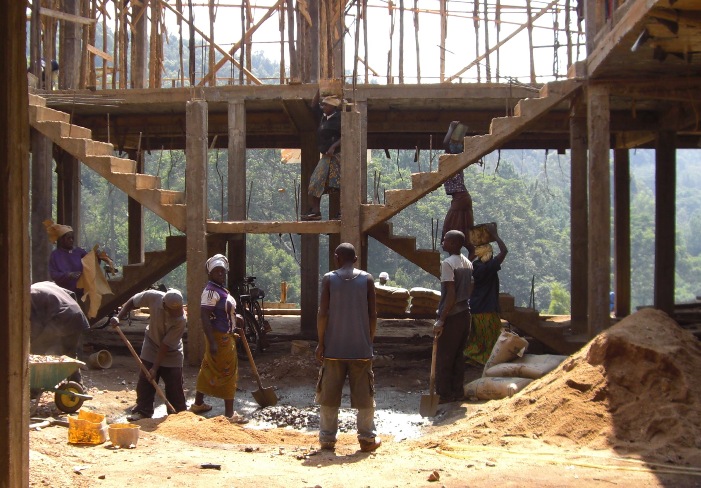
Victor outlined the cargo situation. "When the first container arrived, I had major issues in clearing the contents through Rwandan customs. Your invoice listed the material at eight thousand dollars. Our government reckoned it at twenty thousand and demanded ten thousand in import taxes. I had to remain in Kigali for a full week arguing with officials, explaining we are a nonprofit and not required to pay taxes. Finally, after much negotiation, we reduced the tax burden to three thousand dollars, still a lot, but the best I could manage." The next day, the brothers stopped by the building site. They saw the first container and the contents under blue tarps. Victor told them, "The 7 Seas company will pick up this first container when they deliver the second. And that one is now held hostage in Kigali, with the tax agency demanding a huge amount before releasing it." Victor shrugged, "But we'll get it here without such a big charge. You'll see." A few days later, Ken was present at the site as Victor was looking over a billing invoice. He spoke to the job foreman—a conversation later interpreted to him. "I see you are charging me for twelve laborers today. I can only count ten on-site." The subcontractor replied, "The other two must be away at the moment." To this Victor responded, "I will pay you only for what I see. That's ten." He crossed out the number 12 and marked in 10. "Also, you charged me for thirty large stones. I counted twenty-five." The subcontractor began to shout, "See here! You know how it works. This rich mzungu is the customer. I paid for a truckload of twenty-five boulders, and I'm charging your mzungu friend for thirty. He'll never know. Tell you what. I'll put ten thousand francs in your pocket if you go along. No one will be the wiser. That's just how you do business in Rwanda!" Victor screamed at him, "That's not how I do God's business. I will be out here every day comparing your bill of sales to the material on the ground. If I catch you cheating me again, I'll fire you. Plus, I'll report you to my friend, the police chief." Later in the day, Ken shared an anecdote with Roger about the prevalence of bribes in Africa. "One of my Rwandan friends once talked with me about the practice of tipping in America. He said with a straight face that bribing is not that much different than tipping. 'Just think of an African bribe as an American pre-tip.'" 6. Encounter with the Big Lady A few days later, Victor placed a dozen phone calls to resolve the cargo conflict. He then explained the delicate situation to Roger. "They want you to come with me since you are the sender of the container. Together we will speak with the clearing agent and especially the import minister." Ken wanted to join the expedition but stayed behind to prepare for the seminar. After a prayer to release the thousands of dollars tied up in cargo, Victor and Roger began the uncertain drive to the capital. Once arrived, the two entered the dingy office of a lowly clearing agent. Victor provided official papers, certifying that MissionMates Rwanda was a legitimate nonprofit charity and therefore not subject to taxes. Roger then outlined to the agent how he had personally loaded the container and provided him with a line-item list of contents and values. He also showed his nonprofit certificate from California. Victor negotiated with the agent for about an hour and voiced pleasure when he stamped his endorsement. As he closed the door behind him, he added, "I was never concerned about this guy. He's the friend of a friend. It's the big lady who has the power to approve or disapprove the deal." The team then drove to the modern government building. This posh facility had metal detectors and police guards. After an hour-long wait, the two were ushered into the import minister's office. When she caught sight of Victor, she rolled her eyes. "So, you want me to do the impossible again"—she spoke in English. Then followed about twenty minutes of heated argument in Kinyarwanda. For the benefit of the seated American, the minister would conclude her remarks in English, "No way! Impossible!" Victor would shout back in English, "Has to be!" The raucous conversation seesawed back and forth several more times, each time ending with "no way" and countered with "has to be." After a final volley, the lady took a breath, placed a phone call, looked down, and whispered, "Okay." Victor nodded, and the two left in silence. While returning to the parking lot, the baffled American thought to himself, What did I just witness? Were they negotiating a fee? Did Victor offer a bribe, that is, a pre-tip? What was going on? Finally, he asked a grim-faced Victor, "I'm sorry it didn't work out. What more can we do?" Victor grinned and said, "Nothing. It's done. We only lost one little issue. We have to pay a two-hundred-dollar tax for the motorcycle. Praise God. She accepted everything else as a church donation."
7. The Nehemiah Project Roger reunited with Ken just as the seminar was starting. The protocol team of MissionMates had registered nearly three hundred students, filling about half the university auditorium. The brothers co-taught a curriculum called Cupbearer to the King: Learning Project Management from Nehemiah." 
Roger had come across this innovative curriculum through an African professor at Willamette University. As he explained to Eric, Daniel, and Pascazia, "Some people view the Bible strictly as a religious book, but it can serve as a common-sense guide for any aspect of life, including the business world. I'm sure you know Nehemiah as the Old Testament figure who dreamed of rebuilding the walls of Jerusalem. His book explains how the Persian king empowered him to construct the city walls and then outlines the steps he took to restore the city. I think the teaching point matches our construction effort and is relevant to college students just entering their careers." Over three days of morning and afternoon instruction, Ken and Roger taught through five steps: 1. Prayerful assessment, 2. Compelling vision, 3. Find the right leaders for leverage, 4. Build collaborative teams, and 5. Encourage commitment and accountability. Eric was impressed that these five steps could be clearly discerned from a book written 2,300 years earlier, and Pascazia clapped her hands with enthusiasm, "How amazing that scripture can nourish the entire person!" The dean of the business school showed up on the last day of class to request Nehemiah handouts.
8. Naming their New Home A few days before his return flight to America, Ken was pleased to see the first cargo container hauled away and the second set in its place. As material was being off-loaded, an overjoyed Gaston took possession of his Honda motorcycle. He now served MissionMates as an employee-messenger. Ken retrieved a bronze tablet, which he had packed into a wooden crate. On this commemorative plaque he had inscribed words written in both English and Kinyarwanda: "At this road junction, on June 28, 2002, Joy Lee Taylor died in a bicycle accident. She was a beloved wife, a loving mother, and a faithful servant of Jesus Christ. Joy loved the people of Rwanda. She will forever live in our hearts." A porcelain portrait of Joy smiled in the center space. Under the oval portrait were engraved words of Scripture: "For you died, and your life is now hidden with Christ in God. When Christ, who is your life, appears, then you also will appear with him in glory [from Colossians 3:3–4]." On their final evening in Butare, Ken and Roger met with the five members of the MissionMates board. They spoke about construction and instruction, about present problems and future plans. Eric promised to create a concrete monument at the crossroads and embed into it the bronze plaque. Daniel added, "I guarantee you will visit the Joy memorial on your next mission to Rwanda." The final item on the business agenda was the naming of the new home under construction. Roger proposed the name and the board vote was unanimous. In Kinyarwanda it would be called "Inzu y'ibyishimo," In French, "Maison de la joie," and in English, "House of Joy."
9. A Foot in Each World When Ken returned to California, he discovered his perspective had shifted. He still enjoyed teaching American history, leading a church men's group, and visiting his children. Yet, in his reflective moments, his mind seemed to revert to Africa—not on occasion, but most of the time. He began to toy with the idea of relocating to Rwanda and becoming a full-time missionary. He phoned Roger and outlined three pros and three cons. Pros: 1. I'm unmarried and unattached, 2. My children are out of the house. Jeff and Abby are in DC, while Maddy and her boyfriend, Ryan, are in Pasadena, and 3. By renting my property and receiving Joy's pension, I can financially afford the move. Cons: 1. I would miss my American culture, lifestyle, and circle of friends; 2. I would be distant from quality medical care; 3. I am American to the bones. I love my country, and it would be a sacrifice to live elsewhere. Roger responded, "Those are all reasonable considerations, and you can be a minister of the Gospel anywhere in the world—in California or in Africa. However, the compelling question is this: "Where is God calling you? Where do you feel most at the center of His will? That's where you plant yourself. That's where you will flourish." Ken answered, "I feel I have a foot in each world. You know, Roger, I still have residual remorse over Joy's death. At times I consider serving in Rwanda as a kind of penitence. Yet, I do think it is God who has placed me in my current circumstance, has provided me with abundant resources, and blessed me with a gift for teaching. But truly, I don't know if it's the right thing to do—or, if it is the right thing, if it's something I can actually pull off." "It would be a bold step, for sure," returned Roger. "But remember the words that Mordecai spoke to Esther, 'Maybe you are come into the kingdom for such a time as this.' If you are asking for my advice, here it is. It's now September. For the next three months, pray about it and talk with your kids. Seek counsel from those you trust in church. Then, next January, go with me to Rwanda for an extended mission, say for two months. Keep an open mind and try to remain noncommittal. Then return home and ruminate for a month. If your heart and head still tell you to return to Rwanda, then I think you have discerned God's call." And that's exactly the recipe Ken followed. | ||||||||||||||||||||||||||||||||||||||||||||
|
Mission 2007
1. Phone Calls Ken spoke with his son over the phone, conveying his desire to relocate to Africa. Jefferson was all in. "Nothing expands your horizons like living abroad. I don't see this as a forever move but as an episode in your lifelong pilgrimage." Madison's response seemed feeble to her father. "That's nice, Dad," she spoke without enthusiasm. After a few hems and haws, she added, "You know, Ryan will be graduating next May. We were both hoping you could come to Fuller for the ceremony." "Maybe I can work that out. I might need a mission break by May." She continued with hesitation. "There's more than graduation, pops. Ryan has talked about us getting married when he graduates." She fell silent for a bit. "But he hasn't proposed marriage to me yet. I don't know what to do." Ken thought for a moment. "Is Ryan around right now?" "Yep, he's in the other room. We're watching TV together." "Put him on the line, would you?" "Dad! What are you going to tell him? Please don't embarrass me." "Just put him on the phone, Maddy." She walked into her tiny living room, muted the TV sound, and handed her phone to her boyfriend. Maddy's face flushed. "My dad wants to talk with you." "Hello, Mister Taylor," Ryan spoke with trepidation. "What can I do for you?" Ken cut to the chase. "I'm going to ask you an important question. Are you ready for it?" The young man was startled. "Yes. I guess so." "Ryan, do you love Madison?" He was speechless. Glancing toward his girlfriend, a tear misted his eye. "With… with all my heart." "Good, that's what I thought. Ryan Roberts, you've been a part of my life for four years now. I saw your compassion toward Maddy when her mom died in Rwanda. I've seen the way you look at my daughter and treat her with respect. I'm also aware she's totally devoted to you. "Look, I'm an old-fashioned guy. I believe a suitor should ask the father for a daughter's hand in marriage. So, why haven't you asked me? I can tell you this. If you did ask to marry Madison, I would give you an emphatic yes." There was silence followed by a gulp. "Thank you for that, Mr. Taylor. I've been talking with her about getting married for a long time, but—you know—it's kind of scary. I've told her I wanted to wait until I graduate seminary and then maybe even longer until I land my first job." "I respect that, Ryan. You're a good man for wanting employment before marriage. Maybe we can work something out. I just told Madison my plans to do full-time missionary work in Rwanda, maybe short-term, maybe for a while. We'll see what God has for me. I'll be leaving in January. Anyway, my house will be vacant. I really don't want to sell or even rent it out. "Now, in the past, Maddy has done the house sitting. I want her to do that again, but I want you to do that with her. But you know my values. You share them. You can't just cohabitate. The solution is obvious, at least to my eyes. You could marry my daughter and move to Mill Valley with her. I've given it some thought. You'd pay no rent, just utilities. It would be a favor for me and a kind of wedding gift for you." Ryan responded, "Thank you for your generosity, but I'll have to think about it. You know I have a semester left at Fuller." "Sure, I know. I also know during this final semester you won't be in the classroom much but will focus on writing a thesis. Let's say you did move up here. It would be simple to drive to Pasadena once or twice a month." Ryan looked over to Madison, who had been following the conversation. Her eyes were moist; her face was radiant. "Mister Taylor, I'm getting that nudge, a kind of tingle. I think it's God's Spirit witnessing to mine. I'm going to hang up now. I'm guessing that real soon your daughter will be calling you back with important news." It was only thirty minutes before Madison called her dad with a giggle. "Guess what Ryan and I are doing tomorrow?" "I have no clue," joked her dad. "We'll be shopping together for an engagement ring. Ryan thinks a January wedding might be rushing it, but he's game." "You know what I've told you for years: 'long courtship, short engagement.'" "I do have one concern, pops." "And what's that?" "It's about Diesel and Poppet. I know you don't particularly like dogs. You've never owned one and don't allow sitters to bring them into the house. Do you think it would be okay for our two dogs to join us in Mill Valley?" "If they bring you joy, then bring them along. You may have to dog-proof the house some." Ken heard a squeal at the other end of the line, followed by laughter. Ryan got on the phone, "Thank you so much for your encouragement. I'm as happy as a seagull with a French fry."
2. January Bride The first Saturday in the new year fell on January 6. The Taylor clan, the Roberts family, and assorted friends gathered at the bucolic setting of Prayer Mountain. A morning mist gave way to noontime sun. Under towering redwoods, Ryan and Madison spoke their vows of marriage. Jefferson served as a groomsman while Abigail stood with the bridesmaids. Emily strewed rose petals while little Cody bore the ring. Maddy's best friend, Kristen, accompanied her as maid of honor. As Ken walked his daughter down the aisle, his feelings were mixed: happy at the marriage of Maddy, yet sad that her mom had missed out on such a celebration. Of course, Roger, Rose, and their kids were part of the festivities. As a wedding present, Uncle Roger had paid for a two-night honeymoon stay at the Ritz-Carlton in Half Moon Bay. That gift also provided Ken and Roger with an unfettered day to prepare for their mission trip to Rwanda. Since this overseas deployment might prove to be a long one, the two packed six oversized duffle bags into the cargo space of the Honda CRV. After church on Sunday, Ken located his missionary fedora and pushed it onto his head. "Now I'm set to go." Jeff eyed his headgear, and Ken remarked. "You know why I wear this hat, right?" His son was unsure, "To look like Indiana Jones?" Ken chuckled, "Maybe that's part of the reason. It's become a visual cue of mission embarkment, maybe like a soldier putting on a helmet before entering into a combat zone. This hat's accompanied me on all nine mission trips so far." Jeff then drove his father and uncle to the San Francisco Airport while Abigail stayed behind to dog-sit Diesel and Poppet.
3. Stamp of Approval During the long flight to Africa, Ken shared with his brother some personal doubts. "Are we really doing any positive good in Rwanda? Have we any means at all to objectively evaluate our missionary effort? How can I tell if our few hundred MissionMate graduates are really acting as a pinch of leaven in this African loaf of ten million people?" Roger responded academically, "Maybe Victor can get ahold of recent graduates. We can have them fill out a questionnaire. That might be challenging, but it might work." Upon arriving at Rwandan passport control, Ken handed his documents to the uniformed man in the booth. The agent glanced at the name, then looked at the face. "Oh, I know you, Brother Ken, right? It's good to see you again in my country. I took a Bible class from you. Do you remember me?" After responding in the negative, the young man introduced himself as Phillip. He stamped the Rwanda visa on an unblemished passport page, and the two chatted until the next person stepped forward. Ken related this story to his brother, who responded, "Perhaps this is God's way of letting you know that MissionMate students are establishing themselves as agents of positive change. You have a divine stamp of approval." Once clear of customs, the two were met by the trio of Victor, Daniel, and Eric. Pastor Daniel was surprised at the extra luggage being loaded into the back of his car. "Yes," said Ken, "but you understand I might be remaining here for several months, so my comforts are moving with me."
4. The Joy Memorial Victor was proud to drive through Kigali, pointing out the new construction and cleanliness of the streets. While waiting at an intersection, he expanded his thoughts: "Our government is striving to make Rwanda a rock of stability in a sea of chaos. You know, in Congo and Burundi they are still fighting ethnic wars. Even Kenya is having problems with its Muslims. Just this past year, many NGOs in Nairobi have moved their headquarters to Kigali. Yes, Kagame is making life better for us." Ken's mind wandered. He considered Paul Kagame and the virtues of his authoritarian rule. He mulled the matter. "Maybe Rwanda isn't ready for a Western-style democracy. After all, the Kingdom of Heaven will be ruled by a king: there are no elections there. It won't be called the Republic of Heaven. Perhaps a benevolent despot is the ideal form of government. Of course, assured benevolence is not possible in a human being." The mission team arrived in Butare at midday. Daniel addressed Ken and Roger, "I know you're tired and hungry too. We prepared a welcome meal for you at my house. Many people want to greet you." After the lavish meal, smiles of appreciation, and renewed acquaintance, Roger signaled it was time for them to rest. "Okay, I understand," said Eric. "We'll take you to your rooms at the MissionMates house, but we have to make one important stop before we get there." Ken groaned. Eric's face shone with a mischievous grin. Looking toward the sun, he said, "You'll have just enough daylight to visit the Joy Taylor memorial." Ken forgot his fatigue. "Let's go." A caravan of three cars drove up to the infamous intersection—once a gravel road, now paved with asphalt. A concrete cylinder came into view on the far side of a drainage ditch. Its diameter appeared identical to the support pillars of the new House of Joy facility. Eric explained, "We paid the landowner a bit of money to use this corner of his property. Our construction foreman had retained the cardboard mold and metal clamps from building the foundation of the house. I think it's clever the way he managed it." Victor picked up the story. "It's sturdy, so I don't think a speeding truck can knock it over. We were worried about the metal tablet. Someone might try to pry the bronze loose, so we covered it with this thick plastic shield. We hope you like it." The plaque was at eye level, and Roger read the English words out loud. "At this road junction, on June 28, 2002, Joy Lee Taylor died in a bicycle accident." Pascazia—who had joined the caravan—studied the porcelain portrait in the twilight. "That center photo reminds me of my late husband's picture, a memory preserved behind glass, a touchpoint between a world that has passed and one that is arriving." She smiled at Ken. "Joy was a godly woman, and you are a good man for continuing her work. I'm a better person for having known Mrs. Taylor."
5. The Delight of Ministry After a few days of rest and acclimatization, Ken and Roger began the Fourth Annual East Africa Christian Apologetics Conference. The theme was the ten I am sayings from the Gospel of John. Roger began his lecture in the book of Exodus, where God identified Himself to Moses as "I Am that I Am." He explained the significance of the tetragrammaton YHWH by introducing the term aseity a theological term that means self-existent and non-contingent. Ken picked up that thought by pointing out how Jesus echoed His Father's words of deity in the Fourth Gospel. "I am the Good Shepherd; I am the True Vine; I am the King of the Jews; I am the Bread of Life; I am Jesus of Nazareth; I am the Door; I am the Light of the World; I am before Abraham; I am the Way, the Truth, and the Life." And from the Book of Revelation: "I am the Alpha and Omega." The conference was pure delight for the brothers. What could be better than tag-team teaching, expounding Scripture, answering theological questions, and observing spiritual growth in one hundred university students? Before Roger returned to Oregon to resume his seminary duties, the local board of MissionMates dedicated The House of Joy. As the scent of paint lingered and yellow tape draped unfinished rooms, local dignitaries and townspeople toured the three-story structure. After several speeches and songs, Ken concluded the dedication by quoting Scripture. "I tell you the truth, unless a kernel of wheat falls to the ground and dies, it remains only a single seed. But if it dies, it produces many seeds." He expounded, "A few days ago, I stood at the traffic intersection where Joy lost her life. A brass plaque erected at the roadside reminded me that Joy was 'a faithful servant of Jesus Christ who will forever live in our hearts.' "Let me close by saying the small roadside plaque marks the location where a tiny seed fell into the ground and died." Ken stretched out his arms for emphasis. "While this impressive building is the flowering blossom that sprang from that buried seed. I have no doubt thousands of seeds will sprout from this ground." As they sat for snacks, Roger spoke with his brother, "I've been thinking about your words—the single seed and the enduring seeds. I read about this idea once but can't remember the source. It goes something like this: Every person on earth dies two times. Your first death occurs after your brain flatlines. It's comparable to that single seed falling into the ground and dying. Your second death occurs when your name is spoken for the final time on earth. It's then you actually slide into oblivion. The second death can happen a day after your funeral, after a century, or after a millennium. In this sense Julius Caesar and George Washington still walk among us. Some people fear the second death of oblivion more than the first death of extinction." Ken pondered this philosophy. "Maybe that's my purpose in erecting a memorial and naming a building after Joy. My wife did suffer a physical death, so maybe my deep motive is to prevent her oblivion." Roger sighed. "Ah, but this is also a vanity, a conceit of atheist authors. According to their doctrines, the entire universe will undergo an absolute heat death, a time when all-that-is will vanish into nothingness." He looked at Ken. "That's why we're here in Africa. The only thing we can bring with us into eternity are those souls we have helped to harvest for Christ. Since they are held in God's hand, they will never perish." Roger left for home on January 25, while Ken stayed behind to test his spiritual mettle. Could he survive in Rwanda as a long-term missionary? Could he reinvent himself and thrive far away from his hearth and home?
6. Trial Period The rented house of MissionMates was returned to the landlord as the new building filled with activity. Ken moved into an upstairs apartment especially furnished with a kitchen, bathroom, bedroom, and parlor. He was comfortably ensconced, although he did miss a reliable internet connection. 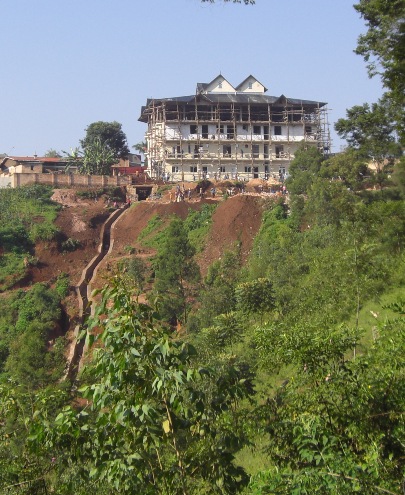 Ken worked with Victor and the local board to hire three Bible teachers and establish a curriculum through Global University—an outreach of the Assembly of God. One degree program was dedicated to helping local pastors attain credentials, while a second program was developed for university students to keep them grounded in the Christian faith. Ken began to look for stimulating work, something outside his routine of Bible teaching. One day in conversation with Pascazia, he asked, "How is the work going at the museum? Do you think I can be of any use there?" She pondered his question. "We have a huge backlog of artifacts that need to be photographed, cataloged, and then either exhibited or stored. We can't seem to find the right person. The museum can't pay much, and the job requires skill as a photographer and curator. Why don't you drop by sometime, and I'll show you what I'm talking about?" Ken did drop by, and he never looked back. The position turned out to be a perfect fit for a man of his skill set and temperament. Plus, since he was a volunteer, the National Ethnographic Museum could afford his salary—one permanent entry pass. Ken spoke with the ethnic studies department at the university and recruited two worthy assistants, a woman with technical skills and a man focused on Rwandan culture. Out of his pocket, he provided a stipend for his student helpers. He discovered the museum owned an old Hasselblad camera, high quality but cumbersome to use. At the House of Joy, he converted a windowless storage closet into a dark room for developing photographs. Pascazia and Ken worked well together, establishing a work schedule in which Ken would show up at the museum three days a week, set up and photograph items, and then develop the photos on his time. And so, three months passed, with Ken serving Rwanda in the present as an evangelist and as a museum cataloger of its past. Ken's return flight to California was set for May second. He tried to follow his agreed-upon advice to remain non-committal about his mission work. After all, he did promise Roger he would not make a final decision until he had returned home. However, his passionate heart intervened. He knew he would be returning to the mission field in Rwanda. His mind spun to fast-forward, plotting how long to stay in Mill Valley, how to set his affairs in order, and what to ship back to his apartment in Butare. Before boarding the return flight, Ken approached passport control for his exit stamp. After two steps forward and before examining his documents, the agent cried out, "I know you. You're Mzee Taylor. You taught a Bible class to me." Ken was flabbergasted. Jan-Luc shook his hand and told him how much he had appreciated the theological training. Three months earlier, Ken had asked God to provide a means of evaluating the effectiveness of the missionary effort. Now God had not only provided one voice upon entering Rwanda but a second upon departing. His thoughts defaulted to scripture: "At the mouth of two witnesses is the matter established." He looked up to heaven. "Thank you, Lord, for establishing this matter."
7. A Month at Home Ken met Ryan at the San Francisco Airport, and soon the two were zooming over the Golden Gate Bridge into Mill Valley. He noticed subtle changes in his homestead: flower baskets hanging from decks and a wire fence along the side yard. As his son-in-law opened the front door, Ken heard the yapping of dogs. Madison greeted him, keeping her animals at bay. Ken noticed a subtle change in his daughter as well. After looking her up and down, he laughed. "It looks like married life is treating you well." He studied her cheery face and glanced at her waistline. Putting on weight was his secret thought. As if to read his mind, Maddy said, "Daddy, I'm not getting fat. Ryan and I are pregnant." Ken acted astonished at the statement, "What? Ryan is pregnant too?" Ryan replied with a grin, "Well, I did have something to do with her condition." "How far along are you?" Ken inquired. "About four months," Maddy replied. "We could have told you earlier, but we wanted to tell you in person." Ken dropped his bag and embraced his daughter. "So good, so good." Ryan looked at the luggage sitting by the door. "So, Mister Taylor, where do you want to stay? This house is yours, so you make the decisions." He put a left hand on Ryan's shoulder and a right on Madison's. "Please, count his house as your own. This downstairs guest room will suit me fine. Put my bags in there." He looked at Maddy's midriff once more. "You three will be staying upstairs in the main bedroom." As the month passed, Ken dropped by the Methodist Church to see Ryan ministering as youth pastor. He also stopped by Sausalito Middle School to see Maddy teaching art. Ken got to dog-sit on many afternoons and grew fond of Diesel and Poppet. Ryan's graduation from Fuller Theological Seminary was set for May 25 in Pasadena. The event served as a family reunion. Jefferson and his family flew in from DC, while Roger drove down from Portland. Ryan's parents were on hand to celebrate as their son was awarded the Master of Divinity. Once back in Mill Valley, Roger convinced his brother to embrace digital photography. Ken purchased nine thousand dollars' worth of photographic equipment as a donation to MissionMates. The cameras, lenses, laptops, and paraphernalia filled two of Ken's suitcases. In mid-June, Ken caught his flight to Africa, sad to leave Ryan, Madison, and even the dogs. However, he was joyful to return to his harvest field. Part of that joy was reuniting with Pascazia and working beside her once more.
8. Marriage Seminar Once back at the Ethnographic Museum, Ken's digital equipment received disapproving looks. "Not as good as the Hasselblad," was the response of the art school director. "You're probably right," said Ken. "The museum can keep the film cameras for special projects, but here's the bottom line. If the stored image is digital—as on this laptop computer—then the picture-taking should be digital as well. This museum-grade software can catalog a million items, both their images and descriptions. Trust me, a digital camera is best for this purpose." After conversations with Pastor Eric and Pastor Daniel, Ken learned of an emerging problem in Christian churches. This was the issue of divorce. As Eric explained, "We in Rwanda are moving quickly away from our village roots. In our traditional society, men were in charge of the family unit. Husbands were the boss, and wives obeyed. That was our culture and was written in law." Daniel took up the conversation. "But now things are different, almost overnight. Women are aware they have equal status. That is a good thing for the most part. Both sexes are equal in the eyes of God. Did you know our National Assembly is now more than fifty percent female?" He paused. "I think that's intentional on the part of President Kagame. Women hate war, and the more that women are in power, the less chance there is of a second genocide. Maybe it's true." Eric picked up the thread, "Many Pentecostal men continue in their traditional village ways. Let's say the wife belittles her husband; then the man slaps her; then she calls the police; they put him in jail for a few days; she consults a female attorney who convinces her divorce is the solution to the problem. If the two are Christian, they come to me before taking action. What can I tell them?" Daniel interrupted, "Yes, the problem is mostly with men. They should never strike their wives. But women need counseling too. They think divorce is modern, imitating the West. They think leaving their husbands will solve their problems. But what about the children? What if the man is basically good but just lost his temper one time? What can I tell the woman?" Ken thought for a while and clarified some of these issues. "Maybe MissionMates can sponsor a marriage seminar for pastors and their wives. I can give them material they can use in couple counseling. Let me think about it, and I'll get back to you." Ken searched his library. Did he pack this one? Yes, there it was: Love & Respect: The Love She Most Desires; the Respect He Desperately Needs. The book, written by Dr. Emerson Eggerichs, had provided him with a tool to talk with Madison and Ryan prior to their marriage. Ken modified the contents of the book, molding it to fit an African context. He created a PowerPoint presentation and printed out a hundred handouts. He figured he had one major obstacle, difficult to overcome. How could he, as a single man, lead a marriage seminar without a female counterpart? He needed a woman to stand at his side, a voice to speak the female perspective, and a kind of visual aid. His mind leapt to Pascazia. Would she be willing to do it? But he was shy. Could he even ask her? Ken decided to use his right-hand man as an intermediary. "Victor, I need you as a sounding board and maybe to ask you a favor. You know I'm developing a marriage seminar for local pastors, right?" "Yes, Mzee." "Now you know I'm not a married man. I was once, but not now." "Yes, Mzee." "Well, I think my seminar would be much more effective if it were co-taught by a woman." Victor's eyes got large. Ken continued, "So, do you know of any woman who might be able to partner with me in teaching a marriage seminar? It's going to be called Love and Respect." Victor gave his reply. "Let me understand what you're asking. Can I suggest to you a co-teacher who is a Christian woman, probably single, speaks fluent English, and likes to stand up in front of people?" He smiled. "Precisely," Ken exclaimed. "There's only one person like that, and you work with her almost every day—Pascazia, of course." Ken responded. "I agree. There is no one better than Pascazia, but is it okay to consider her? I guess I'm asking at two levels. First, is it culturally appropriate? Will I be breaking some code of civility? I'm pretty ignorant about such things. The second is more personal. Will I offend her with such a proposal? I know she was very close to her late husband. The last thing I want to do is upset Pascazia." Victor laughed, "It's simple. Why don't you just ask her? You're not suggesting a romantic date or anything." Ken's face reddened. "Please help me as a favor. Feel her out for me so I won't be rejected. If she gives you a positive response, then I'll ask her personally." The next day, when Victor spoke with Pascazia about Ken's proposal, he noticed a smile she tried to hide. "Of course, I'll do it. It's my Christian duty to help out Mister Taylor." Victor relayed her response to Ken, wondering if a spark was kindling under the surface. As Ken explained to his co-teacher, "The book we'll be using is built upon the theory that the primary emotional need for men is respect, and for women the need is love. The author cites Ephesians 5:33 as his key: 'Nevertheless let each individual among you also love his wife even as himself; and let the wife see to it she respects her husband.'" "I think I grasp the concept," said Pascazia. "A wife needs to feel love, and a husband needs to feel respect. I think that's correct. Without such love a wife will not give respect, and without respect a husband will not show love. Yes, there is a love-respect connection." As the first session got underway at the Anglican Church, Daniel introduced Ken Taylor as the main speaker and Pascazia Kubwimana as a woman who would be filling the role of his wife. To illustrate the bond of marriage, Ken grasped the hand of his stage wife and raised it high as might a prize fighter. She gasped in surprise as the audience cheered with amusement. Over the next few days, Ken spoke to the men about loving their wives, while Pascazia spoke to the ladies about their husbands' need for respect. As is often the case in mixed-language groups, Victor interpreted Ken's English into Kinyarwanda while Pascazia taught directly in her native tongue. Ken understood a few of her words, but Victor whispered the sense of her meaning into his ear. Pascazia was especially effective when she testified with tears about Francis and how he had died during the genocide. "I wish to God my husband were alive today and at home with me. I can't understand why so many of you ladies want to voluntarily discard your man like a piece of garbage. Please do all you can to stay married as long as you are able. If you run into difficulties, seek counseling and pray. Believe me, as you both grow closer to God, you'll grow closer to each other. Ken illustrated this last point by using two pencils. He extended both arms, holding one pencil between each thumb and forefinger. "Look, this first pencil represents the husband, while the second is the wife." He tipped the pencil points until they touched, forming the peak of a pyramid. "Imagine you and your wife at the eraser end, and God is at the point. Think about what happens. As each of you moves closer to God, you automatically move closer to each other."
9. A Criminal Tribunal The August marriage seminar was a smashing success. The co-teaching went so well, the duo led two more sessions in Kigali. It was at a coffee shop in the capital city when Pascazia informed Ken of her departure. "Yesterday I met with our nation's Minister of Justice. She asked me for a special favor. Because I'm a lawyer, professor, and historian, Madam Nahahoro asked me to travel to Arusha in Tanzania." "Why?" asked Ken. "You know there's a United Nations court going on in Arusha. It's called the International Criminal Tribunal for Rwanda. Many Rwandese have been found guilty of crimes against humanity. One man is a special case. His name is Simon Bikindi. Have you heard of him?" Ken shook his head. "No, I can't say that I have. Who is he?" She took a deep breath. "It's hard to explain his significance. At bottom, he's a songwriter and singer. He may have been our nation's most popular entertainer ever, like Elvis Presley and Michael Jackson rolled into one but even more. However, nowadays his songs are blacklisted, and his name is taboo to mention." Ken was puzzled. "Why is that?" She thought for a moment. "Imagine the genocide as if it were a gruesome cinematic production that lasted one hundred horrible days—the mass killing, rape, abuse, torture, all that. Yes, that's a very long movie!" She chuckled. "Now imagine, as in the cinema, there is a soundtrack lasting for one hundred days. Do you know how at the end of the movie the credits roll by?" "Yes, I can visualize that." "You look at the screen and see the list of actors: Juvenal Habyarimana, Theoneste Bagosora, Theodore Sindikubwabo, Madam Agathe, and even Paul Kagame. The hundred names scroll on and on. Finally, you see the words 'Musical Score', and the single name 'Simon Bikindi.' Everyone in Rwanda recognizes that name, and everyone in Rwanda can recite his lyrics. But here's the question: is the person who wrote the background music to the genocide also a génocidaire?" Ken pondered the question. "So, do you think this guy Simon is a war criminal?" "Morally, spiritually, and emotionally, yes! I know for a fact that his songs induced Hutu mobs to kill innocent Tutsis. Whether or not that's a crime in the eyes of a UN tribunal is something I don't know. That's why I'm going to Arusha." Ken followed up, "What else can you tell me about this singer?" "Well, Bikindi fled Rwanda just as the old regime was collapsing and escaped to Goma for a few years, then sneaked into Europe in 2001. My government sought his return to Rwanda. Of course, that never happened. Instead, the Dutch government extradited him to the UN tribunal in July 2002. He sits in a prison cell now. His trial began last May, but it's moving—how do you say it? 'at a snail's pace.'" Ken smiled at her American idiom. She continued with her explanation. "Madam Nahahoro informed me the prosecution of Mister Bikindi is not going well. Rather than bombard the international judges with hate-filled radio songs, she wants me to locate reliable witnesses who will testify under oath they heard him urge Hutus to kill Tutsis." Ken lowered his head. "So, when do you fly to Tanzania?" Her eyes moistened. "Our chief jurist at the tribunal asked for a delay of two weeks. I must leave in ten days." Pascazia got her affairs in order, and in mid-September, Ken and Victor drove her to the Kigali Airport for the short hop to Arusha. As the three of them sat at an airport café, Ken told Pascazia, "I'll be worried about you. Can you keep me informed of your progress? She responded, "Sure, I'll reply to every e-mail you send me. And you let me know how things are going at the museum and the progress you're making with the new software. It's called Korona P-O-S, right?" "Yes, that's it. My assistants are about ready to take our first digital photo and catalog the first item." "You're doing the one thousand drums first, aren't you?" "You got it," Ken said. He had his laptop open and heard the ding that signaled an incoming e-mail. It must have an attachment, he thought to himself; it's taking a long time to load. He gazed at Victor and Pascazia as they conversed in Kinyarwanda. Then he looked down at the message. His face frowned with concern. The message was from Maddy. Before reading the words, he clicked on an attachment. His face broke into a broad grin. He spun the screen toward the two. "Can you guess who that is?" They adjusted their heads to better view the laptop. Pascazia smiled first, then, slower to respond, Victor spoke out, "It looks like your new grandchild." "Yes, indeed." Ken chuckled. "She's my new granddaughter, and her name is Scarlett Rose Roberts." He studied the message in more detail. "Mother and baby are doing fine. Baby was born on September 13 at two in the morning." Making a quick mental calculation, he added, "That was about six hours ago." "Congratulations," said Pascazia. Victor was looking at a second picture with mother, father, and newborn. "So that baby is one-quarter you." "Yep," said the proud grandpa. "A real rainbow baby. One-quarter European, one-quarter Asian, and one-half African-American." The remainder of 2007 passed with busyness for Ken. He taught a few more marriage seminars with Daniel as interpreter and Esperance as his stage wife. He lamented that the presentations didn't have the same electricity as when Pascazia was his partner. Ken and his assistants were able to catalog most of the drums by year's end. They used the Hasselblad camera to feature a few prize drums, making oversized portraits. Gaston Sebagabo continued to work as a motorcycle messenger but dropped out of the National University. "Too much stress," he said. The Kivu refugee married Azalia, the youngest of Daniel's daughters, and the couple was integrated into the Butare family clan. The aspiring young man idolized his father-in-law and studied theology in his library. Victor and Clementine celebrated the birth of a third child, this one a boy named Nkusi. Victor gave Ken a smile of resignation. "My wife informs me three arrows are sufficient for my quiver." Ken and Pascazia kept up a regular correspondence. She wrote this to him in her final message of the year:
| ||||||||||||||||||||||||||||||||||||||||||||
|
Mission 2008 Pascazia Kubwimana spent most of the year working out of a hotel room in Arusha. She kept up a steady correspondence with Ken Taylor, delighting in his constant insight and encouragement. She often printed and posted his comments to her deskside corkboard. Her favorite clipping was a quote from Andrew Fletcher, a Scottish writer and patriot: "Let me write the songs of a nation, and I care not who makes its laws." Pascazia often mulled that saying. "Is it true? Can the lyric of a song command more obedience than the lyric of a law? Can the beat of a drum appeal more than the beat of justice? Does that make Bikindi, the chief songwriter, a greater génocider than Bagosora, the chief instigator?" 1. Criminal Words Pascazia returned to Rwanda in mid-February. When she met Daniel and Ken at the airport, she rushed to greet familiar faces. "I need a break," she confessed. "There are just too many prosecutors, judges, and criminals. I'm always on my toes plotting strategy. It's been like a pressure cooker." "It must be tough," Ken sympathized. "But you're home now and can relax." She half-agreed, "Maybe I can rest a little bit, but this is a working vacation. It doesn't look like the tribunal will render a verdict against Bikindi any time soon. Is there such a thing as too much due process? "While it's on my mind, I'd like to invite you and Daniel to my house tomorrow. It will be a going-away dinner for Beatrice. She'll be flying to France for university. I can't believe she's already eighteen. Where does time go? I'm glad her Aunt Sonia is in Paris to check up on her." The next afternoon when the fine meal was complete, the group gathered in the parlor. For Ken's benefit, the three conversed in English. Pastor Daniel began with an open-ended question to the hostess, "How are things going in Arusha?" "My work is difficult," she spoke while sipping African tea. "I mentioned this to Ken in a message. So much revolves around the meaning of vocabulary, especially when the central charge is something called direct and public incitement to commit genocide. "You know I am working with the prosecution team, right? To prove incitement, we must first show that the accused uttered such words. Then we must show that the uttered words belong in the hate media. Next, we must prove the words were meant to instigate a crime, and finally, we must show that the speaker was aware of that effect. How can we prove all that beyond a reasonable doubt?" Daniel broke in, "What do you mean by hate media?" She explained, "The tribunal rendered an early judgment that brought into the limelight the powerful role of language in the commission of crimes. Hutu-power radio and newspapers constantly used these hate words to incite a genocide against Tutsis. All agree this hate media paved the way to the genocide." Communication is complicated because all the accused are speaking in their native tongue of Kinyarwanda, while none of the judges know that language. How can they render a fair judgment without a common tongue?" Ken joined in, "Pascazia introduced a new word into my vocabulary. It's English but wasn't familiar to me." Pascazia laughed. "You mean polysemic?" "That's right," said Ken. "It means that a single word can have cascading but related meanings. Pascazia was telling me the word inyenzi means 'cockroach' in its literal sense. So, if I ordered you to "kill cockroaches," what am I asking you to do? What is the literal meaning? What are its polysemic meanings, that are dependent on culture and context?" Pascazia continued, "Yes, it was fascinating. I listened to testimony from a language expert. He explained that inyenzi had expanded over time to six circles of related meaning. Of course, its lexical denotation is to the insect called cockroach. Second, by analogy, it was used to describe the RPF Inkotanyi army, a noxious pest that invades by night. Then, by association, inyenzi came to mean RPF accomplices, then by extension, RPF sympathizers; then, by generalization, all Tutsis. Then, by over-generalization, all Hutus who opposed the regime. In the eyes of Hutu power, all six rings were a species of inyenzi deserving extermination. "Members of the tribunal, who spoke no Kinyarwanda, had to rely on the testimony of linguistic experts. Of course, the opposing sides seldom agreed with such professional interpretations." Daniel asked, "What were other criminal words that caused difficulty for the tribunal?" Pascazia thought for a moment. "These are the central terms used in the hate media before and during the genocide: inyenzi, inkotanyi, umwanzi, and icyitso. The tribunal accepted these as coded hate words." Ken sought clarification. "I know inyenzi means cockroach, and Inkotanyi refers to the RPF fighters, but what about those other two?" Daniel spoke up, "Umwanzi means 'enemy' and icyitso means 'accomplice.'" He shook his head. "But the terms evolved in meaning. I listened to Thousand-Hills radio. All four of those terms came to mean 'those people whom Hutu radicals must kill.'" Pascazia sighed. "That's all too true." Daniel added, "There's also the word gukora which literally means 'work'. I often heard this term spoken as code to mean 'kill Tutsis.'" "How can you be certain of that?" asked Ken. Pascazia paused in thought. "Here's one example I read in a transcript. A government official once asked a local mayor, 'Have you completed the gukora?' To which the mayor responded, 'Yes, it's complete.' The official then scolded him, "So then why is Vincent the Tutsi still alive?' "I ask you, other than kill, what else can gukora mean in this context?" At that point, Beatrice walked into the parlor. "Mum, have you seen my mobile phone? I put it down a few minutes ago." Her mom smiled. "Yes, it's on the table right here." Bea looked puzzled. "What? Why?" She handed her daughter a wrapped box. "Open it," she said. "It's a going-away gift." Bea undid the ribbon and colorful wrapping. "Ah! Thank you so much." Daniel joined in. "We looked for the best mobile in Kigali, one suitable for France. The seller recommended this model. He set it up for use in Europe." He added, "It's best to use two phones. Keep your old one for Rwanda calls. You can use the new one once you get to Europe." As Beatrice left the room with a phone in each hand, her mom shouted after her, "Remember to call me every day. That's why I got you the new mobile."
2. Corkboard Clippings A few days later, Victor drove Pascazia and Beatrice to Kigali. The mother would be returning to Arusha while the daughter pursued adventure in Paris. Ken was leading a Bible study in Butare and was thus unable to bid farewell to his unspoken romantic interest. However, he did keep up regular correspondence. In one note he wrote of word quibbles in American history: "During the Civil War, Abraham Lincoln refused to speak with the Confederate President, Jefferson Davis. In pursuit of a peace treaty, the Southern leader had written of 'our two nations,' while Lincoln insisted, 'no, our one nation.' The difference was singular or plural. The United States ARE or the United States IS? You see, fussing over word choice is not particular to Kinyarwanda but universal. Such word choices are not trivial but critical." Pascazia clipped favorite portions of his messages and pinned them to her corkboard:
On a Sunday morning, after church, Pascazia reread the corkboard notes. She fished in her luggage and retrieved a photo of herself standing beside Ken. They held hands on stage, posing as wife and husband. Her heart ached as she pinned the picture next to the clippings. 3. Correspondence Ken wrote to Pascazia in April:
In response, Pascazia wrote:
Ken soon replied:
4. A Summer at Home As events transpired, Ken's out-flight and Pascazia's in-flight coincided on July 10. They were able to share only a few hours in the airport coffee shop. Pascazia apologized. "I'm sorry. I know I was supposed to come back a week ago, but our Minister of Justice asked me to review some tribunal documents. I can't refuse her, but she's promised me that once the Bikindi business is complete, my obligation to her is done." Ken responded, "I appreciate the weight of your responsibility." For twenty minutes the two chatted about the museum and about various personalities. "John Nzabonimana is doing a stellar job in filling in for you," Ken said. "He certainly has the intellect, but not your passion." "Yes," she said. "He is a good man but has his eye set on a higher position. Like most overachievers, John's looking for the opportunity to move to the capital." "How about you?" probed Ken. "Do you have any desire to move to Kigali?" "Not at the moment. I could earn more money there, and someday I might relocate, but the ethnographic museum is in Butare, and I'm content to remain in my longtime home." Ken glanced at his watch. "I have to catch my plane in a few minutes, but I wanted to give you this before I go." He reached into his satchel and handed her a small jewel box. "I thought this gift might cheer you up." She snapped open the container to find a set of small golden earrings, one fashioned into the Greek letter alpha and the other into the omega. "Those once belonged to Joy," he said. "I hope you like them. I passed along most of Joy's jewelry to Madison but for some reason held on to these. Maybe you're the reason." Pascazia was as speechless as Ken was embarrassed. He took hold of his rolling suitcase, did an about-face, and began his retreat. She called his name, and he turned about to face her. She stood on her toes and wrapped her arms around his neck. With an embrace, she whispered, "Thank you, my friend. These earrings are a gift from Joy, from you, and from God. How can I fail to lead a life of virtue when my head is set between the Alpha and the Omega?" On the short flight to Nairobi, Ken replayed the scene in his mind. What am I? A fool? Do I really want to get romantically involved with Pascazia? Could we really share a life together? She called me 'friend,' only a friend. Is that what I am to her? Let me put all this in God's hands. His mind was filled with fancies until his craft touched down at Kenyatta Airport. Ken only had five days in Nairobi before he traveled on to California. After clearing customs, he was overjoyed to greet Jeff, Abigail, Emily, and Cody. His son introduced a Kenyan companion. "This is Levi. He lives with us and acts as our escort, interpreter, and driver." Once seated in the State Department limo, Jeff told his dad, "I have every day planned. I hope you don't mind a busy schedule." With one arm around Emily and one around Cody, he replied, "As long as my grandkids are part of my busyness, that'll be great." Abigail entered the conversation. "You know, we've only been here a few weeks, and much of that time's been involved in settling into our new situation. We haven't had a chance to visit any tourist sites." She squeezed Emily's hand. That was a cue for the six-year-old to speak up. "Gwampa, I have a list I can read to you. I even practiced it." With excitement the girl proudly delivered the words: "We are going on a safari, to a giraffe center, an elephant orphanage, a museum, a carnivore restaurant, and a Masai market to buy souvenirs." Emily showed her grandpa the paper decorated with an appropriate crayon drawing next to each item. And that was Ken's pleasure: to hang out with his offspring, standing aside, observing his family in a Luke 2:52 manner, as they "increase in wisdom and stature, and in favor with God and men." Soon Ken was on his flight to London and thence to San Francisco. Both Maddy and Ryan were occupied with work, so Ken boarded the Marin Airporter to arrive at the Manzanita commuter lot. He phoned Maddy, and soon they were united. This interaction was the first opportunity for Ken to behold his new granddaughter. Scarlett Rose was already a toddling ten months old. "I'll have to return home more often," he quipped. "Skype is a miraculous technology, but it can never replace a full-arm baby cuddle." Ken enjoyed a slice of California life. He was able to babysit for Scarlett, providing respite for her parents. He also paid a call on his financial advisor and hired contractors for home upkeep. Ken scheduled a physical exam with his Kaiser doctor, completed a dental appointment, and picked up a new pair of glasses, thus making the best of his two-week home stay. At the end of July, Roger flew into SFO and stayed with Ken for a night. The evangelical brothers finalized details of their apologetics conference and then headed to Rwanda once more.
5. Songs of the New Rwanda During the nineteen-hour journey from San Francisco to London to Entebbe to Kigali, Ken shared about Pascazia and her judicial case. "It's a perplexing situation," he began. He then quoted Andrew Fletcher: "Let me write the songs of a nation, and I care not who makes its laws." What do you think? Can a songwriter be guilty of war crimes?" Roger listened as his brother expounded the facts. "Fascinating," he finally remarked. "You say many Hutus who listened to Bikindi's music have reported they were motivated to murder Tutsis. Okay, I get that. The drumbeat stimulated their heartbeat. That's why armies play the fife and drum when going into combat. The martial beats stiffen your patriotic resolve to carry out your perceived duty. "You also say the lyrics were obscure, couched in coded language, and difficult to decipher. That's a problem for prosecutors. Bikindi may be morally or emotionally culpable, but legally? In a UN court with European traditions, I doubt such a songwriter would ever go to prison. It rubs against that cherished concept called freedom of speech." The brothers then talked about songs of Rwanda. Ken opened, "I once heard that European music is melodic, based upon the keyboard, and goes back to the Ionian Greeks. This soundscape contrasts with rhythmic-based singing in Africa, which is centered on the drum." "That sounds right," said Roger. "My European ears prefer melody. Maybe that's why some modern hip-hop makes my ears hurt—too much beat." He continued, "You know, only one truly African song has made it to the top of the charts in the States." "What's that?" asked Ken. "Um, The Lion Sleeps Tonight with the doo-wop vocal of 'Wimoweh.' I think it's a Zulu song from South Africa." He gathered his thoughts. "I understand it's really not about sleeping lions. That's coded language. It's a subversive song about African people about to awaken to attack their colonizers." Roger then returned the conversation to Rwanda. "I'm curious, after the genocide, what happened to Bikindi music?" "It was banned, of course. The mere tenor of Bikindi's voice provoked trauma in thousands of genocide victims. However, some opposition leaders say his lyrics are truthful and the ban is more about political control." Roger continued, "So, I know that Rwandans like their music. What followed in the years after the national tragedy? Did the new government try to heal the nation through broadcast?" "For sure. The new regime flooded the airwaves with soothing sounds. They commissioned artists to write songs of reconciliation and unity. I think you sang along with a few, maybe without realizing it." Ken opened his laptop and fumbled through a few sound files. "Here's one you may recognize." Roger plugged his headphones into Ken's computer. "Oh, I know this song. What are the lyrics?" Ken flipped the screen toward his brother:
When the song of reconciliation had ended, Ken showed him the words to the Rwandan national anthem. "This is the song the people voice at every public gathering."
Roger meditated in thought, "So these are the songs that provided an antidote to Bikindi poison." 6. Songs of Faith The two missionaries ministered in Butare for three weeks, leading the Fifth Apologetics Conference titled the Mountainside Teaching of Jesus. Roger taught through the nine Beatitudes from Matthew five, while Ken expounded the six great reversals ("You have heard that it was written, but I say to you"). Ken then took the lead on chapter six and Ken on chapter seven. During these four days of expository preaching, Roger paid particular attention to Rwandan singing. He noted how the scriptural words and joyful spirit served to unite and uplift the congregation. He video-recorded a performance of twenty brightly clad women singing in unison. An electric guitar, keyboard, and traditional drum boomed as accompaniment. The women swayed, clapped, and lifted their arms. Roger commented to Ken, "I can't imagine a Rwandan choir engaging the tongue but not the body." Ken responded, "It would be next to impossible for Rwandese to sing without bodily movement." He chuckled. "You know, in the Roman Catholic tradition, a dancing choir is not permitted. I understand the pope in Rome had to give African churches a special dispensation to sing and dance at the same time." Roger continued to video as the choir broke into pairs. Two by two the women faced each other and shook an index finger in their partner's face. Roger whispered to Victor, "What are they doing?" "How might I say it? They are admonishing one another to stay firm. The words come from Matthew 24: "Mube abantu bagaragaza mu bikorwa ijambo ry'Imana. Something like this:
Roger was struck by the way music and motion, singing and teaching, and encouragement and admonishment all combined inside one short performance. Pastor Eric closed the conference with a musical testimony. "My daughter wants to sing for you. The doctors in Kigali told me she could never do this, so it is a kind of miracle. Believe it or not, Hope can sing better than she can talk." Esther helped the disabled girl to center stage. Hope mumbled words into a microphone construed to be "Thank you." The instruments rang out with force, and Hope came to life as if struck by lightning. She began to sway, pumping her fists. The handicap seemed to vanish as the fourteen-year-old belted out the English words:
Hope cycled through this stanza three times, each sing-through with more vigor. Eric walked on stage and gestured to the audience to join in. Soon there were two hundred voices: "Every day I need the blood of Jesus." The boisterous singing turned into joyous dancing, which transformed into a spontaneous conga line. Roger and Ken joined in, singing, swaying, and stepping up the center aisle. One hand grasped the shoulder ahead while the second waved side to side. "Every day I need the blood of Jesus" echoed in the rafters. Roger congaed in circles around the auditorium, losing track of the repetitions. Ken plopped exhausted into his folding chair. Finally, Eric took the mike. "Please, please, let me close in prayer." He lifted his arms in blessing, spoke a brief benediction, and dismissed the joyful tumult. Soon the time came for Roger to return to the States. He was disappointed in that he did not encounter Pascazia. Professor Kubwimana was still in Arusha continuing her work with the International Criminal Tribunal for Rwanda.
7. Charges against the Songwriter In September, Ken emailed Pascazia, asking her to elaborate on the case brought against Simon Bikindi in Arusha. She responded with a PDF attachment of seventeen pages. 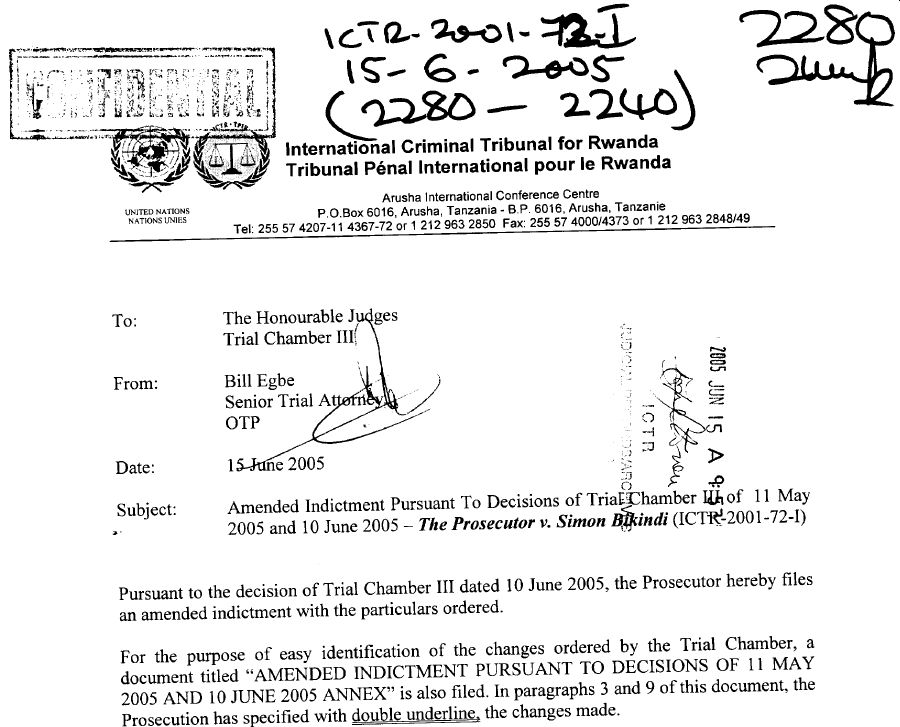 "Here it is," she wrote. "This is the English version. You can read for yourself the six counts and the forty-eight separate charges. You know his trial days numbered sixty days beginning in October 2006 and running to November 2007. As of last week, I am able to share this document with the wider public. Read through it and tell me what you think. I'm not yet sure how the tribunal will rule on the six counts." Ken printed out the pages and read through them several times. He underlined eight portions of the INTERNATIONAL CRIMINAL TRIBUNAL FOR RWANDA (Case Number ICTR-2001-72-1). It seemed to him the case against Bikindi was solid. The prosecutor of the International Criminal Tribunal for Rwanda charges Simon Bikindi with conspiracy to commit genocide; complicity in genocide; direct and public incitement to commit genocide; and murder and persecution as crimes against humanity. Simon Bikindi was a well-known composer and singer of popular music and director of the performance group Irindiro Ballet. He was also an official in the Ministry of Youth and Sports of the government of Rwanda and a member of the MRND political party. Simon Bikindi collaborated with the Head of State, Juvénal Habyarimana, the Minister of Youth and Sports; the national leader of the Interahamwe militia; and national political leaders in order to militarize the Interahamwe youth wing, to indoctrinate militias with anti-Tutsi ideology and to disseminate anti-Tutsi propaganda. Simon Bikindi publicly addressed MRND adherents at party meetings with specific exhortations to do the work, a coded reference to exterminate Tutsis. Simon Bikindi's songs were a crucial part of the genocidal plan because they incited ethnic hatred of Tutsis and further incited people to attack their fellow citizens for the sole reason that they were Tutsis. The intertwining objectives of official radio programming and Simon Bikindi's musical recordings were to sensitize and incite the listening public to target and commit violence against the Tutsis of Rwanda. He particularly influenced the civilian militias, the government armed forces, and the masses of Rwanda's Hutu peasantry. He extolled Hutu solidarity to target the Tutsis as accomplices of the enemy. Sometime in June 1994, at the border crossing between Gisenyi and Zaire, Simon Bikindi ordered the Interahamwe in his company (and to whom he gave orders) to kill a group of Tutsi women who were trying to escape across the border. The women were then killed with Uzi guns. Sometime in mid-June 1994, Simon Bikindi and a band of Interahamwe arrived in Gisenyi from Kigali and launched an attack on Tutsis living in Nyamyumba Commune. Just prior to the attack, Simon Bikindi announced to Interahamwe at the roadblock in Gisenyi town that they should search out Tutsis and kill them and that Hutus helping them to flee to Zaire should also be killed. After these words, Simon Bikindi led a caravan of militia to Nyamyumba and oversaw the killing of Tutsi residents and the pillaging of their property. In late June of 1994, Simon Bikindi addressed an MRND meeting at Umuganda Stadium in Gisenyi, where he publicly stated that "all Hutus should hunt down and kill all inyenzi-cockroaches." Following the meeting, there was an intensive search for Tutsis that were still hiding, and as a result of this search, Tutsis were killed, including a woman named Ancilla and her 4-year-old daughter.
8. Sentence in Arusha As summer transitioned into autumn, the dry season passed into a season of light rain. Ken continued his rhythm of museum work and Christian ministry. In October he learned that Madison had been devastated by a miscarriage. "The beautiful baby was three months along," she wrote to him. Ken spoke by phone with Jeff in Nairobi. Much of the talk centered upon politics and the recent election of Barack Obama to the presidency. "I have strong opinions," Jeff shared, "but as a diplomat, I keep them to myself. My first allegiance is to my country and to support its elected leaders." Ken responded, "I hear you. I voted in Kigali for John McCain, but when I preach, I try to stay neutral. Why alienate half of your audience?" "That's a challenge for me too. My conservative values are out of fashion in the State Department." After a pause Jeff continued, "Say, Dad, did you hear the joke about the Southern Baptist preacher addressing his congregation at election time?" Ken groaned. "Tell it to me." "So, from the pulpit this preacher wanted to demonstrate his even-handedness and said, 'You know God is not a Democrat or a Republican. I repeat, 'He's not a Democrat or a Republican.' Then under his breath he murmured, 'But He's certainly not a Democrat". In December, the verdict in Arusha was finally delivered. Ken tuned into a program called The World and heard Marco Werman report: We end today with an update on a musician who's been on trial for years. Yesterday, Rwandan artist Simon Bikindi received a verdict—guilty. The 54-year-old Bikindi sat in a packed courtroom in Arusha and heard the judge read the verdict: "The trial chamber unanimously finds you, Simon Bikindi, guilty for direct and public incitement to commit genocide based on your exultations to kill Tutsis in a vehicle outfitted with a public address system on the main road between Kivumu and Kayove in late June 1994." In the end, Judge Ines Weinberg made no mention of song lyrics in the verdict. Instead, the panel of three judges sentenced Bikindi to fifteen years in prison for urging Hutus to kill Tutsis. He was given credit for seven years already served. In effect, the jurists said that yes, the songs could be considered as hate songs, but we are not able to prove a direct link between the songs and the actual genocide. It was a pretty clever decision. The trial had been considered problematic because of the troubling possibility of an artist being prosecuted for his work, art being open to a variety of interpretations. The judges successfully avoided this controversial issue since the verdict was not based on Bikindi songs. It leaves open the door to free artistic expression yet closes the door on one particular artist who was clearly guilty of hate crimes.
9. Return of Pascazia In Tanzania, Pascazia's obligation was complete. She cleared out her small office, carefully placing Ken's correspondence into a rosewood box. She arrived in Kigali a few days before Christmas with three heavy containers. "Mostly an accumulation of books," she sheepishly told Ken. On the three-hour drive to Butare, the couple discussed the Bikindi verdict. Pascazia mentioned three aspects of the tribunal that garnered the greatest media attention. First was the establishment of directed rape as an act of genocide. She pointed to the words of Judge Pillay that rape can no longer be regarded as a spoil of war but as a war crime. Pascazia also spoke about the role of state-operated hate media. This aspect not only included persons in charge of radio, television, and newspaper but also stretched to include the songwriter Bikindi. "Unfortunately," Pascazia added, "the French magistrate is also pursuing a case against our president, Paul Kagame. This is ironic since the French government was in bed with Hutu power. I am reminded of your American saying, 'Be careful when pointing a finger at someone, because four fingers are always pointing back toward you.'" When the conversation petered out, Ken tuned in the radio. A Rwandan pop song filled the ears. "What's that song about?" asked Ken. She listened for several seconds. "Oh, that's called Barafu Wa Moyo. I think it's the number one song these days." She focused on the lyrics. "It appears to be the story of a boy cheating on his girlfriend." Ken laughed. "Maybe these kinds of heartbreak songs are a sign that the nation is healing and moving beyond the poison of Bikindi and even the remedy of reconciliation songs." As they entered the outskirts of Butare, Ken invited Pascazia to a New Year's Eve get-together at the House of Joy. "There will be a group of us meeting about 8:00 p.m. to celebrate, to sing, to pray, and to welcome in the New Year of 2009. I want to invite you as my special guest." "I'd love to come," smiled Pascazia. "Can I bring along Beatrice? She's supposed to be back in town in a few days." "Of course," he responded, "I'd love to see your daughter." Christmas passed with Ken and Victor in Kigali leading a series of holiday services. They helped decorate a large coniferous tree with tiny Rwandan baskets as colorful ornaments. At the end of the final meeting, Ken presented every child with a mini-basket filled with sweets. When Ken returned to Butare, he phoned Pascazia. His female friend was out of sorts. "I don't think I can attend your party. My daughter won't be returning from France. Can you believe she cashed in her airline reservation to buy a ticket to a fancy New Year's ball? She was so cheeky to me. My own daughter said, 'So, why do you think I should celebrate the New Year in an African village like Butare when I can really party in the City of Lights?'" Ken responded with sympathy. "I'm so sorry. Please come on Wednesday. You know the celebration includes a prayer vigil. You and I could pray for Beatrice, that God may protect her from the temptations of the big city." Pascazia did join in the Wednesday night party. Ken asked her to wear special glasses shaped as 2-0-0-9 with the two zeros serving as eyeholes. His company and humor lifted her spirit, but she was still distraught by the behavior of her only child. She received a phone call from Paris a few hours before midnight and stepped into the night air. Beatrice had informed her mom she was just now celebrating at a ballroom. The exchange turned out to be short and sour. Returning to the large center room, Pascazia found Ken absorbed in prayer. She put her hand on his shoulder and beckoned him to join her on a balcony. Her face was stained with tears, and her voice aquiver. "I think my daughter has disowned me," she sobbed. "I could tell her words were slurred by alcohol. I heard in the background shrieks and foul language. I insisted she leave that cellar immediately. She laughed at me! Can you believe that? My own daughter? Then she disconnected. I tried to call back, but I was blocked." At this point, in a slight drizzle, the two were standing face-to-face. Ken put his hands around her waist and felt her thumping heart. She looked up into his eyes. "I don't know what to do." She continued to sob lightly. Ken wanted to provide comfort. He focused his mind, plotting his next move, fully aware his life stood at a crossroads. If I do as my heart beckons, there'll be no turning back. Then, with deliberation and aforethought, Ken kissed away her salty tears. She raised her chin slightly, adjusting her lips to meet his. As eyes closed, passion overpowered restraint. Their bodies engaged. Love was confirmed within the arms of their embrace. | ||||||||||||||||||||||||||||||||||||||||||||
|
Mission 2009
1. Awakening At length, Kenneth Taylor and Pascazia Kubwimana disengaged from their embrace. The couple stood side by side in stunned quietude. What had just transpired? Their minds reeled as each processed the intimate encounter. The steady-state intrigue of two years had burst into flame. She spoke first. "God has answered a prayer. We've taken a first step down a road that can only end with us together. I could not have found a better man in all the universe. Ken, I am asking you as a special favor; we must keep our relationship hidden for the moment. It's a Rwandan custom. When we—between ourselves—have a plan in place, we can share it with others." Ken replied, "If that's your wish, I'll do what I can." The drizzle increased to a pelt. "Let's go inside where it's dry. We can practice our indifference in front of an audience." She smiled. "It will only be for a short while. I promise. In the meantime, I'm Miss Decent, and you're Mister Proper. Got it?" "Whatever you say, Most Noble Professor Kubwimana." She glanced three hundred sixty degrees, then kissed his mouth with an electric passion. "You are my mukundwa, my sweetheart, but also my akabanga—little secret. Ken straightened his hair, and Pascazia repositioned her 2-0-0-9 glasses. Then the two of them re-entered the late-night celebration. Pastor Daniel caught sight of the entering couple. "Where have you two been? Did you miss the magic moment of midnight?" Ken responded with nonchalance, "Not really; the moment held a special magic for Pascazia and me." She glared at him, stifled a laugh, then strolled off to interact with New Year celebrants.
2. First Discussions Ken awoke on New Year's morning with an emotional hangover and a vague sense of disbelief. He rubbed his eyes. Did that really happen last night? Did I win the prize? How great is our God! Pascazia phoned Ken about nine o'clock. "I was up all night, mukundwa. First, I wept tears of sorrow for Beatrice, then tears of joy for us finding each other. I think the joy has finally won a victory. I realize I must release my daughter into the hands of God. The Holy Spirit must do the work because I cannot. I'm praying that some person will enter her life with a gospel message she'll understand." Ken suggested, "Today is a holiday, so the museum is closed to the public. Why don't we meet down there? We need to talk about our future in private. Remember when we taught that marriage class together? We can delve into those four C's: Chemistry, Character, Commitment, and Compatibility." "It's amazing," exclaimed Pascazia, "how we prepared marriage lessons together, even before we considered marriage ourselves." "Yes, but when we play-acted a marriage, there was a part of me that wished it to be true. And now it is." His voice broke. "Icyana—darling, I do love you. I wasn't sure it would ever happen again after Joy's death, but the very thought of you makes me tremble." There was stillness followed by whispered words of remembrance: "The best part of happiness lies in the secret heart of a lover." "When I was a young woman, Francis spoke those words to me. It's an African proverb. I'm a passionate woman, but not so much demonstrative. My love runs deep like an artesian well. It may go unsurfaced, but never doubt its depth." Her tone shifted. "Ken, I will unlock the doors at noon. I'll see you shortly after that." Gaston Sebagabo drove Ken on the back of the motorbike to the museum. Ken unlatched the front gate, greeted the familiar watchman, and strolled through the door. He heard soft singing drift from Pascazia's office. The building was deserted as the couple sank into a large sofa. Ken gave his lover a lavish kiss as she melted supine into the couch. After a few minutes of unbridled passion, he bolted upright and pulled her to his side. She was embarrassed. He closed his eyes, cupped his hands to his face, and struggled to speak. "My icyana, you must help me. I beg you. I wish to honor you and honor God with our bodies. Can we do that? I want us to begin our relationship unashamed. You set the guidelines for us in public: no display of affection, handholding, or hugging." Ken felt ridiculous, a fifty-seven-year-old man lecturing a fifty-year-old lady. "I want us to avoid sex until our honeymoon." He stammered, averting his eyes. "This is exactly how I counseled Jefferson and Maddy. 'One, never horizontal; two, no touching under the clothing; and three, no activity that would lead to one or two.'" He stopped, gazed into her eyes, and murmured, "What do you think, my sweetheart?" Pascazia was dumbfounded. Finally, she choked out, "What an amazing man! Just about the time I thought I couldn't love you any more, you speak these words of virtue. My respect for you has risen like a rocket, zoom… into outer space. I am yours, Ken Taylor, body and soul. Yes, I agree with your proposal. I'm ashamed I did not offer it first. We'll work together to honor God with our bodies. But I warn you ahead of time, I'll be a love machine on our honeymoon." Ken laughed out loud. "So, can I call you my little love machine?" "I'm a dignified professor, so you can use those words only in private." Pascazia arose to prepare coffee for the two of them. As they sat across from each other sipping mocha, Ken took out his notes. "Do you remember this? The first C we taught was chemistry. Yes, we have that in spades. You mix us up and we explode—boom! The second C is character. Pascazia, you pass that test for me. Do I pass it for you?" "Yes, yes," she said, "An A plus." He moved on to the third C, which is commitment. "I'm here for the duration of my life. I'm not looking for a sexy date, but a lifelong mate." She nodded in agreement. "Me too." "Finally," he said, "the last C is compatibility. I think that's what we need to develop. We come from different continents, societies, and economies with different expectations. We need to thoroughly investigate that." "I agree," she replied. "We must fully divulge our pasts, open our eyes to the present, and develop a common dream for our future." "But I do have some concerns," she added. "Is getting remarried to you a betrayal of Francis? Are you forsaking Joy by marrying me?" "What do you think, Icyana?" "Well, my mind goes to the story of Ruth and Boaz. You know she was first married to a man named Mahlon who died in Moab. She later remarried to Boaz, who became an ancestor of Jesus. I think by this example, remarriage is permissible in the eyes of God." Ken picked up the conversation. "I've been thinking about this too. You know, in our traditional wedding vows the words are 'unto death do us part.' I think the bond of marriage dissolves at the moment of death, and a person is free to marry again—except in the Lord. I also like those words that God spoke to Adam, 'It is not good that man should live alone.' I think the statement rings true even when a man finds himself a widower." "No doubt you're right. Still, I need to visit Francis at the campus memorial, explain the situation, and ask if he objects. He was a good man, so I'm expecting no answer." "You're reading my mind," he rejoined. "I planned to visit the crossroads to speak with Joy. She admired you so much. I expect her engraved face will continue to smile. 3. Roger Brings a Book Ken telephoned his brother and informed him of his marriage plans. "But please, keep this an akabanga—a little secret. We will announce our engagement to the public when the time is right." Roger responded, "I'm surprised but not staggered. Good for you. How could I not notice how you two kept making goo-goo eyes at each other? From what I know, you could not do better than Pascazia." Ken continued, "And it's so weird. You know we co-taught the marriage seminar. It's like we were preparing ourselves for a life together even before knowing it. Just today I spoke with Pascazia about the four Cs of marriage preparation. I know we nail chemistry, character, and commitment, but I don't know about that fourth one: compatibility." His thoughts shifted. "Roger, can you do a favor for me? Can you buy a diamond engagement ring? Her size is eight. Spend about $3000. I'll send a note to my banker to cover your cost. Let Rose pick out the ring. I don't trust your taste. Also, I'll need matching wedding bands. Add another thousand." He chortled, "I'll ask Rose to do the shopping. She'll like that. And I have a book about that last C, compatibility. I'll bring it along as a wedding gift." Roger was able to finagle two weeks away from the seminary and arrived in Butare on February third. Victor drove from the airport as the brothers talked. Ken informed his loyal assistant concerning Pascazia, swearing him to secrecy. From behind the steering wheel, Victor broke into a broad grin. "Your romance is an open secret, Mzee. We Rwandese are polite, so we pretend we don't notice you two. Your body language is too obvious when you are around each other." Ken spoke with amusement. "If that's the case, what are your thoughts?" "I know you both. There are cultural differences, of course, but under the skin you two are alike, Christian to the core, and that's what matters." "Thank you, my friend," Ken answered. "I appreciate that. How would you like to be my best man?" He then turned to Roger and asked about the seminar curriculum. "I think I mentioned this book." He pulled out a small paperback with the title African Friends and Money Matters. "It was written as an ethnographic study of African economics. The author presents ninety observations of African behaviors related to money matters. I think our MissionMates students will find the concepts enlightening and entertaining." Ken replied, "While we're passing time on this road, why don't you read a few of the observations out loud? Victor and I will respond." Roger cleared his throat and spoke above the road noise. "Here's the theme as written:
"I think I understand that," said Ken. "My Rwandan friends are every bit as intelligent as I am, and the land is every bit as fertile. Yet, as a society, they seem incapable of building roads or gathering funds to form a bank. All the infrastructure you see around you was built by Americans, Europeans, and recently by Chinese." "And yet," said Roger, "most Africans survive and carry out their lives with as much gusto as Americans do. Maybe happiness doesn't correlate so much with wealth as with solidarity to your community. Everyone looks after the other so that even the least gets the minimum to survive." He added, "That sounds biblical." Ken broke in, "So what are some of those ninety observations?" "These are the first eight," said Roger. "I'd like to teach them to our university students. Learning these differences can reduce frustration and misunderstanding. Tell me what you think.
Victor joined the conversation. "All of those seem true. I believe that's the way most Rwandese think about life. Do you think it's important to teach such obvious facts?" Ken replied with a chuckle, "Do you remember that time when you wanted to buy a car? I asked if you are setting money aside in a bank. Victor, you looked puzzled. When I probed, you confided you were developing a list of twenty people who would give you money for the car. I took the hint, guessing I was on the list as a substantial donor. You see, your friends serve as your virtual banking system." Roger piled on, "How about Pastor Eric? I asked him once, 'Why do you keep expanding your house? It's already too big.' He whispered, 'If I have cash in my pocket, I might have to give it to a widow in need, but if it's already turned into a brick, it's invested.'" Ken piled on. "Do you remember when I packed five hundred pens from California? They all had the MissionMates logo, and I wanted to parcel them out over a few years. As I was packing to leave Rwanda, I asked Daniel about them. 'Oh, the pastors brought them all home to pass out to their children and wives. We can't possibly keep them locked in a closet." Roger was on a roll. "How about that time when we distributed those four Christmas shoe boxes from Samaritan's Purse? Do you remember that? The American intention was that one child with a name printed on the box would get everything inside. Of course that's not what happened. The adults opened all the boxes and mixed the contents, and each child got to pick only one item: a pencil, a pair of socks, or a toy car. All twenty kids in that room got one goody before anyone got a second." Ken jumped back in. "And what about that child who received the second item? He said it was for his brother or sister. That's just the way community works in Africa; in regard to sharing, no hesitation at all." Victor spoke up, "And it's not like that in America?" "I'm sad to say it's not," said Roger. "But how about this? Are you prepared to go to another continent, interact with people not of your community, and give them money without expectation of return? That's what Ken and I are doing right now." He continued, "That's observation number thirty: Africans are more hospitable than charitable, whereas Westerners are more charitable than hospitable." After an hour of book-quoting, explaining, and elaborating, the car entered the town of Butare. Just as they were pulling up to the House of Joy, Ken exclaimed to Roger. "This content will form an enlightening seminar for pastors and for students. Let's include Victor and Pascazia to expand the Rwandan viewpoint." He thumped the book. "It will be a revelation to both Africans and Americans."
4. Opening Eyes The two-day seminar was called Bridging Cultural Differences. The session opened with Roger explaining, "We are different. It's not that my way is good and yours is bad. Yet it's critical in a global marketplace to understand the peculiar ways in which Africans and Americans deal with their money and with their friends." For an hour, the tag team of Roger and Victor expanded on ten observations, talking through real-life situations. After a break, Ken and Pascazia followed suit, presenting another ten differences. Once more, the team of Roger and Victor spoke, again followed by Ken and Pascazia. In total, the seminar covered forty observations in four hours. Many in the audience were stunned at their blind spots, often gasping, "Do Westerners really think like that?" Several observations seemed especially relevant to students and pastors alike:
The original plan was to present the seminar twice: once to university students and once to pastors. However, a business professor who sat in on the second class insisted the seminar material be presented to university faculty. He guaranteed a full auditorium. Pascazia was thrilled at the prospect of addressing her university colleagues. 5. On One Knee Ken shared a room with his brother at the House of Joy. On that first night, Roger handed over the jeweled purchases. "Rose picked them out. The three rings are a few hundred over your budget, but my wife insisted they were well worth the price." Ken inspected the size-8 engagement ring. Instead of a single large diamond, he noted one central stone set between two smaller ones. Roger explained the symbolism: "The diamonds can be taken in two ways: either trinitarian, Father, Son, and Holy Spirit, or relational—God at the center with you two as subordinate." Ken examined the two wedding bands. Inscribed on the inside of the smaller ring appeared the words "To my love: Psalm 33:20-22." He located the reference, reading it to Roger. "We wait in hope for the Lord; He is our help and our shield. In him our hearts rejoice, for we trust in his holy name. May your unfailing love be with us, Lord, even as we put our hope in you." Ken spoke under his breath, "That's the verse she quoted to me. Perfect. She'll love it." He added with playfulness, "Now I need to find a clever way to present this ring to her." On the last day of the last seminar, the auditorium was packed with students, professors, and local dignitaries. The entire MissionMates staff was on hand, sitting in the front row. Colonel Ntwari, Pastor Daniel, and Pastor Eric were all present. During a lunch break, the university president spoke to Pascazia, "This information is so critical for business students to grasp. They'll be interacting with Westerners throughout their entire careers and will establish multiple friendships. These lessons about cultural differences will prevent misunderstandings and make Rwandese and Americans more compatible." Pascazia latched on to that C-word. She thought to herself, Maybe it's God's providence these lessons are making me more compatible with Ken. When the lectures were complete, at about three in the afternoon, the mayor walked onto the stage. An assistant carried two Rwandan wicker baskets as gifts for the American teachers. He spoke into the microphone, "On behalf of the university and city of Butare, I present you with these traditional emblems of Rwandan friendship. We give them to you filled with joy. Thank you for building a bridge to understanding." The crowd cheered, drums pounded, and whistles tweeted. Roger and Ken remained on stage as the mayor and his retinue returned to their seats. When the audience quieted, Roger spoke into the mike, "We have one final presentation before you depart." "Pascazia," he shouted, "Pascazia Kubwimana, would you please join us on stage for your special award?" The prim professor was puzzled at this request, but dutifully she arose from her seat, strode upon the stage, and looked into the bright lights. She gazed at familiar faces populating the front row. Was she mistaken or were they all wearing smiles? She wondered, Why did the museum staff show up just now? Roger set the colorful baskets on a side table and positioned the couple at center stage facing each other. Pastor Eric stealthily emerged from backstage with a microphone in one hand and a jewel box in the other. He handed the box to Ken and put the mike to his mouth. Pascazia remained clueless about the mysterious goings-on. However, when Ken dropped to one knee, she covered her face in acute embarrassment. Roger and Eric could not contain their mirth. The audience gasped with delight as the popular professor squirmed in discomfiture. Ken spoke into the mike, "Pascazia, I am now bridging cultures to their limit. Please don't be offended. This may not be an African tradition, but it fits with my American ways. Plus, I know you'll remember this day forever." He opened the box to display the diamond ring. Presenting it as a supplicant, he spoke in a clear voice, "Pascazia, will you marry me?" Eric relocated the mike to the professor's mouth. She was laughing so hard, she couldn't speak a word. She opened her mouth to say something, only to laugh harder. Finally, she eked out a "Yes, yes, yes." The audience roared their approval. Instantly, a dozen women rushed the stage to surround Pascazia. She put the diamond ring on her finger and flashed it to all her friends. To the left of the stage, Victor turned to Clementine. "The hardest part of all this was inviting her friends yet keeping it secret." Ken was unsure of what might be the response of his new fiancée. When they were finally alone, he inquired, "So, what did you think of the proposal?" Her face stiffened. "I'm a proper professor. How dare you! That's the most embarrassed I've been in my whole life." She then delivered a rapturous embrace. "It's also the most fun I've ever-ever had." She laughed. "Lord, prepare my soul for what lies ahead with this amazing man."
6. A July Wedding The couple compromised on the wedding celebration. "We've both been married before," she said, "so no white dress, formalwear, or extravagance. Let's keep it simple." Pascazia spoke like a practical American bride, striving to become compatible with her future husband. "Not at all," said Ken. "I calculated your bride price to be one thousand cows. That's at least $80,000." Ken was speaking like a Rwandan bridegroom, striving to be compatible with his wife-to-be. They agreed the wedding would take place in four phases. First in May they would visit the US Embassy in Kigali to sign legal papers. Then in July the couple would host a traditional celebration on the grounds of the Ethnographic Museum. After that, guests would be welcomed to a religious ceremony at the Anglican Church. Finally, the newlyweds would honeymoon for two nights at the Ibis Hotel. The couple settled on Friday, July fourth, as their wedding date: Independence Day in America and Liberation Day in Rwanda. They chose a public holiday to make it convenient for invited guests. For Ken and Pascazia, the intervening months passed slowly as they strove to keep their personal commitments: her guidelines in public places and his when they were alone. It was no easy task. The two developed a guest list of four hundred attendees for the gala wedding feast. Pascazia explained the number had to be this large because every close relative or acquaintance must bring along several family members. "That's just the way it is in Rwanda—a community celebration." Pastor Daniel agreed to officiate at the Anglican church, and Victor agreed to be best man and chief organizer. Colonel Ntwari volunteered to lead security, making sure only invited guests entered museum grounds. Then came good news and bad news. Jefferson and his family could attend the wedding, flying down from Nairobi. However, the long journey would be too burdensome for Maddy and Scarlett. As a substitute, she proposed to host an American reception. "Almost like a second wedding," she assured her dad. Roger and Rose would co-host their West Coast reception. Pascazia was disappointed the frontier with Burundi was closed—wars and rumors of wars. More disappointing was Beatrice. She wanted to stay in France, telling her mom, "I've been too outspoken about the Kagame regime. The government might detain me when I enter the country. Sorry, I can't attend." The plan progressed on schedule. At the US embassy, the two signed "a report and certificate of marriage" requiring stamps of approval from both US and Rwandan officials. During this process, Pascazia added Taylor as her legal surname. She also applied for a new Rwandan ID and passport. Jefferson, Abigail, Cody, and Emily arrived in Butare on July second, as did many out-of-town guests. A few dozen were accommodated at the House of Joy. Victor calculated the cost of the day to exceed four hundred ten cows, or about $40,000. Ken didn't mind the expense, because most of that money was being poured into the local Butare economy. Victor and Clementine choreographed the day's events with continuing adjustments as dictated by the bride. Ken went along for the ride, flexible and compliant. With the museum closed for the holiday, only official guests were permitted to enter onto the grounds. Colonel Ntwari saw to that. The four hundred meals were catered by the Ibis Hotel, with many of the museum staff serving as protocol. The newlyweds wore traditional Rwandese garb. Ken dressed in a body-length white robe, spangled with black dots and overlaid with a sheer white tunic. A circle of black and white beads served as a necklace. Ken held a small ceremonial spear and a shield of Tutsi tradition. The bride wore a matching outfit of flowing white satin and crepe with a headdress of pearl beads. To the right of the bride, two large tables overflowed with wrapped wedding gifts. Gaston stood by to make sure all the goodies were safely transported to the House of Joy. Dancers, singers, drummers, and strummers entertained the four hundred guests. There were testimonials, toasts, and prayers. The consummating event involved a large gourd filled with sorghum beer. The bride and groom, from opposite ends, slid individual reeds into the liquid and sipped from the common receptacle. They were now married—at least in the traditional sense. Brightly-garbed dancers sashayed the newlyweds to long tables, the first to be seated at the extravagant marriage supper. The celebratory meal was replete with roast chicken, rice, beans, fruit, and various side dishes. To the disappointment of many, the mango punch was served without an alcoholic kick. The final act of the traditional festivities involved the cutting of a wedding cake—an appropriation of Western culture. A three-tiered sponge cake was sliced into four hundred pieces, with every guest handed a small wedge. After this, the wedding party headed for the Anglican church. The bride and bridegroom doffed their Rwandan attire and donned formalwear. The men sported rented tuxedos, while the ladies dressed in white charmeuse with a chiffon overlay of powder blue. Most dinner guests were on hand to witness the vows spoken in both English and Kinyarwanda. Central to their vows was the model of Christ and His Church, the complementarian view of marriage based on his love and her respect. Daniel to the couple: Please face each other, join hands, and take the following vows. Daniel to Ken: "Kenneth, will you love Pascazia as Christ loved His Church and gave Himself completely to her in sacrificial love? Ken to Daniel: "I will." Daniel to Pascazia: "Pascazia, will you give respect to Ken as unto the Lord? Will you honor Ken as head of your home in the same manner as Christ is head of His church? Pascazia to Daniel: "I will." After a song and exchange of wedding bands, Pastor Daniel declared the couple to be husband and wife. The official wedding photo featured Ken as groom and Victor as the best man, with Eric and Jefferson as groomsmen. Little Cody served as ring bearer. Next to the bride stood her sister, Sonia, as maid of honor. Abigail and Esperance (Daniel's wife) stood as bridesmaids. Emily was one of three flower girls. The day was long and exhausting. Inside the church, congratulations and conversation extended for an hour. The action then moved to the House of Joy, where a few dozen people continued to snack and celebrate. Ken and Pascazia opened fifty gifts to the delight of onlookers. It was almost July fifth when the newlyweds finally found themselves alone. "A day to remember," she said. He responded, "An apt prelude to a night long anticipated." After putting on comfort wear, Eric drove the newlyweds to the honeymoon suite at the Ibis Hotel. It was then Pascazia revealed her secret identity. She was indeed that little love machine. 7. An Embrace of Gratitude In the hotel dining area, Jeff and Abby shared breakfast with the new Mr. and Mrs. Taylor. The newlywed couple were still holding hands in the afterglow of a rapturous night. The mood darkened, however, when Jeff asked Pascazia about Beatrice. "I don't know what to say or do. My daughter is not yet twenty years old and thinks she possesses the wisdom of the ages. She wants to run her life and resents me for interfering and for spoiling her fun. She thinks she's the captain of her soul and has no room for God." Ken interjected, "Didn't she say she's worried about arrest if she returns to Rwanda?" "I talked to Sonia about that. She doesn't think that's the real reason. It's a—how do you say it? —a smokescreen. She sits on the fence now. God is tugging at one leg, and the devil yanks at the other. All I can do is pray that God wins the tug of war." Jeff spoke softly, "You say she's in Paris?" "Yes, that's right," replied Pascazia. Jeff glanced at Abby, who nodded her assent. "By coincidence, I'll be in Paris next month for an economic forum. Do you think Beatrice would agree to meet with us?" Sadness vanished from the mother's face. "Would you do that?" Abby reached across the table to grasp her hand. "Pascazia, you're family now. That means Beatrice is also family. Of course we'd like to meet her. Do you think you could set that up?" She couldn't help herself. She asked Jeff and Abby to stand up so she could deliver to each an embrace of gratitude.
8. Living Arrangements Ken and Pascazia had worked through most of their issues. The final problem they faced was where to settle. Should it be on her large property or in Ken's super-sized apartment? As it stood, each remained ensconced on their own estate, Ken sometimes sharing a bed with Pascazia and she on some occasions staying overnight with him. They both conceded it was not the way for a married couple to live, but neither of them seemed willing to abandon their home. After a month of this unconventional living arrangement, the frontier with Burundi unexpectedly opened. Pascazia decided to dash to Bujumbura to visit family—a mother, two sisters, a brother, and dozens of cousins, nieces, and nephews. The border checkpoints were rigorous, "almost like 1994," Pascazia considered. She was grateful she held a new passport and ID; she was also thankful Ken traveled with a pocket full of US dollars. When she finally met with her extended family, the situation did not appear safe. Civil war was encroaching upon the city; once again Tutsi and Hutu were battling in the streets. Ken could hear the sounds of distant gunfire. In the morning, Ken asked his wife, "Is it possible to get your family out of here into Rwanda?" Pascazia gathered the adults together. She addressed them all, "How many of you would like to move across the border into Butare?" Twelve raised their hands. Three young men volunteered to stay behind to safeguard the family's remaining property. She then asked her big brother, "How can we make this move happen?" He looked into the white face of his new brother-in-law. "I can do it but it will take two things. First, we must find a local army officer to escort us to the frontier. I can locate one of those. Money will grease the way. Second, when we step into Rwanda, we must have a sponsor, someone who is willing to support us and promise us a place to reside. Otherwise, your government will catch us and send us back to Burundi." "God's providence," thought Pascazia. "I have the perfect place for them to stay." "I have enough money in the bank," thought Ken. "Is there a better way to put it to use?" And so it happened that on September 1, 2009, twenty-one of Pascazia's extended family moved onto her property, with her brother serving as head of household. Pascazia willingly moved into Ken's apartment, while her eighty-year-old mother and an older sister took up residence in an adjoining room. Three nieces were employed as housekeepers. Pascazia told Ken she was like Moses leading her people out of Egypt into the promised land.
9. Return of the Prodigal It was another day of curating at the Ethnographic Museum. Director Pascazia was in meetings most of the day while Ken was busy cataloging ancient spearheads. As he passed through the entrance lobby, he spotted a young museum greeter in conversation with a tall young lady. Her large suitcase rested at her feet. Ken cocked his ear. Even in the quick tempo of Kinyarwanda, he could not mistake that voice. It was Beatrice! He shouted out, "Bea, what are you doing here? Does your mother know?" Beatrice was startled by his fluency in her native tongue. "No, I wanted to surprise her, and where did you learn to speak like that?" "Your mom has given me a crash course. When we're alone, she only speaks in Kinyarwanda. She insists it's the best way for me to master the language." Returning to his question, "So, your arrival is unknown to her?" He smiled. "How about if we prank her?" He huddled with Bea and the greeter. "Let's do this. I'll go into her office alone and casually ask about taking lunch together. You two follow me several steps behind, but don't let her see you. Wait a few minutes, and then Beatrice, you give her a brief phone call. Give her hints that you're still in Paris." Beatrice began to grin. "Tell her you really want to return home and you plan to catch the next flight to Rwanda. Then hang up the phone." He spoke to the greeter, "You can help us. After the phone call, knock on the director's door. Tell her someone important wants to see her immediately." The two women laughed. Ken struggled to stifle his joy as the joke unfolded. After receiving her daughter's phone call, Pascazia was exuberant that Beatrice was finally coming home. When the door swung open to reveal the presence of Beatrice, her mother nearly exploded with astonishment. After a tearful embrace, she looked toward Ken. "You were the one behind this charade, right?" Ken pleaded guilty. Over lunch, Beatrice explained herself. "I'm sorry, Mother. I know I hurt you so much. I acted like the boy in the story of the prodigal son. I took your hard-earned money and went into a far-off land. I squandered it. Yes, I did. "The Rwandan ex-patriots disliked me because I was a proud Tutsi. My French friends were only interested in sex and wine. I made some mistakes, but I remembered those songs you taught me as a little girl: 'Jesus loves me. This I know. For the Bible tells me so.' Those simple words kept my head above water." "I was at a very low place in my life when I phoned you on New Year's. I had no friends and no cash. I was an outsider in the midst of that noisy crowd you heard. Believe me, I wanted to attend your wedding on Liberation Day, but I was ashamed to ask for even more money. I was too proud to show myself as a failure." Pascazia asked gently, "So what changed?" "Well, about a month ago, I received an unexpected call from a strange woman. She spoke fractured French with a heavy accent. She identified herself as Abigail Taylor from America and invited me to dinner at the Park Hyatt Vendome. I inquired more to find out that her father-in-law was married to my mother. She said that made us kind of step-sisters." Ken broke in, "Funny, Jeff has never mentioned that." Bea continued, "Yes, I asked him to keep it quiet." "And why did you do that?" asked Ken. "I had important decisions to make, and I didn't want my mom to interfere." Pascazia bit her lip so as not to speak. Bea put down her coffee cup. "I had never been to such a fancy place in all my life. I shared dinner with Abby, Jeff, and those two darling kids. Jeff showed me photos and videos of your wedding. You two looked so happy. Jeff's French was poor, and my English was even poorer, so Abby and I did most of the talking. I saw in that couple everything I lacked in myself: education, family, faith, and love. As the hour grew late, I asked Abby to what she attributed their success. She replied, 'We are followers of Jesus. We would be adrift at sea if Christ were not our anchor.' "After more questions and answers, Jeff finally told Abby, "It's getting late, dear. You can see Emily and Cody are acting up. We have to go.' "At that last moment, Abby blurted out, 'My dear sister Bea, can we pray for you before we part ways?' How could I refuse her? The two of them stood, each putting a hand on my shoulder. I surprised myself. I was embarrassed neither at her fractured French nor the stares of other guests. I felt a quickening in my spirit and a fluttering in my heart. Tears rolled down my cheeks." As Bea related her story, tears also watered the cheeks of Pascazia. Bea completed her tale: "A chauffeur drove us back to my apartment. Abby and I chatted along the way while Jeff listened and the kids fell asleep. When the limousine pulled up to my street, Jeff asked me to remain one moment. To my amazement, he handed me an envelope containing two thousand euros. The chauffeur translated his words, 'Please, Beatrice, by the mercy of God, use this money as a free gift to purchase a plane ticket to visit your mother. She loves you more than you can imagine." Bea paused. "And so, I'm here."
10. Plans for a Coming Year "Trust in the Lord with all your heart and lean not onto your own understanding. In all your ways acknowledge Him and He will direct your paths." These were the words Pascazia stenciled above their bedroom door. "Proverbs three, five and six," she told Ken. "That's how I want to lead my life." Beatrice stayed in the House of Joy for only two weeks, but she was a changed woman. Long talks with Pastor Daniel lit a gospel spark in her bosom that could not be extinguished. She read her Bible and treasured the company of her grandmother. She prayed with her mother before her return to Paris. Beatrice never forgot the grace extended to her by Jefferson and Abigail. Ken received two significant e-mails at year's end. The first was from Madison. His daughter was pregnant once again, and the baby was due in March 2010. Maddy wanted her dad and Pascazia to be on hand for the birth, adding, "It will also be a good time for your West Coast reception." A second email came from Roger Taylor. A seminary colleague had approached him with an interest in Rwandan ministry. Craig McGill was a professor of music and wanted to teach guitar to university students. Patrick McGill, his thirty-year-old son, would accompany him. This concert pianist attended graduate school at the University of Texas, majoring in ethnomusicology. He figured Rwanda—in the heart of East Africa—would be a great place to study native song and instruments. Roger asked his brother if these two could travel with them to Butare after the West Coast Reception. Ken was excited at the prospect and replied. "My students would love formal guitar lessons and the ethnographic museum houses a hundred old musical instruments." He considered this email an example of Pascazia's proverb: "As I trust, God leads." Pascazia and Ken began making plans for a March visit to California.
| ||||||||||||||||||||||||||||||||||||||||||||
|
Mission 2010 At the stroke of midnight, Ken and Pascazia Taylor stood on the second-story veranda at the House of Joy. The couple was marking the one-year anniversary of their romance. "Has a year really passed?" she cooed. "It seems like yesterday when we kissed for the first time." "Sweetheart, sometimes it seems I've been kissing you for a lifetime, like we were destined to be lovers." He theologized, "Maybe our combined impressions point to a heavenly perspective where past and future merge into an eternal now." She smiled at her philosopher-husband, "If that be so, kiss me now and make it last for an eternity." Ken did his best to accommodate. 1. West Coast Reception Even though Pascazia was married to an American citizen, the visa process turned into an ordeal. The couple was on the verge of rescheduling their flights. Maybe it was that phone call from Jefferson—diplomat to diplomat—that rescued their travel plans. Ken and Pascazia touched down in San Francisco on February 26 and remained in the USA for five weeks. Ken's Mill Valley residence was occupied by Ryan and Madison upstairs along with Scarlett and a friend-nanny-renter down below. Rather than disrupt this arrangement, Ken accepted an invitation to stay with Albert Swansen for ten days. The West Coast reception took place at the Mill Valley Baptist Church on March sixth. The honored couple were resplendent in their Rwanda wardrobe, Ken with spear and shield, and Pascazia with a headdress of pearl beads. Maddy played Rwandan music over the sound system while Ryan handed out miniature baskets as party favors. Albert stewed a large pot of ugari—an East African mixture of cornmeal, millet, and sorghum. Pascazia assisted by overseeing the process. "It's all in the timing," she said. Roger and Rose drove from Portland to celebrate and greet old friends. Caleb came along and introduced his new wife, Rebecca. The revelry was interrupted when Maddy bent over with cramps. Ryan rushed her to the hospital, but it was a false alarm. The baby wasn't quite ready to join the party. A few days passed as an extended family reunion, then Ken wanted to show Pascazia a thousand-mile slice of Americana, so the three couples headed north along Interstate Five—Ken in an SUV rental. They stayed two nights at a hotel near Mount Shasta, then two more in yurts along the Rogue River. Pascazia was continually cold, even when bundled in layers. She told Ken, "I know you want us to move here, but my African blood can't tolerate such frigid weather." After a day of touring Portland, Ken and Pascazia joined Roger at Multnomah University. There they were introduced to the department chair of music, Craig McGill. He was enthusiastic about his upcoming mission to Rwanda, even more so because his son would be accompanying him. As he explained, "Patrick was raised in the church but has been deconstructing his faith, embracing the higher criticism. My son has a compassionate heart, so maybe seeing the hands of Jesus working through MissionMates will reinvigorate his spirit." Craig showed his guests a desk photo of his son. "Patrick also has a gift for music with an academic interest in non-Western traditions. He'll love surveying the musical scene in East Africa." Roger and Ken conferred with Craig and set June first through sixteenth as the dates for mission 2010. On their last day in Portland, Ken got word that he was a grandpa once more. Madison had given birth to a second daughter. This child they named Sarah, whom they would call by the nickname Sadie. Mother and daughter were both healthy and expected home the next day. With this news, Ken asked his wife if they could shorten their return travel plans from three days to one. After an overnight stay in Ashland, they rushed back to Mill Valley. At three days old, baby Sadie was a bundle to behold. Pascazia was especially drawn to the newborn, confessing to Ken, "Someday I wish to have my own grandchild. I wonder if Beatrice will ever marry and find the happiness I've found in you." She went on, "America is truly a wonderful place, with so much prosperity, liberty, and security. It checks every box, but it's not my home. I know you want us to settle here one day. I'll first have to ask God to settle the matter in my heart." Before returning to Rwanda, Ken drove Pascazia to the University of California in Berkeley. They dropped by the department of ethnic studies and spoke with the chair. Could Pascazia possibly earn an advanced degree in African Studies? Yes, it was possible. The process of application and acceptance was daunting, but the Rwandan professor was never one to shy away from a challenge.
2. Apologetics Conference The Taylors returned to Rwanda during icyunamo—the week of remembrance. Even after sixteen years, sorrow seemed to shroud the land of one thousand hills. Pascazia took part in the Butare ceremony as the remains of newly discovered victims were reinterred at the Kibeho genocide memorial. The museum's director and volunteer photographer returned to their work. While going about her duties, Pascazia prayed continually about her future course. The academic seed planted at the University of California began to germinate. She wondered how long it might take to sprout, to mature, and to bear fruit. Roger, Craig, and Patrick arrived in Rwanda on June first. The ethnomusicologist hung out at the museum, adopting Victor as his confidant and interpreter. Patrick was especially keen on traditional dance and song. He was testing the waters to discern if he should return to Butare for a longer research stay. Roger had prepared a pastor seminar of four days titled Seven Heavenly Messages, taken from the Book of Revelation. Craig stood by his side as co-teacher. However, the music professor's passion lay in teaching guitar: one-on-one, in small groups, and in a grand recital concert. Ken had developed a curriculum called Christian Dating and Sexual Integrity. His wife took pleasure in being his partner, co-teacher, and interpreter. They taught two sessions in the House of Joy, but the interest grew so great, they relocated to the university auditorium. Ken shared his insights with university students. "I hope you all know that men and women are of equal value in the sight of God but different in the ways we express our sexuality. I believe that's the way God created us." He paused, "But let me tell you this, even from a non-god point of view, the biological difference is obvious. This is what I learned from an atheist anthropologist." "Let me read this to you:
"Can you see that playing out in the world today? Most of you men are open to having sex with any available woman, while you women are generally more selective, seeking out commitment and mating only with an alpha man who will provide and protect your offspring." During a question-and-answer session about boundaries in dating, one male student rose to ask Ken, "What is the line in dating? How far is too far?" Ken chuckled. "All of you guys, I want you to know you have a God-given warning apparatus. Please stand and look above your head." All the men stood and looked up to the metal roof. "Now look straight down between your legs." The men looked down, and the women giggled. Pascazia put both hands over her mouth. "You are looking at your built-in thermometer. When you cross the line with your girlfriend, your internal temperature gets hot and your thermometer starts to rise." Ken used an arm gesture to indicate the anatomical temperature gauge. "That's how you know if you've crossed the line. If your thermometer goes up, then back off. If it doesn't, you're fine." His arm dropped limp to his side. The crowd burst into laughter. A few days later, Patrick sat in a conference room with Roger, Ken, Victor, and Pascazia. He asked about Simon Bikindi and the possibility of writing a research paper on his music. The African faces looked troubled. "It's possible, but may be difficult," said Pascazia. "You must be discreet." Victor added, "You know the government has banned his music from the airwaves. As far as they're concerned, he's chief among the génociders. It doesn't matter what a UN court says." Pascazia rejoined the conversation. "Patrick, I have done much investigation of this complex man and am familiar with his music. I can lend you my documents if you wish. I think it would be interesting for a Western scholar like yourself to dig into Mr. Bikindi and publish your findings. His situation is clearly unique. He is often referred to as the only person imprisoned by the UN for writing songs." Patrick was convinced. "He is certainly distinctive, and I find his lyrical style fascinating." He pointed to his friends at the table, "Plus, I have you all as a fantastic support group. Yes, I will return to Butare and write my doctoral dissertation on Simon Bikindi."
3. Patrick Returns Back at the University of Texas, Patrick McGill studied every document he could lay his hands on concerning Simon Bikindi. He read the Arusha court transcripts, Pascazia's official report, and Roger's dissertation. Victor sent him rough English translations of Bikindi's songs. Such music was illegal in Rwanda, but Victor managed to obtain a dozen original songs, which were archived on the internet. Patrick put together a dissertation proposal with the working title The Role of Song in the Rwanda Genocide of 1994: A Case Study of Singer-Songwriter Simon Bikindi. It took two months for him to gather signatures to form a committee composed of faculty from both the field of music and ethnic studies. Once back at the House of Joy in September, Patrick rented a room and hired Victor as his companion and interpreter. As a launching point, he set about to voice-record Rwandans about Simon Bikindi and his songs. He settled on a strategy. With Victor at his side and permission obtained from the interviewees, Patrick would flip on his tape recorder to collect his spoken data. After an explanation, Victor would then use his Apple iPod to play Twasezereye, often taken to be the anthem of the genocide. When the song was complete, he would record the person's reaction and their thoughts about Bikindi's role in the genocide. Patrick began this process by interviewing those closest at hand. He first documented Pastor Eric:
From his interpreter Victor, he documented:
From Pastor Daniel, he documented::
From Pascazia, he recorded::
Patrick also recorded Ken Taylor, who responded.:
4. Collecting Interviews During the months of October, November, and December, Patrick and Victor traveled the country interviewing a great cloud of witnesses. He documented the interviewee's name, tribal affiliation, and political party, as well as the date, time, and location of the interview. In all, the ethnomusicologist was successful in collecting sixty-seven interviews. His cross-section included victims, perpetrators, mayors, expatriates, professors, members of Bikindi's Indiro Ballet, and even his wife—Angeline Mukabanana. Patrick incorporated sixteen statements into his published work as examples of public opinion toward Bikindi's role in the 1994 genocide.
Even though he had tape-recorded so many voices, there still remained one notable voice whom Patrick aspired to record. This singer-songwriter lodged in a UN prison, serving out a fifteen-year prison sentence. Would it be possible to interview Simon Bikindi himself? | ||||||||||||||||||||||||||||||||||||||||||||
Mission 2011
1. Determination With the new year, Patrick began a new campaign; he was determined to interview Simon Bikindi at the United Nations Detention Facility (UNDF) in Arusha. He composed letters to all the US and UN officials he could think of. Victor helped by drafting letters for government officials in Rwanda, all to no avail. The prison doors remained locked fast. He confessed to Ken that it was time for him to take a break, revive his spirit, and touch base with his dissertation committee at the University of Texas. And so, a discouraged Patrick headed home in mid-February. He continued to correspond with Victor, who was collecting Bikindi music, translating documents, and interviewing an occasional Rwandan who knew the singer-songwriter in the days of his stardom. Patrick also discovered a community of Rwandan expatriates near Dallas. He befriended a prominent married couple, Hutus who had fled their homeland due to Tutsi persecution. It may have been that these two held an outsized influence on the suppositions of his study. 2. Chance Encounter Patrick returned to Butare in May with a story to tell. As he explained to Ken and Victor, "I was at wit's end. I knew my investigation would not be complete without a firsthand interview with Simon Bikindi in the flesh. Yet, I found it impossible to penetrate the red tape of the UN bureaucracy. I figured my best shot was to fly into Arusha and sit in the lobby of the detention facility until I made a nuisance of myself. What else could I try but persistence?" He grew animated. "Then came the final leg of this flight from Entebbe to Kigali. I just happen to sit next to a woman with a lap full of papers. I couldn't help but notice they were marked with UN stamps. After further glancing, I noticed the letters ICTR—International Criminal Tribunal for Rwanda. Finally, I asked her, 'Excuse me, but are you working with the criminal court in Arusha?' She responded with surprise, 'Yes, I am.' "She proved to be in a talkative mood, so during the short flight we shared stories. It turned out Ms. Alvarez was a US undersecretary for African affairs. I made my move, confiding how difficult a chore it was to get into the UN detention facility. She sympathized and said, 'I probably can get you inside and even set up a brief face-to-face with Mr. Bikindi. However, a full interview would be up to your powers of persuasion.'" Patrick held up her business card, grinning broadly. "She then told me to visit her in Arusha at the US consulate and show this at the front gate." He plopped the card on the tabletop. Victor sat stunned. "So, I guess we're going to Arusha." "Yes," said the ethnomusicologist, "pack your bags." 3. Detention Facility Patrick and Victor flew into Tanzania on the last day of May. As a one-time British possession, the colonial language of Tanzania was English. Patrick was thus able to converse with local bureaucrats. Swahili was the market tongue, and Victor spoke it as a native. The two checked into the Arusha Giraffe Lodge, ornamented with a distinct safari decor. At twelve dollars per day, the small room with two cots was a bargain. Patrick met with Ms. Alvarez on June first and introduced his interpreter. The researcher was pleased to see that the undersecretary's interest in the imprisoned songwriter had not waned. "I perused your research proposal," she said. "You know several reporters have already spoken with Bikindi, all in search of a sensational story. I'm told Bikindi refuses to meet with any more reporters. However, if you can gain his confidence as an unbiased scholar, he may agree to meet with you." While the two were sitting in her office, she placed a few phone calls, finally addressing Patrick, "Okay, we have an appointment with the general director on June fourth at ten in the morning. He'll be the one to authorize your access badges and introduce you to Simon Bikindi. I'll be meeting you at the prison waiting room." Ms. Alvarez stood to dismiss the two. However, before doing so, she handed Patrick a packet of written material. "Here, you have a few days to prepare. These papers will tell you more about the prison and its regulations. See you in a few days." Back in the Giraffe Lodge, Patrick began to compose questions he planned to pose to the songwriter. Victor busied himself by browsing the prison packet. "The United Nations Detention Facility consists of 89 high-security cells in a Tanzanian prison next to the Arusha airfield and eight kilometers from the city center. "The facility provides a safe environment seeking to achieve the highest international standard for the treatment of detainees. The facility focuses on individual needs, while all persons in detention receive impartial treatment. No one is segregated on the basis of their ethnicity, nationality, or religion. "In addition to providing for the physical and emotional welfare of detainees, the facility provides a full daily activity schedule. The program includes access to a library suitable for the preparation of one's defense, as well as regular opportunities for fresh air, physical exercise, educational classes, and spiritual guidance. "Additionally, detainees may communicate by letter and telephone with their families and friends. They may also receive in-person visits from legal and diplomatic representatives. Such communications are administered in line with regulations intended to safeguard the good order of the UNDF and to protect the integrity of the judicial proceedings. "The UNDF benefits from well-equipped medical facilities, staffed with a medical officer and assistants. All detainees are provided with sufficient food to meet dietary standards and prepared in accordance with modern hygiene requirements." Victor studied photographs of well-appointed rooms, modern gym equipment, and generous food portions. He was not impressed. In fact, he was appalled. The genocide survivor pushed a photo into Patrick's face. "Look," he shouted. "This so-called detention cell is better than the room we're staying in right now. Look at this food! Look at this bicycle machine! These wicked killers live a better life than ninety-nine percent of the people in Rwanda that they victimized." "Maybe if I butchered ten thousand of my countrymen, I also could live in such luxury." He was still fuming. "This is not right! This just isn't fair." Patrick looked up from his research papers and replied with a shrug of the shoulders. A few days later, the two taxied to the UN prison. After passing through a security screen, they sat in a sparse visitors' room. The undersecretary soon appeared. With the researcher and interpreter in tow, she entered the general director's office. Philip Juma greeted the visitors and listened intently as Patrick related the purpose of his study: to discover the role of song in the Rwanda genocide. The scholar concluded, "For six months I've been trying my best to speak with Simon Bikindi. I hope I can accomplish that end today." Director Juma responded slyly, "You may certainly speak to him, but he may not wish to speak back to you. That's entirely his privilege." Ms. Alvarez departed, and the general director escorted the two down a hallway into an austere visitation room. They sat alone for ten minutes until a burly man of fifty-six years entered. Dressed in crisp prison blue, Simon Bikindi fixed his gaze upon the white face in the room. Patrick and Victor stood to their feet. Bikindi spoke in rehearsed English, "Welcome to my temporary home. You have asked to see me and here I am. What can I do for you?" After a few more English pleasantries, Bikindi reverted to his native Kinyarwanda. Victor was not smiling as he began interpreting his language. "Can I trust you?" Bikindi asked the mzungu. "Trust and truth are the two most important things to me." Through interpretation, Patrick replied, "Yes, you can trust me to speak the truth." Mr. Bikindi said, "Please call me Simon." He then asked the purpose of his quest, after which Patrick spoke for ten uninterrupted minutes as Victor interpreted. As Patrick talked on and on, Simon did not so much listen to his words as he studied his body language. Finally, he broke in, "Okay, here's the deal. If you get a few items for me, I will grant your interviews." "I'm okay with that. What is it you want?" The imprisoned songwriter continued. "It's mostly music I miss. Can you provide me with a high-quality cassette player and a dozen tapes?" He handed Patrick a written list of items. "Show it to Director Juma first, but I'm sure it's no problem. They're very lenient toward prisoners in this place." Victor winced as he interpreted that comment. Simon concluded the interview, "Sometimes, when a journalist comes to interview me, he asks me a few questions. I tell him the truth of what happened. But he will also have his analysis of how to deal with the information. Often, he has a selfish agenda. "For example, a journalist from the New York Times found me here in prison. He asked me questions, and I answered them truthfully. Much later, a visitor brought me that newspaper. When I read the article that he had written, there was nothing we had talked about. The headline simply read, 'Songs of the Genocide.' "They took a photo of the skulls that are displayed in the memorials, and they put my face beside these bones. I was really hurt. I wondered, 'How could this man be such an evil person?' Why is my picture next to the skulls? Why is the headline 'Songs of the Genocide'? Promise me you will tell the truth. Just tell the truth." Patrick looked him in the eyes and said, "On our last visit together, I promise to let you read all the material I plan to publish. You can judge for yourself if it's fair and true." Simon seemed satisfied. 4. One Week of Interviews The celebrity inmate spoke with Director Juma and Patrick. All parties agreed that one week of interviews would be sufficient time to conduct the research. However, the general director was still uncertain about issuing guest badges. He voiced concern to Patrick, "I don't know if I can really trust you, and maybe this Tutsi fellow will try to harm my prisoner." Victor pulled Patrick aside to whisper African advice. "This man needs something more to grease the way and to feel more comfortable with us. Why don't you invite him to a nightclub for the evening?" And so, six hours later, Patrick met the general director at the Cocoriko Club and Lounge. The two bonded as Patrick covered the cost of several pints of Serengeti Premium Lager. Pentecostal Victor sipped Coca-Cola. They each shared stories, and the director achieved his comfort zone. On the following afternoon, the Tutsi and the Mzungu received their guest badges, allowing them access to the visiting room. The schedule was solidified for seven visits from June tenth to June seventeenth. Patrick bought the best cassette tape player available in Arusha. Victor made the purchase for $120 at a downtown market. He was also able to round up six of the ten cassette tapes requested by the musician. Upon the first visit, Simon was pleased to see the merchandise. During all seven interviews, Patrick also had a small machine recording in the background, not wanting to miss a word. Each session lasted about ninety minutes, or one flip of a fresh cassette tape. The threads of conversation did not proceed along any topical or chronological chain but were spontaneous and impressionistic. Patrick would open his notebook to ask his specific question. At times, he would receive a direct answer, but often Simon would prove evasive or pivot to a subject more to his liking. Both being musicians, the two experts talked incessantly about song structure and instrumentation. Patrick considered Simon to be a benevolent and warm-hearted artist, a sympathetic figure who often expressed bewilderment at his incarceration. Simon insisted, "I honestly don't understand why I'm serving a prison sentence. All I did was write these songs. And that was even before the war began." His whole persona was so charming and beguiling, Patrick had to continually remind himself, "This man's music provided the soundtrack to the torture and murder of nearly one million people." Over the course of the week, Simon spoke of his childhood poverty and his exposure to violence, as well as his desire to tell the truth. At the conclusion of most sessions, Simon would embrace his fellow artist and mutter "komera, komera," that is, "be strong, be strong." He often mentioned his concern for homeless orphans and his efforts to help them through the performing arts. He presented himself as an attentive husband and caring father. Victor did his best to support his friend and benefactor. Nevertheless, at times, this Inkotanyi fighter could no longer contain his rage. In his native tongue, he lashed out, "So, am I to believe that you're an innocent victim? No way! I know your music. I heard the Interahamwe shout your lyrics as they butchered babies and raped little girls. You are responsible for that, Bikindi! You're a monster posing as a human." "That's not true," Simon shouted back. "Ha!" exclaimed Victor. "You can fool this gullible mzungu, but you can't fool me." He pointed to his eyes and ears. "What am I supposed to believe? My own senses or your poisonous lips?" Victor's diatribe continued. "Look around at how you live in this detention center with comfort, food, and medicine. Did you know my poor wife had to survive in a sorghum field inside a dirt hole? Her father hid under floorboards, in a dark grave, until your Hutu overlords sliced him with machetes! I see no repentance in your eyes, only cool calculations. I have no pity for you whatsoever." Patrick stood and put his hands on Victor's shoulders. "My friend, we're not here to judge. We're here to do research." Victor calmed down, and Simon let the incident pass without further mention. On the final day of their security clearance, Patrick gave a transcript of his notes to Simon. "If you find any errors, let me know. You may not like every word of it, but I swear the words are true and fair." Simon replied with exuberance, "I have a gift for you too. I want to sing you the song that I performed at the conclusion of my trial. Please join in the chorus. It's called Ibyiringiro By'ejo Hazaza, that is, 'Hope for the Future.'" As the two musicians embraced and chanted the words, Victor retreated to a corner with arms crossed. Simon plucked strings while Patrick tapped the tabletop. It was obvious to the Inkotanyi fighter that the song master had won over the heart of the ethnomusicologist. 5. Discussion over Dinner Back at the Giraffe Lodge, the two settled into the Safari restaurant for a final Tanzanian meal. Patrick ordered a Tusker beer, while his companion settled for a Pepsi-Cola. They entered into a heated discussion about Simon Bikindi with a clear understanding they would never meet eye to eye. The establishment advertised itself as carnivore, featuring a variety of bush meats to include crocodile, zebra, elephant, and impala. In a celebratory mood, Patrick wished to cap a successful week with something special. "Victor," he called out, "which of those bush critters appeals to you?" Victor read through the list. "Believe it or not, I've eaten most of those animals, not as a high-priced delicacy, but out of necessity. I do remember the crocodile being tasty. How about a piece of that?" As Patrick was deliberating his order, a voice spoke over his shoulder, "May I make a suggestion? I understand they serve a lean cut of zebra flesh here." The accent sounded Hindustani. When Patrick turned to his rear, his eyes met an impeccably dressed gentleman of about sixty years. "Please sit with us," Patrick enjoined. "We may need your help navigating this menu." Taking a seat, The man replied, "Excuse my rudeness for imposing on you, but I could not help but overhear your conversation. Did I hear you say you just conducted interviews with Simon Bikindi?" "That's right," said Patrick. "Do you know him?" The man stifled a laugh. "Of course I do. I prosecuted him back in 2004." The gentleman removed a calling card from his pocket and handed it to his tablemate: "Dr. Chandrakanth Gupta—Attorney at Law, Mumbai, India." "Great. It's good to meet you. Maybe you can help settle our dispute." Patrick then spoke of his university research and his week-long encounter with the prison inmate. He concluded, "I find it so difficult to believe that Bikindi advocated genocide. He's not that kind of soul. He was gentle and funny, talented and creative, and never violent." The prosecutor refrained from comment, but he did ask Patrick clarifying questions. He then turned to Victor, who had reverted to a sulky silence. "And what do you say to all that, my Rwandan friend?" "I have no opinion," Victor said. "I have facts." He then related his experience of the one hundred days. He described the Interahamwe dancing to Bikindi music, a dirt hole from which Clementine first appeared, and his adopted daughter being chopped with a machete. "I have no opinion," he repeated, "only facts." The hot bush meat began to cool at the circular table. "Let's enjoy our meal without distraction," said the prosecutor. "When you consume the meat, I'll share with you my thoughts on the matter." The Hindu solicitor partook of his curried vegetables. After thirty minutes, the bush bones were picked clean, the curry plate was consumed, and the three were relocated around a coffee table. "So, Dr. Gupta," Patrick said, "you heard us out. I've been dying to know. What do you think of Simon Bikindi? Is he innocent or guilty of the crimes alleged against him?" "While we were eating," spoke the prosecutor, "I thought deeply about how I might respond. I'm from India, so please excuse my philosophy and my roundabout way of answering. "Many years ago, when I lived in Delhi, my young daughter kept a small lizard as a pet. Actually, the animal was a chameleon. It was not much of a pet. Chameleons are not cuddly and don't bond with their owners. They don't enjoy being handled and are most active at night. Of course, the chameleon is notable for one big thing. What is that?" He asked the two. "It changes colors," responded Patrick. "Precisely," said the prosecutor. "I've seen the same animal change from green to blue, to striped, to patched, and to rainbow. I understand this color change is mostly for camouflage." Dr. Gupta was a master debater. He stopped talking completely and began to sip his African tea. A minute passed in silence. Out of patience, Victor asked, "Why did you tell us this story about your daughter's pet lizard?" The prosecutor looked at both men dramatically before intoning, "Simon Bikindi is a perfect chameleon." He then went silent again. "Okay," said Patrick. "Go on." "I wrote an article about this one time in regard to Mr. Bikindi. It was published in a Hindi journal, so I'm sure you've never read it. Adaptability is Bikindi's core trait. As a social chameleon, he can seamlessly blend into various settings, adjust his demeanor, and match his preferences to those around him. Like his reptile cousin, he may not even realize he's color shifting. If you were to ask him, 'Hey Simon, what color are you now?' I bet he wouldn't know. "I believe Bikindi's behavior is deeply embedded and is driven by a desire to be liked and accepted. From my limited study, I've learned that social chameleons are experts at empathy, adaptability, and social awareness. They possess outstanding communication skills. What do you think? Does this describe our singer-songwriter?" Victor spoke reluctantly, "Yes, I can see that. He's a chameleon all right, but a guilty chameleon." Patrick responded with irony, "Dr. Gupta, you've performed a miracle. You've actually caused Victor and me to agree on something in regard to Bikindi—not about his guilt, of course—but about him being a chameleon. He is truly striped when he has to be and truly blue when necessary." "Let me add this," the prosecutor continued. "More than a simple social chameleon, Simon Bikindi is also an advanced political chameleon. I believe that, even unawares to himself, he can shift his opinion on political issues and bend his truth to match a particular audience or political climate." Victor grew impatient with the prosecutor. "So, tell me what you think! Is Bikindi guilty or innocent?" Dr. Gupta smiled. "Ah, I see you're Christian. It's not 'either-or' but 'both-and.' That's the Hindu way of thinking. Don't you see? Asking if Bikindi is guilty or innocent is like asking if the chameleon is bright blue or brown striped." As a gesture of kindness, the Indian prosecutor picked up the tab of ninety-eight dollars and fifty-five cents. 6. Back in Butare With bags fully packed, Patrick sat in the lobby of Inzu y'ibyishimo—the House of Joy. Ken and Pascazia posed questions about his one-week interaction with Bikindi. The researcher-musician responded in vague generalities. "Throughout our time together, I found Bikindi to be passionate and animated. He would laugh one moment and lament the next. He seemed emotionally wrecked by his circumstances. He said he once had so many admirers, and he couldn't fathom how such close friends could have abandoned him. I felt bad for my fellow musician. He seemed a tragic figure—somewhat like Napoleon on Elba. "You know I've been focused on this man for an entire year. He's been my obsession. Here's my conclusion based on his trial testimony, our conversation, and his song lyrics: In 1990 Simon Bikindi was a non-politician preoccupied with the success of his Irindiro Ballet. In 1992, he agonized over the societal collapse that was resulting from the RPF invasions. Then in 1994, when Habyarimana's plane went down, he was co-opted into serving the state. He was swept into chaos and became a reluctant cog in a killing machine. No one can persuade me that Bikindi ever despised Tutsis and wanted them eliminated. I know better." Pascazia responded, "Tell me, Patrick. Is it Mr. Bikindi's contention then that the root cause of the genocide was an invasion by the Rwanda Patriotic Front? And that Hutu Power played a secondary role?" Patrick balked at that reframing of his words. "Maybe, partly. Without an invasion there would have been no war. And without a war there would have been no genocide." "You know," Patrick further pontificated, "I've written an analysis of Simon Bikindi. I find him to be an anti-revolutionary at heart, a patriot who recoils from social upheaval. It's my contention that as a political conservative he values tradition and social institutions above all. These are what enabled him to achieve so much professional success and personal satisfaction. "If I am correct about this, the same criticism made against a conservative like Bikindi can be made against the conservative movement across the globe. That is, such reactionaries tend to ignore the ways in which tradition and political structures promulgate injustice and provoke social unrest." Ken was taken aback. "That sounds like socialist propaganda to me." Patrick barked back, "Call it what you will. I do tend to lean left in my politics. I believe in compassion, solidarity, and a basic goodness in all human beings. In fact, I think that's called Christian." The musician rushed on without a breath. "As a matter of fact, I think the reason Bikindi met with me was because he recognized my basic faith in all humankind. He believed I could let others know that his songs have been misinterpreted and that I might help rehabilitate his reputation." "And will you be doing that?" asked Ken sardonically. "Through your publications, will you be striving to rehabilitate his reputation?" At this point of tension, Victor entered the room. "Hey, Patrick, did you tell Ken about the chameleon diagnosis?" Patrick was embarrassed. "No, I haven't. You tell them." Victor pulled up a chair. "You all know what a chameleon is, right?" Pascazia and Ken nodded their understanding. Victor continued, "We met an Indian gentleman in Arusha, a prosecutor for the UN tribunal." Pascazia thought for a moment, "Are you talking about Dr. Gupta?" "Yes, indeed," said Victor, amazed. "How do you know him?" She smiled. "Everyone in Arusha knows the distinguished jurist from India—a delightful person. Tell me, what did you think of him?" Victor replied. "We met him at the Giraffe Lodge Restaurant." She interrupted, "Let me guess, he recommended the meal of zebra meat, so you ate that animal." "No," said Victor. "That was Patrick. I ate the crocodile." "Eew." She made a face of disgust. He carried on, "You can guess that Patrick and I have different positions on the conviction of Bikindi, right? My friend here thinks he's innocent, but I think he's guilty. Well, we explained ourselves to Mr. Gupta. He said we were both right! "I wondered, 'How can that be?' He then compared Bikindi to a chameleon, shifting colors. He asked me if the chameleon is truly blue or striped. I said, 'both,' and he said, 'That's like Bikindi, truly innocent and guilty at the same time. Mr. Taylor, what do you think of that analogy?" Ken considered, "It sounds like Eastern metaphysics. My mind works differently. Something cannot be 'A' and 'not A' at the same time. What makes more sense to me is something I read in The Gulag Archipelago." Pascazia clarified, "You mean the book by the Russian, Solzhenitsyn." That's right," said Ken. "It has stuck with me over the years. While he was in the prison camps—the gulags—he suffered greatly. Being a man of the Orthodox Christian faith, he struggled with the concept of good and evil in men. For a while, he separated humanity into two large lumps: the saints and sinners, the heaven-bound and hell-bent, and the innocent and guilty. He pictured a bright red line passing between the two categories of people. "But while lying on his filthy prison cot, Solzhenitsyn had an epiphany. He noted that some prison guards did exhibit occasional flashes of humanity. Likewise, brutalized prisoners often brutalized their fellow inmates. What sense could he make of these data? "He said he wished the world were simple. If only evil people were committing evil deeds, then we could easily separate them from the rest of us, but the world's not like that. There's no glowing line dividing good people from evil people. In now-famous words, he concluded, 'The battleline dividing good and evil cuts through the heart of every human being.' "That's what I believe too. Each of us has a battle going on in our heart. We decide moment by moment if we'll follow the better angels or the lesser demons, and we are responsible for our choices. It's my personal moral duty—no one else's—to ensure the goodness in my soul keeps the evil in restraint." Patrick checked his watch. "Sorry guys. It's time for me to go. I can't thank you enough for your support. He took Victor aside and handed him an envelope of cash. "I won't be needing this in Texas." Gaston moved two giant suitcases into Pastor Daniel's car, and the three pulled out of the driveway. The ethnomusicologist then returned to Texas to begin the daunting task of publishing his doctoral dissertation. 7. Orthodoxy, Heterodoxy, and Heresy In mid-June, Roger Taylor arrived in Butare along with three Multnomah seminary students. He had developed a three-day conference based around three theological touchstones: 1. The Divinity of Christ, 2. Salvation by Faith, 3. Sufficiency of Scripture. He described to Ken his strategy: "I'm going to make this presentation as simple and as visual as possible. I'll put empty baskets up front on a table, which will be labeled as 'orthodoxy,' 'heterodoxy,' and 'heresy.'" He showed Ken his placards. "Next, I have this colorful collection of cut-outs with various denominations, movements, and teachings—all claiming to be Christian more or less. You can see these." Roger shuffled through the labels: Traditional Protestant, Roman Catholic, Prosperity Gospel, Watchtower, Mormon, and Pentecostal. I have a few blanks that I'll ask students to fill in. Maybe you can help me here. What non-biblical teachings are blowing in the winds of Africa right now?" "On day one, I plan to preach and elaborate upon three criteria we'll use to determine theology: the pillars of Christ, Salvation, and Scripture. We'll strive to arrive at a consensus on what these terms mean. "On day two, we distinguish the three baskets up front on the table, and then on day three, we put the particular cut-outs into one of the three baskets. That's the 1-2-3 plan anyway. We'll see how it goes. I want the students to buy in at every step along the way." Ken considered, "How can I help?" "I don't want this to be a three-day monologue on my part," replied Roger. "I have a dozen scriptural references to undergird my lectures. I'll give you a few of these texts to present to students. You and I are tuned to the same spiritual frequency, so I'm sure it will work out." And so, it did. University students and local pastors crammed the meeting room for the three days. As Roger explained to his audience, "The purpose of the seminar is not to bash certain religious groups, but to lift up Jesus Christ; and when He is lifted up, allow Him to draw all people to Himself."
8. Excurses into the Trinity Seated in the audience was a theologian from the Kingdom Hall in Kigali. Charles Mukesi introduced himself and then stood to challenge Dr. Taylor on the triune nature of God. "Isn't it true that the word Trinity does not appear in the Bible and that the term was first coined by Emperor Constantine in the fourth century? Isn't the concept of a three-in-one God a human invention?" Roger responded, "Let me address your concerns. First, the three-part nature of God is a puzzle that took the early church a few centuries to sort out—to put the pieces together, so to speak. But just because it took time does not mean it's false. Think about your religion. The term Jehovah Witness does not appear in scripture, and yet you call yourself by that name. Plus, Watchtower doctrine wasn't formulated by Charles Taze Russel until the 1870s, nearly two millennia after Christ, and you hold his teaching to be true. In any event, the Trinity itself does not stand as a problem but rather as the solution to a problem." "What do you mean?" responded the questioner. "Here are the facts: The New Testament does indeed refer to the Heavenly Father as God, and Jesus Christ as God, and the Holy Spirit as God. I can reference the verses in the Bible if you like. At the same time, Scripture tells us there is only one God. I think we both agree on this. Now, since I believe in the inspiration of all scripture, I must strive to reconcile the full counsel of God." The man from Watchtower responded, "Wouldn't it be easier to concede there is just one God, which is monotheism, and not three gods, polytheism?" "You're mistaken, my friend," Roger replied. We Christians are not polytheists. There is one God, that is, one substance, but three persons constituting that one substance, which we designate as Father, Son, and Spirit. "That's incoherent," Charles ridiculed. "How can you have one and have three at the same time? It doesn't even make mathematical sense." Ken stepped into the discussion. "Perhaps this is the best way I understand the doctrine. There is one WHAT and three WHOs. The single WHAT is God—a unified substance. The three WHOs are persons: Father, Son, and Spirit. Our contention is that there is one being who we call God with three distinct centers of consciousness." The Witness retorted, "That's absurd. How can there be such a God?" Roger realized the discussion was heating up. "Please, Mr. Mukesi, let me recast all we have been discussing. I believe our true battleground does not lie with the Trinity, per se, but in the nature of Christ. "Jesus Christ is the crux of our difference. You know, I can't recall a single instance in all church history when a splintering sect first adopted a non-trinitarian view of God, and then second—based on that reasoning—concluded that Christ is therefore non-divine. It always flows from a denial of Christ's deity to a denial of God's threefold nature." He continued, "Let me be perfectly honest with you. The Christians of the first century were not trinitarians. That perspective had not been fleshed out. However, all available evidence does point to the fact that, from the very beginning, all followers of Jesus worshipped Him as God. They viewed Christ as God incarnate and co-equal with God. You could term them something like "dualitarians," the idea being that the Father and the Son are one." Charles retorted, "Well, I don't believe that either. It's impossible for you to show me that." Ken took the microphone. "I'll write four citations for the great Christological statements on the blackboard. I'll ask four of you MissionMate students to read each aloud in Kinyarwanda. You can be the judge if Saints Paul and John took the high view that Jesus Christ was truly God and truly human." Ken then wrote, "John 1:1-4 & 14, Philippians 2:5-11, Colossians 1:15-20, and Hebrews 1:1-4." The packed audience was enthralled by recitation of such uncompromising words. Roger spoke up. "I'll continue to be honest with you. It is possible the apostles got it wrong. You have the free-will option to reject or believe. However, it seems impossible to deny the intent of their proclamations. In the clearest Greek language available to them, these first-century authors say Jesus Christ is an equal deity with His Father. You may not believe what they say, but you can't deny that they are saying it." Charles went silent, and a Muslim student spoke up. "Okay, I'll concede that point, but this is what I don't understand. Why didn't Jesus himself ever speak the exact words 'I am God'? If he is truly God, why didn't he make it crystal clear? Why was he always so indirect, never making an unequivocal statement?" After some thought, Roger responded. "This is how I understand His situation, but it's only a guess. If Jesus had spoken these exact Greek words, ego emei theos, that is, "I am God," there would have been mass confusion—even as there is today among our Watchtower and Muslim friends. His listeners might interpret his words as meaning, "The Father and the Son are the same person." As orthodox believers, we contend they are not person-identical. The Father and the Son share a Divine Substance, but not a Divine Person. The early listeners may have said, "How can you, Jesus, stand on the earth and sit in heaven at the same time?" I think that's why the Father is typically referred to as "my God," and Jesus as "my Lord." More questions and answers were presented, but few minds were changed. Ken told Roger, "It's the darkness of sin and not the darkness of ignorance that shrouds their minds." 9. The American Branch of the African Root July Fourth fell on a Monday, marking the second wedding anniversary of Ken and Pascazia. Roger sat with the couple for a final meal before his return to the USA. The three Multnomah students joined in. Lifting his glass of sparkling water, Roger spoke out, "Here's a toast to the most distinguished, most elegant, and most blessed couple in all of Rwanda." After a few sips of celebration, Ken joked, "I'm glad we chose this date. I have a simple mind, and because it's Independence Day, that fact helps me remember the day I lost my independence." Pascazia retorted in kind, "Ha. Today is Liberation Day in Rwanda, a date that commemorates the time I was un-liberated." She went on to thank Roger for taking along the three female students. "I put them to good use, having them work at rural churches and women's co-ops, and showing them the museum and a few memorials. Brigette here even wants to return to my country. All three got a rich taste of the missionary vocation." With hesitation, Pascazia spoke to Roger, "You know I've been thinking about doing graduate study in California, but I don't know where to start." This statement came as a surprise to Ken. His wife had been tight-lipped about a possible move to America. Ken guessed that by broaching the topic with his brother, she was simultaneously informing him of a possible future path. Roger responded, "That would be great. Would it be for a PhD?" "Yes, I think so," came the reply. "Do you know where you might study?" "When I was in Mill Valley with Ken, we made a quick visit to the University of California at Berkeley. I think that makes sense. It's only an hour from his house and one of the top colleges in the country." Ken couldn't believe all that was coming from her mouth. It was news to him. "All that's true," said Roger. "Do you know what in particular you'd like to research?" "That's still fuzzy," she said. "Maybe an ethnographic study, comparing Africans in Africa to Africans in America. You know, the continuities and the discontinuities. That intrigues me. At least that's an initial thought." At this point, Brigette joined the conversation. "Look, I'm a Black American, and I'm interested in what you're talking about. In my physical appearance I look like Professor Pascazia, but in the way I think, I'm more like my blonde friend here, Meagan." Meagan laughed. "That's true." Roger shared an experience. "I once visited a church in Portland. It was composed of half African-Americans and half otherwise. I learned that a few families from Nigeria would be visiting on that morning. It was summertime, maybe eighty degrees outside. As I approached the congregants, I noted one group of Blacks huddled in conversation. "I questioned myself, are these the Africans or the African-Americans? Then I noticed that the man, woman, and two children were bundled in long overcoats. Africans, I answered myself. And I was correct." "Yes," said Pascazia. "That was me when we were in Oregon. Remember? If I study in America, I'll be wearing that coat all the time." Roger and the three interns returned to Portland, while Pascazia and Ken returned to their work at the Museum. Life was full in Rwanda for the two of them. Throughout the remainder of the year, thoughts of U.C. Berkeley percolated in the mind of Pascazia. She began to formulate a plan to matriculate in a PhD program for the fall term of 2012. Her joy bells were quieted for a time when in November her mother fell down a flight of stairs at the House of Joy. She was bedridden for a while, then lost her will to eat. At eighty-three years old, she passed away. However, the joy returned when her sister, Sonia, finally accepted the marriage proposal of Colonel Ntwari. Word got back to her through Victor in regard to a comment spoken by her past suitor, "If I can't win the first prize, the second is lovely enough." | ||||||||||||||||||||||||||||||||||||||||||||
Mission 2012 At the start of the new year, Ken learned that Ryan and Madison were making plans to visit Rwanda. They would be taking Scarlett and Sadie along with a few college-age students from their church group. A tentative time was set for June. Jefferson suggested a family get-together with Abby and their two kids flying in from Nairobi. On a three-way conference call, Ken told his offspring, "Family is like branches on a tree; we all grow in different directions, yet our roots remain as one." 1. Funeral in Kayove In early March, Clementine Ndayambaje learned that her mother was gravely ill. She and Victor rushed to Kayove, taking along her brother Jean-Luc and their three children: Naomi, Nathelie, and Nkusi. (Victor called them his three arrows.) Clementine counted herself as blessed because she was able to commune with her mother during her final days on earth. Her brothers were also at their mother's bedside. Joseph had prospered in Montreal as a businessman while Oliver taught in France as a Jesuit priest. He went by the religious name of Dismas, the repentant thief. As a kind of fifth sibling, Andrea had remained in Kayove, a source of succor to her adoptive mother. That once sickly baby, so scarred by the machete, had blossomed into a robust sixteen-year-old. As the teenager ministered to her bedridden mother, Clementine sighed to herself, "She's just the age I was during that troubled time." Aunt Louise had remained part of the household over the seasons, but at eighty years old, dementia had ravaged her mind. She sat in the background, hardly speaking a word. Paula, the helpful lakeside neighbor, occupied a small room in the big house. The government had taken ownership of her property after her notorious husband had perished in the jungles of Zaire. Father Clement was reinstated as chaplain at Saint Mary Seminary. The elderly priest led the funeral mass for Adeline Niyigaba and the interment of her body next to that of her husband. It was a time of tears and reminiscing. Over a dinner table, Father Clement spoke of the time when André had survived in a crypt below the church flooring. On a whim, he asked if anyone would like to see the underground hiding place. All five children spoke up. A custodian located the ladder, and Clement pulled away a musty carpet that hid the loose floorboards. The priest told them, "I don't think anyone's been down there since the war. I have no idea what you may find—snakes, spiders?" In the end only Joseph, Oliver, and Victor carefully stepped down the five stairs into the crypt. "So dark and damp," uttered Joseph. Oliver marveled that anyone could survive in such tight quarters. Victor took hold of a flashlight, and crawled into the dank darkness. He stained his church pants with rust-colored dust. With astonishment he shouted out, "Look what I found!" Once returned to sunlight, Joseph unwrapped a bundle of papers. Most were ruined with mildew, but in the center a Gideon New Testament was preserved in double plastic bags. As he thumbed through the pages, he recognized his father's handwriting. On a scrap of paper, André had written out the words of scripture: "We have no certain dwelling place; being reviled, we bless; being persecuted, we suffer it; being defamed, we entreat." The group of seven wept at the godliness of André Muhoza. Joseph handed the tattered volume to Oliver. "Brother, I've kept his blood-stained prayer book. I want you to preserve this testament from Saint Paul as a testament to our saintly father." In the quiet of the sanctuary, Clement huddled together with Victor, Clementine, and Andrea, speaking to them, "Life can be so strange. Almost seventeen years ago, I placed a newborn baby into the arms of Adeline. She accepted the child as hers without hesitation. Now the mother is deceased, and the child is in need of shelter. Can you two welcome Andrea into your home and see that she gets a proper upbringing?" All three nodded their consent. When the three little arrows got the news, they whooped with delight at the prospect of a big sister. Before returning to Butare, Clementine wanted to visit the green mosque. She desired to thank the Umuswahili for their kindness in sheltering her family at the risk of their lives. She also wanted to show her children how she and Victor had first set eyes on each other. A young worker was keeping an eye on the chapatti shop when the group appeared. Clementine asked for Akbar. The man, dressed as Muslim, responded, "Akbar? I am Akbar." "No," said Clementine, "I am looking for an older man. He and Fatima operated this shop in the time that was before." "Oh, you mean old Akbar," he replied. "I'm sorry. He's in paradise with his virgins, but Fatima is resting in the back room. Let me fetch her for you." After a minute, an old woman strode out to greet the inquirers. She first distinguished Jean-Luc with his half-closed eyes. She then recognized Clementine. "Oh, you are Adeline's children. How good to see you." Jean-Luc's ears perked up at the sound of her voice. "Mama Fatima, you have always been a blessing to me." The woman blushed, not knowing how to respond. "I did what Allah expected of me. What brings you to my humble shop today?" Clementine spoke, "Maybe you've heard our mother died. My family is in town for her funeral. I wanted to visit a place that showed hospitality to my mom, along with my aunt and brother." "I did what I could," she demurred. The young Akbar spoke up. "Mama Fatima and old Akbar kept me alive too. I hid under the mosque for fifty days. She provided me with food and hope." Clementine walked toward the door. "May we look around? I want to show my kids where I was hiding." "Of course, let me assist you," she said to Clementine. Then to Akbar, "Look after the place, son." They first walked into the attached kitchen. "I recognize this place," marveled Jean-Luc, "the fragrance of the spices and meats, but more the acrid smoke." Joseph wandered over to the entryway, where a ceiling board covered a small plank that led into the roof space. "And that's where my little brother was hiding when we found him." Naomi, the oldest arrow, piped up, "That's so tiny! How did big uncle fit into that little hole?" Joseph laughed. "Your uncle was tinier back then too." The group picked their way into the rear of the property. Sorghum still grew in abundance, but the ramshackle building was long torn down. Fatima walked in circles, getting her bearings. She kicked the earth at the crest of a mound. "Yes, this is it. You can still see the broken glass and metal." Clementine gazed at the shop, about fifty meters distant. "Yes, this seems about right. My sparrow hole was right here!" She then positioned Victor with his back to the shop, saying to her children, "Check this out." Then to her husband, "Hold out your arms. I'm going to stumble into your chest." The three children laughed as Victor and Clementine reenacted their abrupt introduction. As they were returning to the transport, Jean-Luc asked Fatima, "Do you know what ever happened to that gang who robbed you—the two men and the boy?" "I have no idea," she replied. "They probably ran away to Zaire like most of the Hutu criminals from around here. No doubt their graves are in Kivu." Went unspoken were the thoughts of Jean-Luc, "They are the ones who murdered my father." 2. Lucid Dreaming Andrea returned with Clementine to Butare. This survivor was a soft-spoken seventeen-year-old, attuned to the needs of others. She attended a local high school and worked beside Victor in the evenings at the House of Joy. When asked, Victor introduced her as the senior of his four arrows. During the week of icyunamo, Ken and Pascazia invited a contingent of friends to escape the April deluge and share a meal at the Rooftop Café in the House of Joy. In addition to the hosts, ten were in attendance: Pastor Daniel with Esperance, Pastor Eric with Esther, Victor with Clementine, Jean-Luc, Andrea, and Gaston with Azelia. A collection of children sat apart from the adults. Since the day was set aside to remember the events of the 1994 genocide, Ken pursued that subject. He knew the stories of Eric, Victor, and Daniel, as well as bits of Andrea's story, but nothing of Gaston's survival tale. Victor interpreted for his eldest. "She says she doesn't remember anything. She was born during the one hundred days. However, she does have one souvenir from that time." Victor spoke to her, and she lowered her collar an inch to reveal an ugly scar along her clavicle. "We think she got the slash a few days after birth. We aren't sure. The doctor said she came within a hair's breadth of dying." Gaston sat across from Andrea, glancing at her scar. He averted his eyes. Ken noticed Gaston's unease. "My friend, what were you doing eighteen years ago? Daniel tells me you were in Congo." "Yes, that's true. It is difficult to talk about. My people are called Banyamulenge. We are Rwandese by blood and Congolese by nationality, and in our tradition, we mix the two up. I was forced to be a kadogo, a child soldier, when I was twelve years old. Much wickedness was done to me, and I did many bad things. I t-try to forget." In spite of his physical limitations, Jean-Luc uttered a comment, "I was also twelve at that time, but I lived in Kayove." He continued, "Do you know that town in Rwanda?" Clementine was surprised at those words. "Jean-Luc, how would Gaston know a little town like ours?" "Sister, without my eyes, I have developed good ears. I know the Banyamulenge accent. I don't hear it. But there is something familiar in his voice. I don't know what." Struggling not to stammer, Gaston attempted a laugh. "Ha, that's crazy. I still have my old passport if you're curious. I'm fully Rwandan now, but for my first fifteen years, I lived in Kivu with my people." He accentuated his Kivu manner of speaking. "During the Congo wars, I lived with many refugees from the western provinces like Gisenyi, Kibuye, and Cyangugu. I suppose I have some of that language still in me." He took to his feet. "Look, I feel sick to my stomach. My days as a kadogo still haunt me. I have bad dreams whenever my mind returns to those killing fields. I think I have to leave the table now." He took the hand of Azalia, and they walked away. Jean-Luc stroked the curls on his chin, retreating into his inner thoughts. Daniel spoke to those still seated, "Gaston may appear well-adjusted on the outside, but inwardly he is very troubled. He's a delayed victim of the genocide. Some call it post-traumatic stress syndrome. I cannot tell you more than that, but keep him in your prayers." The next morning, Gaston burst into Daniel's parlor. The clergyman was spooning a breakfast of pea porridge with Esperance. In obvious agitation, Gaston shouted out, "Can you answer me a question, a religious one?" Daniel responded, "I'll try my best, but first have some breakfast. The hot soup will settle your mind." Esperance left the table to fetch breakfast for her son-in-law, then absented herself. When the bowls were empty, Gaston asked in all earnestness, "Can a man commit sin while he is asleep?" Daniel responded with surprise, "I don't know. I've never considered the question. Can you explain why this topic is a concern to you?" Gaston spoke in anguish, "I've shared with you my childhood in Kivu. It was so horrible to me; I don't want to remember it. But then yesterday, Ken asked me directly about my days as a kadogo, and Jean-Luc questioned my identity as a Banyamulenge. That triggered my thoughts, and last night my nightmares returned." Daniel drew his chair closer to focus on the young man's words. Gaston closed his eyes as he described his dream, "I was back in the jungle in Kivu. Hutu fighters were chasing me through the bush. I was fast, but they cornered me at a wall. A big man with a vicious grin grabbed me while a woman slashed me with a machete. All grew dark, and I woke up with my heart pounding out of my chest." "Go on," encouraged the pastor. "I finally managed to sleep again, but the evil dream returned. Again, I ran through the bush; again, I was encircled like a beast. But this time… But this time something had changed. I stared at the man and the woman. My mind somehow opened. 'This is not real,' I told myself. 'This is a dream I am inhabiting.' Suddenly I was empowered." "Ah," said Daniel, "That's called a lucid dream. I've never experienced that myself. It's a type of dream wherein the dreamer realizes he is dreaming during his dream." Gaston continued, "Before I say more about this dream, I have to return to a conversation you and I had a few years ago. I was intrigued by your words. You spoke about Saint Augustine and a man on a rooftop." "Ah, yes, I remember," said the pastor. "Well, if a workman on a roof accidentally drops a brick from a great height and it hits a man on the head and he dies, that is not murder. It might be manslaughter, you told me; he did kill someone. Maybe he was careless." Daniel was surprised. "So, you remember that conversation, do you? I was talking about Pascal, the student who drove the car that killed Joy Taylor. Obviously, he did not intend to kill her, yet that was the result of his speeding. There was no evil intent. It was an unfortunate accident. That's why I encouraged Mister Taylor to forgive the boy." Gaston went on, "Then you told me a different version of the story. You said if a worker intentionally drops a brick on a man's head and kills him, that becomes murder because an act of volition has occurred. You also told me if the same worker deliberately dropped a brick, but it missed his head, that is also evil, maybe called attempted murder. It's the same dropped brick, but three different outcomes. You told me all this, explaining that the only truly evil thing in the world is an evil will. Do you believe that?" "You are a true theologian," Daniel marveled. "And I take sin seriously," he replied. "So let me get back to my dream. When I became aware I was living in an illusion, I became evil. I strangled Nehemie, for that was the name of my tormentor. I took pleasure in raping Maria, the woman who beat me in real life." He broke into tears, "When I woke up, I felt dirty. What had I done? With my free will, I once again participated in crimes against humanity. So, can a man like me sin while he is sleeping?" "Wow, what a question! I can see you're troubled, so let me respond as best I can. Whether it's a sin or not, I can't say. Obviously, no real person was injured. Yet, you did feel guilty about your acts. All I can say, Gaston, is this: 'Pray.' Ask God to forgive your evil intent." He paused, "And maybe this too. Before you fall asleep, ask God to provide you with another lucid dream. But this time, when you become aware of your dream state forebear. Speak to yourself in your dream, 'I will not do this thing which displeases my God.'" Gaston opened his mouth as if to make a further confession but backed off. That was enough transparency for one day. Standing up, he said, "Thank you, Mzee. I am so blessed to have such a wise father-in-law." 3. A New Teaching Team In correspondence with Roger, Ken learned his brother had been promoted to an administrative position. Roger would have to spend the summer on campus. He wrote, "I can still manage the nonprofit, but I'll have to skip Butare—at least for a few years." The two brothers could not be team teachers for the June seminars. For this reason, Ken was doubly pleased to learn his son-in-law was preparing to teach a MissionMate seminar in June. As Ryan emailed Ken, "A few months ago, I led a Bible study based on a book by John Stott called Why I Am a Christian. It's really true: 'Teaching is learning,' and the person who prepares good lessons becomes the greatest learner. "Stott presents seven chapters with seven reasons. Seven's a sound theological number, but being more practical, I prefer the number ten. So, I reconfigured his material to include ten reasons. Here they are. Please, Mr. Taylor, tell me what you think. It would be a privilege if you helped me present this material to university students.
Ken responded, "That looks great! It's just the right chunk to present in a twelve-hour seminar. I'd be happy to co-teach with you. How about if I plan to lead the even numbers and you do the odds? I think with you coming a week before the start date, we'll have enough time to iron out the agenda." He went on with his message, "Do you know what Madison plans to do? Does she have any special project?" A response came a few days later from Maddy: "Hey, Dad. I plan to create some art for the House of Joy. I'm not sure what it will be yet, but I plan to acquire most of the material locally. A few of the girls coming along will help out. And of course, I'll expend a lot of time looking after Scarlett and Sadie." Ken grinned ear to ear at the mention of his two granddaughters. 4. Limbs, Branches, and Twigs Jefferson and family arrived in Kigali on June 15. Ken and Pascazia greeted them after they passed through customs. The six spent a night in the capital, then drove the three hours to Butare. Ken couldn't get over how Emily and Cody had sprouted. The four guests settled in at the House of Joy. Two days later Madison and Ryan arrived in Kigali along with a three-person mission team. Pastor Eric and Victor led the way in a two-car convoy. Ken and Jeff followed, leaving Abigail and the kids in the charge of Pascazia. This alone time gave father and son a chance to talk. The car-ride conversation started out with politics, with Barack Obama running for a second term. The talk veered into religion, Mitt Romney's Mormonism, and sacred underpants. Finally, the two spoke of family and future. "How is your job going?" asked Ken. Jeff was upbeat. "I love the foreign service. Life in Kenya is challenging, for sure. Abby keeps busy with her volunteer work. Emily and Cody attend the diplomatic school with an assortment of various nationals. They're learning Swahili. Isn't that amazing? It's a fertile environment for their education. We do miss the States and our families. You know, in another few weeks, Abby and the kids are flying to Colorado to spend some time with the Parks. I'm staying behind to catch up on special projects." It was all grace-filled father-son conversation. The flight from Entebbe arrived an hour later than expected. There was always ambiguity in Uganda-Rwanda time zones. Ryan and Maddy were exhausted upon landing and happy to turn over childcare responsibility to Grandpa and Uncle. Ryan introduced the three fellow travelers: Sophie, Carolyn, and his little brother, Jamal. Victor rented a minibus and driver to haul the mission team. After an overnight stay in the capital, the caravan headed south to Butare. June 19 was set aside as a day of celebration and reunion for Ken's family. Ten local pastor families joined in for a chicken dinner at the House of Joy. The culminating event was the unveiling of a three-by-four-foot portrait of Joy Lee Taylor. Maddy had escorted the art all the way from her California studio. Within the frame, her mother's image is flanked by several Batwa women in traditional garb. All are smiling, exuding the joy of God. Jamal took aside his little nieces. "You know today is a special day on the African-American calendar. It's called Juneteenth, the day when we Black people learned that we were free from slavery. It's like a Black Fourth of July." A photo from the third-floor balcony showed the gathering: the portrait as the centerpiece is surrounded by Ken and Pascazia; Jefferson, Abigail, Cody, and Emily; and Madison, Ryan, Scarlett, and Sadie. Around this family clan are the mission team and longtime friends. On the margins with arms extended in intercessory prayer stand the local celebrants. In his message of thanksgiving, Ken spoke of his family tree with himself and Pascazia as limbs, his children and in-laws as branches, and the little ones as precious twigs. Jefferson whispered into his father's ear that another twig would be sprouting in about six months. 5. Not Seven Maddy outlined her art project to her young assistants. "In my heart, I see this African nation not as a land of hills nor as a land of genocide. I see Rwanda as the land of forgiveness, a shining example to the entire world. It's incredible to me that Hutu and Tutsi can live side by side as neighbors. You've been to the memorials. You've seen the national trauma. Can there be a better example of God's grace?" "I want my art to allude to a question asked by Simon Peter and an answer provided by his rabbi." Looking to her mission partner, she asked, "Sophie, would you mind reading Matthew 18:21 & 22?" She found the verses and spoke: "Then Peter came to him and said, 'Lord, how often shall my brother sin against me, and I forgive him? Until seven times?' Jesus said, 'I say not unto you, Until seven times, but, Until seventy-seven times.'" Madison expounded, "I've dug into this short saying of Jesus. Here's the background. The rabbis of Jesus' time recognized the necessity of forgiveness. The debate among the different rabbinic schools was not, Should we forgive? That was written in the Law of Moses. Rather, the question was, How many times should a righteous person forgive before he stops forgiving? There must be a limit, right?" She continued, "One of the more generous rabbis suggested seven times should be the limit of forgiveness. And so, Peter asked his own rabbi, Jesus, what the forgiveness limit might be. Maybe he was expecting, I bet Jesus says ten." "But Carolyn and Sophie, what's the answer?" Sophie stumbled, "I guess Christians are supposed to stop forgiving at seventy-seven times." She paused, unsure of her answer. Carolyn spoke up, "My footnote says: the Greek here is ambiguous. The words may mean 77 or 70 times 7, which equals 490." Madison asked, "So which is it, ladies? Should we forgive our offenders seventy-seven times or four hundred ninety times?" On the margins of this conversation, Ryan was entertaining Sadie and Scarlett. He interrupted his play to raise a hand in a lighthearted manner. "Oh! Oh! I know! I know." Like the schoolteacher she was, Madison pointed to her husband. "Okay, honey, you tell us. Is the answer 77 or 490?" His face grinned. "It's a trick question. The answer is neither. 'Seventy times seven.' is probably Jesus' way of saying beyond counting. In other words, forgive without limit. As many times as you are sinned against, that's how many times you forgive." "Right on, Ryan smarty-pants," clowned Madison. She next held high a traditional Rwandan basket. The white wicker object was woven from banana leaves, about eight inches tall with a rounded bottom and a pointy lid. Black zig-zags encircled the base. She explained. "This is called an Agaseke Peace Basket. A basket like this one this conveys a message of reconciliation, peace, and hope for the future. This piece of wicker ware is such a powerful symbol of Rwanda's fresh start that a peace basket is included at the center of the country's coat of arms and is featured on the five-thousand-franc banknote." She passed around the pink note displaying the Agaseke basket. "So, as you have guessed, I want to use the peace basket as the basis of my art." Madison then unrolled a large piece of butcher paper and stretched it onto a dining table. "I want to create something that will exhibit four hundred ninety items, each item labeled with the word forgive. I worked on it back in Mill Valley, and this is what I came up with. Tell me what you think." The sketch showed seven Rwandan baskets with markings to reflect a size of six feet high and three feet wide. The drawings did not depict three-dimensional baskets but center slices, the distinctive shapes appearing as silhouettes. She elaborated, "I'm thinking of attaching each ribbon outline to a wall with an outward depth of about two inches. Are you with me so far? That's part one." She went on, "So that makes seven baskets so far, right? Now, nested inside each of the seven large baskets, I will arrange sixty-nine tiny baskets, all of different sizes, shapes, and colors. And since my husband shines at math, what's the total number of peace baskets in the installation?" Ryan scratched his head. "Four hundred ninety?" "Right," she said. "That's part two, and now part three. Each of the four hundred ninety baskets, big and small, will be inscribed with the word forgive. I want the message to be puzzling upon introduction, then subtle upon consideration, then obvious upon reflection." Maddy glanced around at Carolyn, Sophie, and Ryan. "What are your thoughts, guys? Give me some feedback." After a moment of hesitation, Carolyn spoke up. "Were you going to put all the words for forgive in the English language?" Maddy nodded in the affirmative. "How about this: Maybe we use several different languages for the word forgive, like in French, Kinyarwanda, or Swahili?" Sophie added, "How about in Chinese? The people of my homeland must also learn to forgive." Ryan added, "How about Greek and Hebrew? The scriptural words were written in those languages first." Maddy got the point. "Great suggestion! My only response is Why didn't I think of that first?" Over the next two weeks, Maddy worked with Andrea—Victor's oldest—to construct seven large basket silhouettes, which served as holders. She hand-crafted wicker sheets, electrical wire, staples, glue, and thin boards. A local carpenter cut the wood to specification, and a few mamas helped with forming the shapes. The unwieldy objects looked something like gigantic cookie cutters with cross shelving. Maddy tasked Sophia and Carolyn to collect the 483 smaller baskets. Some of these miniatures were locally purchased, some bought in Kigali, and some fashioned by local women. A man named Jean-Baptiste was expert at calligraphy. He carefully inked a word on each basket; forgive in English, pardonner in French, imbabazi in Kinyarwanda, kusamehe in Swahili, yong-soe in Korean, aphiemi in Greek, ignoscere in Latin, s'licha in Hebrew, and perdonar in Spanish. Sophie wrote out the Chinese character yuanliang and a man from the mosque volunteered to write ghafara in Arab script. 6. A Christian Identity Summer Mission 2012 proved to be a resounding success. The ten reasons for Why I am A Christian resonated with the college audience. Ken awarded a thumb drive to each student who could stand and recite, without notes, all ten reasons. He had to stop at twenty when his prizes ran out. Jamal sat through his brother's class but without enthusiasm. Throughout the mission trip, the younger brother felt like an odd man out. Whereas Ryan was restrained, cerebral, and introverted, Jamal was loud, emotive, and argumentative. He also struggled with the Christian identity he had inherited from his mother. He had been baptized as a youngster, and although the immersion felt genuine at the time, the water had only penetrated skin deep. The young man struggled inwardly. "Who am I at my core? Is my primary allegiance to Christ or to my tribal group of African Americans? Actually, my number one allegiance might be to myself." As he contemplated such matters, he spied Pascazia sitting alone at the breakfast table. He pulled up a chair. "Sister, there's something I'm curious about. How do you see yourself? Are you a Black Christian woman or a Christian Black woman?" She was a bit taken aback. "Well, Jamal, I think it depends. I've come to understand identity as the narrative you tell yourself to make sense of the world. As you know, I am a wife, a mother, a sister, a professor, and, as you say, an African, a female, and a follower of Christ. I used to identify as a Tutsi, as opposed to a Hutu, but no more. Most of the time these various identities coexist in peace, layer upon layer. To be honest, such things are not at the forefront of my mind." "I'm torn," replied Jamal. "My identities conflict. They don't unite me. I don't have peace." "Can we pray?" Pascazia suggested. "That's just it," he groaned. "A part of me wants to be polite and say 'of course.' Another part of me wants to be honest and say, 'What for? Prayer is nonsense.'" Pascazia was surprised but unruffled. "Prayer is just talking to God like you're talking to a friend." He retorted, "For me, it's more like talking into the thin air." She spoke with kindness, "Tell me what troubles you, Jamal." He cleared his throat. "Here's the deal. I'm in Rwanda supporting my brother in his Christian endeavor, and I don't even know if Christ is real. I feel like a hypocrite, just like when I pray with you and feel there's nobody listening. "You know, I work with a Black church in East Oakland. We're Christian, I think, but it's a different gospel. Yes, our reverend preaches. We shout and clap, but we advocate for our people. We're social justice warriors. I can't understand why Ryan has to travel halfway around the world, and at great expense, and drag along a wife and two kids, just to serve Black people. Ya see, there are plenty of poor Black folks in our old neighborhood. Why not invest your labor and money in Oakland?" At that point, Ken, Ryan, and Madison sat at the breakfast table, catching some of the final words. Ryan glanced at his brother, rolled his eyes, and spoke, "Pascazia, is Jamal annoying you with his racial identity questions?" "I'm not disturbed," she said. "I sensed some of this was going on." "What's that?" Ken mumbled, not so tuned in. After a sip of pea porridge, Ryan announced with resignation, "Go on, Jamal. Tell the group what ails you." Jamal spoke up, "I was just talking to Pascazia. When I look at her, I see a beautiful Black woman, but when I speak with her, I hear a white voice." Ken screwed up his face. "That's odd. When I look at my wife, I don't see color at all; I just see a beautiful daughter of God." Ryan took offense at his brother's discourtesy and shouted at Jamal. A crazy cycle ensued—words against words—each trying to out-argue the other. The ladies remained tight-lipped during the heated dispute. Ken sat listening but finally tapped a teaspoon against his ceramic coffee mug. "May I speak?" He tapped with more vigor—ding-ding-ding. "May I speak, please?" The brothers fumed in a silent truce, allowing Ken room to enter the conversation. "Let me start with a clarifying question. Jamal, please indulge me. I hear you using the word Black in regard to human beings. Please tell me what group of people you are referring to." He laughed. "I mean people who look like me, like Ryan, and like Pascazia. You know, people with melanin in their skin." Maddy had to speak, "How about your nieces, Scarlett and Sadie? Are they Black? Do they have sufficient pigment?" Jamal replied with a shrug of embarrassment. Ken went on, "So, when you're back in your Oakland neighborhood and you hear terms like Black Power, Black Pride, or Black Culture, which group is the referent?" "People like me," he said. Ken spoke deliberately, "How about people like Pascazia? Can she be a participant of your Black pride or Black culture?" Jamal grimaced. "Let me ask her," continued Ken. "Pascazia, aren't you considering an ethnographic study for your doctoral program, perhaps comparing Africans in Africa to Africans in America? What does Black Pride mean to you? What are the marks of Black culture?" She spoke with conviction. "I don't know Black pride. I know the poison of Tutsi pride and Hutu pride. As far as Black culture goes, from my perspective, that's a very wide net to speak about. I don't know much about Somali or Cameroonian culture, but I do understand Rwandan culture." An atmosphere of calm took hold as Ken spoke on. "I understand you brothers have a profound difference of opinion. As long as you agree to disagree and not make personal attacks, disagreements can lead to clarity, and clarity may lead to harmony. "Jamal, I've been listening closely to your words. It seems to me that sometimes you use the word Black to refer to that one-quarter of the world's population who possess a certain pigment. Is that correct?" "Yes, that's right," he joked. "Pascazia here and I are both Black." He put his exposed arm next to hers. "Okay, I can see a similar pigmentation," Ken chuckled. "But let me point this out. Sometimes when you use the term Black, you're referring to that specific portion of the American population who were forcibly imported from Africa as slaves. After 1860, these once enslaved people melded into an identifiable group. They developed a common culture and history. Are you tracking me? Let's say that's an identity group of about fifty million people." "That sounds about right," Jamal said. Ryan nodded his head in agreement. "So, as I see it, you are part of two identity groups: Black as in African American culture, one person of fifty million, and Black as melanin endowed, one of a billion people." Everyone sitting at the tables was attentive to his presentation, so he went on. "I don't want to get too philosophical, but there's a technical word for this. It's called equivocation." He read from his online reference: "The logical fallacy where one word is used with two different meanings in an argument is called equivocation. This fallacy occurs when an ambiguous term is used in one sense in the premise of an argument and in a different sense in the conclusion, making the argument invalid." He added, "That's why the term Black pride does not come across as offensive. It's referring to a culture, maybe like Irish pride or Korean pride. However, the parallel term White pride is indeed offensive. It's placing one skin color above another. Jamal began to argue that he was not equivocating but soon grew sullen. As Ken began a second cup of coffee, he propounded, "I'm in a similar situation, you know. My ancestors mostly came from Germany. That's my ethnicity, but I don't celebrate my German-ness." He smiled, "I'm an accidental occidental, amalgamated as a white-bread American. Each of my four grandparents fell into the great American melting pot. I guess my racial group is classified as white—that is, Caucasian. I think there are a few billion of us Whities in the world. It's not something I celebrate or take pride in. How could I be proud that I was born with a particular skin tone?" After a few seconds of silence, Maddy broke in. She feigned seriousness. "My dad joked with me once that white skin is superior to black skin in one important regard." She paused for dramatic effect. "White skin shows off blue tattoos better." Ryan flashed her a grin as she displayed a tiny cross of ink on her upper arm. "It does show off better than mine," admitted Ryan. He rolled up his sleeve. "See for yourself. We got a matching pair of tats on our honeymoon." Pascazia would not let the table dismiss until all joined hands to pray. Jamal stood between his brother and sister-in-law. "Dear God," the wise woman prayed. "Thank you for this opportunity to air our differences. Thank you that Jamal is a part of this team. May each of us find our ultimate identity in You and remind us always that the ground is level at the foot of the cross." 7. A Published Dissertation After three weeks of mission work, the visitors to Rwanda returned to their abodes. Ken basked in the afterglow of the reunion while Pascazia became increasingly anxious. She was awaiting word of her application to the University of California. Why hadn't she heard yet? A month went by. One morning in September, when Ken opened his email, he noted a message from Craig McGill—the guitar instructor par excellence. The seminary professor thanked Ken and his MissionMates team for supporting Patrick's research in Rwanda. He reported proudly that his son had earned a PhD in ethnomusicology from the University of Texas, and he provided a link to the three-hundred-page treatise. Ken clicked the link and opened the scholarly tome. He perused the contents and told himself, "Maybe I'll read this at a more convenient time." He then forwarded the message to Pascazia and Victor. After dinner on that same day, Ken asked his wife if she had read the dissertation. "Oh yes," she replied. "Well, most of it, anyway. I can't believe how immersed that guy was in Bikindi music. I believe Patrick knows more about his songs than anyone in the world, and that includes us Rwandese. He is such an outstanding researcher." She lowered her head. "I pray I can do half as well if I ever get into the University of California." Ken encouraged her. "You'll get in, dear. Just be patient." Pascazia again addressed the research. "I did find this introductory sentence to be especially revealing." She flipped on her laptop and opened the document file. After locating the appropriate page, she read aloud Patrick's words:
She then commented on the selection: "It seems to me that Patrick was not pleased with the sentence handed down by the UN tribunal, and his dissertation provided a means of correcting that injustice. He seems to be describing himself as a kind of an inyangamugayo—like I was during the gacaca. He says he's not passing judgment. Yet, by the end of the research paper, he strongly suggests that Mr. Bikindi is innocent of genocide charges." "That was my impression of his research as well," said Ken. "Patrick is a kind-hearted person. He examined the whole personality of Bikindi and found him to be charismatic and winsome. He determined that on ninety-nine out of one hundred days the imprisoned singer was innocent of wrongdoing. Ninety-nine percent is an excellent score, and by that standard Bikindi is not guilty. However, that's not how criminal justice works. "Let's say, for example, I claim in court, 'Yes, I did rob Kigali First Bank on day one, but on the following ninety-nine days I didn't rob a single bank.' Guess what? I'm still judged as a bank robber even though I'm ninety-nine percent innocent." Pascazia smiled at his homespun logic and went on, "In retrospect, I can see the case was straightforward enough, but it got bogged down in the minutiae of his songs. A detailed examination of his music proved to be a tempting rabbit trail to follow, and that led to an enormous distraction. Hey, I allowed myself to be sucked into that sideshow, wasting a lot of energy. "The bottom line was this, Ken: Several credible witnesses testified that they observed Simon Bikindi speak into a microphone and heard his incitement to kill Tutsis. That constituted a proper crime, and Bikindi received a proper sentence. It would have been easier if the court had put the man and not his music on trial."
8. The Fat Letter On a Tuesday morning in November, Ken received a phone call from Madison. "Hey Dad, I just received a letter from Berkeley. It's addressed to Pascazia Kubwimana Taylor. Should I open it up?" "Is it fat or skinny?" he asked. "Oh, I don't know. It's in an oversized envelope." Ken groaned. "Hang on. I'll put her on the line for you." He handed the phone to his wife. Pascazia spoke nervously, "Good to hear from you, Madison. Your dad tells me you received a big letter addressed to me." Ken could only monitor the African end of the conversation. "Yes, yes, of course you have my permission to open it up." Moments passed. Ken observed the apprehension build on Pascazia's face. "My dear, please read through all the words and just tell me the bottom line. I can wait a moment." There were thirty seconds of silence. Then Pascazia rocked her head, biting her lip. "Yes, I understand. You'll scan all ten pages of the letter and attach it to me in an email. I got it. Okay, I'll put your dad back on the line." Ken could perceive the disappointment in his wife's voice as he put the phone receiver to his ear. "Sorry, Dad," said his daughter. "The letter said she was extremely qualified but lacked a few requirements and endorsements. The dean said he had remembered their encounter and encouraged her to apply for the 2014 school year." She paused. "How did you guess it was a non-acceptance letter?" He laughed. "During my sixty years I've applied for many academic positions, as did your mother. We both noted that yes letters are one-pagers: brief and to the point. The skinny letter congratulates you and indicates more information will follow. No letters are usually bulky. They return some of your documents and include brochures." After a brief conversational check-in at both ends of the phone, Ken disconnected from Madison and connected with Pascazia. He found her alone in prayer, lips moving, tears streaming. "I'll be fine. Just give me a moment," she whispered. After an hour, she faced Ken with a booming voice. "'Don't give up,' God told me. 'It's all in my hands. You do your part, and I'll do mine.' Ken, my part is to try again, and that's exactly what I intend to do." | ||||||||||||||||||||||||||||||||||||||||||||
|
Mission 2013
1. A New Grandson "Coming to terms with the diagnosis." Those are the words Ken afterward remembered during his phone conversation. Jefferson went on with a tremor in his voice. "Our new son was born with Down syndrome." Ken was at a loss as how to respond. Was he shocked, disappointed, angry at God? He checked his emotions, saying, "Okay, I hear you. How are you and Abby coping?" "Pops, we didn't know until Abby gave birth. I was with her in the delivery room yesterday when the doctor examined our son. I admit it. I was devastated. We abandoned all expectations we had for this newborn. That's a kind of grief, you know. Good for Abby. She said, 'We'll do everything in our power to keep this baby healthy and happy, to raise Benjamin as a child of God.'" Abigail, who had once practiced as a nurse, got on the line to clarify the syndrome. "You may know that human beings are typically born with forty-six chromosomes. We receive twenty-three from each parent. A Down child is born with a forty-seventh. That extra is called a trisomy of human chromosome twenty-one." Her voice cracked before continuing. "The obstetrician pointed out to me the tell-tale signs: an upward slant to the eyes, an enlarged tongue, and a crease across the center of his palm. We got the results of his blood test today, and the diagnosis is confirmed. It's too early to know about possible cognitive delays. This is where we need to lift up Benji in prayer." Ken responded, "We can certainly do that. Pascazia is a prayer warrior. Sometimes, I think she has an inside track with the Almighty." 2. A Fraud Revealed During the April deluge, the lowlands along Cyawa Road were flooded and the Anglican Church nearly collapsed in a torrent of water. While repairs were being accomplished, Pastor Daniel's congregation met at the House of Joy. On a Sunday afternoon a group of Anglican parishioners gathered in the Rooftop Café. Along with Daniel's extended clan were Victor and his family. Clementine announced that her brother Joseph would be arriving in Butare in a few days. From there, the conversation pivoted to a reminiscence of Kayove in the time before the genocide. She spoke to Jean-Luc, who was sitting opposite her at the table. "Do you remember that little cabaret called Le Tigre? You used to hang out there with your buddies. I think it shut down after the war." "Oh yes," he replied with nostalgia in his voice. "Sometimes Mom would give me a hundred francs for a bag of peanuts or an ear of corn." Gaston overheard the words and grew animated. He remembered Le Tigre as one of his boyhood haunts. Clementine laughed. "I remember Mom would have to send Oliver to that place to hunt you down. You were such a hyperactive boy." Jean-Luc chuckled at the memory. Gaston burst out, "D-do you remember Old Mister Mugemana, who ran the p-place?" Clementine and Jean-Luc paused in puzzlement. Gaston tried to take back his words, "Oh, I think you must have mentioned him one time." The two were confused. Clementine shook her head. "No. No, I don't think so." All eyes at the table fastened on Gaston. Jean-Luc spoke slowly. "There was one boy in our group named Felix. He had a peculiar stammer. I remember he dropped out of school to look after goats." Clementine added, "Yes, he stayed with our neighbor for a while. As a matter of fact, he's the one who discovered us hiding in her back garden." The whole table quieted as a revelation unfolded. "Sister," said Jean-Luc. "I remember Felix Ndizeye well. One time he came to Le Tigre limping with his pants torn. He showed me his left buttock, where a goat had left a nasty wound. It's probably a scar these days." Azalia—Gaston's wife—let out a gasp at that remark. The former goatherd jumped from his chair and bolted from the room. He dashed into the street and was not seen for the remainder of Sunday.
3. The Confession On Monday morning, Daniel heard a knock at the parsonage door. With sodden clothes and puffy eyes, Gaston entered the parlor. "I've been walking in the rain all night." He hesitated. "I thought about killing myself—jumping into the river." Daniel responded, "I'm glad you didn't. Azalia needs a husband, and your three boys need a father—a good father like yourself, I might add." With eyes downcast, Gaston confessed, "It's true, you know. I am Felix Ndizeye of Kayove. I thought that boy was dead, buried, and forgotten, but he's dug himself from the pit and has reappeared, a stinking mess." "I'm ready to listen any time you want to speak," the vicar responded. Gaston (for that was the name by which he was known) shared some of his past: how he was orphaned in Kayove, had helped the Interahamwe catch Tutsis, had run away into Zaire, and had fought as a kadogo, boy soldier. He also explained his adoption by the Banyamulenge and how he had acquired his Kivu name. Pastor Daniel listened to the story with sympathetic ears. "You told me some of these things in counseling—how those long-past events continue to trouble you in dreams. I'm sure you did many shameful things in those violent days. Gaston, you were only twelve years old. God alone knows the extent of your accountability. He knows you were a victim at the hands of others much more than a perpetrator." Gaston shuddered at the memory of his old self. Daniel spoke on. "Of course, Azalia needs to know all of this. A husband should not keep secrets from his wife. My daughter's been so worried about you. She has a big heart. She'll do the right thing." Gaston nodded his concurrence. The vicar continued, "And I think your confession will have a better outcome right here and right now. We should sit together until you answer all of your wife's questions. What do you think?" Gaston sniffled and again nodded. Esperance walked a few houses down to find her daughter at home suckling the youngest of her sons. She left the boys with a neighbor and walked to the parsonage. Azalia plied her mother with questions along the pathway, but her mom deferred, "Keep them in mind to ask your husband. He's a good man with a troubled past. Show him all the compassion you can muster." Gaston stood when his wife entered the room. She looked him in the eyes, then stepped forward to embrace him. Daniel addressed Gaston. "Please tell my daughter the same story you told me. Be honest and answer her questions with the whole truth." For a full hour the interrogation ran its course. Gaston explained how he had no intention to fool anyone. His former self named Felix was truly dead, and a new man named Gaston had indeed replaced him. He said he had never divulged that previous identity because his past was too complicated and embarrassing. Also, he wasn't sure how the Tutsi regime would treat him as a former Hutu fighter, even if he were a youngster at the time. It was better, he contended, to maintain his adopted identity. Azalia was hurt at the deception but said she understood the reasoning behind it. "It's okay, my husband. I know your heart. You've been kind to me and love your children. It will take a while to digest this news. But please, is this the whole truth, or is there more you want to say?" Gaston bit his lip. "No, I have told you everything of consequence. Look, I did many wicked things in Kayove and in Kivu. My sins are too many to expound one by one. I confess them all to you and ask you to forgive me." He could barely choke out the words. "But see, I'm a Christian now, a new creature. Aren't my sins washed away?" Nevertheless, the repentant sinner failed to divulge the episode of the tin whistle, the sharp knife, and the death of Headmaster Muhoza. Perhaps that painful encounter was buried too deep in the darkness to drag into the daylight. Daniel closed the meeting in prayer, then, looking at his son-in-law, he proclaimed, "As far as I'm concerned, you're Gaston Sebagabo, period. If anyone asks me about your past, I'll tell them many evil things happened to you during the ethnic war when you were a child. Such things are too painful to discuss." All four agreed to this approach. Gaston would remain alive, and Felix would remain buried. As the couple were rising to leave, Daniel spoke one final word toward Gaston, "I think it's appropriate that you meet privately with Clementine and Jean-Luc. They knew you in Kayove and deserve to know your full story firsthand." 4. The Confrontation A few days later, Gaston met for tea with the former residents of Kayove. Since Joseph was in town, he joined the assembly. As Gaston walked down Cyawa Road, he was upbeat. Hadn't he anticipated condemnation from his family? Instead, he had found mercy. He felt to his soul the impact of Christian forgiveness. He searched his heart. Yes, he was repentant. He was genuinely sorry for his sinful actions during the genocide and for his misdeeds as a boy soldier. He also regretted deceiving his friends with a false identity. Gaston smiled as he felt a burden lift from his shoulders. His deep secret had been exposed, and he had survived. He had always admired the winsome Clementine and remembered with fondness the rambunctious Jean-Luc. He actually looked forward to the interview so that he might freely talk about those nostalgic pre-war days. As he entered the House of Joy, Gaston was met by Clementine and Joseph. They looked him over, head to toe, reimagining him as a twelve-year-old boy. Gaston understood their gaze. "Yes, I am the same Felix Ndizeye you knew in Kayove. Forgive me for shielding this identity." Joseph smiled and said, "Ah, little Felix the goatherd." He pretended to sniff the air. "I'm glad the stink has left you. Come have tea with us and tell us your amazing story." As Gaston drew up a chair in the restaurant, he noted Victor and Andrea in light conversation. These inquisitors appeared relaxed and eager to speak with the man once known as Felix. However, Jean-Luc sat with arms crossed and face scowling. Gaston went on to tell the same story he had reported to Daniel, then repeated to Azalia. He was probed along the way by Clementine and Joseph. The tale was indeed remarkable, like a ghost materializing from the past. They wanted to learn all the details about his time as a kadogo, his life among the Banyamulenge, and how he ended up in Butare. Gaston was thrilled to be the center of attention. Joseph urged Jean-Luc to ask questions, but his brother remained stoic, ears tuned to the intonations of his boyhood buddy. Finally, he spoke to Joseph. "Do you remember where you found me hiding on our day of liberation?" His big brother replied, "Of course. You were huddled in a ceiling space above a cookstove." Victor joined in, "Yes, I was there too. Just after that is when I first set eyes on Clementine." Jean-Luc continued, "And do you remember where that kitchen was located?" Joseph wasn't certain, but Clementine broke in, "Sure, we were there just last year when our mom died. Remember? It was that little chapatti shop next to the green mosque." Gaston felt his pulse race. Jean-Luc went on. "And do you remember why Mama Fatima was so troubled when you first arrived at the shop?" Victor thought for a moment. "As I recall, it's because her place had just been robbed. Some Hutu hoodlums had threatened her and her husband with machetes." Gaston fidgeted in his chair, not liking the trajectory of the conversation. "I was above the ceiling boards just overhead of those robbers," intoned Jean-Luc. "They did not realize I was hiding. I heard them speak. The voices were of one boy and two men. The boy was boasting to his elders about a recent murder. I remember his exact words: 'That cockroach we just killed, his name was Principal Muhoza.'" Clementine was shocked. She had never heard her brother mention that incident. Jean-Luc then spoke in a hushed tone, "I think I'm listening to that identical voice today. He has the same peculiar stammer I heard so many years ago." He then turned his head and glowered in the direction of Gaston. "Jean-Luc, are you certain?" gasped Clementine. "How does he respond to my words?" her little brother asked. "My eyes are blind, but my ears are keen." Joseph leapt from his chair, grabbing Gaston by the arm. "Is this true? Did you kill my father?" Gaston squirmed as Joseph shouted, "Murderer!" Victor also rose to his feet and seized Gaston from behind, just as much to protect him from Joseph's wrath as to secure him. Gaston now thrashed like a bird caught in a net. He kicked over a table and flung a chair across the floor. Yet, the two ex-soldiers held him fast. Pascazia heard the commotion and rushed into the dining area. "What's going on?" she shouted. Clementine spoke above the din, "We just learned that Gaston here is the person who killed our father." Ken entered the large room and grasped the outlines of the situation. He took charge. By this time Gaston had settled down, but the two men maintained their iron grip. Ken gestured, "There's a private room over there. Victor, will you escort Gaston behind that door and sit with him?" Ken noted Joseph's unease. "Yes, you can go with him too. We need to get to the bottom of this." Ken turned to his wife. "And Pascazia, please phone Daniel and ask him to come here immediately." Once Gaston was confined behind the door, Ken asked the women to neaten up the disordered room. In a private corner, he spoke with a shaken Jean-Luc. As he listened to the rush of words, Ken shook his head in astonished disbelief. Soon Daniel rushed into the room, short of breath and with concern etched on his face. He inquired of Ken, "What's going on?" Daniel, Ken, and Jean-Luc huddled for several minutes. They gestured toward the locked door and glanced at the distressed women. Finally, Daniel addressed all present. "I just heard the story of Jean-Luc from his lips. I believe he's telling the truth, especially because of Gaston's violent reaction. Please, my friends, allow me to talk to my son-in-law in private. You see, he's in a fragile mental state and I don't want him to harm himself." Clementine and Andrea were in no mood to grant Gaston favors, but they agreed to the vicar's request. Daniel tapped at the wooden door. "This is Pastor Mugisha. Please open up for me." Victor cracked open the entrance and slid out, but Joseph's exit required additional coaxing from Ken. The two stood outside as guards, barricading the room. 5. The Gospel of Matthew The door was secured for about an hour. Daniel opened it once to request a flask of tea and writing material. In the meantime, Azalia and Esperance joined the assembly. Pascazia quietly explained to them the unbelievable circumstance. Eventually, the four men—Ken, Victor, Jean-Luc, and Joseph—sat in a circle of chairs discussing the matter. As Clementine and Andrea inveighed against Gaston, Azalia began to sob uncontrollably. She defended her husband with one breath, then attacked him for deceit with the next. Esperance did her best to calm her daughter's nerves. Acting as house hostess, Pascazia invited the women to the ground floor. Desiring to redirect the conversation, she drew their attention to the installation art jutting from the concrete wall. "You know my stepdaughter made this wonderful art. It's titled Love at Its Testing Point. Do you know the meaning?" Three of the women nodded in affirmation. Azalia was unsure. Pascazia spoke to Andrea, "You helped Maddy construct this project, right? Can you tell Azalia what it represents?" The nineteen-year-old was reluctant. She was bitter toward Gaston and foresaw the purpose behind the request. She held no interest in forgiving Gaston. However, she respected Pascazia and explained. "You see before you a depiction of seven Agaseke baskets. Inside each mama basket, you see horizontal shelves, and on the shelves, you see sixty-nine baby baskets. If you calculate the number of all the baskets, you get four hundred ninety." Azalia did not grasp the significance. Pascazia urged her to step up close and read the single word printed on each basket. Azalia read aloud the Kinyarwanda word imbabazi, as well as the French word pardonner. Esperance stepped to her side to read the Swahili kusamehe and the English word forgive. Next, Pascazia stepped behind the reception desk and retrieved five Bibles. "Please indulge me." She handed out the books. "Turn to Matthew 18:21 & 22. Clementine, please read aloud the French; Azalia, read in our language; and Esperance, please read aloud the English." "Then Peter came to him and said, 'Lord, how often shall my brother sin against me, and I forgive him? Until seven times?' Jesus said, 'I say not unto you, Until seven times: but, Until seventy times seven.'" Having heard the same story three times in three languages hammered the message home. The four women joined hands to pray. Clementine led out, "God, help us to be your faithful disciples. Help us to pass this difficult test of Christian love. If our brother, Gaston, confesses to even four hundred ninety sins, and if he truly repents, help each of us to forgive him four hundred ninety times." Under a conviction of the Holy Spirit, the women could not hold back a flood of tears. At that moment Victor walked down the stairs and approached the women. "Daniel has come out of the room and has a letter that Gaston composed." 6. A Letter of Contrition Daniel stood facing an audience of nine with Gaston at his side, head bowed. All were subdued, engrossed in their thoughts. At length the vicar spoke. "I have a statement to read from Gaston. Please bear with me. It's only a page long." He put on his reading glasses and began. "I was born Felix Ndizeye in the town of Kayove in 1982. My mother died of AIDS when I was ten years old, and my father abandoned me. My aunt looked after me for a while, but I preferred to hang out with my street friends. I attended the same school as Jean-Luc and Clementine but dropped out because I could not afford the uniform. I supported myself a little bit by looking after goats. When the genocide started, I was twelve years old and working for a kind woman named Paula. I'm ashamed of my life after that. There was chaos everywhere. All the boys in my gang were so much into Hutu Power. I couldn't resist them. Two Interahamwe militiamen adopted us, almost like parents. I called them Sergeant and Bodyguard, and they called me Gamin—street urchin. They stole things from rich Tutsis and gave some of the loot to us kids. I was not big, maybe twenty kilos, but I was a fast runner. The two militiamen gave me a tin whistle. My job was not to kill Tutsis, but to hunt them down and toot my whistle when I found one. It was on the last day of Hutu Power in Kayove, just as the Inkotanyi were entering the town. It was a chaotic time. Sergeant spotted a man heading north, pushing against all the refugees rushing south. Bodyguard chased the suspected Tutsi, but I'm the one who cornered him. I was surprised to discover the old man was Headmaster Muhoza. He did not recognize me. Sergeant slashed at his body to kill him and Bodyguard chopped off his head. There was a bounty for such a head. Hutu leaders called them cabbages. I stabbed at the dead body myself. I did that. I admit it. I'm sorry, but I'm telling you the truth. Headmaster Muhoza was already dead. They searched his pockets, took some money, and threw away a prayer book, cursing at God. It was unreal. I saw the Inkotanyi soldiers marching up the road. Sergeant said we better run. We didn't want to get caught by cockroaches. He also said we should get some supplies before we escaped south toward the French zone. Bodyguard knew a Muslim shop in the area, so we ran there. I was so excited. My heart was pounding out of my chest. Yes, I was bragging to my elders about killing the old man. I was called an urchin and wanted to look like a big man in their eyes. I don't remember saying those exact words in the Muslim shop, but if Jean-Luc remembers them, I cannot deny them. After that, I ran away into Zaire with my two protectors. That's all I know about the death of André Muhoza. I make this confession of my free will and ask for your forgiveness. I beg for mercy. My heart is contrite. I will do whatever you ask to atone for this crime against your family and for this sin against God." Daniel passed the letter to Gaston and continued to speak, "We all seek after justice, truth, and reconciliation. We Rwandese have been tested before, and we are about to be tested again. Will mercy prevail?" He looked at the nine people staring at him. "Does this proceeding feel familiar? Oddly, this is like a gacaca, and I know of no person in all of Rwanda better qualified to lead a gacaca session than Professor Kubwimana. You all know this woman was an inyangamugayo—a person of integrity, as well as an attorney and a judge. I've asked her to say a few words." Pascazia strode to the front. "My friends, we have already been here too long, and everyone is exhausted. Let's meet in this same place tomorrow at six in the evening. This will not be a state-sponsored gacaca but an unofficial tribunal. We must determine how we will deal with Gaston. In the meantime, prepare your questions and pray for wisdom. I ask that you do not harass Gaston and keep an open mind. See you then."
7. In-House Tribunal After twenty-four hours, the trauma of the previous day had moderated into a dull pain. Joseph, Clementine, and Jean-Luc accepted the letter of confession as an accurate account and were prepared to ask questions. The facts surrounding the death of their father were of secondary importance. The vexing question was why? Why in the world would Gaston participate in such a grisly murder? Why? Why? Why? They could not understand his motive. Of course, the question most difficult for the perpetrator to answer was the same why question: How could Gaston—then called Felix—ever do such a horrible thing? That defied explanation. When Joseph asked him point blank, "Why did you kill my father?" Gaston had this to say. "I am guilty of that crime. That's for certain, but why did I do it? I have trouble explaining that to myself. How can I possibly explain it to you?" "Look," he pointed to his heart. "Now I'm a thirty-three-year-old man; then, I was a twelve-year-old boy. Now I'm a church-going Christian; then I never set foot in a church. Now I have a loving family, a wife and children; then I was alone, abandoned as an orphan. The Felix of 1994 is a boy I hardly recognize." He continued, "As I recreate that child in my mind, I can tell you some things about him. He was a stray dog, vulnerable to hunger and abuse. He craved attention and affirmation. Felix the boy was looking for a place to belong. Also, as a wild child, he was seeking excitement. Sergeant and his hoodlums provided all of that and more. For the first time in my life, I felt like I belonged to something bigger than myself." He looked at his accusers. "I'm not seeking your sympathy, but your understanding." "For the first three weeks of the killing, all was going great for me. I received plenty of food and even items that were looted from Tutsis. My fellows laughed and partied every night. Of course, I had reservations about hurting and killing people. I always thought that was wrong. But my protector surrogate parent, Sergeant, said it was justified because the Tutsis had killed our beloved President Habyarimana. The mayor said it was permissible because the cockroaches were foreign invaders. Even the preacher from the Adventists said the killing was okay with God. How could I stand against them? I was a twelve-year-old street urchin." "I heard this story later, from Clementine, I think. On the day of his death, Headmaster Muhoza emerged from a hiding place at the college. He supposed the war was over and was trying to locate his family. He made himself obvious because he was pushing against the tide of fleeing bodies. I became a part of that hunt, like a dozen others before that day. I was doing what Sergeant ordered me to do. I chased down the old man, blowing my whistle. I was too little to attack him myself. When Sergeant came up, he killed him with one blow of his machete. Bodyguard then cut off his head. As part of this Hutu family, I felt compelled to do something, so I stabbed him, a silly act since he was already beheaded." "I am truly sorry for my actions, but I don't think I can explain why I stabbed your father any better than that." The room was silent. As inyangamugayo, Pascazia said, "Are there any more questions?" Joseph was still hostile. "I still think he is a murderer and must be somehow punished." Clementine responded to his words, "Yes, brother, Gaston may have some part in killing our father. That is true. But we must forgive him." "Forgive him?" Joseph bellowed. "Why should we forgive the cat face who killed our father?" She responded, "Because that's what Jesus tells us to do, and we are his followers. He tells us to forgive up to seventy times seven." With a tear, Andrea nodded her concurrence. Jean-Luc was unsure but finally said, "Yes, the Lord has forgiven me, and I should forgive Gaston. I think that's what Papa would want." Joseph remained silent with arms crossed. A minute passed. Finally, Pascazia spoke, "This is my judgment then. Gaston is guilty of participating in the death of André Muhoza. However, there are circumstances that demand mercy: He was only twelve at the time; he was acting under orders of an Interahamwe criminal; he exhibits genuine remorse; and he seeks reconciliation from those who are children of the deceased." She added, "There is one final matter. Does the family request any restitution from Gaston?" Clementine and Jean-Luc were caught unprepared to answer that question. After a minute of hurried consultation, the daughter of André Muhoza said, "Yes, there is one thing. We don't want any of his money or possessions. We would like this: We ask that Gaston travel with us to Kayove and show us the exact tree under which our father was killed. That may be healing for us." Pastor Daniel whispered to Gaston, "That may be healing for you as well." Judge Pascazia then asked Gaston, "Do you accept this judgement?" He responded, "Yes, I do." The judge then announced, "Gaston Sebagabo, I expect you to keep that commitment." Then she said, "These proceedings are concluded." After the verdict, there was no celebration, but neither was there vituperation. Gaston soon reconciled with his wife and in-laws. His nightmares slackened. Yet, when they did occur, Azalia was on hand with knowledge to provide comfort. The relationship between Clementine's family and Gaston was strained for many months. Forgiveness was declared with the mouth, but words took time to sink down to the soul. Joseph sulked in silence. After the verdict, he packed his bags and took the first flight back to Montreal. The big brother would not contact his African family for many years. The lives of Ken and Pascazia were pulled in different directions. Ken formulated plans to visit Jefferson and Abigail in Nairobi, while his wife stressed over a revised application to the University of California. Would she make it this time? 8. Trip to Nairobi Ken was troubled as he boarded the Kenya Airlines flight from Kigali to Nairobi. Would he be happy or sad to see Benjamin? He didn't want to upset Jeff or Abby with an untoward comment. What was Down syndrome anyway? A lifelong burden sprung upon unsuspecting parents or a God-given opportunity to demonstrate sacrificial love? This puzzlement vanished when he spotted Cody and Emily holding up a banner that read: Welcome Grampa. Jefferson embraced his dad and then reached down to pull his wheeled suitcase. Abby stood in the background, a blanketed infant snug to her chest. He walked toward his daughter-in-law. "May I see the newest addition to your family." Abby inched away the blanket to reveal a thumb-sucking baby boy. Ken's heart melted. "May I hold him?" he asked. "For just a moment," Jeff answered, looking at his watch. "Our driver's waiting in short-term parking. You can hold Benji all you want when we get home. Of course, the older ones will be jealous. They want your attention too." After a late dinner, when the children were asleep, Ken sat in the parlor, speaking with Jeff and Abby. "So, how are things going so far?" Jeff responded, "We've made adjustments in our lives, of course, and are still learning everything we can about Down syndrome. It's one of those funny things in life. Before Benji was born, I didn't notice anyone with Downs. It's like they were invisible. Now with my own Downs infant, I see them everywhere, both Africans and foreigners." Rocking the infant in her arms, Abigail joined the conversation. "The Foreign Service is very good to us and provides the best healthcare available in Kenya. I take Benjamin to Aga Khan University Hospital every two weeks, at least for now. Given his Down syndrome, the doctors say he is flourishing. He has encountered no unexpected complications, and at three months old, Benji is just above the normal length and weight—and that's for a non-Down baby." Ken broke in, "Our prayers are being answered." "Then pray for this too," Jeff interjected. "The State Department has rules concerning handicapped dependents overseas. For example, Kenya might be barely acceptable, but Mongolia would be off-limits. Abby and I see the sense in that. We wouldn't want Benji to suffer a life-threatening event and then discover we are two plane rides away from a decent hospital." "Right now, Dad, I have fourteen years of federal service. I'm right on the cusp of locking in my twenty-year retirement. I'm thinking my next assignment will be in the States, and then I'll move on to a related career. We have to put the needs of our third child first." Abigail nodded her agreement. "Well, Jeff, change happens to us all. There's a possibility I might not be a missionary in Rwanda much longer." Jefferson was shocked. "What do you mean, Dad?" "I'm sure you know that Pascazia is a very determined lady." The two listeners shook their heads in agreement. "Well," Ken said. "She's applied to a doctoral program at UC Berkeley. She didn't get in last year, but she's trying even harder this year. There's a good chance she'll be accepted for the next fall term." Abigail joined in, "That's great. Berkeley is less than an hour from your place in Mill Valley. You won't have to find a residence. I'm guessing it's a three-year program." "Right on both counts," Ken said. "I think by this time next year, we'll be in California." Jeff closed out the conversation, "And we'll be in the States too, probably in the DC area." Ken stayed with his son and family for five days, especially relishing the boisterous company of eleven-year-old Emily and nine-year-old Cody. While holding the just-born Benjamin, Ken had to think hard to recall the boy had any disability whatsoever. Love will do that.
9. The Odds of Life On the last day Ken was in Nairobi, he and Jefferson attended a symposium at the International Christian Centre. The lecture was delivered by the famed mathematician Michael Weaver of Cambridge University. His talk was titled: Faith and Science: Friends or Foes? During the question-answer time, a front-row student asked, "Do you think there is life on other planets?" Ken began to scribble notes. "It's possible," the mathematician proffered, "in one of two ways. First, if a fragment of terrestrial DNA somehow found its way to a heavenly object, like a planet, moon, or asteroid, that might spark life. Of course, the earthly bit of life would require earth-like conditions to survive. In a case like that, perhaps extraterrestrial life could spring up. The second way life could occur would be for an intelligent agent—perhaps we call Him God—to purposely create and direct such an alien life-form." He paused. "But that's probably not your question. I bet you want to know if life could spontaneously generate and self-organize independent from the earth and without the input of an intelligent being. If your question is along those lines, my answer is no, or as the movie mogul once said, 'Let me tell you in two words, IM possible.'" He stopped. "Would you like me to elaborate?" Several voices chimed, "Yes, please do." To the rear of Dr. Weaver stood an old-fashioned blackboard. "Okay, I'd like the young man who asked the question to come forward to take this piece of chalk." The student rose from his seat and walked onto the stage. Doctor Weaver continued, "This is my suspicion. Most of you think alien life is possible or even inevitable because of the utter vastness of our cosmos. Is that correct? You reason, there are billions of stars in this galaxy alone, and in orbit around the billions of stars must be tens of billions of planets. Surely, you figure, there must be Goldilocks locations beyond our puny planet that are capable of supporting life. It makes sense, right?" The students nodded in the affirmative. He then told the chalkboard student, "First, write this simple formula for me: X = (N) * (1/N). We will solve for X, which is the estimated number of inhabited worlds." "So, first we must figure out its potential number. That's the N. Let's be generous. Write the number one trillion." The chalkboard student counted his digits: a one followed by twelve zeros. "That's a big number," the doctor remarked. "Add another twelve zeros to it." The professor went on, "Let's just say, for the sake of argument, that's the potential number of inhabited worlds in our universe: it's one sextillion. Who knows? There may be more. There may be less. "So now the reasoning goes, with so many potential life sites, there's almost a one hundred percent chance that an ET exists somewhere out there. Are you tracking with me?" He paused, gesturing toward heaven. "But that's only the first half of the equation." He smacked his forehead with the palm of his hand as a gesture of stupidity. "I forgot to tell you the 1/N is the likelihood of abiogenesis, that is, the possibility of life springing up spontaneously from basic elements. What are the odds of any world being so calibrated as to permit intelligent lifeforms, like those of us seated in this auditorium?" He asked the chalk-wielding student to draw a times symbol next to the sextillion number, followed by a one-slash, then the same sextillion number. He asked, "According to this equation, what is the number of inhabited worlds we can expect?" One of the math students in the front row responded, "When one number is multiplied by its reciprocal, the answer is always one. We can expect one inhabited world." "Right you are," said the mathematician. Then, speaking toward the chalkboard, "Now to the right of that last digit, write twelve more zeros, making the number one undecillion." He looked at his audience for dramatic effect. "Now add fifty-six more zeros for a total of eighty zeros. That number is called one hundred quintivigintillion, a number greater than all the atoms that exist in the universe." The chalkboard ended up looking something like this:
X = (N) * (1/N) Dr. Weaver continued. "What if I told you the fraction you see represents the odds of non-life self-organizing into life? If you grasp the math, such an occurrence is next to impossible. As a matter of fact, it would take a miracle for it to happen." Here's what the famed astronomer, Fred Hoyle, once said: "The possibility of abiogenesis happening on earth is comparable to a tornado sweeping through a junkyard and assembling a Boeing 747 from the materials therein." "No, my friends. Life can only derive from life, in the same way as mind can only derive from mind. There is a Great Creator ruling our universe, and the more we scientists delve into the origin of life on our planet, the less likely it becomes that life exists elsewhere." A burst of applause boomed from the audience. At the rear of the auditorium, Ken purchased three of Dr. Weaver's books. He said to Jeff, "I love to read this kind of stuff. I ruminate on it first, then recast it in a way understandable to my students at the National University." And that became his project for the fall term of 2013.
10. The Skinny Letter Ken and Pascazia continued their work at the Ethnographic Museum, Ken cataloging and photographing, and Pascazia managing day-to-day affairs. Andrea joined the museum staff, working at the front desk. In the midst of a photoshoot, Ken received a phone call. He heard telltale signs of baby squeals and dog barks. After a few words of small talk, Maddy said, "Guess what came in the mail today?" Her dad responded, "Well, you're making an overseas call just to tell me, so I'm thinking it's important." Madison giggled. "It's addressed to Pascazia Taylor, and it's from Berkeley." "So, is it fat or skinny?" he inquired. "It feels like a one-pager," she responded. He set down his camera and dismissed his assistant. "Tell you what," he said. "I have my iPad with me. In about ten minutes, Skype me and I'll have Pascazia join in. Can you do that?" "Sure, Dad," she said and clicked off. Ken found his wife shuffling paperwork. He caught her attention. "Maddy is going to Skype us in ten minutes. She says she got a skinny letter from Berkeley." Pascazia pushed aside her papers and took a deep breath. "I hope it's what I think it is." The iPad soon jingled, and Maddy's face appeared on the screen. Two little faces darted in and out of the frame. "Hey, Maddy, good to see you," said her dad. "Yes, Madison, same here," Pascazia added. "What time is it in California?" "It's seven in the morning. The girls are about to eat breakfast. What time is it there?" She glanced at the wall clock. "Four in the afternoon," Ken centered the camera on his wife's face. "Maddy, your dad tells me you have an envelope for me." "That's right." She held the letter in front of the lens. Then with annoyance, she shouted, "Ryan, can you feed these girls some Cheerios? I need to talk to Africa." After order was restored, Pascazia said, "Well, go ahead and open it. I'm dying with anticipation." Ken instructed her with foresight, "Maddy, just read the first word. That's all that's important." His daughter sliced open the letter, read the first word, smiled, then enunciated the five syllables, "Con-grat-u-la-tions." Pascazia whooped first, then murmured a prayer of thanks. Madison went on to read the entire page of print. In summary, the School of Ethnic Studies had conditionally accepted Pascazia into the PhD program for the Fall term of 2014. She was given until the end of the current calendar year to accept the offer. After more talk back and forth, Ken noticed Ryan waving a spoon in his direction. Two girls appeared in the frame. "Goodbye, Scarlett and Sadie," he spoke into his device. "I love you." "I love you too, Grandpa," said each of the little ones. When the call was complete, Pascazia heaved an audible sigh of relief. She looked at Ken. "Our cozy home is about to go crazy. I'm the one who asked for this, but I'm no longer sure. Are we really ready for such an adventure in America?" "God will work it out, sweetheart," Ken assured her. "Don't be anxious for tomorrow. His eye is on the sparrows. You know He'll look after us." | ||||||||||||||||||||||||||||||||||||||||||||
|
Mission 2014
1. Why Africa Needs Christ As the new year dawned, a new thought also dawned in the head of Ken: Let's suppose Pascazia and I do move to California for the fall school year. Okay, where will we live? My old home in Mill Valley makes sense, but do I really want to dispossess Madison and her family? As Ken pondered these thoughts, he received a propitious email from Ryan. "Mr. Taylor, the two of us have been praying about our future. I love my job as youth pastor and Maddy enjoys her teaching career. However, we're both looking for deeper ways to serve God. "I read somewhere that thirty-three years old is an age of enlightenment, because that was the life span of Christ. (And guess what? Maddy and I are both thirty-three at the moment.) Do you think we can find enlightenment in Africa? Truly, we are looking for ways to minister as a team. "As I was contemplating this matter, Maddy forwarded to me an opinion piece written by a philosopher named Matthew Parris. Have you heard of him? He's a celebrity atheist out of England. A few years ago, he posted this article called As an Atheist, I Truly Believe Africa Needs God. I found it amazing that this Christian apologia should be found at the Richard Dawkins Foundation for Reason and Science. So, if even an atheist thinks Africa is in need of Christian missionaries, how can Maddy and I remain on the sidelines in the USA? "Anyway, all this to say that Madison and I are considering full-time ministry in Rwanda. Mr. Taylor, we would need your help and blessing to accomplish such a thing. Coming over in June or July makes sense to us. What do you think? By the way, here's the article by Matthew Parris."
Ken later responded to Ryan and Maddy, "Thanks so much for the article. It expresses many of my ideas, but better than I could voice them. Mr. Parris is in my prayers. He's not too far from the kingdom." "I've spoken with Pascazia. She's okay with the switcheroo. 'The Lord is working things out,' she tells me. We can swap homes in August. It will be a WIN for us and a WIN for you. What a mighty God we serve!" 2. Pilgrimage to Kayove Gaston was reluctant to return to his hometown. Finally, in February, Pastor Daniel reminded his son-in-law it was Hero's Day on the Rwandan calendar. He urged Gaston to be an ingenzi—a hero—by showing sacrifice and setting a high example. "Propose a date and pay all expenses," he advised. "You must do this to demonstrate your true repentance." Gaston agreed, summoning the courage to meet with those he had so greatly offended. Victor would travel with Clementine, Jean-Luc, and the four arrows. Gaston requested his father-in-law travel with him as a friend and supporter. Ken and Pascazia asked to accompany the pilgrimage, paying their own way. Before their three-car convoy departed the House of Joy, Pascazia encouraged the group to reconcile, to look toward the future, not to the past. She read this scripture from Second Corinthians:
She expanded, "I do my best to keep my two-fold mission in the front of my mind: first, to reconcile people to God, and second, to reconcile people to one another. I believe that's at the center of our gospel." The visit to Kayove was brief: one day of travel to the shores of Lake Kivu, one day of remembrance within the town, and one day of return. Many changes had taken place in the span of one year. First, Clementine was sad to learn that Father Clement had joined his predecessors in the underground crypt. Father Leo was now in charge at Saint Mary Church and escorted the group to see the old office of Headmaster André Muhoza. Naomi assisted her Uncle Jean-Luc as he tapped his white cane along the dusty paths. The eleven pilgrims next went to the old homestead of Clementine and Jean-Luc. After the death of Adeline, the lakeside property changed hands. The new owner did permit the family to place flowers above the neglected stone markers and to walk through the refurbished home. Serpent Creek was a two-kilometer walk from the house. As the group strolled through the small town, Clementine pointed out particular landmarks of interest, and Gaston gestured to others. The talk was nostalgic between the two who shared Kayove as a hometown. Many of the structures had vanished in the twenty years since the genocide. The old-fashioned Tigre Cabaret had transformed into a modern coffee café. Sadly, the Muslim chapatti shop was shuttered, and access to the Clementine sparrow hole was blocked. As the eleven trudged on, Gaston spoke to the group, "I think the killing tree is ahead, but let's walk the fifty meters to the bridge, then return. I can be more certain that way. The base of the eucalyptus was very thick and near the ditch. I think I can locate it." As Victor looked around, his mind returned to 1994. He remembered racing up this very road, firing his pistol at fleeing Interahamwe. He remembered Joseph running at his side, clutching a prayer book in one hand and a rifle in the other. He recalled the circle of mourners looking down upon a desecrated corpse partially hidden under a wicker blanket. The eleven made their way to the midspan of the bridge, then turned and walked along the right side of the highway. "This must be the place," Gaston mused. "Look here. This is by far the widest tree." Victor added, "Yes, this feels right." He twirled three hundred sixty degrees and spoke to his wife, "I think Joseph and I found the remains of your father a dozen steps up the road." Gaston folded his hands to the front of him, looked squarely at Clementine and Jean-Luc, and choked out, "I regret so much what I did here, and I ask your forgiveness." After a moment of silence, Pastor Daniel spoke on behalf of his son-in-law, "Please, anyone, is there anything more Gaston can do for you?" The silence remained unbroken. Then Victor instructed the four children to place a single red rose at the base of the eucalyptus. Jean-Luc asked that the group join hands and circle the tree. A few curious boys pedaling bicycles stopped near the group to see what was going on. They overheard this prayer from Clementine: "Lord, let it end here, not the memory but the pain and the blame. Allow us to heal. We ask, according to your will, for a complete reconciliation between my family and Gaston. Let this be a testimony to Your amazing grace in our lives. Amen." The three drivers walked back to the cars, while the others refreshed themselves at the mocha café.
3. The Macedonian Call Over the next few months, Ken was in continual contact with Maddy and Ryan. They deliberated upon logistic concerns like what to bring to Africa, what to store in the attic, who should look after the house while in transit, what to do with dogs and cars, and how to handle schools, doctors, banks, and taxes. Madison informed her dad she was learning the Kinyarwanda language and teaching phrases to the two girls. She was viewing online videos of Rwanda and reading about its history. With this mental preoccupation, she emailed her father about a Macedonian call. "Dad, you're familiar with chapter sixteen of Acts, right? This is where Paul experiences a vision. In this dream, a mysterious man calls to the Apostle, begging him to come to Macedonia. When Paul awakes, he and his evangelists immediately set sail for Philippi. "A few nights ago, I went to sleep with Rwanda on my heart and its people in my head. I had a dream in which I saw Pascazia, Andrea, and a few other unfamiliar women. We were all in church singing and shouting. The preacher asked me to take the pulpit and say a few words, but I wasn't prepared—something like my old dreams of high school when the teacher called upon me and I was tongue-tied. Anyway, I strode up with confidence to the podium, opened my mouth, and preached without hesitation. I can't recall the words, but Ryan took to his feet in the front row and applauded wildly. That's when I woke up." She concluded, "Stampeding elephants could not keep me away from Africa." By May, most of the travel issues were resolved. Ryan, Madison, Scarlett, and Sadie all had their passports and immunizations in order. Sophie Chan would accompany the family to help with child care. Jamal agreed to both house-sit and dog-sit for his brother, at least for two months. Ryan sold his Chevy pickup for cash, and Maddy bequeathed her little Toyota to Pascazia. On June fifth, the family arrived in Butare, exhausted by travel but jubilant at their return to the harvest field. They occupied three rooms at the House of Joy, setting up a temporary residence until the big apartment became available. The process of house swapping now reversed direction. As Maddy and her family settled in, Pascazia became more unsettled. She began in earnest to prepare her life for that far-off land of California. Her mood fluctuated between tearful and joyful. To backfill her mission duties, she hired a hostess named Chantel Uwizeye. This young lady would oversee hospitality at the House of Joy and occupy one of the rooms. Ryan teamed up with Victor, scheduling visits to rural churches after sunset. As a means of bush evangelism, the duo projected the Jesus Movie upon an exterior whitewashed wall. University helpers set up a gas generator, a video projector, and a sound system. Victor did not so much translate the movie, as preach a running commentary. Multiple church choirs provided song, dance, and exuberance. Rural folk dropped by to hear the amplified sounds and see the projected images, with dozens raising their hands in response to the gospel invitation. Maddy established a junior Bible school with Sophie and Chantel assisting. Women from the cooperative helped with the management of fifty children. To each of the little participants, Maddy distributed a rubbery wristband emblazoned with the letters W.W.J.D. With a colorful bangle dangling from each wrist, Madison explained the significance. "Whenever you have an important choice to make, you have to determine if it's right or wrong. To figure that out, just ask yourself, What Would Jesus Do?" 4. W.W.J.D. Every few days, Chantel would walk to the local market to purchase supplies for the House of Joy. During one of these sojourns, Maddy and Scarlett accompanied Chantel along the dusty roadway. The six-year-old proudly sported her pink bracelet emblazoned with WWJD? As they neared a bus stop, Chantel noticed a ragged, weary woman slumped against a brick wall. The woman signaled her to talk. Chantel spoke to her in kindness, "How can I help you?" "I have this load of charcoal," she groaned. "I can't carry it anymore. You see it's worth four thousand francs. I will sell it to you for only three thousand. I need the money now." Chantel examined the bag. "Yes, I can see. It's a full bag worth four thousand francs, but I just bought charcoal yesterday. I don't need it. Sorry." Just then Chantel glanced behind her and saw a friend a few strides down the road. Chantel stepped back to whisper to her, "Hey, would you like to buy this charcoal for three thousand? It's a bargain." Her friend was delighted. "Yes, I was just going to market to buy charcoal. Thank you so much." She gave cash to the desperate woman, then happily carried the charcoal home. Once more the three were walking together. Chantel explained the conversation to Maddy and flashed a bright smile of accomplishment. Maddy was troubled. "So, Chantel, why didn't you buy that charcoal for MissionMates and take it back to our house? It was quite a bargain." "Madison, I didn't need it. We have a full bag. Didn't you hear me say that?" "Yes, I heard your words, but charcoal doesn't spoil. You could have bought this second bag and saved it for next week and profited one thousand francs." Chantel looked puzzled, like she didn't comprehend the comment. "Yes, I see, but the poor woman was happy to get some money. My friend was happy to get a bargain for charcoal, and I was happy because I helped my friend." "But you lost one thousand francs in the process." Chantel looked askance, unsure how to respond. Maddy glanced at Scarlett flashing her bracelet and thought to herself, One thousand francs versus three happy people. WWJD?
5. From the Epistle to the Hebrews July 4, 2014, fell on a Friday. The mayor of Butare asked Ken Taylor to speak at a Kwibohora celebration, a day that would commemorate the twentieth anniversary of Liberation. Ken decided to deliver the speech in the Kinyarwanda tongue and asked Pascazia to help polish the paragraphs. Ken wrote about the heroes and witnesses to the Rwandan tragedy. The American evangelist found inspiration in the Epistle to the Hebrews. In chapter 11, a dozen heroes of the faith are commended name-by-name including, Noah, Abraham, and Moses. These forty verses of dropping names are sometimes referred to as the Old Testament Hall of Fame. Ken read out the four verses of scripture that summarized the heroes:
Ken ended this passage with the final verse of chapter 11: "abatari bakwiriye kuba kw'iyisi" that is, the world was not worthy of them. He paused his scripture reading and clutched his notes. "According to my reckoning, these are six heroes in the Butare Hall of Fame." "They conquered kingdoms: Colonel Bruno Ntwari, please stand up. You led Inkotanyi fighters in battle. You helped overcome the hate of Hutu power. "They administered justice: Pascazia Kubwimana, please stand up. You were a person of integrity (Inyangamugayo) in the gacaca courts. You brought Justice to Rwanda. "They escaped the edge of the sword: Andrea Sanyu, please stand up. This young woman was born in the midst of the killing. As a tiny baby, she escaped the slash of the machete. Andrea bears the scars of witness on her body. "They went about in sheepskins and goatskins: Clementine Ndayambaje and Jean-Luc Twambazimana, please stand up. These two suffered in filthy rags, enduring miserable conditions. The older survived alone in a watery hole, and the younger went blind hiding above a cookstove. "They were stoned; they were sawn in two; they were put to death by the sword. I cannot ask these people to stand, because they are deceased, victims of the genocide. Some of their remains are in the wooden coffins you see before you. I never met them in life because I was in America in 1994. However, I will speak the names of five genocide victims now known to me, and I ask you also to speak the names of five deceased martyrs known to you." There followed a babble of spoken names: some shouted, some whispered, and some uttered with tears. Ken spoke quietly into his microphone the names of Francis, Andre, Rachel, Sano, and Mwiza. Ken ended his Kwibohora speech with a tone of encouragement. Referring to a vast multitude of heroes and martyrs, he read from the first few verses of chapter twelve.
Pascazia applauded at the conclusion of her husband's speech. While standing, she lost herself in a daylight rapture of that great cloud, the spirits of unseen martyrs. She pictured herself in a sports stadium sprinting about on a grassy field. She actually shuffled her feet to run with perseverance the race set before her. Pascazia lifted her eyes to gaze at the overcast sky, at the multitude of onlookers cheering her from the bleachers. Were these the stupendous cloud of witnesses? Were Francis and Joy Lee smiling down from the front row? 6. A Season of Returns Ken and Pascazia booked their flight to San Francisco via Entebbe and London. They would be departing from Kigali on Saturday night, August second. Pascazia told her husband, "This will work out great. Our harvest festival, Umuganura, is on August first, and we can have a celebration before our departure." Victor and Madison hoisted the party banner and notified everyone on Ken's African Rolodex. Maddy made a call to Nairobi to invite Jeff to the Umuganura festival. (He could participate, but Abby and the children were stuck in a grade school program.) Clementine got wind of the party and wanted to make the holiday a memorable event for Victor as well. She sought out people from her husband's past. As July progressed, a great cloud of witnesses began to assemble in Butare. First to arrive was Beatrice from Paris. Pascazia relished the news of her daughter's success in the business world as well as her continued commitment to the Christian faith. Beatrice introduced her traveling companion. "This is my new friend and co-worker, Mathilda Dubois. Yes, she's Rwandese by birth but a French citizen now." Pascazia greeted the expatriate with la bise, the French cheek kiss. The three women retired to the House of Joy, where they talked into the night—about life, politics, and tribal identity. Mathilda told Pascazia she had not visited her homeland since 1998 because of her involvement in social justice. However, on this return home, she swore to stifle her public pronouncements, not wanting to run afoul of the government. The hottest debate centered on Simon Bikindi. As a subject matter expert, Pascazia stated her conclusion that Bikindi was guilty of abetting genocide. Mathilda countered, "No, he was persecuted for song lyrics, which are, in fact, true history." "I agree with you. Both facts are true at the same time," she replied. "Bikindi was indeed persecuted for his song lyrics, but in the end, he was convicted for his evil deeds. It would have been so much easier if the UN had put the person on trial and not his music." Colonel Ntwari did pay an unofficial call on Mathilda at the guesthouse. He said he had run a background check on Mathilda Dubois, but the name did not appear on a watch list. He advised the former troublemaker not to voice political opinions in a public forum. "I would take no pleasure in arresting you," he told her. A few days later, as Victor was preparing a sermon, a familiar face appeared at his office door. It was that of Bernice Mukamana, once a fellow officer in the Inkotanyi Army. Victor pushed his books aside to engage Bernice in a recollection of their common history. "It's so good to see you!" he exclaimed, then plunged into several minutes of pleasant reminiscing. He pulled out his photo of the four lieutenants. "Do you remember this? We were so young, and the tragic events seem like a far-off dream, beyond belief." "More like a nightmare," she responded. "I buried so many corpses, beyond counting. Mwiza was killed, and Sano was lost. But I'm glad that you and I survived the war and can talk about it today." Victor spoke of his years after the genocide, how he had met Clementine in a sorghum field, how he ended up in Butare, and how he has dedicated his life to Christ. He began to proselytize Bernice, but she chuckled, "Victor, I too am a Christian. Remember those long talks by Sano about evil and suffering? I looked into that Jesus fellow he talked about, and it made sense to me—not the suffering part, but the part about God's love." "So, you're Pentecostal now?" he inquired. "No, the Catholic church of Sano appealed to me. I attend mass every Sunday." And thus, the conversation continued for an hour. Bernice closed by saying, "I'm so glad Clementine tracked me down to Gitarama. Otherwise, we wouldn't be talking. By the way, your wife mentioned someone special is coming to town tomorrow. Do you know who that is?" "I know her brother, Oliver, is flying into Kigali. He's a Jesuit priest, so you two should get along. I'd be happy to introduce you." "Okay, Victor, I'll see you tomorrow." 7. A Surprise Appearance The next day, Clementine and Andrea traveled to the Kigali airport to meet Oliver. Father Dismas, as Oliver was known to the world, was accompanied by a Dominican brother named Sebastian. However, this co-traveler was delayed in passing through customs. While sitting in wait, Oliver described his initial encounter with Sebastian: "I met him at the Centre Sèvres in Paris during a conference on patristics. He was the only Rwandan beside myself." He smiled. "We hit it off right away, even though he's from a different holy order." "Over dinner we talked and talked. You know how we Rwandese operate. We discussed our biographies in detail, trying to establish people we know in common. We came from opposite ends of the country, Sebastian from the eastern frontier and me from the west. As we spoke about his war experience, we did arrive at a common name: Victor Kwizera. Believe it or not, this man of God spent a few months as an Inkotanyi lieutenant. He knows your husband quite well." Clementine was astonished. "What? How? Victor has never mentioned a man named Sebastian." "His religious name may be Sebastian, but his secular name is Sano, Ruhinda Sano." Her face lit up. "Yes, my husband does mention that name from time to time. He calls Sano one of the four lieutenants, but Victor told me he had died—murdered by a priest no less." "Almost murdered," Oliver corrected. "He's approaching us now. See him. He's being pushed in the wheelchair." Clementine noticed the smile on his face more than the disability of the chair. Dismas introduced Sebastian to his sister, then Sebastian introduced himself to his assistant, "Meet my legs, Brother Hyacinth." The Archdiocese of Kigali provided a handicap-accessible van, and the three men spent the night in a Catholic guesthouse. Clementine and Andrea stayed in a nearby room. Over dinner, Sebastain told his astounding story of survival. "I can't wait until Victor hears these words," Clementine spoke out. "He assumed you were dead." Andrea added, "And don't forget his lieutenant friend." Clementine looked at Sebastian. "Do you remember a woman by the name of Bernice Mukamana?" "Oh, yes," he said. "I spoke with her for hours about war and about faith. Will I be seeing her too?" "Yes, I understand she'll be in Butare for another few days." Clementine phoned her husband and asked him to set up a lunch appointment for the following day with Bernice as a special guest. She mentioned her brother would attend but kept secret the presence of Sebastian. "Invite the whole house. Oliver is bringing along a surprise guest." Victor and Bernice were chatting near a café window when they noticed a large van pull into a parking space. They watched as the group exited, one man pushing another in a wheelchair. When the assemblage passed through the doors, Victor stared in disbelief at the familiar face. Bernice recognized his distinctive greeting, Que Dieu soit toujours avec toi —May God be with you always. The two shouted in the same instant, "It's Sano!" Sano held the lunch guests in thrall as he related his tale of survival. "You know the interim government appointed me mayor of Gabiro. I didn't want the job and wasn't qualified, but it was army orders. I soon learned that my mentor priest, Father Silas, was accused of war crimes. I also learned he was hiding at his mother's house deep in the Kagera jungle. "I wanted to meet him and plead with him to face his accusers. The meeting did not go well. My old priest was in complete denial even in the face of two eyewitnesses. He said I could return to Gabiro unmolested, but once I was out the door, he sent four killers after me. By God's grace, we escaped this posse and ran deeper into the rain forest. Again, by God's grace, we found a woman named Zura Hakuziyaremye. She was called a sorceress." Clementine broke in, "I've heard of that ancient woman. President Kagame gave her an award last Heroes Day." Sano continued, "Yes, I've never met a more hospitable and courageous woman. She was protecting about a dozen Tutsi runaways. Anyway, Father Silas and his Interahamwe friends found us after a few days. They dragged me from the house and pushed me to the ground. They beat me with sticks, and one man cut both my ankle tendons. I was howling with pain. One man slashed me at the throat with his machete, but two things saved me. Can you guess?" They urged him to continue. "Here's the first thing." He removed the metal scapular from around his neck to pass around the lunch table. "Can you see the crease across the center? My jugular vein was not severed, only bruised. I continue to wear the scapular as a testimony to God's mercy and as a reminder of near death." "What's the second thing?" Victor quizzed. "As a killer raised his big blade to plunge it into my heart, the Inkotanyi arrived. A few of the attackers stabbed me with smaller blades, but the soldiers chased them away. I was not killed, as you can see." Bernice asked, "I see you are crippled. The doctors could not save your feet?" "No, I'm afraid not. Both of my feet were nearly hacked off. I kept them for one week in Africa and another week in France, but the doctors said they could never regain their function and it was safer to remove them." Sano rolled up his pant legs to show two stumps covered with stockings. "But I am happy it was not my hands that were cut off. I could not be ordained a priest without hands to celebrate the sacraments." About this time, Ken walked into the room with Pascazia. She noticed the three priests but latched her eyes on the one in the wheelchair. "Don't I know you? You gave testimony in Arusha. Father Sebastian, right?" Victor was surprised. "So, you know my old friend, Sano? Why didn't you tell me, sister?" Pascazia replied, "Sure, I heard you talk about a person named Sano, but never about a Sebastian. Plus, I remember you telling me your friend Sano was dead." It dawned on her. "So, Sano and Sebastian are the same person, right?" Sano smiled. "Yes, we both are he." Victor joined back in, "I remember you taking all those notes in Byumba Province. Did you get to use them in Arusha?" "Well, just a few," he said. "Most of those criminals I wrote about in my notebook were either dead or lost in Tanzania." The three former army officers talked into the evening, comparing lives, weeping, and laughing together. They made numerous toasts to Mwiza, the fourth lieutenant, the fallen comrade.
8. Passing on the Fedora Ryan and Madison upsized into the big apartment with furnished bedrooms for Scarlett and Sadie. Ken and Pascazia downsized into the smaller guest room, soon filled with boxes and baggage. Ken worked beside Maddy as she backfilled his position at the Ethnographic Museum. The daughter was as talented at photography and cataloging as was her father, maybe even more so. Pascazia resigned her positions as director of the museum and professor at the university. Her final week was filled with office parties and recognitions. When Jefferson arrived in Kigali, he was able to escort Pascazia into the US embassy to expedite visa matters. Beatrice helped her mom to reduce a lifelong accumulation into two fifty-pound bags. As they packed, she mentioned to her mom one more time how grateful she was that Jeff and Abby had stepped into her life at a critical juncture. "Those two are the reason I'm here today." When the Saturday of the Umuganura finally arrived, about one hundred people gathered at the House of Joy. The extravagant harvest meal was catered by Ken's longtime friends at the Eden Garden hotel. Pastor Eric was on hand with his family, as well as Pastor Daniel and his cohort. Many friends and family of Pascazia dropped in to bid farewell to this pillar of the community. Ken sat at the head table surrounded by Jefferson, Madison, Ryan, Scarlett, and Sadie. He was joyful to introduce Victor, Clementine, and the four arrows as his African branch of my family. Glancing around at the exuberant multitude, Ken had much to be thankful for on this Rwandan day of Thanksgiving. After dessert was served, Ken stood to deliver his closing remarks, "I'm sixty-two years old next week. For the past seven years I have resided in this wonderful town of Butare, and for the last five I have lived with this beautiful woman at my side." Pascazia rose, smiled, and waved. Ken continued, "It's with a sweet sorrow Pascazia and I are leaving you and establishing ourselves in California. I'm confident we'll be back in a few years to refresh these ties that bind us as Christians. And on this day of thanksgiving, let me say that I am especially thankful for the courage of my daughter, Madison, and her husband, Ryan." "Stand up, you two." He looked at his notes. "My daughter, Madison, will be taking over my role at the ethnographic museum, and Ryan, her husband, will be preaching the Gospel from the House of Joy. I have something special for each of you." "Maddy, you first. Please come forward to receive your gift." As she strode forward, Pascazia stepped next to Ken. The couple presented Maddy with two keys, one to the front door of the museum and a second to the photo lab. Pascazia announced to the guests, "With this gift, I acknowledge Madison as the official photographer of the ethnographic museum." The audience applauded until she took her seat and Ryan stepped forward. Ken looked him in the eyes and removed his wide-brimmed hat. With a dash of ceremony, he placed the fedora on the head of his son-in-law. "Ryan," he said, "my African son over here once called this the Mzee Hat, a symbol of eldership and authority. I bequeath it to you. Wear it with distinction as you teach, preach, and spread God's word. "Before we depart, let me read to you our original charter: 'The purpose of MissionMates is to lift up Rwanda's next generation of Christian leaders so that they may usher Africa into a brighter future. The mission house is intended to be a resource and refuge for students at the National University as well as an outreach to the local community.' My prayer is that we have fulfilled this purpose." There was no dismissal of guests. Some departed after dessert; others lingered until well after dark. Those residing in the house conversed until the final guest had left. That hanger-on turned out to be Gaston Sebagabo, the one who felt as comfortable in the group as he had once felt alienated. 9. Sufficient Grace Gazing out the window of his transcontinental flight, Ken looked down upon the verdant hills of the tropical highlands. He mused, If two people as different as Pascazia and I could join together in hope and healing, why cannot this troubled nation do the same? He asked his wife, "What do you really think about all the suffering you witnessed in Rwanda?" He dug deeper. "Was that part of God's handiwork? Did the genocide take place with His permission or even His purpose?" "I don't have answers, Ken. I do accept that everything moves by the grace of God, and His ways are above my own ways. He is my sovereign, and I must put my trust in Him." She thought a bit, "There's a song that has the line His grace is sufficient for me." Ken donned his noise-canceling headphones to consider her response. Soon he was thumbing through Second Corinthians, chapter twelve, and how Paul dealt with personal suffering. Three times the apostle petitioned God to remove a thorn in his flesh, and three times he was denied relief. Finally, God whispered these words into the ear of His apostle: 'My grace is sufficient for you, for my power is made perfect in weakness.'" Ken wrestled with the scripture. "Is God's response a solution to the thorns in life? No, not even close. Is it an explanation for the Apostle's suffering? No, I can't say that either." He wondered, "So why is it that Paul received these particular words?" He answered himself, "Maybe, just maybe, these are the appropriate words that a suffering saint hears when his ear is properly tuned to God's voice." Ken prayed that God would fine-tune his ears to hear, "My grace is sufficient for you." He expanded his prayer, "And let me accept this word from God down to my bones." He removed his headphones and spoke softly to Pascazia, "Ubuntu bwe burahagije kuri njye." She smiled. "Yes, my darling, His grace is sufficient for me too. May it always be so." ~ End of Book Two ~ | ||||||||||||||||||||||||||||||||||||||||||||
|
Nothing persists in the collective psyche of a nation more than a thoroughgoing genocide. To this day, the Rwandese calendar commemorates a cycle of solemn ceremonies, while its landscape abounds with well-tended memorials to the catastrophe of 1994. The genocide against the Tutsis will forever remain the signal event in Rwandan history—something akin to the demarcation between B.C. and A.D. Within the pages of this book, over one hundred witnesses gave testimony to the one hundred days of horror. Their stories continue to reverber-ate through time and space, made manifest through spoken and written words.
Ken and Pascazia Taylor lived the remainder of their years in Mill Valley, California, he became a tireless champion of African causes, and she became a professor of African studies at San Francisco State University. Professor Roger Taylor remained in close contact with his brother, maintained the nonprofit charity of MissionMates, and returned to Rwanda every few years. His signature publication, titled Joseph in Africa, became a popular text in seminary circles. Jefferson and Abigail relocated to Washington, DC, where Jeff retired from the foreign service in 2020. The family resettled in Colorado to be near Abigail's parents. Both Emily and Cody Taylor excelled in medical careers, while Benjamin, with his gift of joy, remained in the home of his parents. Victor and Clementine devoted their lives to Gospel service, preaching and teaching in Southern Rwanda. As the four arrows matured into adult-hood, Naomi and Nkusi prospered in Kigali, while Nathelie and Andrea resettled in Europe. Beatrice (Little Bea) lived her days in France, lucky in business but un-lucky in romance. Pascazia never became the grandmother she had so wished to become. Gaston Sebago (also known as Felix and Gamin) could never escape the ghosts of his past. After abandoning his wife and children, the one-time boy soldier died of drink and remorse in Kigali. Sano Ruhinda (Father Sebastian) stayed true to his calling in the Franciscan Order. He later served in Rome as an assistant to a Jesuit pope. Song master Simon Bikindi was paroled from Arusha Prison in 2015, dying in obscurity in the West African country of Benin in December 2018. Paul Kagame remained president for many years, leading his nation through tumultuous times and establishing himself as a strong and effective chief of state. General Roméo Dallaire returned to Canada in 1994 and served in several military and governmental posts. He suffered from post-traumatic stress disorder, attempting suicide. His book Shake Hands with the Devil became a best-selling account of his military service in Rwanda. Patrick McGill went on to teach ethnic music at the University of Georgia. From time to time, he returned to Rwanda to pursue his passion for African folk songs. Ryan and Madison Roberts remained in Butare for only three years. A bout with malaria complicated Ryan's chronic asthma. The family returned to America for medical attention in Stockton, California, where Ryan preached in a small church and Maddy returned to the classroom. Scarlett Roberts married a physician and settled into a comfortable life. Sadie Roberts made a name for herself in the New York City art scene, while Aubry Roberts—born in Rwanda—would someday become ambassador to that nation. But hers is another tale for another telling. | ||||||||||||||||||||||||||||||||||||||||||||
|
in order of appearance
BOOK ONE
BOOK TWO
| ||||||||||||||||||||||||||||||||||||||||||||
|
| ||||||||||||||||||||||||||||||||||||||||||||
|
in order of appearance Sermons
Apologetic conferences
Theodicy
Causes of the genocide
|
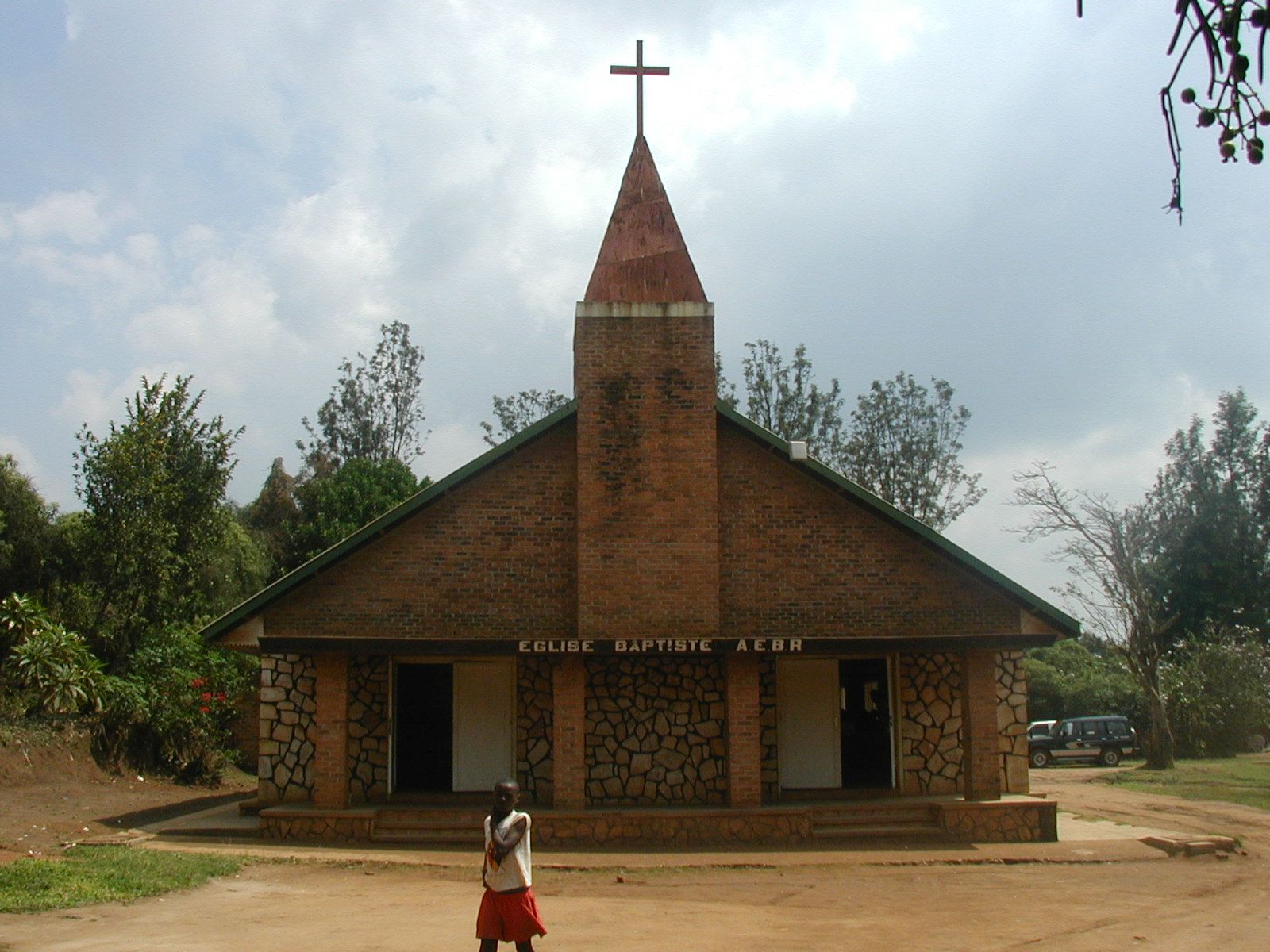
 The champion of this brand of justice is a young French woman named Kora Andrieu. Here, I've translated it from French to English for you. I've counted about sixteen parts to it." Pascazia opened her binder, retrieved a paper, and handed it to Albert. "I've adopted this concept as my template of justice."
 Question: What is the most fundamental economic consideration in the majority of African societies?